
Identification & Education
Compass plant by Burt Levy
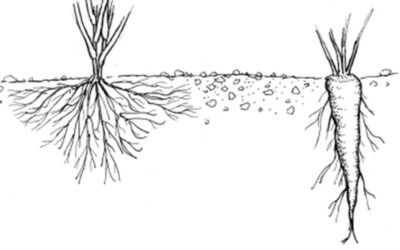
Survey of Drought and Root Morphology across Southern Wisconsin Prairies
As early as 1830, Wisconsin was home to 971,000 hectares of prairie. From 1830-1994, prairie loss accelerated, with the majority of the loss caused by European settlements and later urban and agricultural development, reducing prairie cover by 99.9% and leaving the state with roughly 4000 hectares (Samson and Knopf, 1994; Askins et al., 2007).
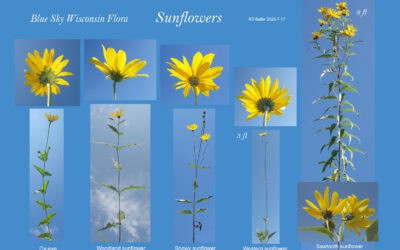
Blue Sky Botany – Sunflowers
Learn about four common Wisconsin sunflowers most likely to be associated with Wisconsin prairie and savanna.
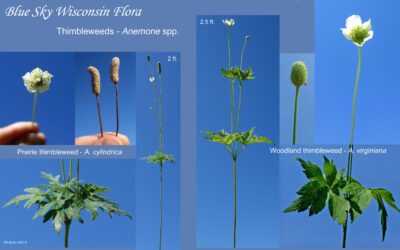
Blue Sky Botany – Thimbleweeds
Two thimbleweeds (Anemone cylindrica and A. virginiana) reside here in Wisconsin, one trending in the prairie and the other in oak savanna.
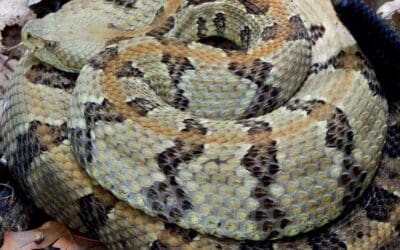
Rattlesnake Rescuer
When Stephen Winter is not busy with work or volunteering with his Chapter, he enjoys a most unusual hobby —rescuing rattlesnakes.
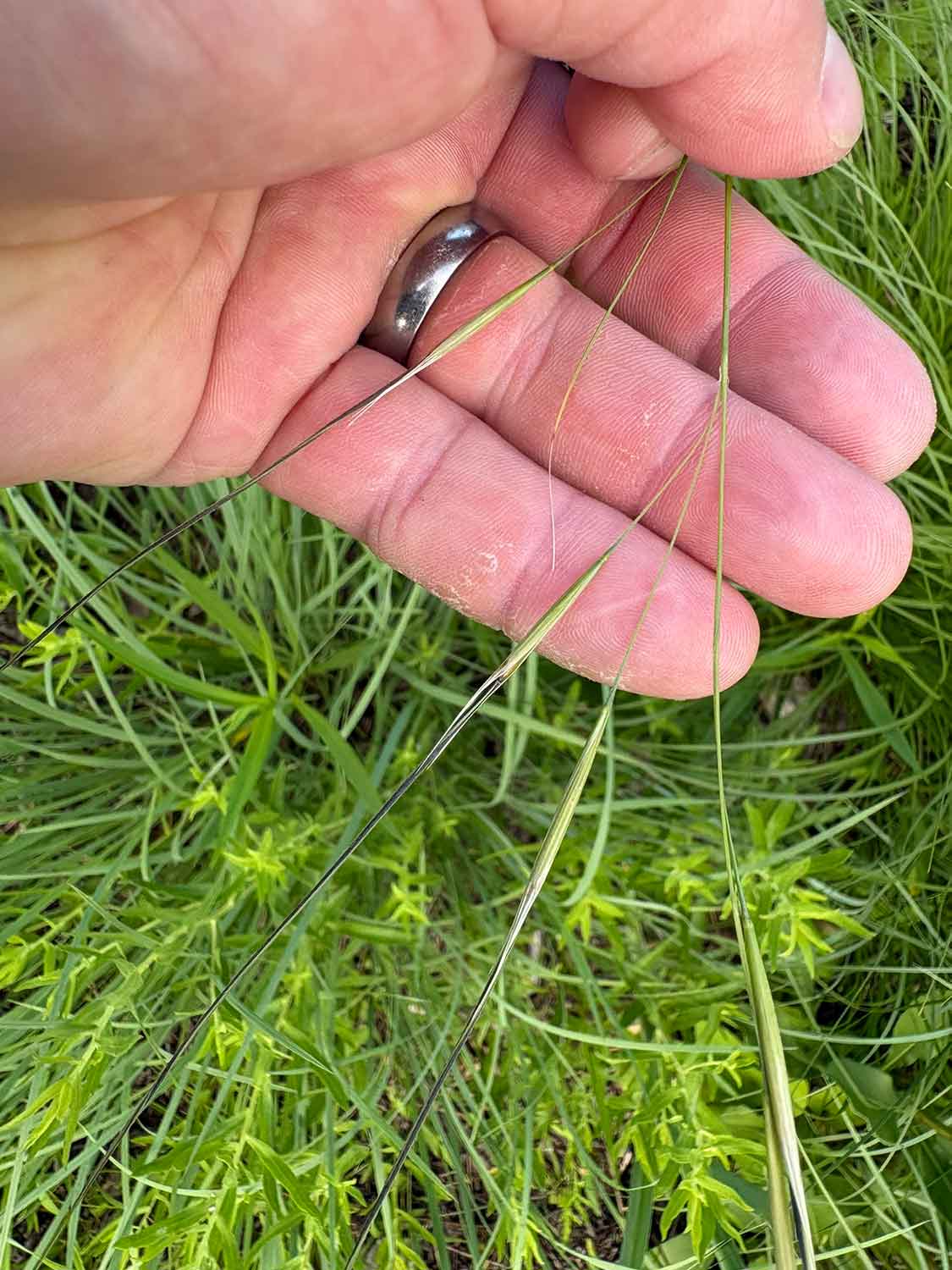
Porcupine Grass
Porcupine grass (Hesperostipa spartea, AKA needlegrass), one of our most important prairie grasses, is presently beginning to disperse its unique seeds.
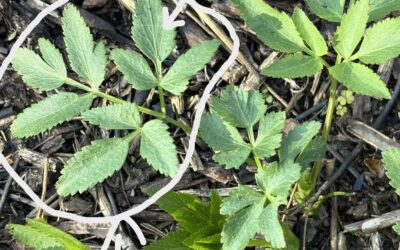
Parsnip Identification: Telling apart golden Alexanders, yellow pimpernel and poison parsnip
Two native yellow-flowering plants of prairies, savannas, and oak woods that are sometimes confused with parsnip (or poison parsnip, Pastinaca sativa) are golden Alexanders (Zizia aurea) and yellow pimpernel (Taenidia integerrima).
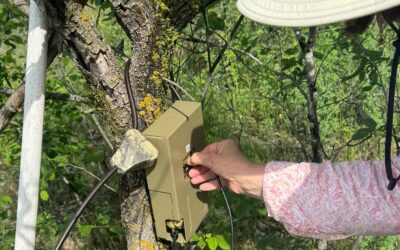
Monitoring Bat Activity Following Prairie Savanna Restoration
Bats are in trouble. Bats provide many important ecosystem services, including the control of crop insect pests.
Karrikins & Soil Health: Emerging Tools for Accelerating Prairie Succession
Prairie restorations often fall short of public expectations, not because of a lack of planning or care, but because the soil itself isn’t yet ready to support the species people hope to see in the first few years.

Springtime Magic
Enter the magical world of bumble bees and prairie blooms with paintings from artist and Prairie Enthusiast Joe Maurer.
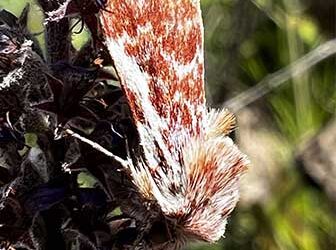
Moths, Caterpillars, and Restoration of Remnants
Read about the search for the elusive lead plant flower moth at Blueberry Hill Prairie, a remnant prairie near Hudson, Wisconsin.
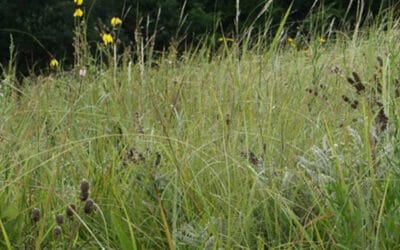
Change & Persistence Among Prairie Grasses
There are many misconceptions about prairies that cloud restoration, reconstruction, and management. Prominent among these is the tallgrass prairie “big four.”
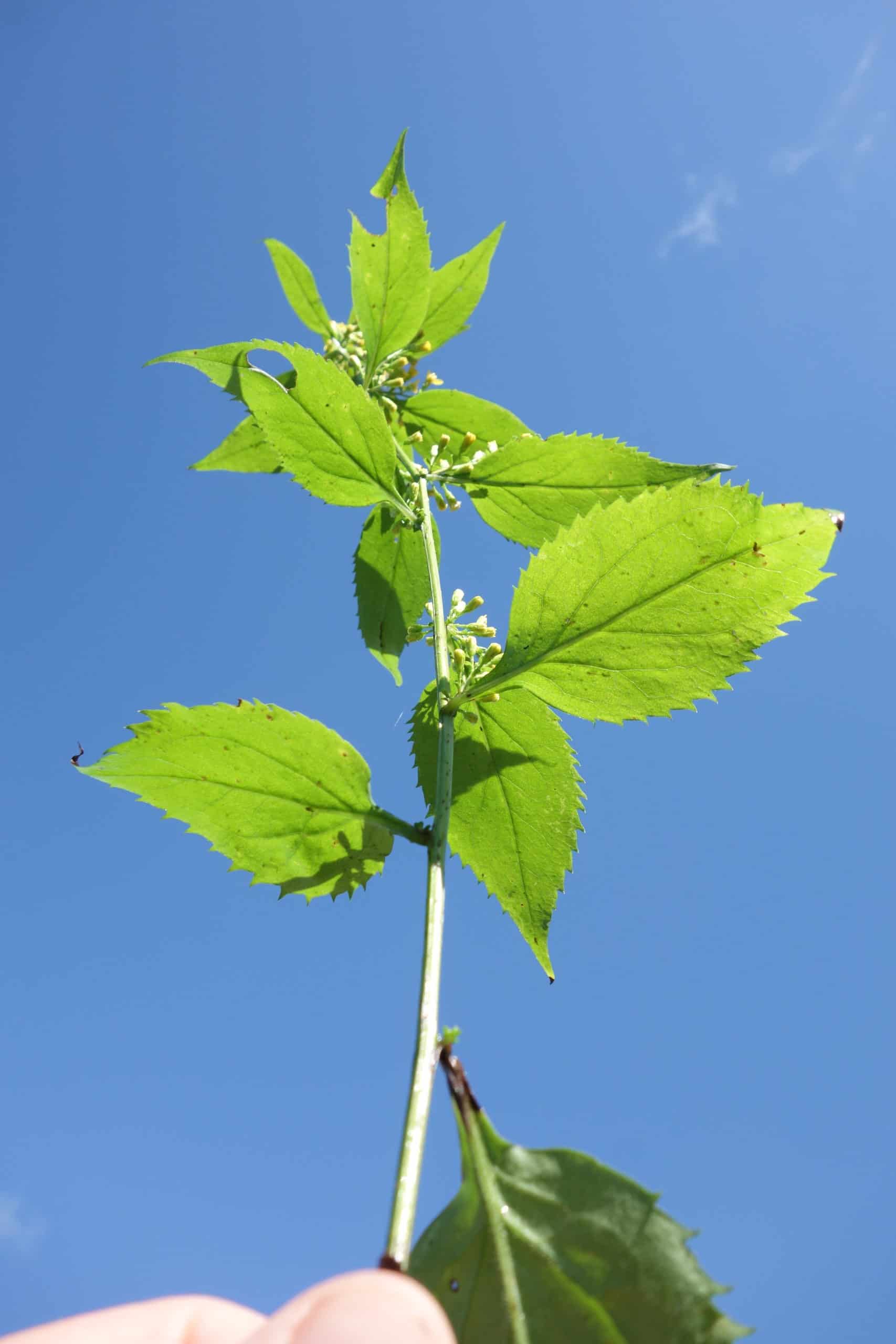
Blue Sky Botany – Goldenrods
The baffling goldenrods swim in that giant taxonomic pool of asters, sunflowers, and thistles (Asteraceae). Their tiny, sun-emitting yellow-orange flowers are aggregated into marvelous “inflorescences” that appear to the uninitiated as single large blooms, whose growth forms are variously described as feather dusters, candles, or flattops. They are beloved by late summer insects, especially bees, and people with bee binoculars. Identification practice makes perfect.
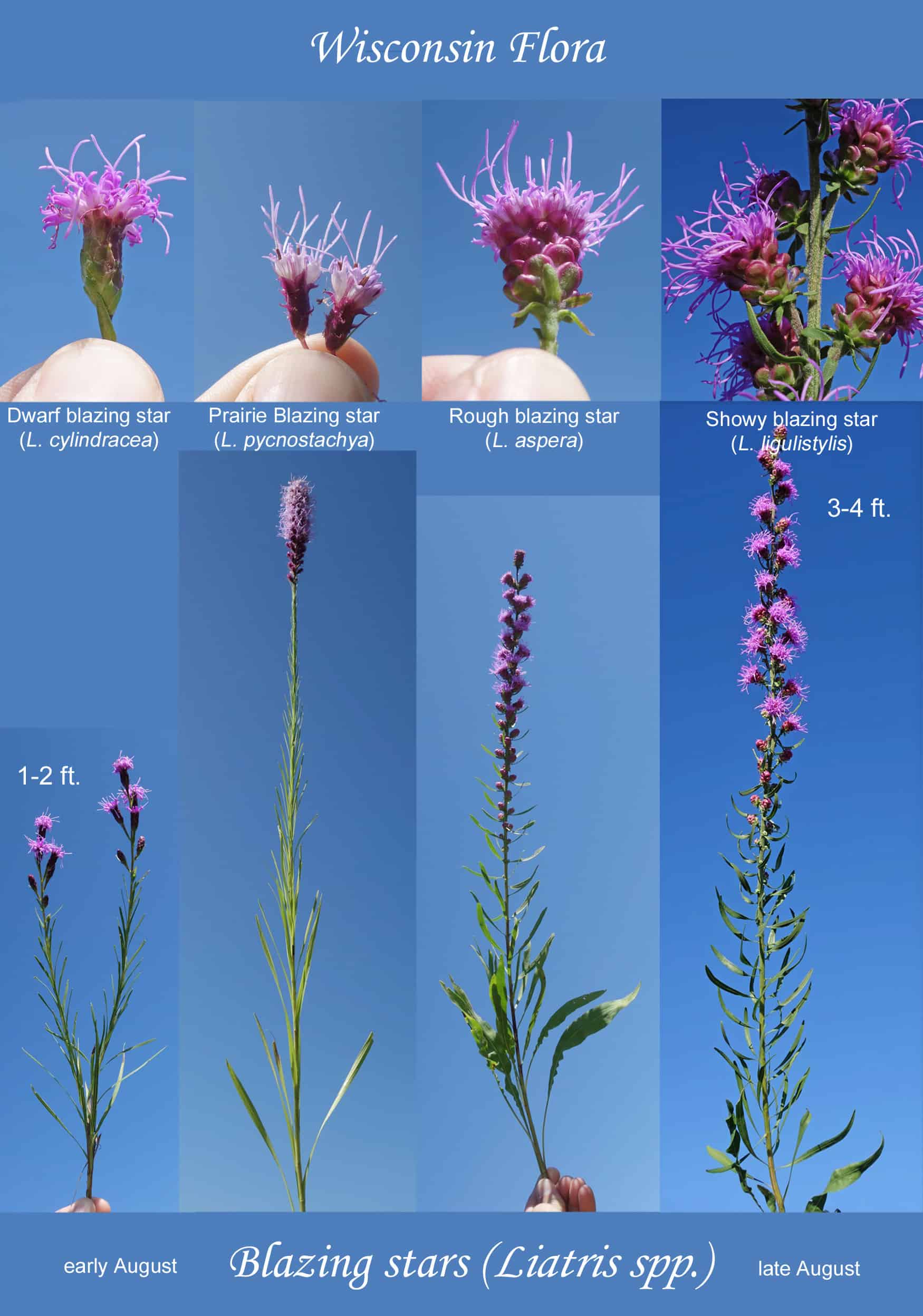
Blue Sky Botany – Blazing Stars
Here are the four Liatris species most likely to be seen on our beloved Wisconsin prairie remnants.
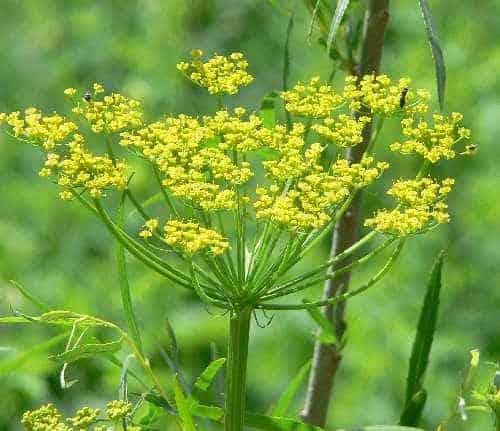
Effect of Wild Parsnip Removal on Black Swallowtails
Very often in the world of prairie restoration, there are differences of opinion on the ‘best’ way to improve a piece of land.

Blue Sky Botany – June
Learn about how to identify June blooms through these “blue sky” photographs.
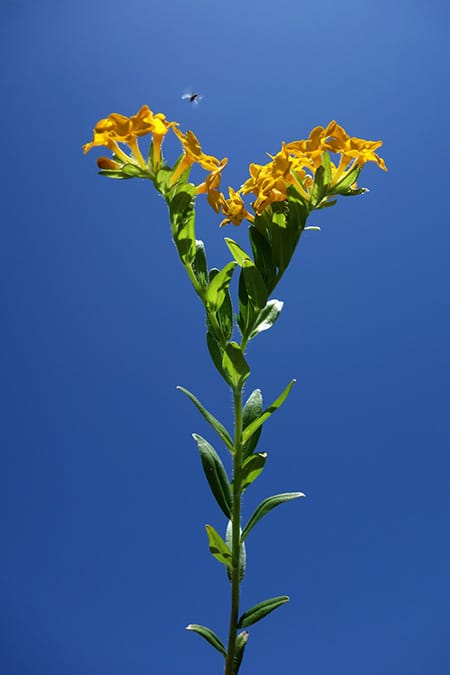
Blue Sky Botany – May
Learn about how to identify different May blooms through these “blue sky” photographs.
Blue Sky Botany – April
Learn how to identify some April blooms through these “blue sky” photographs.

Timber Rattlesnakes: Vanishing Blufflands Icon
Historically significant and emblematic of the wildness that once existed along the towering bluffs of the Mississippi River, the timber rattlesnake (Crotalus horridus) continues to survive in isolated pockets.