Volunteer Spotlight: Gary Eldred

Volunteer Spotlight: Gary Eldred

Volunteer Spotlight: Gary Eldred

Article by Kay Wienke, Southwest Wisconsin Chapter Board Representative

November 17, 2025

Gary Eldred is the volunteer every organization yearns to have in their membership. He has spent 50 years of his life dedicated to prairie restoration and The Prairie Enthusiasts. He was instrumental in the discovery of the organization’s first prairie (Muralt Bluff Prairie), participated in the first burn there in 1975 and several since. He is also credited with helping to find and acquire  several other prairies for the organization. To discover prairie remnants, Gary has conducted surveys in over a dozen Wisconsin counties and three counties in Iowa.

His service on the ground is legendary. He served as site steward for several prairies at one time, conducting weekly work parties with an experienced group of volunteers. He served as President of the early Southwest Prairie Enthusiasts for its first five years. When the group became The Prairie Enthusiasts in 1993, he served as the organization’s President for 10 years. He continues to serve as Emeritus on the The Prairie Enthusiasts Board and regularly attends the Southwest Wisconsin Chapter meetings, presentations and workdays.

His artwork is an accurate, beautiful representation of nature and prairie species. In 1989, his drawing of a meadowlark on a fence became the organizational logo and continues to this day. Historically his art was sold at Chapter banquets to raise funds for the work of the organization.

All this work and dedication to prairies resulted in Gary Eldred being inducted into the Wisconsin Conservation Hall of Fame in 2021. Thomas Hunt, Southwest Wisconsin Chapter Member, describes him as “a renaissance man—artist, writer, scientist, organizer and leader.”

Gary indicates that when he had a job, it was to support his habit of discovering and preserving prairies. He has spent more hours than can be counted dedicated to prairies and The Prairie Enthusiasts. Gary Eldred is the example we can all strive to become! Thank you, Gary, for your lifelong service!
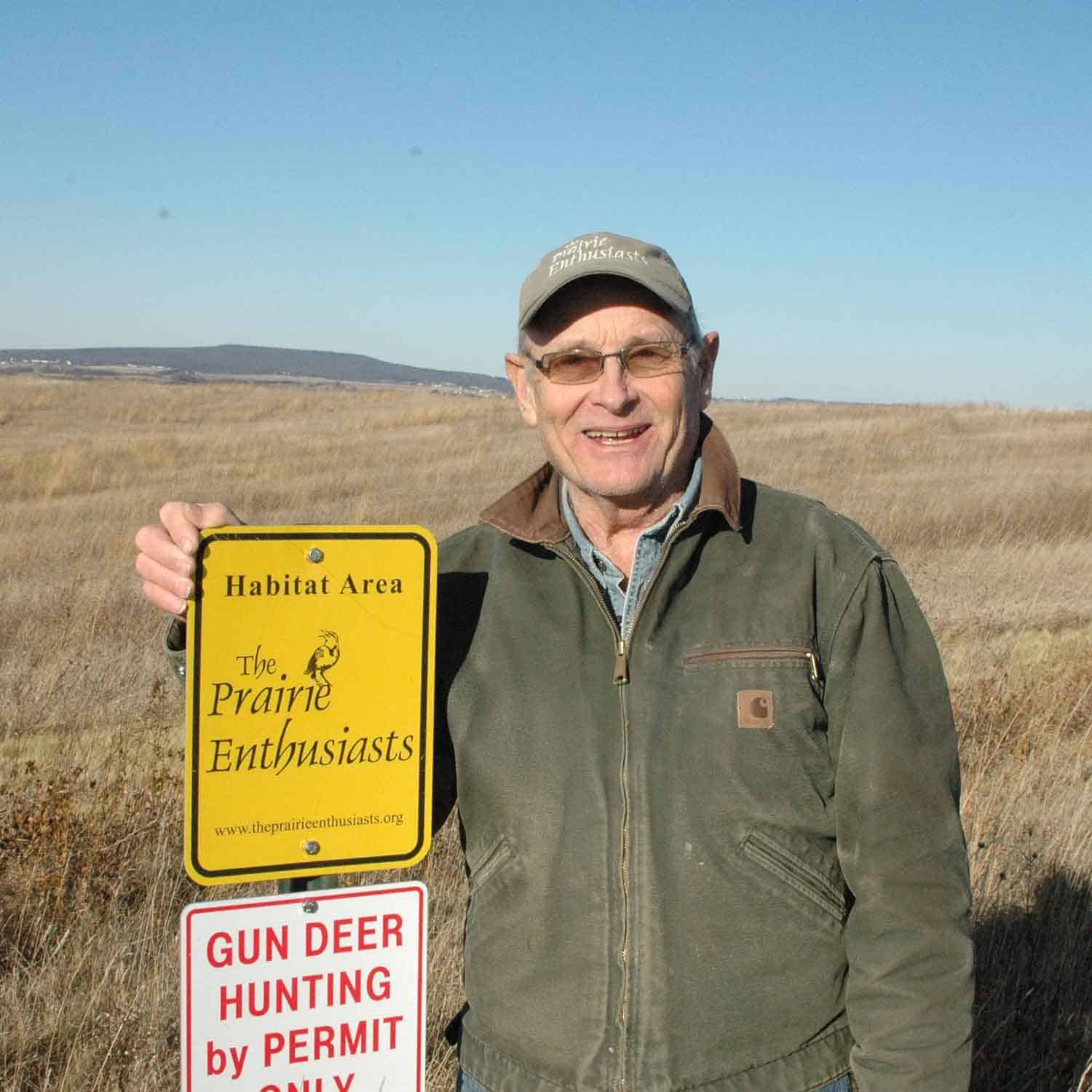
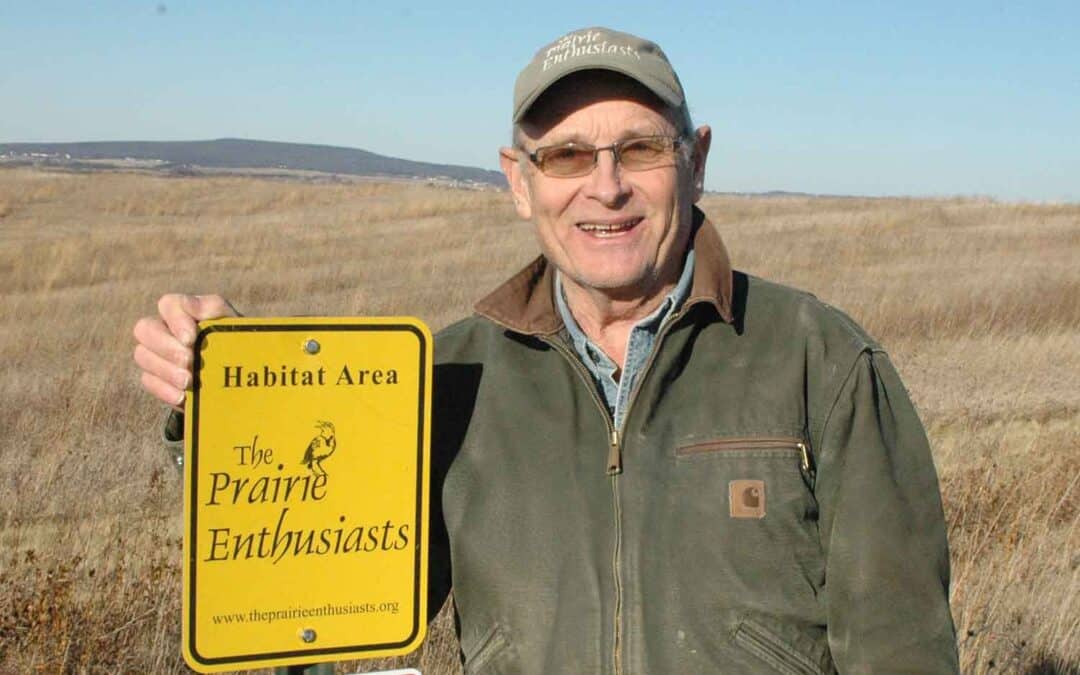
Gary Eldred standing by a boundary sign with the meadowlark illustration he created. Photo by Tim Eisele.

This article appeared in the Fall 2025 edition of The Prairie Promoter, a publication of news, art and writing from The Prairie Enthusiasts community. Explore the full collection and learn how to submit your work here

About The Prairie Enthusiasts 

The Prairie Enthusiasts is an accredited land trust that seeks to ensure the perpetuation and recovery of prairie, oak savanna, and other fire-dependent ecosystems of the Upper Midwest through protection, management, restoration, and education. In doing so, they strive to work openly and cooperatively with private landowners and other private and public conservation groups. Their management and stewardship centers on high-quality remnants, which contain nearly all the components of endangered prairie communities. 
Student Researchers and Local Stewards Team Up to Study How Management Shapes Restored Prairies Under Changing Winters

Student Researchers and Local Stewards Team Up to Study How Management Shapes Restored Prairies Under Changing Winters

Student Researchers and Local Stewards Team Up to Study How Management Shapes Restored Prairies Under Changing Winters

Article by Katherine Charton, Empire-Sauk Chapter Member

November 17, 2025

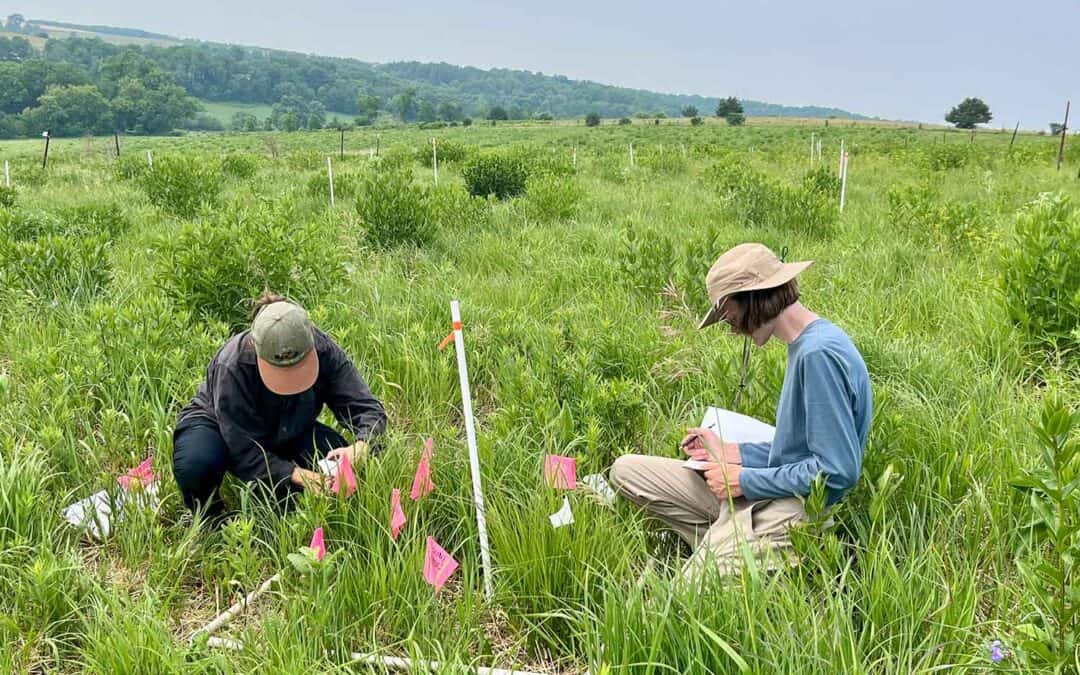
Former undergraduate researchers Sam August and Benji Jackson survey plant community composition in summer within the long-term experimental plots at Mounds View Grassland. Photo by Michelle Homann.

On a winter morning at The Prairie Enthusiasts’ Mounds View Grassland, the prairie is quiet but alive. Beneath the snow, small mammals race through hidden tunnels, their paths winding between dormant stems. Just below the soil surface, the buds of prairie perennials wait patiently for the thaw, storing energy for the first warm day of spring. Overhead, a hawk scans the whitened landscape while the wind combs through last season’s seedheads. And in the distance, the scrape of shovels cuts through the stillness as bundled-up students push snow into neat piles or clear it away entirely from flag-marked plots. Few humans venture into the prairie at this time of year, but these students are maintaining an experiment unlike any other in the region—an effort to understand how a changing winter is reshaping prairies across the Midwest.

The project began in 2016 as a collaboration between university research ecologists and local land stewards to test how winter snow cover interacts with the type and timing of managed disturbance. It’s a question that weighs on the minds of practitioners across the region who are working to restore the prairies that once stretched unbroken across the landscape. “Disturbance through fire, mowing and other means defines prairie management,” explains Ellen Damschen, Professor of Integrative Biology at the UW-Madison and principal investigator of the project. “Those actions are essential to restoring and maintaining prairie ecosystems. But a key question for stewards is whether they might amplify—or help offset—the stresses of a changing winter.”

In the Midwest, climate change is advancing fastest in the cold months, and once-reliable snow cover is becoming less certain. Snow acts as an insulating blanket, buffering roots and buds from the full force of winter cold. Without that protection, soils can freeze more deeply and cycle between freezing and thawing more often, increasing plant exposure to potentially damaging conditions. Restoration must be planned with this future in mind. “The prairies being planted today will grow under a different climate than the one that shaped them over their evolutionary history, especially in winter,” says Damschen. “Given the likelihood that we’ll continue to lose insulation in the form of snow, we wanted to know whether burning or mowing before winter would alter the insulation provided by plant litter.”

The idea to test this interaction at Mounds View Grassland took root through conversations between Damschen, then-postdoctoral research associate Laura Ladwig, then-doctoral student Jon Henn and Rich Henderson, longtime Empire-Sauk Chapter Board Representative and Mounds View Grassland site steward for The Prairie Enthusiasts. Together they envisioned a living experiment that could serve both science and restoration. Henn and Henderson worked closely to map out 32 200-m2 plots across two prairie restorations at the site. Henderson coordinated management schedules so that experimental spring burns, fall burns and fall mowing could proceed without disrupting ongoing stewardship, while fire crews from The Prairie Enthusiasts and the local land management company Adaptive Restoration provided the expertise and labor to carry out the treatments.

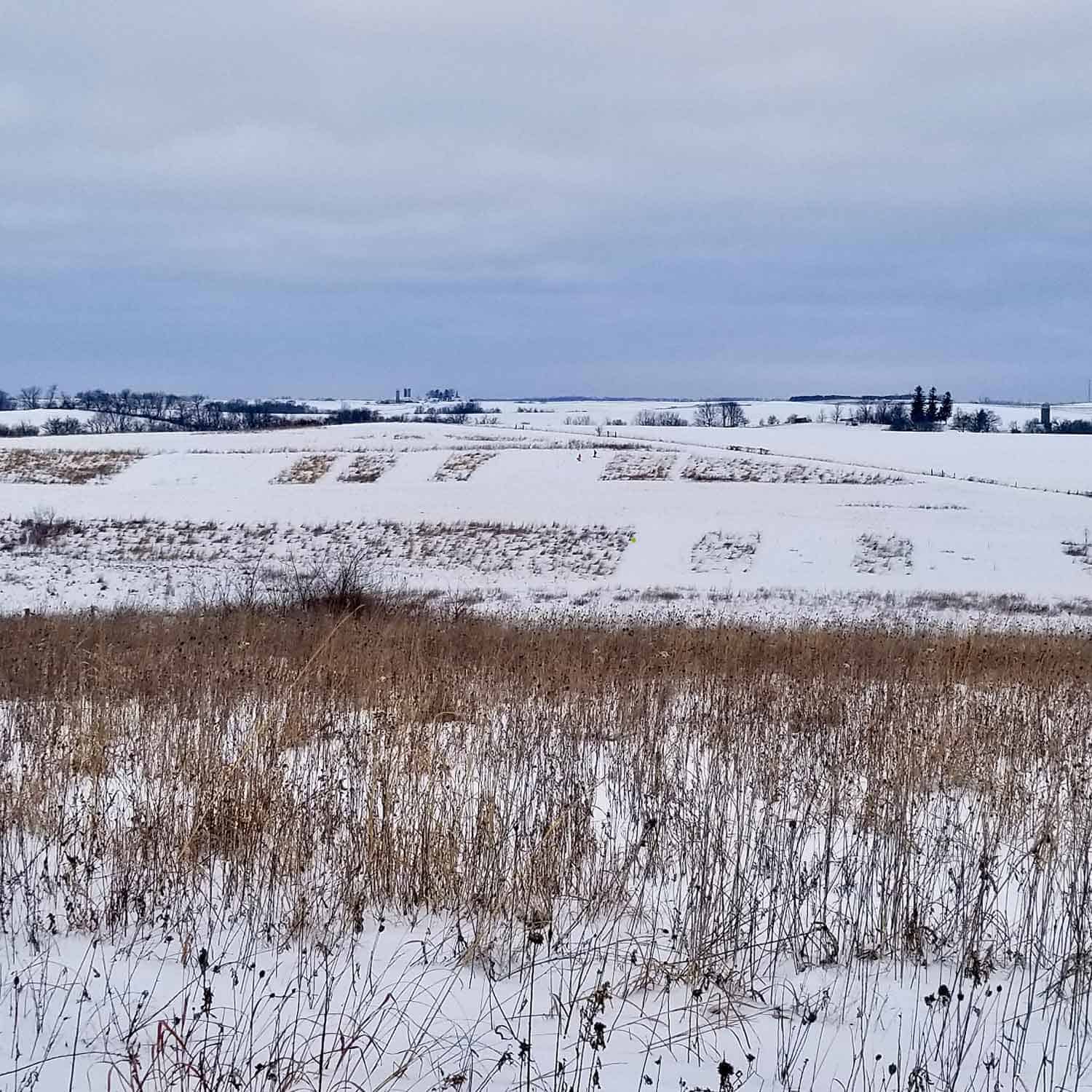
The research team, initially led by Henn, also manipulated snow in 192 4m2 subplots nested within the larger disturbance plots. Using cross-country skis, snowshoes and shovels, student crews trekked to Mounds View Grassland after each snowfall of four inches or more, removing snow from some plots, adding it to others or leaving it untouched. Maintained now for nearly a decade, this experimental design has allowed researchers to explore how management and insulation interact—to see whether, for instance, removing litter before winter exposes plants to deeper frost in low-snow conditions, or whether keeping litter through the winter offers protection and benefits the plant community.

As the project matured, a new generation of researchers stepped in to continue the work. I joined the Damschen Lab as a graduate student in 2019 and inherited the project from Henn, expanding its scope to explore how plant functional traits—characteristics of plants such as stress tolerance and resource acquisition abilities—might predict which species persist or colonize under different combinations of managed disturbance and snow cover. In 2022, Michelle Homann, a current PhD candidate, joined to lead new rounds of data collection and focus on how the treatments influence early spring thaw and seedling emergence. Christopher Warneke, a postdoctoral research associate, took on the role of data manager, ensuring the consistency and quality of thousands of data points gathered each year. Early funding from the Joint Fire Science Program and the National Science Foundation helped launch the work, while continued support from the U.S. Geological Survey Midwest Climate Adaptation Science Center has sustained the experiment over time, allowing for a rare, long-term assessment of ecological change. At every stage, the project’s continuity has depended on collaboration between graduate students, faculty mentors, practitioners, stewards, funders and the dozens of undergraduate assistants who have kept the experiment alive.

I recently led the publication of a peer-reviewed manuscript summarizing results from seven years of data and exploring how plant traits influence community outcomes. We found that fall burns and reduced snow both led to colder minimum winter soil temperatures, with the coldest conditions occurring when the two treatments were combined. That’s likely because prescribed fire removes insulation in the form of litter before plants have a chance to regrow and replenish it, while the snow removal prevents accumulation of snow that would otherwise buffer the soil from the coldest temperatures.

Winter view of the experimental plots at Mounds View Grassland from a nearby hilltop. Photo by Ellen Damschen.

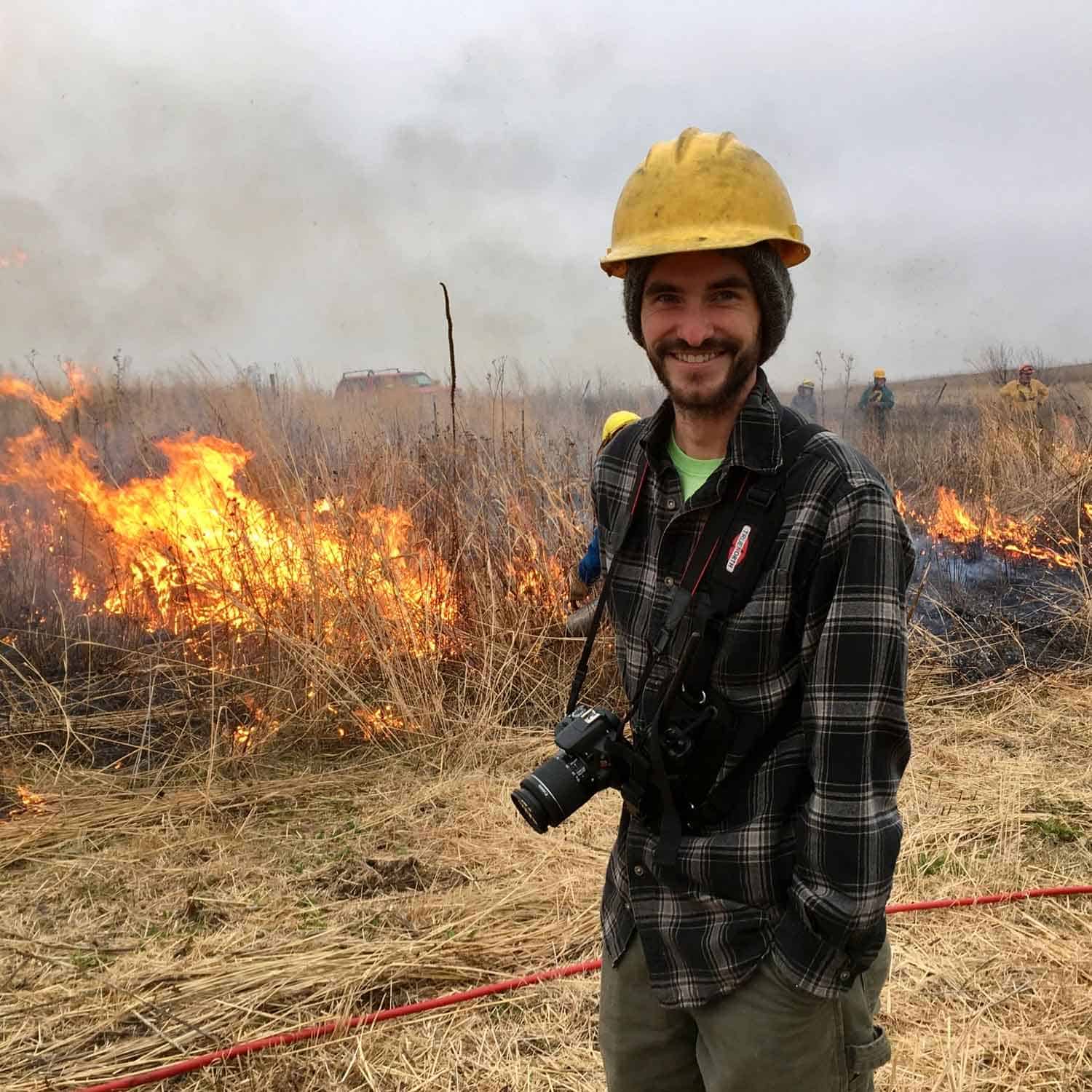
Former graduate student Jon Henn, who helped originate the experiment, joins The Prairie Enthusiasts’ prescribed fire crew to apply a burn treatment at Mounds View Grassland. Photo by Laura Ladwig.

Surprisingly, however, only the management treatments—not the snow manipulations—have produced measurable effects on the composition of species that make-up the plant community so far. We found that both spring and fall burns have resulted in greater increases in species richness than in unmanaged plots, with fall mowing falling somewhere in between, a pattern that aligns with what many practitioners already observe. Despite clear shifts in winter soil conditions and measurable effects on individual species performance, including early life stages, we’ve seen no evidence that altered snow depth is changing the overall composition of these prairie communities. This resilience may stem from the evolutionary history of the species themselves. Most prairie plants are long-lived perennials adapted to disturbance. The same deep roots and underground buds that allow them to survive fire may also protect them from freeze stress.

Digging deeper into the data, subtler patterns have emerged in support of this idea. In young restorations like those at Mounds View Grassland, we typically expect colonization by fast-growing, resource-acquisitive plants. But in the coldest plots—those that were burned in the fall and had snow removed—we found more recruitment of stress-tolerant, slower-growing plants. Among those are wholeleaf rosinweed (Silphium integrifolium), wild quinine (Parthenium integrifolium), big bluestem (Andropogon gerardii), white heath aster (Symphyotrichum ericoides) and prairie dropseed (Sporobolus heterolepis)—plants with tough, nutrient-poor leaves and high tolerance to cold, the botanical hallmarks of endurance.

For now, these restored prairie plant communities appear to be holding steady through the loss of winter snow, but subtle or delayed effects may yet emerge as small shifts—like those seen in colonization trends—accumulate over time. And because the experiment has unfolded during an era of warming winters, it has, in a sense, been running within its own real-world test of change, complicating what the data can reveal. Moreover, the prairies at Mounds View Grassland are still relatively young restorations and don’t yet have the species richness and ecological complexity of remnant prairies, so results may differ in those long-established systems.

In my view, a conservative approach would be to continue keeping litter down through burns to make space for new seedlings, but where possible, those burns should occur in the spring to help soften the potential impacts of warming winters. At the same time, we can’t take disturbance for granted. Fire is essential for maintaining the diversity and function of prairie plant communities, but climate change is shifting weather windows, and practitioners have to stay flexible to burn safely and effectively. In some years, that may mean more fall burning simply to ensure fire remains on the landscape at all.

The lessons from this research extend beyond its scientific findings. The experiment demonstrates how restored prairies can double as living laboratories—places where research questions meet the realities of management. Such work depends on trust and shared learning, where researchers rely on practitioners for on-the-ground expertise and historical context, and practitioners rely on researchers to interpret patterns that can inform future stewardship. At Mounds View Grassland, that collaboration has been ongoing for nearly a decade, spanning three generations of graduate students. Season after season, it reminds us that resilience grows from persistence—from tending the land through uncertainty and trusting that, like the prairie itself, our efforts will endure.

For more information about this research, please see the associated academic papers published in Ecosphere (2022) and American Journal of Botany (2025). The research team thanks the continued support of their collaborators and funders, including The Prairie Enthusiasts, Adaptive Restoration, The Nature Conservancy, the Wisconsin Department of Natural Resources, the National Science Foundation, the Joint Fire Science Program and the U.S. Geological Survey Midwest Climate Adaptation Science Center.

Visit Mounds View Grassland!

Click HERE to learn more

This article appeared in the Fall 2025 edition of The Prairie Promoter, a publication of news, art and writing from The Prairie Enthusiasts community. Explore the full collection and learn how to submit your work here

About The Prairie Enthusiasts 

The Prairie Enthusiasts is an accredited land trust that seeks to ensure the perpetuation and recovery of prairie, oak savanna, and other fire-dependent ecosystems of the Upper Midwest through protection, management, restoration, and education. In doing so, they strive to work openly and cooperatively with private landowners and other private and public conservation groups. Their management and stewardship centers on high-quality remnants, which contain nearly all the components of endangered prairie communities. 

mark_van_der_linden

mark_van_der_linden

Who We Are

Mark van der Linden

Land Protection and Stewardship Manager

Contact at: MvanderLinden@ThePrairieEnthusiasts.org

Mark comes to The Prairie Enthusiasts after 15 years in the nonprofit sector, including 11 years working with the Minnesota Land Trust on conservation easements. His work acquiring new conservation projects in the Minnesota portion of the Driftless Area led to countless connections with landowners, volunteers and board members associated with The Prairie Enthusiasts. Their enthusiasm for prairie conservation and restoration was infectious; as a result he accepted a position on the Operations Team in October 2025. Mark lives in Decorah, IA with his family and many pets. He is an avid hiker and backpacker and completed a thru-hike of the Appalachian Trail in 2017.

People_Khris_Miller

People_Khris_Miller

Who We Are

Khris Miller

Land Protection Specialist

Contact at: KMiller@ThePrairieEnthusiasts.org

Khris joined The Prairie Enthusiasts to make a difference for “our beautiful planet Earth” after spending much of her career in the for-profit sector. Trained as an educator, her love of learning and teaching has allowed her to grow and help others succeed as well. She is a creative problem solver and resourceful support for our chapters and members. Khris and her husband relocated to the Driftless region in 2018, where they are learning to be stewards of the land. She enjoys hiking, snowshoeing, and horseback riding.

Assessing Ecological Integrity: An Example from Grazed and Ungrazed Nachusa Old-Growth Prairie

Assessing Ecological Integrity: An Example from Grazed and Ungrazed Nachusa Old-Growth Prairie

Assessing Ecological Integrity: An Example from Grazed and Ungrazed Nachusa Old-Growth Prairie   

Story and Photos by Ecologist Dan Carter
July 7, 2025

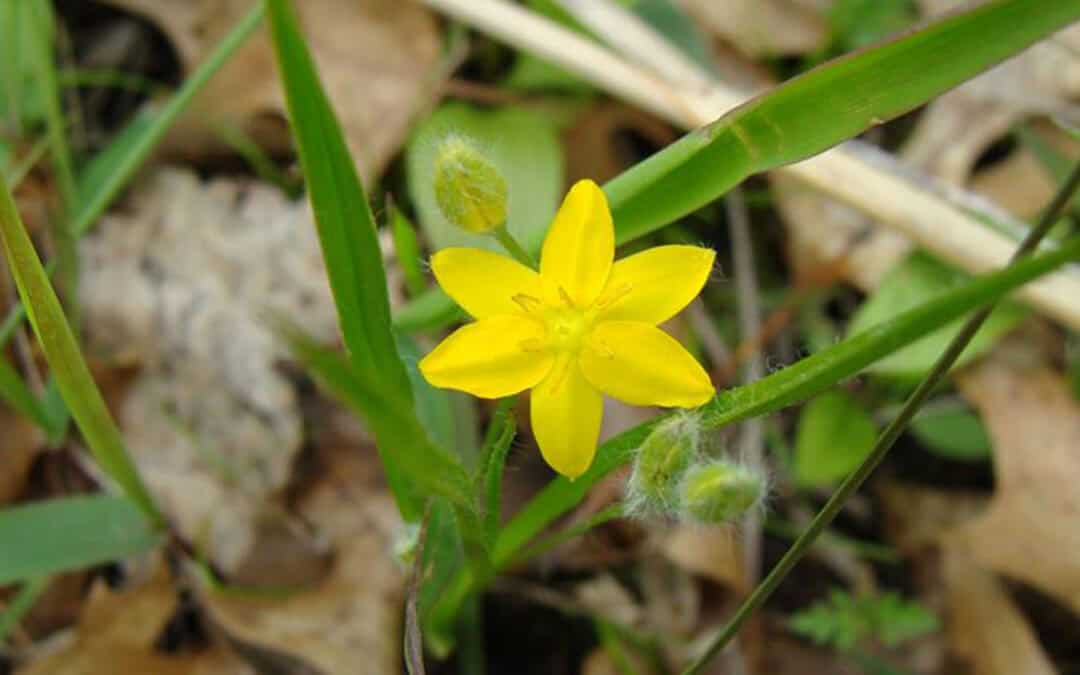
Figure 1. Yellow star grass (Hypoxis hirsuta, Wisconsin C = 8), a relatively conservative native species of old-growth herbaceous vegetation in prairies, oak woods, savannas, and fens.

In recent issues, I contributed a series of articles about how old-growth fire-dependent ecosystems originate from and are perpetuated by stability more than by disturbance in relation to stewardship practices—especially use of fire and grazing.1

One way we measure the extent to which an ecosystem has the abiotic and biotic elements needed to perpetuate itself—an ecosystems’ ecological integrity—is by assessing floristic quality. In particular, we assign “coefficients” of conservatism to vascular plant species on a scale of zero to ten based on how faithful or “conservative2 ” they are to old growth (remnants). Species assigned a value of ten are the most conservative. These numbers have ecological meaning. Relatively conservative species tend to be the most specialized to their abiotic and biotic environments. They often have more or stronger symbioses with other plants, fungi, insects, and other organisms, and they are usually part of communities structured by limiting nutrients or water compared to communities structured by competition for light in the presence of abundant available nutrients and water. For example, conservative species like prairie dropseed (Sporobolus heterolepis, Wisconsin coefficient of conservatism 10) are associated with and dependent on mycorrhizal fungi,3,4 have more co-evolved relationships with consumers (e.g., invertebrates like the red-tailed prairie leafhopper, Aflexia rubranura5 ) and are strongly associated with old-growth prairies (or efforts that re-create their conditions). In contrast, weedy or opportunistic native plants like mare’s tail (Conyza canadensis, Wisconsin coefficient of conservatism = 0) are less mycorrhizal,6 interact with relatively few consumers and are largely restricted to disturbed environments where nutrients are more available. If you bring me a specimen of mare’s tail, I won’t know if it came from your vegetable garden, a fallow agricultural field or the soil disturbance associated with a mammal burrow out on an old-growth prairie. I will know that it came from a place where competition has been removed or suppressed and where light and nutrients are readily available. Most of our native flora (~84%) is at least moderately conservative, with coefficients of four or higher, and these species also largely comprise our old-growth ecosystems. Plant communities with mean coefficients of conservatism (mean C) among constituent species above 4.5 are typically of natural area quality (Fig. 1). Species with lower coefficients aren’t bad, but when abundant, the land is convalescent.

In plant community ecology, mainstay metrics like species richness,7 evenness8 and diversity9 give us information about how many species are present and how equitable their abundances are, but they do not provide the vital context of what kinds of species they are. Are the species present associated with disturbed and degraded land? Do they indicate that an ecosystem is changing states from one type to another? Are they species associated with old-growth, intact ecosystems with their many biotic and abiotic relationships? The mean C of the flora in a place gives us that context. Despite that, it’s still often omitted from studies of prairie and other old-growth plant communities, and without it, it can be difficult or impossible to judge whether community changes are associated with loss or gain of ecological integrity.

A recent study by Chakravorty et al. reported responses to five years of bison grazing at Nachusa Grasslands.10 They included areas of old-growth prairie subject to bison grazing and exclosures that kept out bison activity from portions of those prairies. They also included prairie plantings, wetlands and degraded savannas. Given the pre-European paucity of bison on eastern prairies, and effects I observed on more western prairies as a graduate student, I was interested in what this study had to report (see “Stability Part Two: Why I Seldom Recommend Grazing” in the Summer, 2024 The Prairie Promoter).

Chakravorty et al. found little effect of bison on diversity and composition across community types, though there was some evidence of an increase in non-native relative to native plants after five years of grazing. In other words, bison didn’t seem to be hurting things, or at least not much. However, the study did not examine ecological integrity. Were there any changes in mean C in the remnants at Nachusa? The authors provided access to the data used in their analyses online at Dryad,11 so I decided to have a look.

I examined data from the paired grazed and ungrazed (exclosure) plots from the six old-growth prairies included in the study and added coefficients of conservatism developed for Illinois12 and obtained from Universal FQA13 (floristic quality assessment).14 Six is a small sample, but that’s difficult to avoid in the study of old-growth prairies. I calculated mean coefficients of conservatism that were weighted by the relative abundance of each species for grazed and ungrazed plot pairs in the six remnants. Weighted mean C can be more sensitive to change than simply calculating the mean of all coefficients of species observed, because weighted mean C can change without loss or gain of species—just changes in their abundances. For example, in my graduate work15 I studied changes in mean C across a series of prairie plantings of different ages. Mean C did not change (increase) with planting age, but mean C weighted by relative abundance did change—it increased with age. That’s because even the more conservative, slower developing species are detectable in young plantings as small, immature plants if you look closely enough! Those then increase in their relative abundance as plantings age and fast-establishing but less conservative species diminish.

I tested the null hypothesis that there was no difference between grazed and ungrazed portions of the old-growth prairies against the one-sided alternative that weighted mean C was lower where bison had access for five years. The data were not normal, so more precisely, I tested median differences (Wilcoxon signed rank test in Program R). The difference was not large, but there is marginal evidence that weighted mean C is lower on the bison-grazed portions of the old-growth prairies at Nachusa. Given the data, there is only a 7.8% chance that the null hypothesis is true (p = 0.078). The data are represented with a line plot to show all the paired points, with brown dots representing average weighted mean C of both grazed and ungrazed areas before bison grazing started for reference.

Figure 2. Giant ragweed (Ambrosia trifida, Wisconsin C = 0), an opportunistic native species of a wide range of high light, high nutrient settings.

There is no evidence that bison are benefiting old-growth prairie ecological integrity after five years, and there is some evidence that the presence of bison may be starting to reduce it. However, weighted mean C values of grazed and ungrazed areas both remain very high (well above 4.5). When data from the most recent five years become available, it will be interesting to see if differences become more pronounced. Five years is not much time.

There are rare species’ habitat reasons and cultural reasons for bringing bison back on to the landscape. However, it may not be judicious to put bison on our precious few remaining tracts of old-growth prairie, especially if one of the objectives is to sustain ecological integrity. Fortunately, there are plenty of opportunities to do so elsewhere.

When presented with information about how plant communities respond to various practices or treatments, please ask, “how did mean C respond?” Without mean C or other assessments designed around ecological integrity concepts, it is more difficult to assess relevance to our mission—perpetuation of prairie, savanna and other associated ecosystems of the Upper Midwest. Maybe if we keep asking, we’ll start to see mean C more often reported in research, or maybe it will influence more of us to find ways to collect data to inform our work, which Nachusa and those doing research there should be applauded for. I plan to get to work in that regard this field season with the support of the philanthropy of our members.

For those interested in coefficients of conservatism and floristic quality assessment, I recommend reading Spyreas (2019)16 , and watching a presentation called Ecesis: The Nature of Nature with Justin Thomas on YouTube (most relevant discussion after the 33-minute mark) in addition to some of the other work cited above.

Figure 3. Line plot showing paired points connected by lines representing plots protected from bison within exclosures (green, ungrazed) and accessible to bison (orange, grazed). Gray dots represent mean values prior to grazing inside and outside of exclosures for reference; exclosures did not start with higher weighted mean C. Sampling and initiation of bison grazing were staggered over two years on different prairies, so sampling after five years of grazing occurred in 2019 and 2020.

References

1. Carter, D. (2024). Stability part one: Why I recommend frequent dormant season burning. Prairie Promoter, Spring: 14-19. https://theprairieenthusiasts.org/stability-part-one/

2. Swink and Wilhelm 17.

3. Ebbers, B. C., Anderson, R. C., & Liberta, A. E. (1987). Aspects of the mycorrhizal ecology of prairie dropseed, Sporobolus heterolepis (Poaceae). American Journal of Botany, 74(4), 564-573.

4. Middleton, E. L., Richardson, S., Koziol, L., Palmer, C. E., Yermakov, Z., Henning, J. A., … & Bever, J. D. (2015). Locally adapted arbuscular mycorrhizal fungi improve vigor and resistance to herbivory of native prairie plant species. Ecosphere, 6(12), 1-16. 

5. https://apps.dnr.wi.gov/biodiversity/Home/detail/animals/7015

6. Řezáčová, V., Řezáč, M., Wilson, G. W., & Michalová, T. (2022). Arbuscular mycorrhiza can be disadvantageous for weedy annuals in competition with paired perennial plants. Scientific Reports, 12(1), 20703.

7. Richness is how many species are in a defined area.

8. Evenness is how equitable the species in a defined area are in terms of their abundance.

9. Diversity is a function of both richness and evenness. 

10. Chakravorty, J., Harrington, J. A., & Bach, E. M. (2024). Bison Grazing in Eastern Tallgrass Prairie Does Not Alter Plant Diversity after Five Years. Natural Areas Journal, 44(4), 215-222.

11. https://datadryad.org/dataset/doi:10.5061/dryad.d7wm37qb2

12. Taft, J. B., Wilhelm, G. S., Ladd, D. M., & Masters, L. A. (1997). Floristic quality assessment for vegetation in Illinois, a method for assessing vegetation integrity. Erigenia, 14, 3-95,

13. https://universalfqa.org/ 

14. Some taxonomic resolution was also necessary, sedges and grasses not identified to species were omitted (they were similar in abundance between grazed and ungrazed exclosures), and two taxa very unlikely to have truly been present in upland Illinois prairie that were recorded in low abundance from single plots were removed from the data (Hippuris vulgaris, an emergent plant of cold, mineral-rich water; Linum flavum, a shrub native to southern Europe and not in North America’s flora.).  

15. Carter, D. L., & Blair, J. M. (2012). Recovery of native plant community characteristics on a chronosequence of restored prairies seeded into pastures in WestCentral Iowa. Restoration Ecology, 20(2), 170-179. 

16. Spyreas, G. (2019). Floristic Quality Assessment: a critique, a defense, and a primer. Ecosphere, 10(8).

This article appeared in the Spring 2025 edition of The Prairie Promoter, a publication of news, art and writing from The Prairie Enthusiasts community. Explore the full collection and learn how to submit your work here

About The Prairie Enthusiasts 

The Prairie Enthusiasts is an accredited land trust that seeks to ensure the perpetuation and recovery of prairie, oak savanna, and other fire-dependent ecosystems of the Upper Midwest through protection, management, restoration, and education. In doing so, they strive to work openly and cooperatively with private landowners and other private and public conservation groups. Their management and stewardship centers on high-quality remnants, which contain nearly all the components of endangered prairie communities.