by The Prairie Enthusiasts | Jul 19, 2023
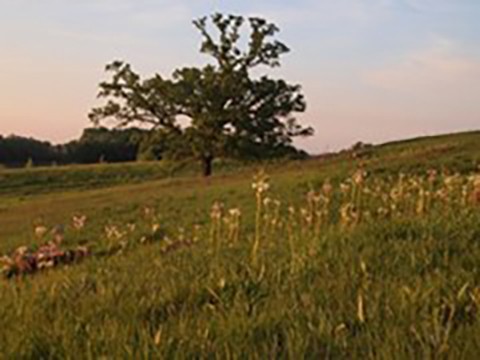
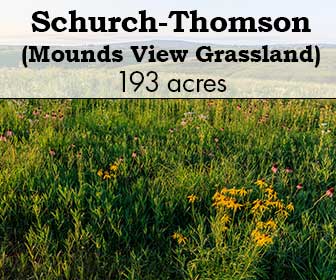
This site is a 193-acre farm in the Military Ridge Prairie Heritage Area with mix of prairie, savanna, woodland, and agricultural fields that provides habitat for several rare and endangered species. It has over 220 species of native plants and supports many butterflies and other prairie insects, as well as rare grassland birds and animals like the badger and bull snake.
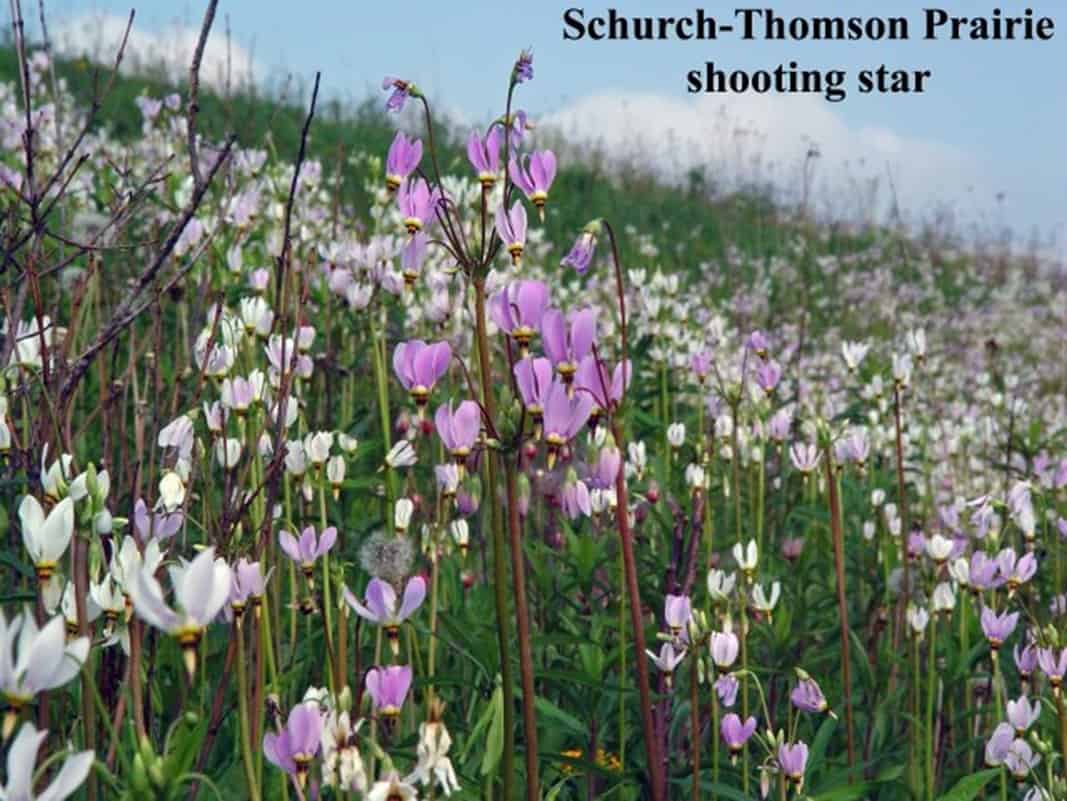
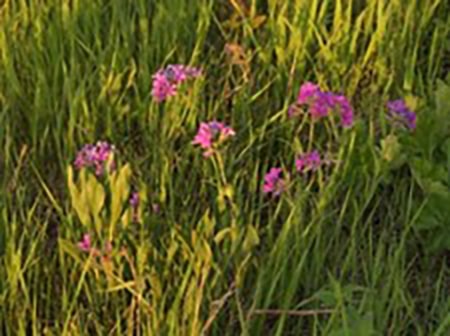
In spring, the prairie remnants are covered with tens of thousands of shooting stars, a native prairie wildflower. Continued restoration and management will remove invasive species that threaten the health of the prairie and savanna remnants and restore water quality in the stream that runs through the property.
SITE STEWARDS
RICH HENDERSON
608-845-7065
ACCESS & DIRECTIONS
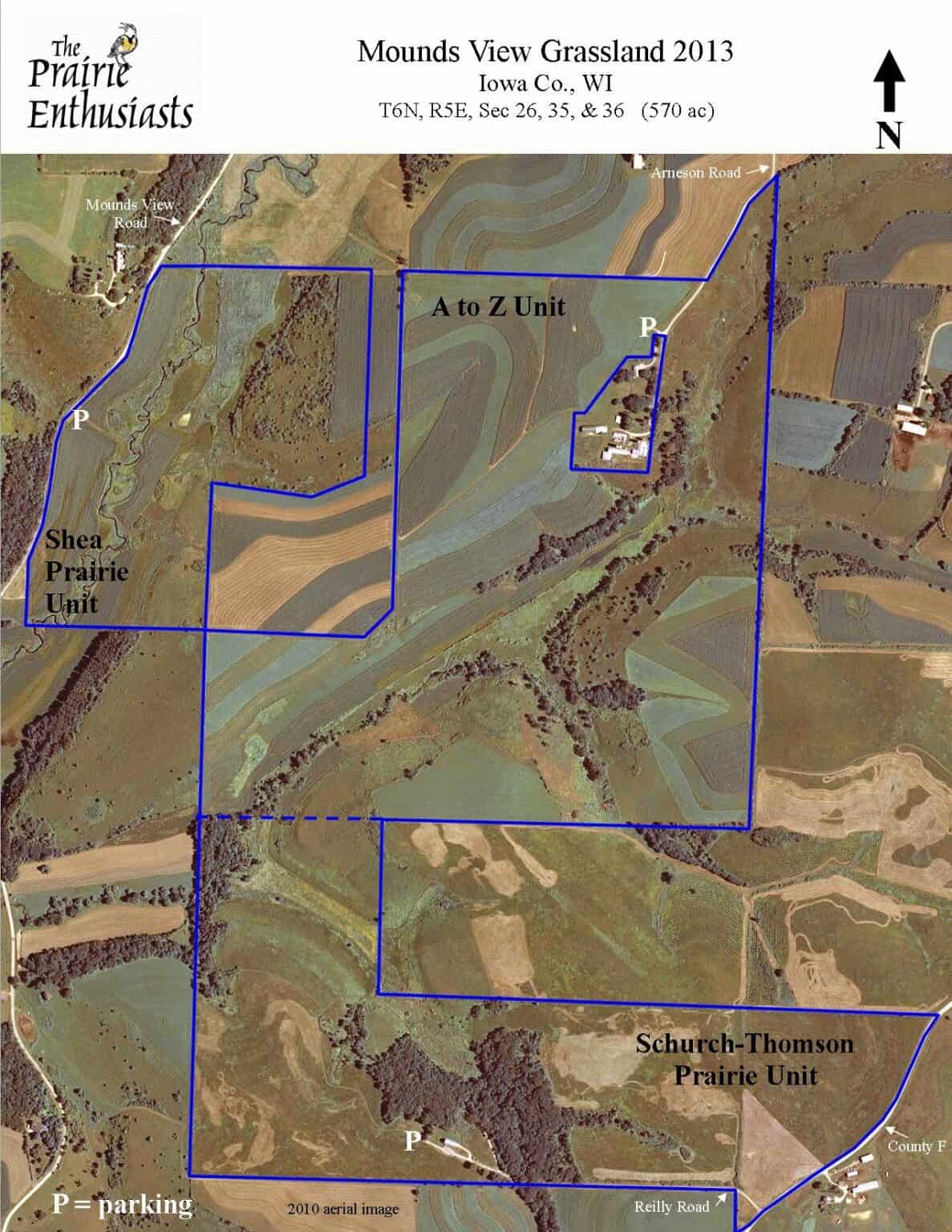
The preserve lies along Reilly Road off of County Highway F, south of Barneveld. Parking location denoted with a “P” on the map. Address is: 8624 Reilly Rd, Barneveld
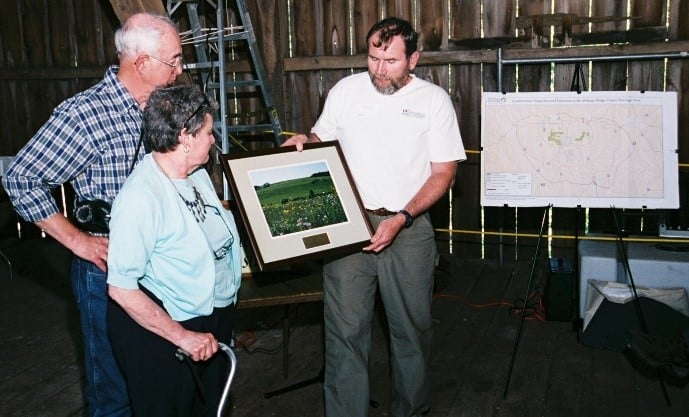
The Prairie Enthusiasts volunteers have been working with Dennis and Joan Schurch Thomson for about 20 years to restore the original prairies and savannas on the farm. The Schurch-Thomson Prairie was dedicated during a ceremony on June 9, 2007.
by The Prairie Enthusiasts | Jul 19, 2023
Photo credit Steve Huebner.
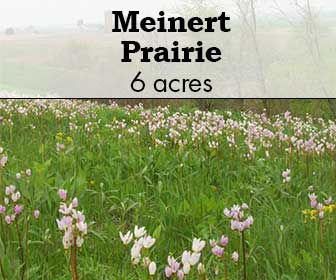
Meinert Prairie is a small prairie located in the very far corner of the Allen Meinert farm. The entrance is located just about 200 feet west of Siedschlag Road on Walnut Grove Road in Section 21 of Rock Run Township of Stephenson County. The map coordinates are 42 degrees 29’ and 48.33’’ North and 89 degrees 27’ 55.27’’ West. The elevation is 1030 feet above sea level.
It was never tilled as there is a large ditch that prevented access by farm tractors allowing the native flora to survive. Allen Meinert told of potatoes grown there a few years.
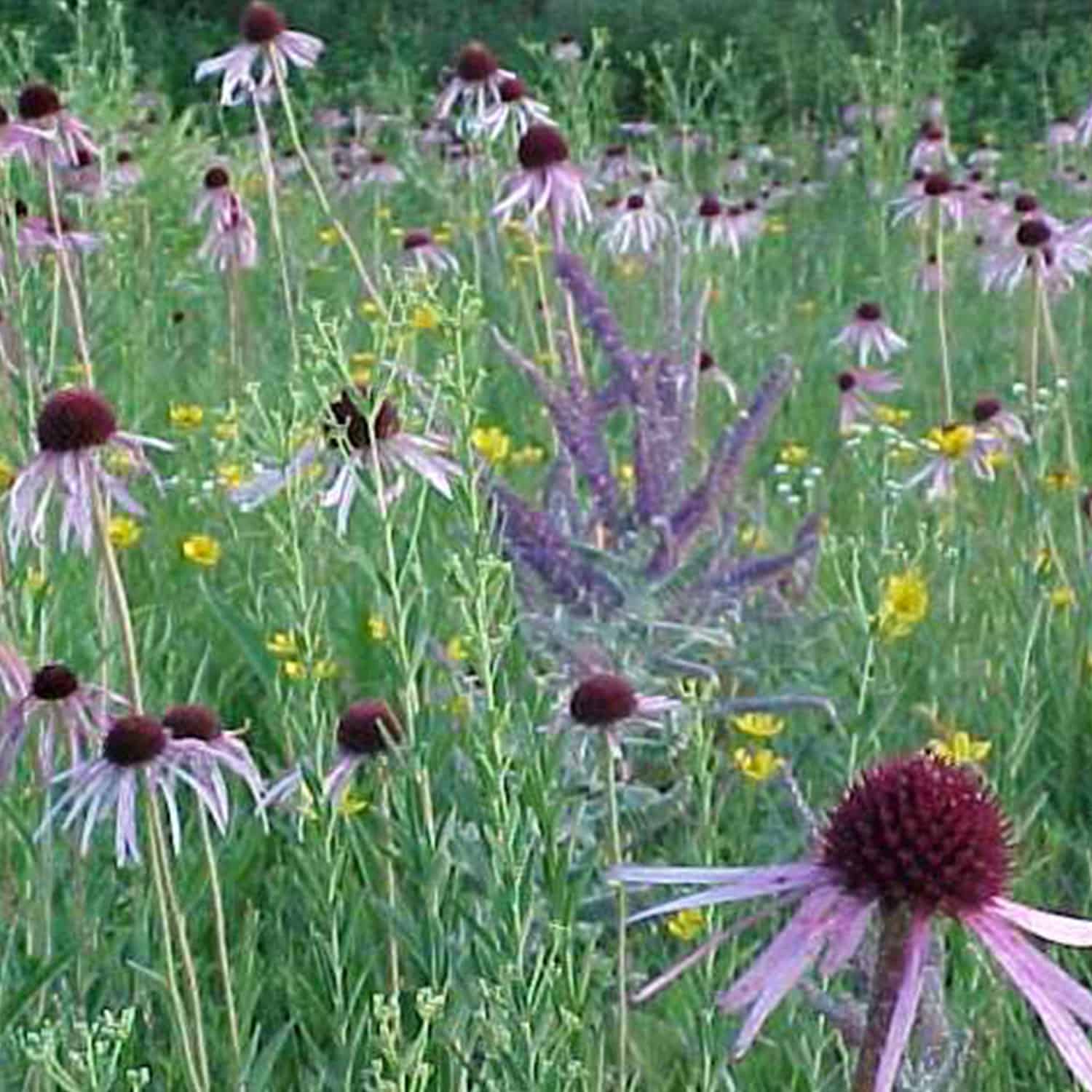
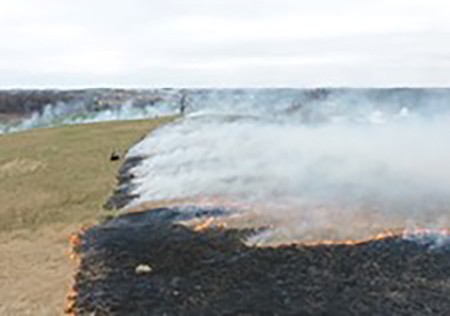
The Meinert Prairie is managed by volunteers of the Prairie Enthusiasts to allow the 75 plus native species to thrive. Our management of Meinert Prairie includes removing weeds and brush that threaten the native flora. We do prescribed burns as needed to ensure native grasses and forbs the chance to thrive.
Management
Management at Meinert prairie will include pulling sweet clover and cutting sumac. Seeds will be collected and spread to the South and West sides as a buffer to the original prairie site. Lots of trees and brush have been removed along with wire rolls and posts.
The Meinert Prairie is managed by volunteers of the Prairie Enthusiasts forever to allow the 75 plus native species to thrive. Our management of Meinert Prairie includes removing weeds and brush that threaten the native flora. We do prescribed burns as needed to ensure native grasses and forbs the chance to thrive.
The parcel is regularly burned, but only about one third at one time to insure invertebrates have a chance to survive.
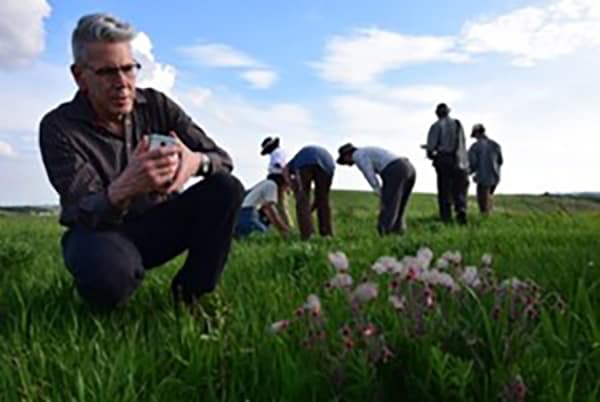
We do tours led by knowledgeable volunteers to promote education and appreciation of fire dependent ecosystems. Our volunteers also have assisted others in their scientific studies of prairie plants, insects and other native life on the prairie.
by The Prairie Enthusiasts | Jul 19, 2023
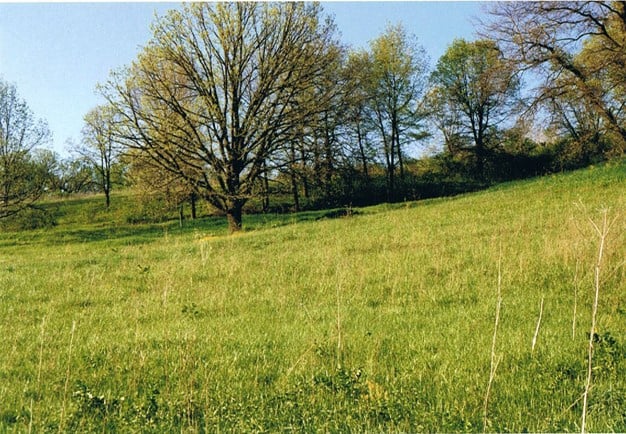
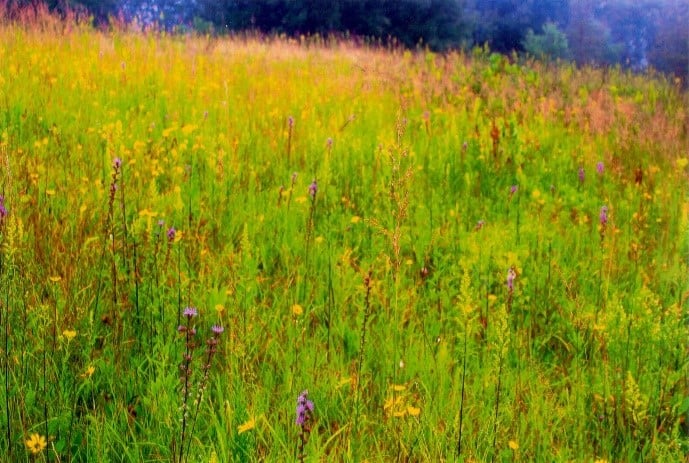
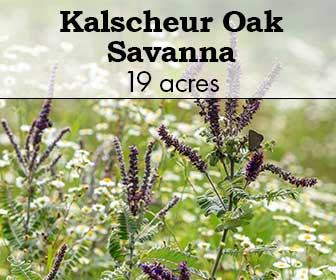
This 19.06 acre property harbors 212 native plant species, including a population of the rare Hill’s thistle, a Threatened Species in Wisconsin. In the southern part of the property is a cold water stream and wet meadow which rises up to meet a south facing slope of St. Peter’s sandstone covered with dry prairie and oak savanna. As you go to the highest points of the property, there is a thin cap of dolomite over the sandstone. Where the uplands meet the wetlands there is ground water discharge forming springs and perched wetlands raised several feet above the rest of the wetland habitat.
SITE STEWARDS
PAT HANDRICK
608-354-3467
ACCESS & DIRECTIONS
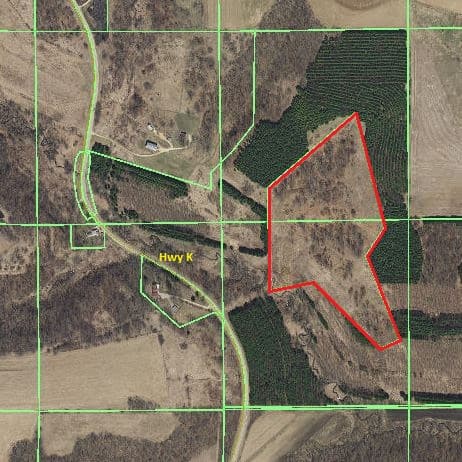
The Kalscheur Oak Savanna is located on County Highway K, two miles south of the village of Hollandale in Iowa County, Wisconsin. The property is landlocked, but TPE does have an undeveloped right-of-way which permits legal access.
Allowed:
- Outdoor Recreation
- Hunting: Wild Turkey (spring season only; no permit or reservation required)
- Hunting: White Tailed Deer (bow, crossbow, and muzzleloader season; no permit or reservation required)
- Hunting: White Tailed Deer (gun season; permit and reservation required)
This site had served as a pasture for many decades. In the early 1990s, volunteers with the Southwest Wisconsin Chapter of TPE, while surveying for remnants, discovered prairie vegetation here. They approached owner James Kalscheur about the possible purchase of the parcel. In December 1994, with kindly assistance from the Natural Land Institute and the new WI State Stewardship Grant Program, we completed the purchase. Mr. Kalscheur then generously noted cash back to TPE for a land management endowment for the site.
In January 1996, restoration began in earnest when Southwest Wisconsin Chapter member David Lowe felled around 150 trees and fellow prairie enthusiast Ron Nieman removed all of the downed trees with his tractor and skidder. Trees removed included black cherry, slippery elm, basswood, walnut, paper birch and aspen. Some trees were processed at a saw mill and the remainder was processed into nearly 30 cords of firewood by TPE volunteers. Since then, many additional hours have been spent clearing small trees and shrubs. In the summer of 1996, 150 purple milkweed seedlings were planted on the site. In the fall, portions of the site experienced fire for the first time in many years.
Removal of woody vegetation and exotic species will remain high priorities for years to come. A carefully planned fire regimen will also be applied.
by The Prairie Enthusiasts | Jul 19, 2023
Iris Drive
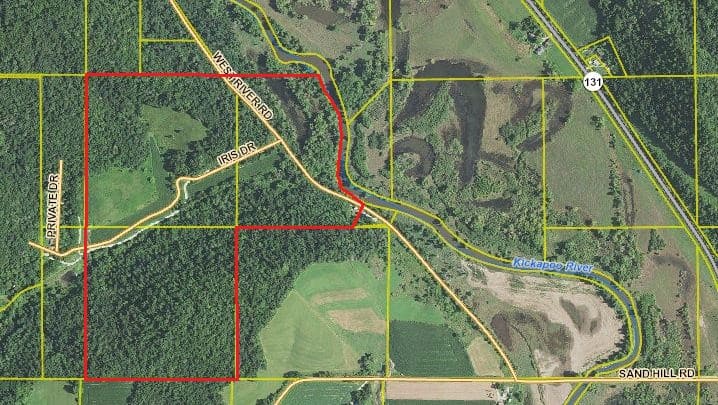
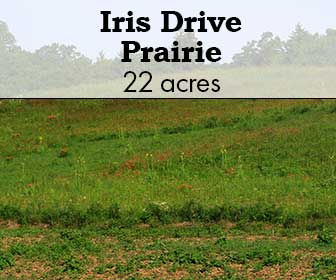
Iris Drive is a site managed by the Southwest Chapter and was found by TPE Director Emeritus Gary Eldred. Starting in the fall of 2012, Gary developed a working relationship with the original owner of the site, who agreed to allow Gary to begin managing the property. The site, which totals 107 acres includes approximately 20 acres of remnant prairie located on south facing slopes. Since 2012, TPE volunteers have cleared all the remnant prairie present and have continued to work on a regular basis.
SITE STEWARD
BOB RETKO
(262) 384-0081
ACCESS & DIRECTIONS
The address for the site is 18663 West River Road, Gays Mills, WI 54631. From the village of Gays Mills, WI drive west on HW 171. As you cross the Kickapoo River take the immediate next left onto River Road. Continue south for 2 miles to Iris Drive on your right. You have now arrived at the property. The rural route number is posted along River Road a few hundred feet south of the intersection. To access the prairies, turn right onto Iris Drive and continue for 1,000 feet. There is a farm lane entrance on your right that you can turn into and park off of the road. As you walk north on the farm lane, the eastern prairie that has been restored since 2012 is on your right, and the western prairie that has been restored since 2016 is on your left.
Description & Significance
Iris Drive is located in central Crawford County, WI in the lower Kickapoo River Valley. The area is known as an important bird area that is contiguous to the Lower Wisconsin River Way several miles to the south. The property is approximately 4 miles north of the Hogsback Prairie, owned by The Nature Conservancy and a WI dedicated State Natural Area. Adjacent to Iris Drive to the east is the WI DNR’s lower Kickapoo Wildlife Area, and 0.5 miles to the north is Mississippi Valley Conservancy’s Kickapoo Bottoms property.
The lower Kickapoo River valley and its tributaries contain numerous south facing slopes that house many high quality hill prairie remnants. Most of these are privately owned and are so steep and bare that they continue to host a diverse amount native species that are present amongst the scattered cedar and prostrate juniper.
The property also includes a northern sloped forest that includes some limestone outcropping and a good cover of mature oak species. East of River Road the property fronts along the Kickapoo River for a 0.5 miles.
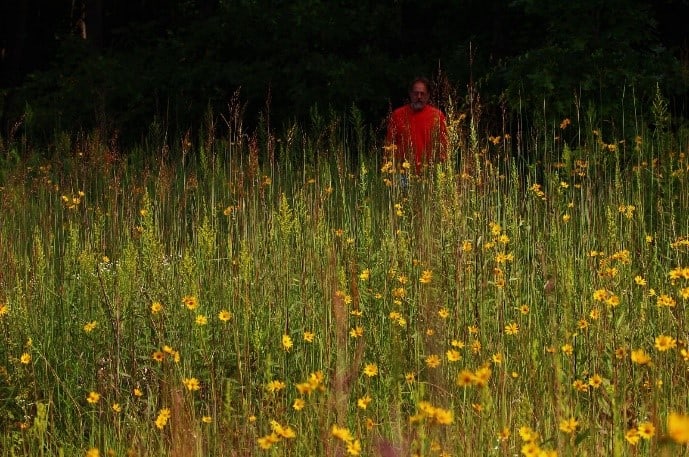
The best times to visit and see wildflowers are spring and late summer. In early May, there is a large population of puccoons, violets, sand cress and some cream baptisia. Later in autumn you can see all the tall grasses, nine kinds of asters, five species of goldenrods, gentians and blazing stars. The main remnant area has been cleared by local volunteers. Prior to restoration efforts nearly 80% of the area was covered with raspberries, honeysuckle and sumac.
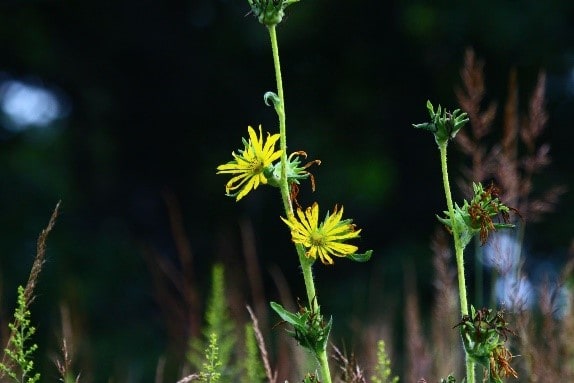
There are currently populations of conservative uncommon species characteristic of dry-mesic to mesic prairie, including, cream indigo, white prairie clover, butterfly milkweed, compass plant, leadplants, and New Jersey tea. Purple Milkweed has been observed in the past, and it is anticipated that with more active management and inventorying that more rare species will be observed. Insect and bird inventories have not been conducted.
Either the Swenson Hill or nearby Drakenburg prairie were included in the description and analysis of dry-mesic prairies in John Curtis’s seminal work The Vegetation of Wisconsin (1956). Notes within the 1990 TNC description of the sites and the St. John’s Complex suggest that Olive Thomson visited these sites in the 1950’s. (Read more about Dr. John and Olive Thomson, premier conservationists, environmental education leaders and naturalists.)
Allowed:
- Hunting
- Fishing
- Trapping
- Canoeing
- Outdoor Recreation
Not Allowed:
- Collecting plants, rocks or animals without permission from The Prairie Enthusiasts
The property was purchased by TPE in June of 2016 with funds from the WI DNR Knowles Nelson Stewardship Program. The property already had a public hunting and fishing easement placed on the property in the 1960’s. In 2012 Gary Eldred discovered the remnants and contacted the previous owner who lived out of state. Since acquiring the property, volunteers have been clearing brush, treating re-sprouts, and conducting prescribed burns.
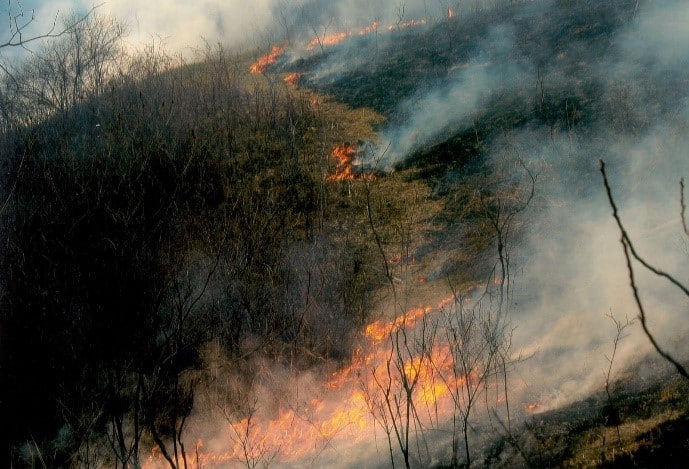
Management efforts by the Southwest Chapter are spearheaded by Gary Eldred and Site Steward Bob Retko. A group of volunteers meet 2-4 times per month to manage the property. Interested people should contact Bob Retko by email (retko2001@yahoo.com) or phone (262) 384-0082 to inquire about their next work party. Since the site was discovered, the eastern remnant was the first area to be cleared of encroaching trees and brush. Follow-up mowing and herbicide application of re-sprouts have significantly begun to diminish the brush, and with regular prescribed burns, the remnant is beginning to respond.
by The Prairie Enthusiasts | Jul 19, 2023
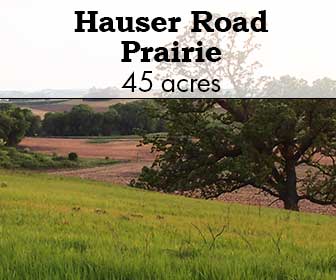
Located in just north of Waunakee, WI, the 45-acre Hauser Road Prairie is the largest remaining single piece of the original 100-square mile Empire Prairie that once covered much of what is now northern Dane County and southern Columbia County.
The site’s ridge top hill has many areas of shallow soil over dolomite bedrock, and the abundance of glacially-deposited boulders prevented it from being tilled, so it was lightly grazed for 100 years until the 1990’s. Hauser Road Prairie is only 15 miles from downtown Madison, and has the unusual feature for a prairie remnant – a view of the Wisconsin state capitol from the hilltop! This is an important natural feature in a rapidly developing area.
SITE STEWARDS
RANDY HOFFMAN
608-849-4502
ACCESS & DIRECTIONS
Visitors are welcome. Hauser Road Prairie is located 4 miles north of Waunakee, WI on the south side of Hauser Road. From the junction of Hwys 19 and 113 in Waunakee, take Hwy 113 north 2.5 miles to Madigan Road (right turn), follow Madigan Road for 1 mile to Hauser Road, turn right. Site is 0.2 miles on the right. Park along the road well off the pavement.
Description & Significance
A total of 148 prairie plant species have been found on site so far. Some prairie plants sensitive to grazing apparently survived in a narrow strip between the plow line and the fence or as very rare, scattered individuals in some cases. Over the past 30 years these rarities are starting to recolonize the former pasture. They include prairie phlox, leadplant, compass plant, rosinweed, rattlesnake master, and prairie blazingstar. For more details, see this article from March 2016 Prairie Promoter.
There are also populations of two state-threatened plants, ten species of specialized leafhoppers found only on prairie remnants, as well as badgers and an array of grassland birds.
Notable Plant Species Include:
- shooting star
- pasqueflower (Anemone patens)
- prairie violet (Viola pedatifida)
- birdfoot violet (Viola pedata)
- prairie smoke (Geum triflorum)
- cylindrical (dwarf) blazingstar (Liatris cylindracea)
- showy goldenrod (Solidago speciosa)
- stiff gentian (Gentianella quinquefolia)
- prairie gentian (Gentiana puberulenta)
- purple prairie clover (Dalea purpurea)
- prairie gentian (Gentiana puberulenta)
- stiff gentian (Gentianella quinquefolia)
- Hill’s Thistle (Cirsium hillii) – state-threatened
- edible valerian (Valeriana edulis)
- smooth white lettuce (Prenanthes alba)
- heart-leaved golden Alexander (Zizia aptera)
- and various goldenrods and asters
Volunteers are vital to the management of this prairie. Join us for a workday on Hauser Road Prairie and the other prairie remnants in the area to collect and plant seed, control weeds and brush, conduct biological monitoring, and help with other management activities. For more details, contact Randy via
email.
Allowed:
- Walking
- Bird watching
- Hunting & trapping (all species; contact site steward)
- Cross country skiing
Not Allowed:
- Bicycles or vehicles
- Pets
- Campfires
- Collection of seed, flowers, plants or the removal of rocks or other natural objects.
In July of 2014, The Prairie Enthusiasts took on the ownership, care, and management of Hauser Road Prairie. With grants from the Wisconsin DNR Knowles-Nelson Stewardship Program and the Dane County Conservation Fund and a loan from The Conservation Fund (a national non-profit), TPE acquired title to this impressive big sky ridge of natural heritage.
The permanent protection of Hauser Road Prairie was the culmination of 22 years of effort by The Prairie Enthusiasts and the Wisconsin Department of Natural Resources (WIDNR) Natural Areas Program. In the early 1980s, the conservation community became aware that prairie was surviving in the 45-acre pasture along Hauser Road. In 1992, TPE volunteers reached out to the new owners of the site to inform them of the treasure they had and offered advice, help and encouragement in conserving the site. From 2000 to 2014, the Natural Areas Program leased the land and conducted several prescribed burns and some brush control. TPE also mowed sweet clover and provided other weed control measures during this time.
In 2013, the owners, Mike and Susan Zauner, decided they would like the site permanently protected. The Natural Areas program negotiated with them to buy the site and to designate it a State Natural Area, but the project was not accepted by the WI DNR administration. The Prairie Enthusiasts offered to step in and acquire the site by applying for grants from Knowles-Nelson Stewardship Program and the Dane County Conservation Fund, which covered three-quarters of the acquisition expenses. TPE was able to pay the remainder thanks to generous donations from TPE members from across the
organization.
With a grant from the U.S. Fish & Wildlife Service Private Lands Program and the efforts of site steward Randy Hoffman and other volunteers, great progress has been made at Hauser Road Prairie removing trees and brush from the preserve.
The years of grazing took its toll on the composition of the prairie vegetation, eliminating some species, reducing others and allowing non-native grasses to invade, especially in the deeper soils areas. However, much of the original prairie ecosystem survived and has been making a good recovery since the cessation of grazing and the implementation of an occasional prescribed burn from 2000 to 2013.
Fortunately, there are several high-quality small prairie remnants within a few miles of the preserve harboring the full range of prairie species native to the area. Our management goal for Hauser Road Prairie is to bring seed from those remnants to the preserve to accelerate its recovery and to reintroduce lost species such as wood lily, wood betony and rough white lettuce. With burning and inter-seeding, we hope to bring back most, if not all, of the site’s original diverse prairie plant community over the next 30 years.