How It’s Made: Parsnip Predators

How It’s Made: Parsnip Predators

How It’s Made: Parsnip Predators

Summer 2024 Chapter Update by Rebecca Gilman and Charles Harmon. Photos by Rebecca Gilman.

Nick Faessler, Jerry Newman, Den Oostdik, Chris Roberts, Fred Faessler and Tom Mitchell with a crate of finished Predators

What’s a Prairie Enthusiast to do when the skies of February turn gloomy? Members of the Prairie Bluff Chapter spent the short days of winter—as they have for years—producing the tool that tames the nightmare that is wild parsnip (Pastinaca sativa). 

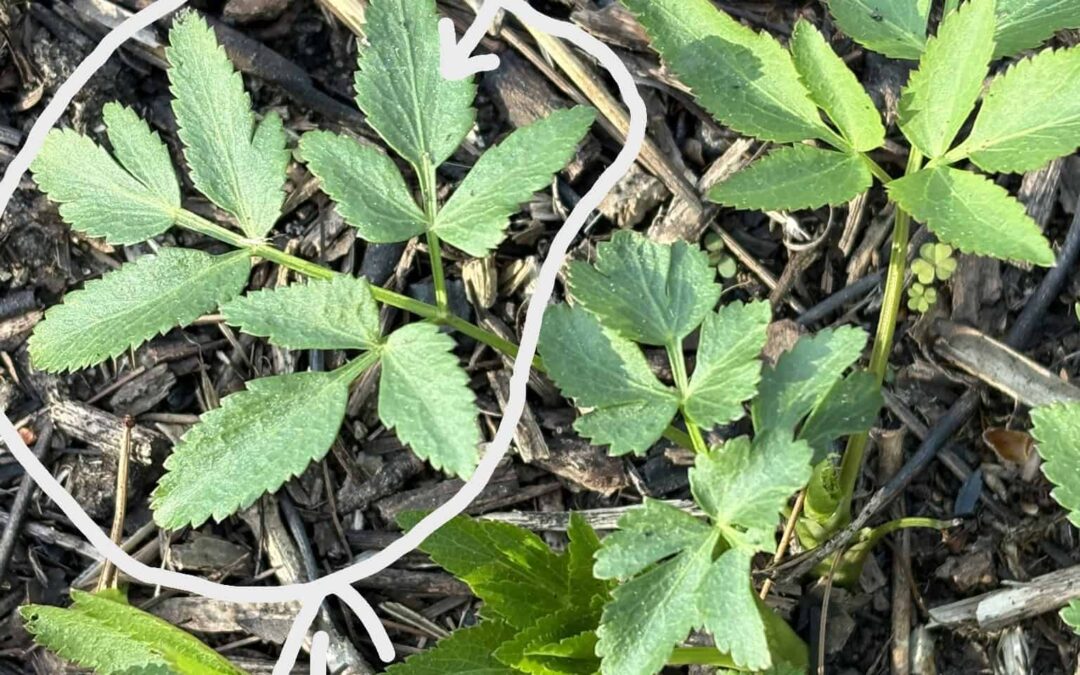
If you’re lucky enough not to know it, wild parsnip is an aggressive invasive that spreads like wildfire and burns like it too. Handling the plant without proper protection can be dangerous. If an unsuspecting weed-puller gets sap from wild parsnip on their skin and the sap is then exposed to UV light, it causes phytophotodermatitis, or burn-like blisters. That’s the scenario that faced George and Kay Barry, stewards of a prairie planting at Honey Creek Park in Monroe, WI, in the early 1990’s. Presented with a field full of parsnip, Kay turned to The Prairie Enthusiasts for help. 

As chapter member Rob Baller recalls, “I contacted Mark Martin, (of the Wisconsin DNR), and asked how the State Natural Area crew treated parsnip. He told me that crew members sharpen spades, and on prairie remnants they jab the plant a couple inches from the base, angling the blade so it intercepts and slices the root an inch or two below-ground. Then, with gloves on, they pull out the severed plant. A parsnip with the root crown so severed will not resprout.” 

Rob took Mark Martin’s idea and ran with it, straight back to his workbench. Using scrap metal, the handle from an old snow shovel, and plenty of nuts and bolts, he fashioned the prototype of what we now call the “Parsnip Predator.” After trying it out, “Kay was all smiles,” Rob says.   “’Can you make more of these?’ she asked.”   

Rob turned to Nick and Fred Faessler and asked the brothers if they thought the tool could be put into mass production. Another chapter member, Julia O’Reilly, saw commercial potential in the tool and volunteered to be the implement’s first dealer. Nick and Fred retired to Nick’s shop and began experimenting. Eventually, they settled on a modified number two shovel with a notched blade as the best design. The tool allows users to cut the parsnip root crown and is strong enough to pry the parsnip out of the ground once severed.  (“Everyone wants to pry,” Rob notes.) 

Nick Faessler remembers that they made the first batch of 30 Parsnip Predators with no idea of whether or not any of them would sell. The predator was an instant hit, however. Over the years, the Prairie Bluff Chapter saw sales increase yearly and shipped the tool from coast-to-coast. Now sales and shipping are handled by The Prairie Enthusiasts awesome staff in Viroqua, with Prairie Bluff Chapter and the organization as a whole sharing the profits. 

Nick Faessler cuts Predator blades

Chris Roberts secures handles

This past February, a visitor to Nick’s shop witnessed what is now a well-oiled, Parsnip Predator assembly line. Nick begins the process by cutting a notched tip in the shovel’s blade with a plasma-cutter. At the next station, the rivets that attach the shovel’s handle to the blade are ground off so that the handle can be turned 90-degrees and carefully aligned. During the next step, a new hole is drilled in the handle and a bolt is inserted, tightened and ground downAnother group of volunteers then polishes the sharp edges on the blade and applies a protective coating of paint. The final step is to brand the handle of each shovel with the registered “Parsnip Predator” trademark. (The “Parsnip Predator” moniker was coined by Rob Baller’s landlord and adopted in lieu of another suggestion, “The Root Canaller.”) 

The group of volunteers on hand in Nick’s shop that day made the work look easy. But take it from that visitor who briefly wielded a power tool herself, crafting a Parsnip Predator is not as easy as it looks. Only through years of working together have the volunteers on hand that day—Nick Faessler, Chris Roberts, Billy Eisenhuth, Fred Faessler, Jackson Lancaster, Tom Mitchell, Todd Argall, John Ochsner, Steve Hubner, Den Oostdik and Jerry Newman—created a seamless system that was beautiful to behold.   

Over the years, sales of the Parsnip Predator have not only helped to eradicate a noxious invasive, they’ve also helped to preserve and protect the prairies we cherish. If you’re not already a proud owner of a predator, consider purchasing one today. Every Parsnip Predator is handmade in Wisconsin, with love. 

John Ochsner applies protective coats of paint

Den Oostdik grinds off the original bolts

This article appeared in the Summer 2024 edition of The Prairie Promoter, a publication of news, art and writing from The Prairie Enthusiasts community. Explore the full collection and learn how to submit your work here.

Positive Changes on Pleasant Bluff

Positive Changes on Pleasant Bluff

Positive Changes on Pleasant Bluff

Story by Eric Ressel, Minnesota Driftless Chapter volunteer 

Drone image of prescribed burn at Pleasant Bluff.

As I approached Pleasant Bluff, just south of Winona, MN, I asked myself if this was the same location I visited a few years earlier, since this hillside was once densely infested with an onslaught of buckthorn and encroaching eastern red cedars. Since then, the Minnesota Driftless Chapter of The Prairie Enthusiasts has contributed substantially to ecological restoration on this impressive prairie remnant. Over 18 acres along the spine of this formidable bluff, which sits above the banks of the Mississippi River, have been restored due to the diligent, hard work from folks like Gabe Ericksen, who has spent countless hours traversing the steep terrain to cut and remove the cedars, eradicate invasive brush, and implement numerous prescribed burns over the years. Gabe is a restoration practitioner through his contracting business, Land Spirit Design Landscaping, and he has been the tip of the restoration spear on Pleasant Bluff, assisted by the landowners and the Minnesota Driftless Chapter.

At a mid-March occasion in 2023, a diverse crew was assembled to assist Gabe with an 11-acre prescribed burn on this precipitous goat prairie. Thirty people of all ages and backgrounds, from children to seniors, joined together to conduct a safe and successful prescribed burn. Many of the participants were members of the Minnesota Driftless Chapter of The Prairie Enthusiasts, but many of the participants weren’t. A substantive way in which the Minnesota Driftless Chapter of The Prairie Enthusiasts contributed to the burn was by loaning the Chapter’s prescribed burn equipment to Gabe for the day’s burn.

The slope of this lofty bluff approaches 60% and is nothing short of intimidating. On this day, thanks to restoration efforts, the fuel-bed consisted primarily of native warm-season grasses and wildflowers, with some scattered pockets of shrubs. The climb up the mowed firebreak was grueling for the whole group. At the top, along the ridge overlooking the Mississippi River, Steve Winter having been designated as the burn boss by Gabe, provided the crew with an overview of why we burn such fire-dependent ecosystems, and he demonstrated fire behavior on steep terrain. He also highlighted numerous safety considerations, such as tumbling rocks and tripping hazards. Steve educated the group on the importance of clear communication, being familiar with the weather and environmental conditions, such as the optimal wind direction and humidity, and being aware of the safety zones and escape routes at this particular site. Once everyone confirmed they were comfortable implementing the burn, we broke into several smaller crews that were positioned along the ridge and others down the steep firebreak on the northwestern side. 


From the ridge we patiently waited for the progression of the fire from the ignition point, which was slow-going due to the calm conditions. My crew discussed strategy and stayed in contact with Steve and Gabe over the radio. We kept a careful watch as the gradually growing flames moved diagonally down the hillside. However, with barely a breeze the fire crept ever slowly, so Steve instructed me and fellow member Bill Hovell to ignite a shirt strip fire directly down the slope, which allowed the flames to spread more quickly in both lateral directions in the dense Indian grass (Sorghastrum nutans), side-oats grama (Bouteloua curtipendula), and little bluestem (Schizachyrium scoparium). Bill and I worked our way down the steep slope towards the county road on the lower edge of the prairie where we rendezvoused with our other crew members, whom I literally passed the torch to so they could get some ignition experience. It was in that moment that I watched my greener group members become less fearful, and more comfortable and excited to use fire as an ecological tool! 

In the meantime, another crew worked the line along the northern edge of the burn unit as the flames continued to consume the fuel down the slope. In the heat of the moment, the landowner, Paul Richards, was able to capture some stunning drone footage. I wondered what the children, who were positioned in a safety zone at the top of the ridge, and upwind from the fire, were thinking as they watched the fire grow from a safe distance. I’m sure this experience proved to be exhilarating, educational, and memorable for them. Along with the children, I hoped our new participants and the students that attended Steve’s burn school would also be inspired to continue with the restoration legacy. 

Volunteer Gabe Ericksen burning. Photo by Laurie Arzaga.

Our crew continued to walk along the lower edge. We eventually met up with Gabe and his partner, and we extended the line as far east as possible. As the heat intensified above us and behind us, we ducked down into the refuge of a safety zone represented by a buckthorn thicket, which had little flammable fuel on the ground, as the flames progressed through the portions of the burn unit. I turned around and gave a gleeful smile as the sweltering flames made contact with many stems of the aggressive woody plants that are constantly trying to establish in prairies such as the one we were burning that day. We then moved again to our county road safety zone farther below, which we followed back to meet the main group. Gabe once again targeted the buckthorn as he ignited the strip of vegetation along the roadside edge, allowing the fire to burn up the slope and make contact with many buckthorn stems. We allowed the fire to spread up the slope into a grove of old white oaks that will surely benefit from the fire with more space to stretch their limbs.

We met to start mopping up and to review the outcome of the successful burn. Most of the group members then left, but I was greatly impressed by those devoted enthusiasts who decided to stay well into the evening. Gabe and Josh Lallaman led this late-night effort, which was carefully supervised into the early morning hours, and they were able to effectively burn an additional 3-acre area. The night burn looked equally serene and intensely dramatic. To me, this illuminating scene was the perfect illustration of the power of fire. It showed why prescribed burning promotes creation through destruction, making it an essential tool to encourage natural rejuvenation and regrowth, which helps to maintain prairies and savannas by preventing their conversion to other vegetation communities. Once again, demonstrating that fire is the ultimate management method to set back undesirable invasive vegetation, while stimulating the growth and reproduction of native grasses and wildflowers.  

As I drove south to head home along the mighty river, I reflected on the progress of this goat prairie from its previous poor condition, choked by buckthorn, to a thriving, fully functional ecosystem that is driven and dependent on fire. Now this unique ecological community can thrive in the southwestern-facing sunshine, while supporting an array of rare plant and animal species. I contemplated the logistics and timeframe for completing restoration efforts on similar sites, since the majority of the goat prairies in the Driftless Area, along with associated oak savannas and woodlands, have become degraded in part because of altered fire regimes. I thought of the historic photos portraying a landscape where trees weren’t as abundant along the Mississippi River Valley. Those historic conditions were largely due to frequent landscape burning by Indigenous Peoples. As Indigenous Peoples were displaced by European Americans, Indigenous land stewardship practices like prescribed burning were also displaced. Fires were often viewed as harmful by European Americans, and woody vegetation increased greatly in the Driftless Area, including on Pleasant Bluff. With the increasing prevalence of woody vegetation, including invasive species such as buckthorn, we’re witnessing a correlated decline in health of rare plant communities and an overall decrease in plant diversity.

“It made me proud to be a part of such an ambitious chapter of like-minded, well-educated enthusiasts who are passionate about ecological restoration and conservation education.”

The Pleasant Bluff prescribed burn was just one example of how dedicated members of the Minnesota Driftless Chapter are eager to save ecosystems. Their tireless restoration work, outreach efforts and mentorship are also an inspiration for others. It made me proud to be part of such an ambitious chapter of like-minded, well-educated enthusiasts who are passionate about ecological restoration and conservation education.

I want to thank the Pleasant Bluff landowners, Paul and Melissa (Missy) Richards, for their ongoing involvement and enthusiasm for the restoration and management of Pleasant Bluff. Their commitment to conservation and stewardship of the beautiful bluff prairies, woodlands, and oak savannas on their Winona County property is exemplary. Missy summarizes the continual progress of their beloved prairie: “We have deep appreciation for all the collaborative work between The Prairie Enthusiasts volunteers, experts in the field, U.S. Fish and Wildlife Service and Land Spirit Design Landscaping. We recognize and appreciate being a part of something so much bigger than us. It gives us the opportunity to showcase the importance and impact of land restoration to our neighbors, family and friends. The ability to have a community partner with us on this journey makes Pleasant Bluff so much better.”


You, too, can follow their inspirational journey on the Richards’ Instagram page (@pleasantbluff_winonamn). Since the burn last spring, with help from Gabe, the Richards have continued their brush management efforts to lessen the buckthorn pressure across additional areas on the bluff. They have also documented dozens of native wildflowers on the bluff and often find new species. We encourage you to follow the Minnesota Driftless Chapter Facebook page to learn what additional prescribed burns and restoration efforts will take place.

I’ll be thrilled for the opportunity to return to this unique and productive dry bluff prairie to work once again with our devoted chapter members and these dedicated landowners, and to observe the positive and dynamic changes to this ecological gem along the river. On behalf of the Minnesota Driftless Chapter, we hope you can come join us.

Seven people and a dog gathered around a table and smiling at the camera.

Nighttime prescribed burn mop-up. Photo by Joshua Lallaman.

This article appeared in the Spring 2024 edition of  The Prairie Promoter, a publication of news, art and writing from The Prairie Enthusiasts community. Explore the full collection and learn how to submit your work here

Prairie Enthusiasm Ignites in the Twin Cities

Prairie Enthusiasm Ignites in the Twin Cities

Prairie Enthusiasm Ignites in the Twin Cities

Story by Kysh Lindell, The Prairie Enthusiasts AmeriCorps Member

The Prairie Enthusiasts is thrilled to announce the formation of a new chapter! The Minnesota Oak Savanna Chapter will be serving Anoka, Carver, Dakota, Hennepin, Isanti, Ramsey, Scott, Sherburne and Wright Counties.

Though a third of Minnesota was once prairie, less than 2% of Minnesota’s native grassland habitats remain. The Minnesota Oak Savanna Chapter is so named because of the historic abundance of oak savanna ecosystems in what today comprises the greater Minneapolis-St. Paul metro area. These open grassland habitats are comprised of scattered oak trees and an understory of sun-loving prairie plants, both of which support fascinating native wildlife like the state-endangered Henslow’s sparrow and federally-endangered rusty patched bumblebee. Though agriculture and urban development have largely replaced these essential native ecosystems, a few remnants—extraordinarily rare sites that have been largely undisturbed and retain most of their original plant communities—have persevered.

Wild lupine (Lupinus perennis) by Alex Carroll, Minnesota Oak Savanna Chapter Contact.

Inspired by an outpouring of interest in caring for native ecosystems, the Chapter is invested in providing hands-on education, training and volunteer opportunities for everyone in the local community, regardless of experience level. Attendees at local education events and work parties can expect to learn what makes prairie so unique, how to identify and control invasive plant species, how to enhance habitat for pollinators and how to conduct prescribed burns. Along with these tangible skills, the Chapter strives to inspire hope. “In the face of climate change it’s easy for people to feel discouraged, dispirited and powerless. We believe that creating community, exploring the wonders of our native places and joining together in skillful work to protect and restore such places is uplifting, hope-inducing and rewarding,” says Minnesota Oak Savanna Chapter Board Representative Greg Heberlein.

Beyond the proven environmental benefits of stewarding native ecosystems—from providing critical habitat for threatened wildlife and enhancing soil health to combating carbon emissions and improving water quality—Minnesotans stand to gain a priceless connection to the natural communities in their own backyards. “I grew up in Minnesota, and I lived there for 40 years without really knowing what a prairie was until a few years ago,” says Debra Behrens, Executive Director of The Prairie Enthusiasts. “Thinking of young people learning about the land around them and being inspired to care for that land… it’s truly a wellspring of hope.”

Please join us in welcoming our new Chapter and stay tuned for upcoming events! For more information, contact Info@ThePrairieEnthusiasts.org or click here to sign up for Chapter emails.


This article appeared in the Spring 2025 edition of The Prairie Promoter, a publication of news, art and writing from The Prairie Enthusiasts community. Explore the full collection and learn how to submit your work here.

Springtime Magic

Springtime Magic

Springtime Magic

Story and Art by Joe Maurer, Multimedia Artist, Chippewa Savannas Chapter Member

Dower Prairie Shooting Stars

Two springs ago, I got a call from Steve Hubner from the Prairie Bluff chapter. Joe you gotta get down here and see the blooms of these shooting stars.Steve specifically wanted me to create videos that would showcase the extravagant floral displays found in Butenhoff Prairie, Dower’s and Muralt Prairies, all of which had recently been burned earlier in spring of 2022.As is typical for me when I go to these landscapes, I tend to be a tad drifty. I am either hyper-focused on something or I want to see it all.A Prairie Enthusiast knows there really is no way to properly capture the life of the prairie. Its a highly personal experience.You just have to be there and let the landscape direct you.

Shooting with high frame rates to capture slow motion, I spent a lot of my time chasing queen bumblebees.With my camera on a long stick, I looked a bit like somebody with a metal detector obsession searching for treasures.Steve noticed my odd behavior and more than once remarked that I get overview shots to make sure people see and understand the expansiveness of the floral displays.”

When I got back home, I edited together footage that captured some of what I felt.The videos were good, but there was still another feeling I was trying to get to. In my restlessness to find that feeling, I printed out frames from the videos and taped them together on the walls of my art studio. I spent the next year and a half working on a dozen five-to-six-foot paintings derived from the film stills.I wanted that feeling of being at ground level where queen bees collect spring pollen and badgers forage.I am happy to share some of the outcomes of these efforts.   

My gratitude to Steve Hubner and Mary Zimmerman for the support during this project. Prairie Bluff and Southwest Chapters: thank you for keeping the magic alive in these landscape jewels we call prairies!   

Check out the videos mentioned in this article here:

Dower Prairie

Butenhoff Prairie

Muralt Prairie

To experience the magic of prairies firsthand, visit one of our protected sites.

This article appeared in the Summer 2024 edition of The Prairie Promoter, a publication of news, art and writing from The Prairie Enthusiasts community. Explore the full collection and learn how to submit your work here.

Dower’s Prairie

Nederland

Butenhoff Prairie 

Gentians of Eau Claire 

Management Toolbox: How to Prioritize Removing Invasive Species

Management Toolbox: How to Prioritize Removing Invasive Species

Management Toolbox: How to Prioritize Removing Invasive Species  

Story by Jim Rogala, President 

The purpose of this regular section of The Prairie Promoter is to keep proper management methods fresh in your mind. These short articles will sometimes reference past or future articles that contain details on the selected topic. Others will just be some food for thought. I encourage others to provide ideas for articles. You can send those ideas to me at jrogala@theprairieenthusiasts.org.

Prioritizing the sometimes-long list of invasive species to combat  

Oftentimes serving on a committee seems like a burden, albeit necessary. However, those meetings provide an opportunity for committee members to engage in interesting discussions. A recent Land Management Committee meeting found its members talking about strategies for dealing with a long list of invasive species in a management plan. Seldom do we have the resources to control all the invasive species present, so how do we prioritize our management actions?

Let me offer an example of a process that might be used. There are several factors leading to my decision to control a species. The first factor I consider is whether the species has shown up because of a disturbance. Many species take advantage of the lack of competition but can’t compete in the long-term as other more conservative plants establish. Some examples are Queen Anne’s Lace, Mullein, and Canada Thistle. I realize it is difficult to just ignore these and wait them out, but leaving each species can be justified. Both Queen Anne’s Lace and Mullein are biennials and could be controlled by pulling. However, remember why they showed up in the first place, and consider how the additional soil disturbance might perpetuate the problem. Canada Thistle is a deeply rooted perennial that one might suspect could outcompete establishing prairie plants but that is not the case, as it will succumb to solid competition from native plants given enough time. 

In contrast to species that respond to disturbance, there are those that can invade remnant sod. These pesky species require attention because once established they can spread and have an impact on prairie species. Some of these heavy hitters include Crown Vetch, Leafy Spurge, and Spotted Knapweed (I won’t list more because it can be depressing!). These usually require herbicide use, although there are some biocontrol methods that can at least keep populations controlled to some degree. 

I’ve just scratched the surface of this topic here. Look for an upcoming article by Dan Carter in which he will delve into the factors behind why to prioritize control of some invasive species over others.

What timescale do you plan at?

Keeping with the theme of topics discussed at Land Management Committee meetings, one of the committee’s primary responsibilities is to approve land management plans. These are required for all lands owned by The Prairie Enthusiasts, land with easements and areas with management agreements. These are long-term plans, although we are now planning to update them in a 10-year interval. We have also formally added some goals for a 10-year period in our management plans, a period that might require a substantial amount of work for new sites. Although these plans provide valuable context for conducting management, actions are usually planned at much shorter timescales. I like to develop 1-year plans that focus work for the upcoming year. These plans can be much more detailed and therefore provide the basis for scheduling specific work throughout the year. I’d encourage anyone managing lands to consider having plans at several scales, preferably written plans rather than ones just floating around in our heads.

This article appeared in the Fall 2024 edition of The Prairie Promoter, a publication of news, art and writing from The Prairie Enthusiasts community. Explore the full collection and learn how to submit your work here

Invasive Queen Anne’s Lace. Unknown photographer.