The Parsnip Predator: Handy and Homegrown

The Parsnip Predator: Handy and Homegrown

If you’re not familiar with the Parsnip Predator, you’re missing out!

Invented and produced by members of The Prairie Enthusiasts’ Prairie Bluff Chapter, the Parsnip Predator is a tool designed for prairie invaders like wild parsnip (Pastinaca sativa) and burdock (Arctium minus). It has gone through a few changes over the years, but it’s still just as useful for tackling taproots.

Now’s the time to “gear up” for another season of restoring healthy prairies. Visit our eStore and get your own Predator in time for the first wave of parsnip!

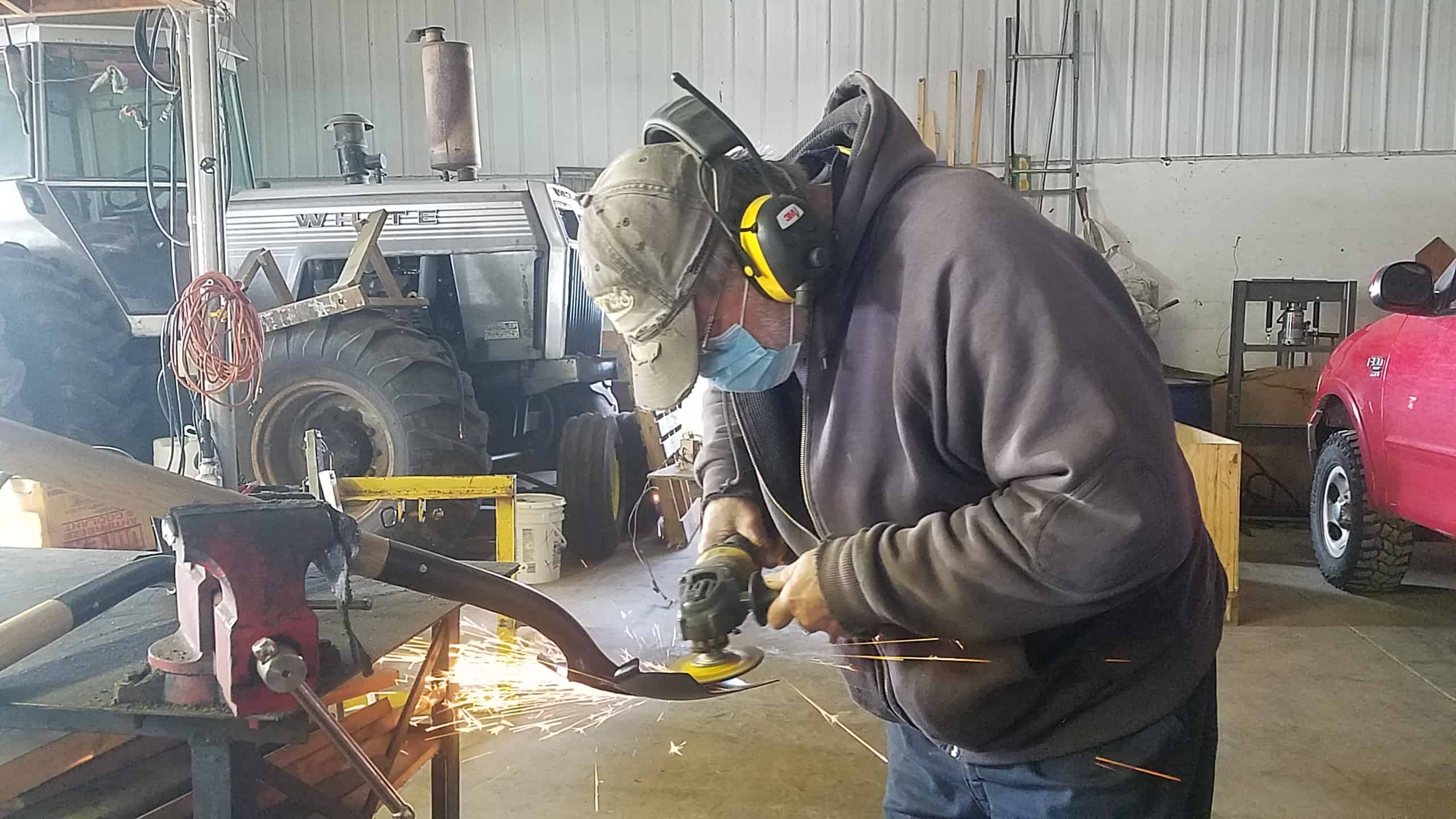
Thanks to The Prairie Enthusiasts volunteer Nick Faessler for the use of his workshop to create these useful tools, and for these photos showing the process.

Volunteer Gary Kleppe sharpens the notched blade of a Predator.

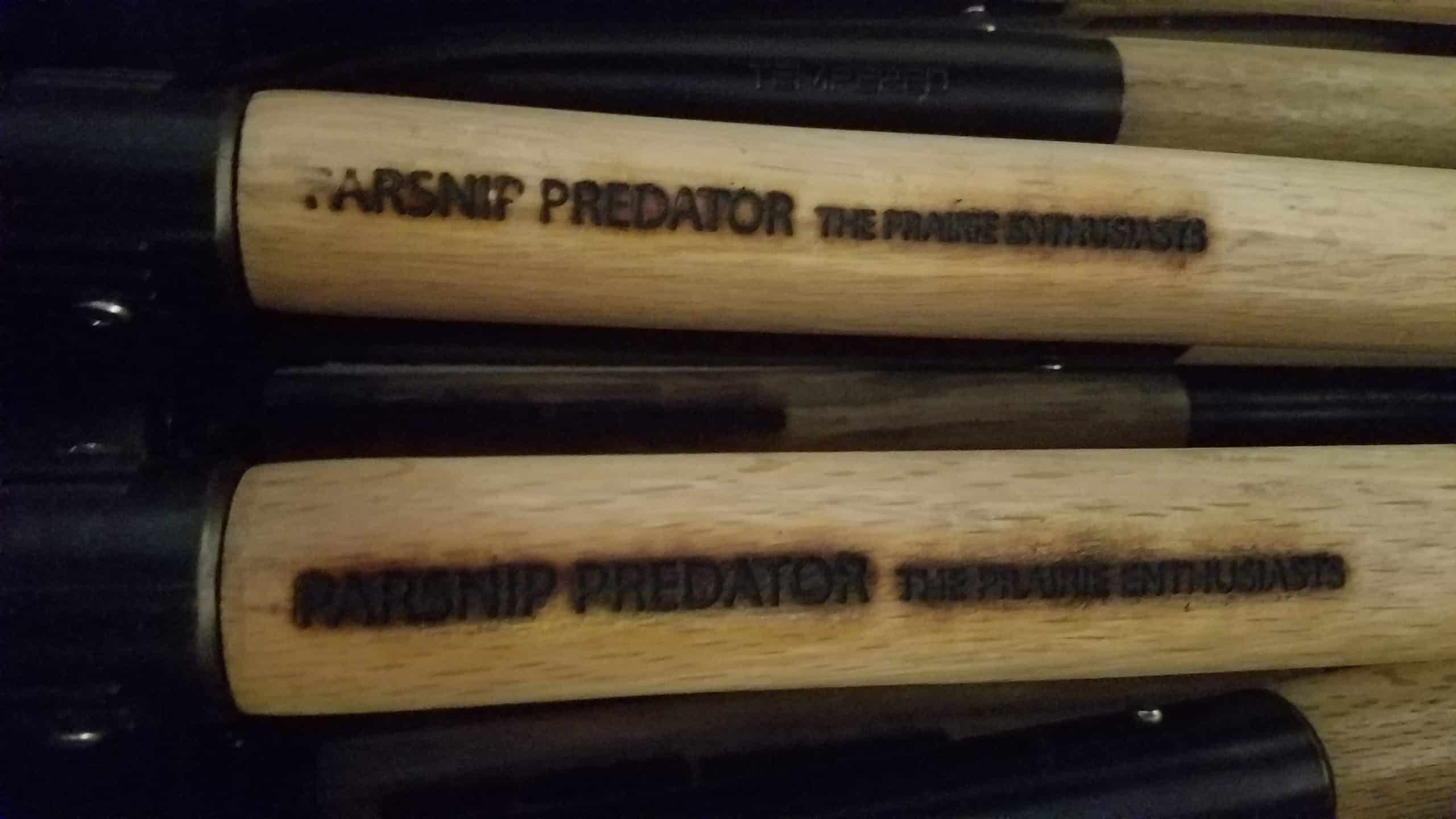
Once the Predators are branded, they’re ready to go!

2021 Photo Contest Winners

2021 Photo Contest Winners

A conference tradition continues! The online format of our 2021 conference let TPE’s amazing photographers show off their work to more people than ever. Read on to see who won.

We received entries in five categories: people, seasons, flora/fauna, landscape and wabi-sabi (the beauty of transience or imperfection). Avid photographer and contest judge Jerry Newman narrowed each category down to one photo (thanks, Jerry!). During the conference, attendees voted for their favorite to pick the ultimate winner.


In the People category: “What Pandemic?” by Rob Baller


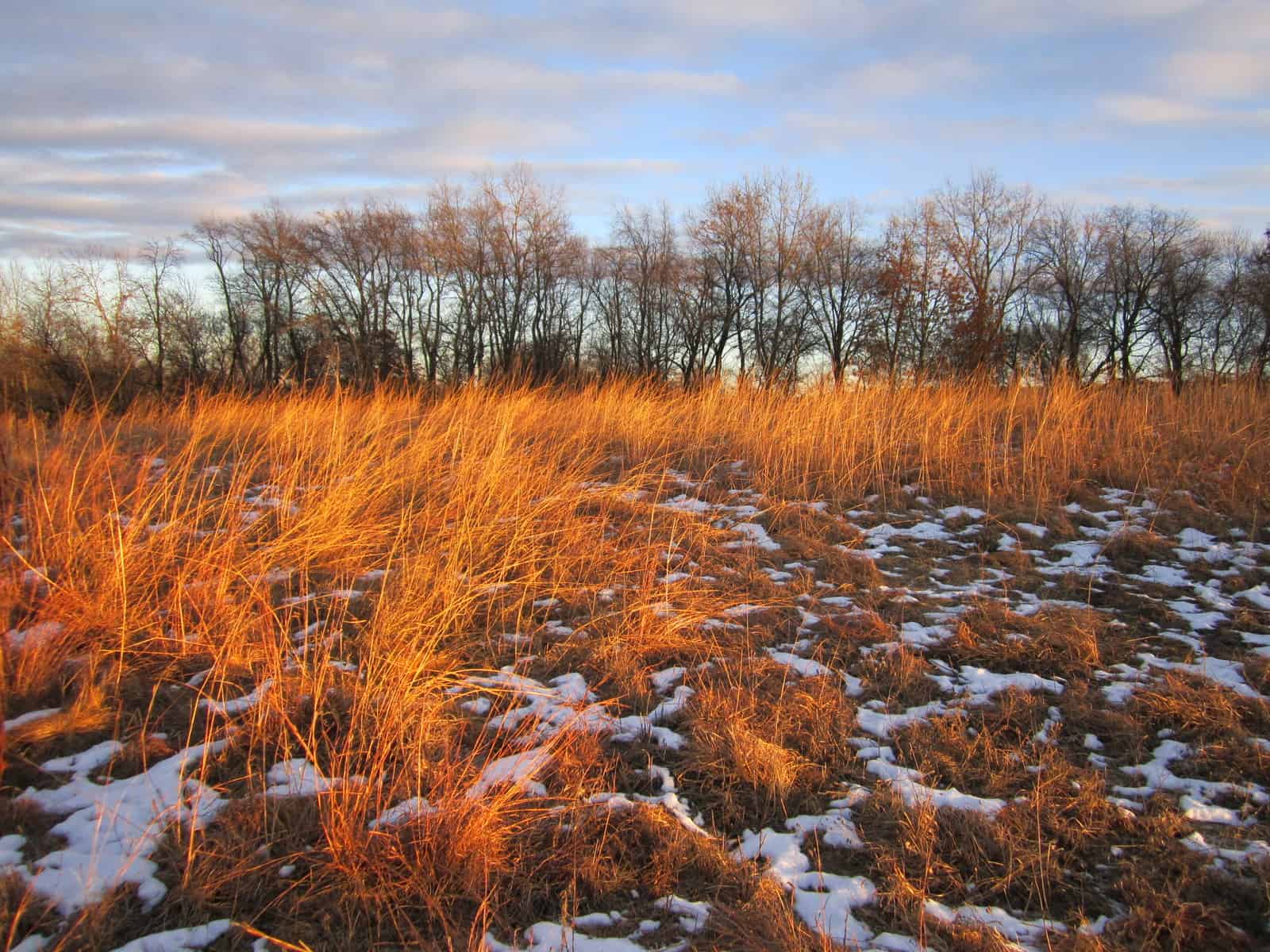
In the Seasons category: “December at Dower Prairie” by Steve Hubner


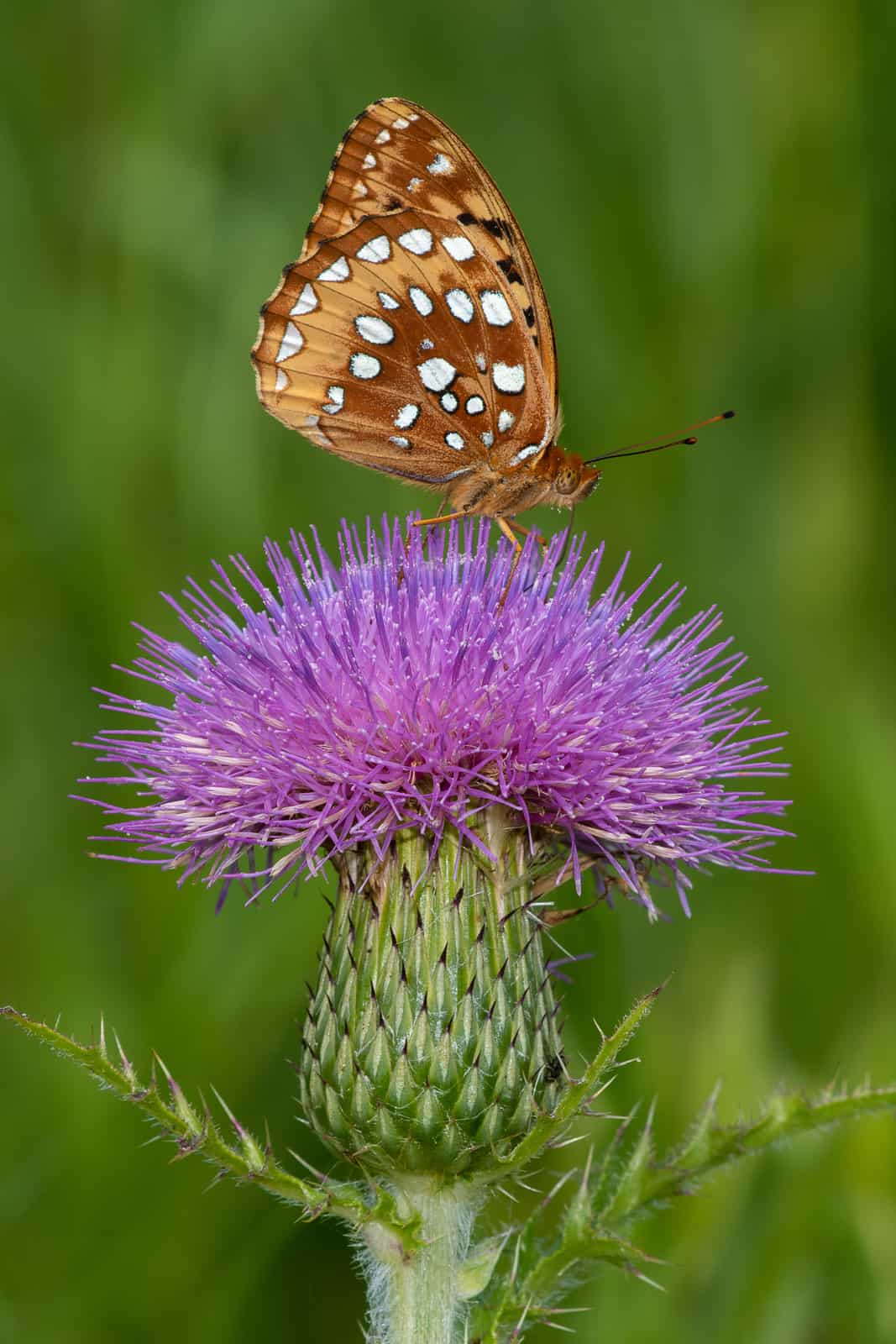
In the Flora/Fauna category: “Great Spangled Fritillary on Hill’s Thistle” by Eric Preston


In the Wabi-Sabi category: untitled photo by Ben Behrens


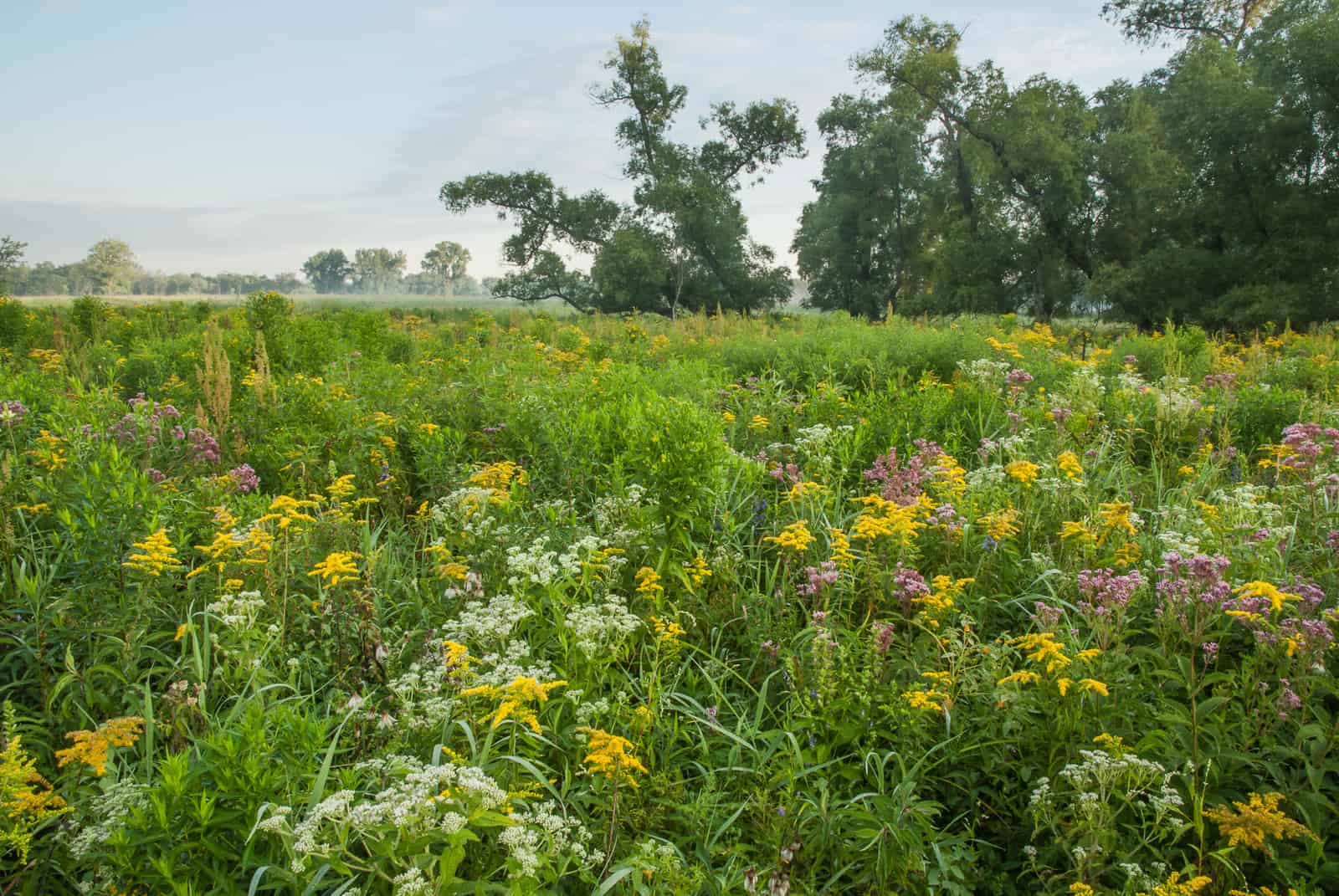
In the Landscape category: “Sedge Meadow Wildflowers” by Gary Shackelford


Congrats to STEVE HUBNER for taking first place! Look for his photo on the cover of our next Prairie Promoter newsletter.


2021 Photo Contest Winners

Our Winter Reading List

Updated 12/5/2024


Pour some coffee, curl up in your favorite chair, and delve into these books written by members and friends of The Prairie Enthusiasts!

Is there a book that should be on this list?  If you’re an author writing about ecology, or have a favorite Prairie Enthusiasts author you want to share with the world, reach out at info@theprairieenthusiasts.org.
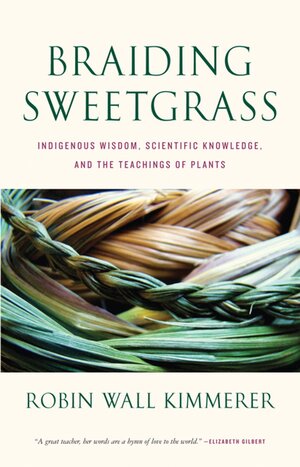
 

Braiding Sweetgrass by Robin Wall Kimmerer

Robin was a featured speaker at our annual conference in 2021!

“As a botanist, Robin Wall Kimmerer has been trained to ask questions of nature with the tools of science. As a member of the Citizen Potawatomi Nation, she embraces the notion that plants and animals are our oldest teachers… In a rich braid of reflections that range from the creation of Turtle Island to the forces that threaten its flourishing today, she circles toward a central argument: that the awakening of a wider ecological consciousness requires the acknowledgment and celebration of our reciprocal relationship with the rest of the living world. For only when we can hear the languages of other beings will we be capable of understanding the generosity of the earth, and learn to give our own gifts in return.” (text from Milkweed Editions)

Gathering Moss by Robin Wall Kimmerer

“In this series of linked personal essays, Robin Wall Kimmerer leads general readers and scientists alike to an understanding of how mosses live and how their lives are intertwined with the lives of countless other beings. Kimmerer explains the biology of mosses clearly and artfully, while at the same time reflecting on what these fascinating organisms have to teach us. Drawing on her diverse experiences as a scientist, mother, teacher, and writer of Native American heritage, Kimmerer explains the stories of mosses in scientific terms as well as in the framework of indigenous ways of knowing. In her book, the natural history and cultural relationships of mosses become a powerful metaphor for ways of living in the world.” (text from OSU Press)


Hidden Prairie by Chris Helzer

Chris gave the keynote address and led a photography workshop at our annual conference in 2021.

Chris Helzer illustrates the beauty and diversity of prairie through an impressive series of photographs, all taken within the same square meter of prairie. During his year-long project, he photographed 113 plant and animal species within a tiny plot, and captured numerous other images that document the splendor of diverse grasslands. Even readers familiar with prairies will be fascinated by the varied subject matter Helzer captured with his camera. In addition, his captivating and accessible natural history writing tells the story of his personal journey during the project and the stories of the characters he found within his chosen square meter of prairie.” (text from University of Iowa Press)

The Ecology and Management of Prairies in the Central United States by Chris Helzer

Grasslands can be found throughout much of North America, and the ideas and strategies in this book apply to most of them, particularly tallgrass and mixed grass prairies in eastern North Dakota, eastern South Dakota, eastern Nebraska, eastern Kansas, eastern Oklahoma, northwestern Missouri, northern Illinois, northwestern Indiana, Iowa, southwestern Wisconsin, and southwestern Minnesota. By presenting all the factors that promote biological diversity and thus enhance prairie communities, then incorporating these factors into a set of clear-sighted management practices, The Ecology and Management of Prairies in the Central United States presents the tools necessary to ensure that grasslands are managed in the purposeful ways essential to the continued health and survival of prairie communities.” (text from University of Iowa Press)


The Driftless Reader by Curt Meine

Curt was featured in a panel discussion at our annual conference in 2021.

“The Driftless Reader gathers writings that highlight the unique natural and cultural history, landscape, and literature of this region that encompasses southwestern Wisconsin and adjacent Minnesota, Iowa, and Illinois. The more than eighty selected texts include writings by Black Hawk, Mark Twain, Laura Ingalls Wilder, Frank Lloyd Wright, Aldo Leopold, David Rhodes, and many other Native people, explorers, scientists, historians, farmers, songwriters, journalists, and poets. Paintings, photographs, maps, and other images complement the texts, providing a deeper appreciation of this region’s layered natural and human history.” (text from UW Press)

When Things Happen by Randy Hoffman

Randy is the site steward of The Prairie Enthusiasts’ Hauser Road Prairie.

“Busy families want to have meaningful experiences in nature. This book identifies the best times to view spring wildflowers, bird migrations, insect emergence, mammal birthing, and even meteor showers. In addition, in-depth articles give additional meaning to natural events. Nearly 40 pictures and illustrations support the book.” (text from Randy Hoffman)

With Wings Extended by Greg Hoch

“A century ago, many people had given up on the wood duck, dooming it to extinction along with the passenger pigeon and Carolina parakeet. Today, the wood duck is one of the most familiar and most harvested ducks in the eastern half of the country, and one of America’s great conservation success stories. In With Wings Extended, Minnesota conservationist Greg Hoch introduces readers to a duck they probably recognize but may not know well. Hoch illustrates the complexities of wildlife and habitat management that landowners as well as state and federal wildlife agencies deal with on a daily basis, and takes readers through the life stages of what is largely considered the most beautiful duck in the world. In this fascinating and practical read, Hoch blends the historical literature about the species with modern science, and also shows how our views of conservation have changed over the last century.” (text from University of Iowa Press)


Tending the Valley by Alice D’Alessio

In Tending the Valley, Alice chronicles [her husband’s and her own] efforts to return the land to its natural prairie state and to manage their oak and pine woods. Along the way they joined the land restoration movement, became involved in a number of stewardship groups, and discovered the depths of dedication and toil required to bring their dream to fruition. With hard-earned experience and the evocative language of a poet, D’Alessio shares her personal triumphs and setbacks as a prairie steward, along with a profound love for the land and respect for the natural history of the Driftless.” (text from Wisconsin Historical Society Press)

Safe Burning, Safe Learning

Safe Burning, Safe Learning

This article was a collaboration with Jeb Barzen. 

Interested in pitching in to save our fire-dependent ecosystems? The Prairie Enthusiasts’ next prescribed burn crew training will be an online-only class on Wednesday, February 12, 2025 (the first day of our annual conference). Instructors Rob Baller, Scott Fulton, Rob Schubert and Andy Sleger from the Empire-Sauk Chapter will lead this all-day event. Visit the conference page to learn more.

More fire safelyand effectivelyon the ground.

That’s the wish of educator and Wisconsin Prescribed Fire Council member Jeb Barzen. “In Wisconsin we are currently burning 5-10% of our fire-adapted communities that require periodic fire management,” notes Jeb, who is also a site steward for The Prairie Enthusiasts. “The longevity of these remnant ecosystems, that intelligent tinkerers wish to save, is vanishing. Concurrently, we have more landowners (both private and public) that want burning to be done than we have resources to respond.”

To develop more trained fire ecologists, Jeb and co-instructors Rob Nurre, Rob Baller, and Scott Fulton have organized a series of annual prescribed burn classes over the last five years. In 2020, The Prairie Enthusiasts’ Prairie Sands Chapter sponsored two basic burn training sessions in October and November. Despite the unusual circumstances, both classes were a success.

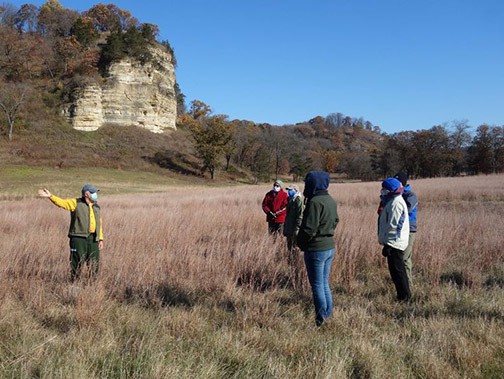
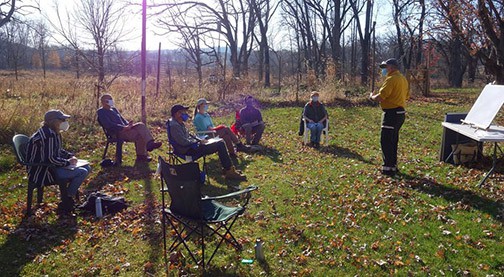
Each class was held outside and followed The Prairie Enthusiasts’ guidelines for events during COVID-19. Class sizes were limited to eight masked students representing a range of ages and backgrounds. The students took notes from lawn chairs spaced apart in the grass while the instructors taught at a distance, using a whiteboard to diagram burn scenarios. Interspersed with these lectures were field explorations of how fuel types relate to fire behavior and weather. Whether or not the weather would allow actual fire was a lesson in itself.

Burn_1.jpg

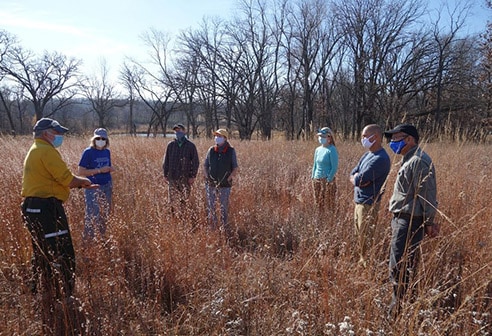
Outdoor lecture. Photo by Rob Baller

Friends and members of The Prairie Enthusiasts generously offered the use of their private properties for these classes. The October 31 class convened at Cassell Savanna in Sauk County. On this cold and windy Halloween day, the students wore thick hats and long underwear. By the time the second class (at Prairie Hill Farm in Marquette County) rolled around a week later, the weather had changed to 70°F with all sunshine.

Field training at Cassell Savanna. Photo by Rob Baller

Despite the difference in temperature, both weekends were made more complicated by high winds. Live fire was at a minimum; only the students in the second class could practice burning breaks, and only in the shelter of the woods. Even so, the students remained engaged, socially distant, and open to the lessons that these conditions provided.  Students later described the class as “interesting, engaging, enjoyable” and even “the best of the [burn classes] that I’ve taken”.

Nevertheless, two small classes alone won’t solve the problems facing fire ecologists. More frequent and widespread training is required. “Just a few unsafe fires can greatly inhibit our overall ability to burn because the public will not support risky ventures,” Jeb observes. “Ineffective fires also waste limited resources that we can ill-afford to squander… Sponsors of prescribed burn courses provide both fire practitioners and pyroecologists the very basis necessary to succeed at conservation.  We need to do more.”

Field training at Prairie Hill Farm. Photo by Rob Baller

2021 Photo Contest Winners

This Month in the Driftless, October 2020

Here’s a recap of Driftless Area phenology from the past month, written by our very own Pat Trochlell.  Pat’s inspiration comes from her career as a wetland ecologist with the Wisconsin DNR.  She and her husband, Ken Wade, live near and are stewards of TPE’s 30-acre Parrish Oak Savanna, a diverse woodland ecosystem of over 240 native species.

Follow our Facebook page to read Pat’s column once a week.

1 October 2020

Autumn is well underway, with trees turning bright colors. In southern Wisconsin, a few tree species – ash, aspen, hickory and maples – are red, yellow, and orange, but the oak-rich landscape is still predominantly green. Some understory plants, like Indian grass and staghorn sumac, also turn brilliant colors. Another plant that is now very colorful is Virginia creeper or woodbine (Parthenocissus quinquefolia). This plant is a climbing vine with palmately compound leaves. It is a strong climber, with tendrils that form an adhesive disc when they come in contact with a support. It is also our only species besides poison ivy that develops short roots along the vine to hold onto tree trunks. It’s also found climbing on human-constructed structures and rock walls.

Woodbine on sandstone wall. Photo by Pat Trochlell

The woodbine in my photograph is growing on a tall vertical wall of sandstone. Using a nifty app called Rockd, I was able to determine the type and age of the sandstone formation. It is Cambrian-age sandstone from the Tunnel City Formation, which is approximately 495 million years old. The Rockd app is a great tool developed by UW-Madison geologists. You can download the free app onto your mobile phone. As long as you have cell reception, the app can provide information about the geology and rocks in the areas that you visit.


8 October 2020

Signs of autumn continue with oak trees turning rust-colored, the scent of falling leaves, flocks of white-throated sparrows singing in the woods, and prairie plant seeds piling up in sheds and barns across the area. At TPE’s Mounds View Grassland, seed collecting started around the first of June when pasque flower seeds were ripe. Volunteers will continue into early November to harvest seed from the last remaining asters and stiff gentians. Last week, we collected boneset and mountain mint; this week, we collect prairie cordgrass and rough blazing-star. 

Mounds View is just one of TPE’s many sites where seeds are harvested, processed, mixed, and stored for planting. Over the season, about 50 people show up for collecting, but the number of people has increased this year. This is probably due to the current need for us to get outside and also because TPE is reaching out to more people. Last Sunday, a record high of 17 people showed up to help with the harvest on a beautiful sunny day. 

How many species are collected? Rich Henderson estimates that at Mounds View about 150 plant species are harvested, though not all in every year. Volunteers collect 300 to 400 pounds of seed with a “street value” of $100,000 to $150,000! 

The monetary value of the seed is high, but the value to the prairies and other natural areas under restoration is higher. Perhaps the most important value, though, is to those of us who help collect and process the seed. We can watch the progress over time as an old cornfield or pasture is restored into the yellow and purple wildflowers and sea of bluestem that make up a tallgrass prairie. We can say that we played a part in this amazing transformation.

Seeds drying in a TPE-owned barn. Photo by Pat Trochlell

Jan Ketelle searches for western sunflower gone to seed. Photo by Pat Trochlell


15 October 2020: Asters (again!)

Asters are again (or still) in the spotlight for this week. We still have some species continuing to bloom, despite the colder weather and shorter day lengths. But most of them are showing signs of senescence. One species I hope to harvest seeds from along the hilly roadsides at this time of year is the flat-top aster (Doellingeria umbellata). When it blooms in late summer, the plant has numerous white flower heads in a flat-top cluster. It has many 3- to 6-inch leaves arranged alternately along the stem. At this time of year, the fluffy seed is ripe and ready to collect.

I associate this species with northern wetlands, especially in ditches along roadsides where it can be quite common. However, the plant is found throughout Wisconsin, including in the Driftless Area. Though mostly found in wetlands, it also grows in uplands. The range of habitat types in the Atlas of the Wisconsin Prairie and Savanna Flora lists “marshy, swampy or peaty ground, also in sandy or rocky uplands (such as bracken grasslands), north of the Tension Zone in spruce-cedar-ash swamps, moist fir-yellow birch-hemlock woods, and second-growth aspen, white birch, pine or red maple stands, edge of tamarack or sphagnum bogs… in the south …in fens, low prairies, sedge meadows, shrub cars, openings in low sandy woods, drained, burned or cut-over lowlands, margins of tamarack bogs and cranberry marshes, weedy in drainage ditches, roadsides and old grassy fields.” 

With that broad range of habitat types, it seems capable of tolerating many conditions. But it is not a species that I have had much luck establishing from seed, despite my efforts. Maybe this year…

Sky-blue aster and a cold bumblebee. Photo by Pat Trochlell


22 October 2020

What a difference a week makes! Vibrant-hued oak trees are turning brown and losing leaves, which cover the forest floor. Weather changes are bringing rain and, in some areas, record early snowfall. Many migrating birds, like the pine siskins which were feeding heavily on stiff goldenrod seeds, have moved south. So it’s nice to see the occasional late-blooming flower, such as biennial gaura (Oenothera gaura). The plant is a mesic prairie species in the evening-primrose family. The name “gaura” comes from the Greek word gauros, meaning proud. The name is apt, as the plant grows up to 7 feet tall with numerous showy white flowers that turn pink as they age.

Late-blooming gaura. Photo by Pat Trochlell

Fall is a good time to look for signs of springs and seeps. As the vegetation senesces, more ground is exposed. In areas where there is standing water you may see signs of groundwater influence, such as the presence of iron bacteria where soluble ferrous (reduced) iron leached from rocks discharged with the groundwater. Iron bacteria are thread-like cells that oxidize the ferrous iron to ferric iron for energy. The ferric iron is insoluble and precipitates as a rust-colored deposit. Once the bacteria cells decay, they release a reddish or brownish slime that has the appearance of petroleum. Petroleum contamination is unlikely in most natural seepage areas, but you can confirm that the oily sheen is from bacteria and not petroleum by pushing on this layer with a stick. If it breaks apart, it is caused by iron bacteria.

Iron bacteria showing up as an oily, orangeish deposit. Photo by Pat Trochlell


29 October 2020

Native plant foliage has largely fallen or changed color, but several non-native plants are still green. This makes searching for them very easy if you’re intent on controlling them. This is especially true of common buckthorn (Rhamnus cathartica) and non-native bush-honeysuckles (Lonicera spp.). Staying green when other plants have senesced and dropped their leaves gives these invasive plants an advantage over native species. Both buckthorn and honeysuckle have wide ecological habitat ranges, tolerating both wetland and upland conditions. Both species can dominate the landscape, shading out native species. Buckthorn is also allelopathic, creating soil conditions that suppress native vegetation and reduce habitat.

For those of us who want to rid our natural areas of these non-native species, a great way to remove them is pulling them up, roots and all. While this may give us a good feeling, it’s limited to small plants only. For large plants or large infestations, herbicides are usually required. One great source of information on controlling invasive plants is the Midwest Invasive Plant Control Network (MIPN) Invasive Plant Control Database. This database is a great tool to determine the most effective means of invasive plant control. It contains information gathered from both the scientific literature and the opinions of experts. You can search for a particular species and indicate the habitat, season, and whether you are a novice or expert. The search results can give you information on different means of treatment and the short and long-term effectiveness of those treatments. 

We can’t control invasive plants everywhere, but we can work toward this goal on the properties that we manage and where we volunteer. Every invasive plant you remove can help, and this may eventually result in a fall landscape without a green understory.