by The Prairie Enthusiasts | Jun 29, 2020 | News
Beginning in late May of this year, our collective attention has been forcibly drawn by the enormous and continuing demonstrations across the country protesting the long unsolved issues of racial injustice and police brutality. This challenge has been with us as a society for a very long time, but something seems quite different about it now. For most of us members of TPE, who are white and often live or own property in rural areas, this may seem like something remote and not particularly relevant to our conservation work. However, if we believe that connecting our human community to the natural communities we love is truly important, we cannot ignore this challenge, and need consider how to help address it in our own way.
All of us have seen numerous statements made by civic and government leaders, businesses, and non-profit organizations about this issue since the protests began. Conservation organizations have been no exception to this. Our local and national land trust organizations (Gathering Waters and the Land Trust Alliance) have both issued clear statements and held several open sessions on the topic. Like everyone else, the TPE staff and other leaders have been engaged in active discussions about what our response as a group should be. The following are my personal reflections, intended not as a formal organization position but as a starting point for deeper ongoing work moving forward.
We should first clearly and unequivocally state what I hope is obvious:
As an organization, The Prairie Enthusiasts abhors and is utterly opposed to racism of any kind and unnecessary police brutality, especially when based on race. As a community of people who work to protect and enhance biological diversity in the natural communities we care for, we are committed to supporting the diversity of our human communities in race, culture, age, gender, sexual orientation, economic and educational status, etc. We believe that growing the diversity of our own TPE community is a key to its long-term sustainability in carrying out our mission.
Making a statement like this is necessary and important, but it is in no way sufficient. Words matter, because they are the starting point for focusing our minds in thought, which ultimately leads to actions. In the end, however, our actions going forward will be what matter. To put this another way, this kind of statement is an important reactive response to this challenge, but I believe we are called to do more work (both personally and as a group) to create and implement authentic responses which show up in our future actions.
Truly authentic responses from an organization like The Prairie Enthusiasts cannot arise from top-down decisions by the board or staff, but rather come from the grassroots work of our members and local chapters. One of the challenges with this is that our organization encompasses a huge range of different local community environments and situations. It is easy to think that perhaps these issues do not really affect us personally, but only those living in the big metropolitan areas. However, what all of us are learning is that racial justice matters for all of us, no matter where we live. The very widespread nature of the recent protests in every part of our country and the amazing diversity of those who come out to them is a sign that this issue really does touch us all.
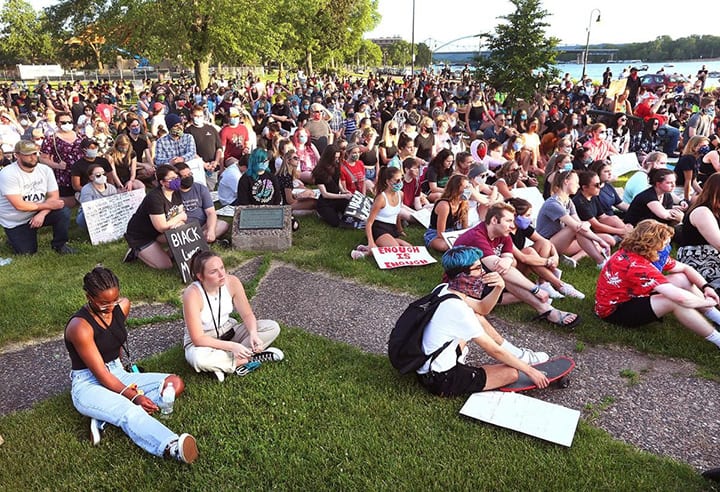
Justice for George Floyd protest in La Crosse, WI on June 3, 2020.
Photo by Peter Thomson, La Crosse Tribune
The other major challenge in thinking about authentic responses in the context of TPE is how to meaningfully connect our mission and focus – protection, restoration, and education about prairies and savannas – with the issues of racial justice and the promotion of human community diversity. This challenge is may be uncomfortable for us and is certainly one that each of us can only address our own personal way. Each of our chapters can only take actions that make sense to them in their local environment.
To assist in considering authentic responses moving forward as individuals and local TPE communities, here are a few examples of related appropriate actions we have taken in the relatively recent past:
- At the September 2018 leadership retreat, board and chapter leaders from across TPE worked together in small groups to consider the most important challenges facing the organization in the coming years and how we should address them. By far the number one issue raised by every breakout group was the need to develop the next generation of leaders for TPE and for the conservation movement in general. Many in the group were thinking about engaging more young people in what we do. As we can see night after night in the protests, our younger generations care deeply about issues of diversity and social justice, and we will have difficulty engaging them unless we can do the same.
- Our Glacial Prairies chapter (with the leadership and particular help of Alice and Walter Mirk and Rob Baller) have had a significant program to make presentations on prairies to children in both rural and urban schools in southeast Wisconsin. They have noted that in urban schools with predominantly children of color, where exposure to nature of any kind is extremely limited, these efforts have been met with great enthusiasm.

Rob Baller explains the food diversity pyramid at the Frank School, Kenosha, WI in 2014
Photo by Alice Mirk
- TPE devotes majority of its volunteer hours and dollars to restoration and management work carried on by our chapters. This can present opportunities to connect with different communities in a lasting and meaningful way. A wonderful example of this is the “Sunshine Acre” program led by Ed Strenski of the Northwest Illinois chapter in collaboration with the Jo Daviess Conservation Foundation (JDCF), Jo-Carroll Energy, and the Northwest Academy in Elizabeth, IL, a school for kids with significant educational needs and behavioral challenges. Ed has led the students in restoration work parties on JDCF’s Casper Bluff Preserve (including collecting and sowing prairie seeds) not only giving them a new exposure to nature but also helping to build a new sense of responsibility and teamwork skills.

Northwest Academy students working at Casper Bluff Preserve, Galena, IL in 2014
Photo by Michele Cahill, JDCF
- As I have discussed our possible authentic responses to racial injustice with people across TPE, the connection that resonates the most is with the First Nations peoples. Although their long and sad history of violent oppression has not been an explicit focus of the most recent protests, there is a deep similarity between the history and current situations of all people of color in our country, including indigenous peoples. Many of us feel especially drawn to the tribes. In many ways TPE’s mission is to restore and preserve natural communities that were created and maintained through widespread use of fire and other practices by those who lived here as part of this land for thousands of years before European settlement. We have a great deal to learn from and to share with the First Nations across our region.

Former Ho-Chunk Nation President Chloris Lowe at the 2016 TPE Conference
Photo by Joe Rising
These examples from the past few years are but a few ideas for how we can begin to develop our own authentic responses for the future. We most especially welcome your thoughts and comments and continuing discussions on this important topic.
by The Prairie Enthusiasts | Jun 4, 2020 | News
TPE has set in place new guidelines to enable us to begin holding our important field trips and work parties going forward while protecting our safety during the COVID-19 pandemic.
May 2020 field trip at the oak barrens near TPE’s Rattlesnake Ridge preserve in Arena, WI. Photo by Scott Fulton
Like all of us, we at TPE are learning how to adapt to the new reality of COVID-19. One of the major impacts for us is on our field trips and work parties. These events are critical to our work of caring for the land, building our human community, and reaching out to engage others in our mission. We have had to give careful thought to how to safely conduct TPE field trips, work parties, and other events while protecting the safety of our members and public health.
The TPE staff and board have worked together to develop and approve a new policy and guidelines for safely conducting our events while the COVID-19 pandemic continues. In doing this, we recognized the need to clearly identify who is responsible for making decisions and communicating with our leaders and members so that we can quickly modify our approach as the situation changes.
The core of the policy is a Current TPE Event COVID-19 Guidelines document which is written by the Executive Director, approved by the Executive Committee of the Board, and reviewed at least monthly for changes in the situation. The Current Guidelines covers all types of TPE events (field trips, work parties, prescribed burns, workshops, lectures, courses, social events, meetings, and conferences) and is based on the current orders and public health recommendations from the CDC and our three states (WI, MN and IL). The Current Guidelines is available on the COVID-19 page on the TPE website.
The initial Current Guidelines (May 26, 2020) allow field trips and work parties to proceed under the following conditions:
- Events must be held outdoors (indoor events are still cancelled or postponed).
- No more than 10 attendees total (including both event leaders and participants).
- No one should attend who has a fever or other symptoms, or an active COVID-19 infection.
- All leaders and participants should always stay at least 6 feet apart (except for members of the same household).
- Wearing a face mask to protect others is highly recommended when safe distancing is difficult.
- Everyone should cough or sneeze away from others and cover themselves appropriately.
- Avoid exchanging physical objects (e.g. pens and papers, tools, equipment, etc.). Where this is not possible, objects should be carefully sanitized before and after use.
- Avoid sharing vehicles during an event, except between members of the same households.
Because we will be limiting attendance at our events, we have decided to institute pre-registration. You can do this by emailing or phoning the event leader, or (better yet) by registering online at the Events page of the TPE website. We will need at least an email address or phone number for each attendee so that we can contact you is anything changes. The online event listing will also include a description of the event itself, contact information for the event leader, and a Google Maps link for the event location.
All of this is a significant change for those of you planning to lead events. You will need to familiarize yourself with the Current Guidelines and will be responsible for insuring that those who attend the event comply with the social distancing rules. We have prepared a TPE COVID-19 Event Leader Guide to assist you, which is also available on the COVID-19 page. Please contact Diane Hills, the new TPE Outreach and Development Coordinator (outreach@theprairieenthusiasts.org, (608) 239-4699) for more information or assistance with publicizing your event.
We ask that those of you who either lead or attend events to please cooperate with the new Current Guidelines so that our field trips and work parties can be safe for everyone. We know that it’s a pain to wear masks and hard to remember to stay sufficiently separated. Frankly, none of us enjoy these rules at all! But this is truly the only way that we can continue to do the work needed to care for the natural communities we love and to share them with others while COVID-19 is still with us. Getting back out again on the prairies and savannas with our TPE friends will make it worthwhile!
by The Prairie Enthusiasts | Jun 4, 2020 | News
Are you, or do you know someone who is interested in restoring or managing native prairie and savanna communities on private land? Would you like to hear the bumblebees busily spreading pollen from flower to flower and see more butterflies dancing among the grasses?

Coulee Region Chapter members John and Rita Hoffmann at their property in Viola, WI with Dan Carter in May. Photo by Scott Fulton
As most of us are well aware, the biggest threat to the prairie plants, pollinators and other animals is a loss or degradation of their habitat. With more than 96% of Illinois, 82% of Wisconsin, and 77% of Minnesota’s landscape under private ownership, landowners play a key role in helping conserve the diversity and beauty of natural prairie and savanna communities.
Although some of our our volunteer chapters focus primarily or in part on supporting private landowners with restoration, management, and education efforts, much of TPE’s work over the years has been focused on preserves we own or public lands that we support. Several years ago, we identified a major need to provide better services to private landowners, who are frequently so busy on their own properties that they are not able to do much volunteer work with the chapters. In 2018 we surveyed our landowner members to better understand their needs and began to look for ways we could better serve them.
Good news! This year TPE received a 3-year grant from the National Fish and Wildlife Foundation (NFWF) to provide educational outreach and direct technical assistance for private landowners who want to restore and manage habitat for pollinators (with a special focus on monarch and Karner blue butterflies and the rusty patched bumblebee). The goal is to work with landowners throughout TPE’s service area to increase the overall acreage and quality of native prairie and oak savanna pollinator habitat. The grant dollars are to be used specifically to fund two new TPE staff positions to work in collaboration with TPE’s local chapters as well as several other conservation organizations, including the Valley Stewardship Network and the Southwest Wisconsin Grassland Network. NFWF is particularly interested in supporting working landowners, so much of our efforts will be focused on reaching out to farmers and ranchers in our region, a new audience for TPE.

Key pollinators for TPE NFWF grant – monarch and Karner blue butterflies and rusty patched bumblebee. Photos by Gary Shackelford, Shelley Hamel, and Jeb Barzen
Diane Hills and Dan Carter have recently joined TPE’s staff to implement the NFWF grant (for more about them, see the staff introduction article in this edition). Half of Diane’s role as Outreach and Development Coordinator will be to work on engaging and educating landowners about the ecology and natural history of prairies and savannas along with best practices for restoration and management. TPE’s chapters already provide an excellent local, peer-based foundation for these activities, and Diane will be actively building upon and supporting their efforts. Stay tuned for future program developments!
Dan Carter is the new Landowner Services Coordinator funded full time by the grant. He is now available to schedule site visits to assess and discuss the potential for prairie/savanna restoration and reconstruction projects on private property. Depending on the project’s potential within the scope of the grant and the landowner’s interests, Dan can help landowners develop a management plan and connect them with possible funding sources and quality resources (such as management contractors and quality seed suppliers), as well as provide information about potential land protection options. Dan will be working in close contact with the local chapters to connect landowners new to TPE with our existing community, and to provide the best locally based advice.
Now that the field season is in full swing, Dan already has a full dance card of landowner visits under way. If you (or someone you know) own private land, you can reach Dan at landowners@theprairieenthusiasts.org or 319-321-6513 to ask questions, discuss your property’s potential and/ or set up a site visit. As a landowner, you can make a difference!
by The Prairie Enthusiasts | Jun 4, 2020 | News
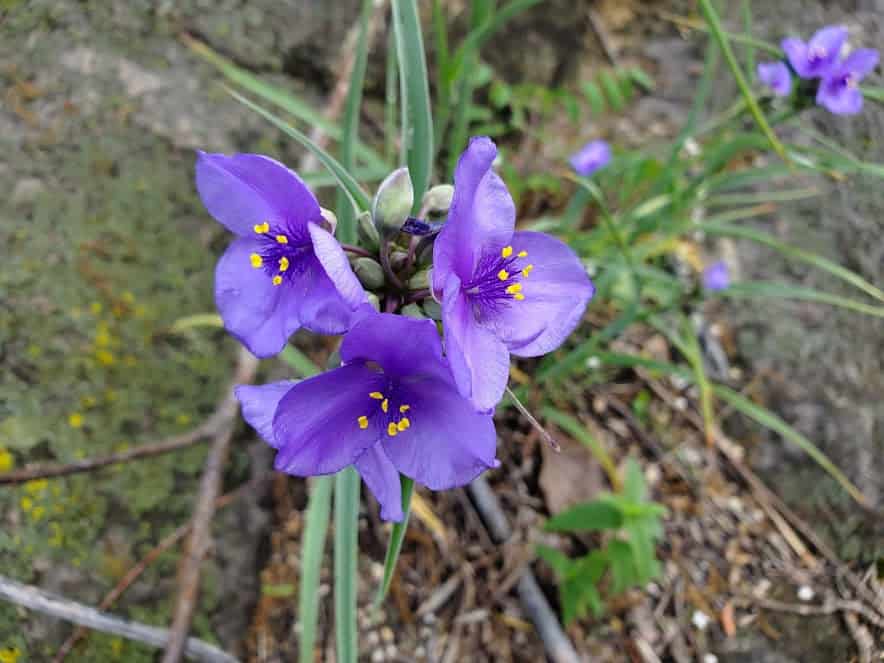
This week the savanna’s purple lupines (Lupinus perennis) and pink wild geraniums (Geranium maculatum) are being replaced by spiderworts (Tradescantia ohiensis). According to past years’ local records, spiderworts are blooming later than normal this year. The cool spring, together with the lack of burning, make this year’s blooming plants on the hillsides appear to be less striking than in past years. But up close they are still a beautiful and impressive plant.
Many birds are fully occupied with nesting. Andy Sleger observed a female Rose-breasted Grosbeak exiting a nest and took a photo. Rose-breasted Grosbeak nests appear to be flimsy but tend to hold up well. At least the species appears to be a successful nester, based on the number of young grosbeaks that show up with their parents at bird feeders every year.

Another nesting critter that Andy found was a large snapping turtle. This turtle was just starting to lay her eggs in a nice sandy area. Unfortunately, the area is on a management use trail. Turtle nesting is often unsuccessful. Turtles face obstacles, like roads and other impediments as they head to and from nesting sites. Nest predation is also a significant source of loss, with 90 to 100% of all turtle nests failing due to predators in some areas. With turtle populations declining, we need to protect turtles as much as we can. Check out the WDNR website for more information on how you can help.

Photos:
Spiderwort (Tradescantia ohiensis), photo by Pat Trochlell
Rose-breasted Grosbeak nest, photo by Andy Sleger
Snapping turtle laying eggs, photo by Andy Sleger
by The Prairie Enthusiasts | Jun 4, 2020 | News
Spring is quickly growing into summer. Here are a few photos that captured our attention this past month. So fun to see what is happening in and around the prairie. One way of looking at these images is called Phenology which is the study of reoccurring life cycles that are driven by the environment. The timing of these events are related to both short – and long-term variability in climate. Do these images look familiar, can you identify them?

Photo by Joe Rising

Photo by Joe Rising

Photo by Pat Trochlell
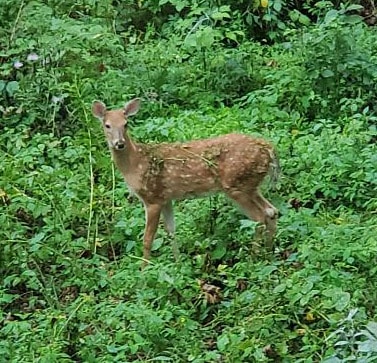
Photo by Pat Handrick

Photo by Ken Erickson

Photo by Joe Rising

Photo by Pat Trochlell

Photo by Christine Larson

Photo by Freya Rising

Photo by Gail Erickson

Photo by Pat Trochlell

Photo by Steve Engber

Photo by Pat Trochlell

Photo by Christine Larson
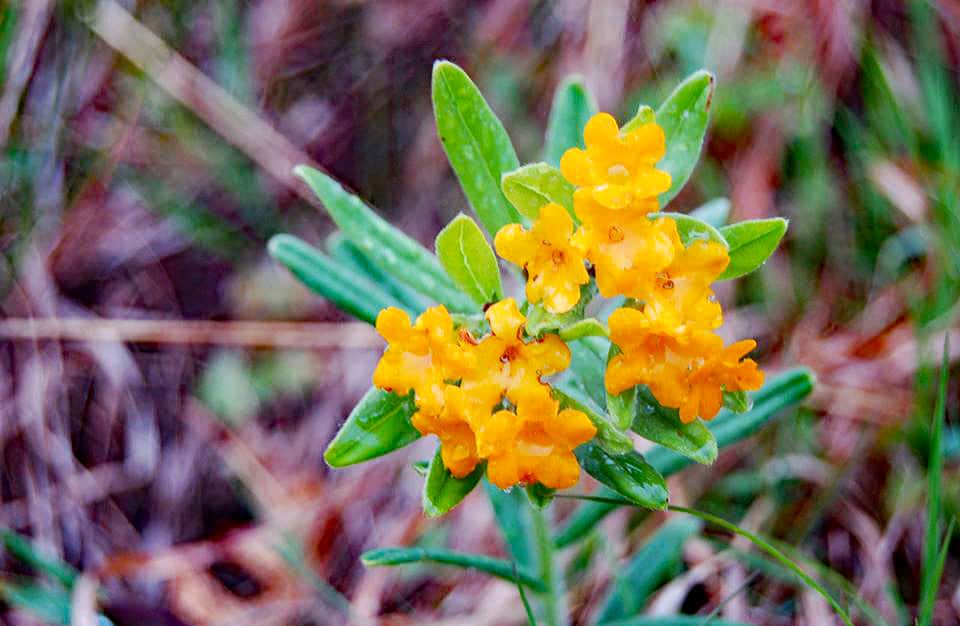
Photo by Stephen Winter

Photo by Jim Rogala