Reason for Optimism: Long-Term Results from Planting Prairie into Live Exotic Cool-Season Grass Sod

Reason for Optimism: Long-Term Results from Planting Prairie into Live Exotic Cool-Season Grass Sod

Reason for Optimism: Long-Term Results from Planting Prairie into Live Exotic CoolSeason Grass Sod 

Article and Photos by Dan Carter, The Prairie Enthusiasts Ecologist
March 2, 2025

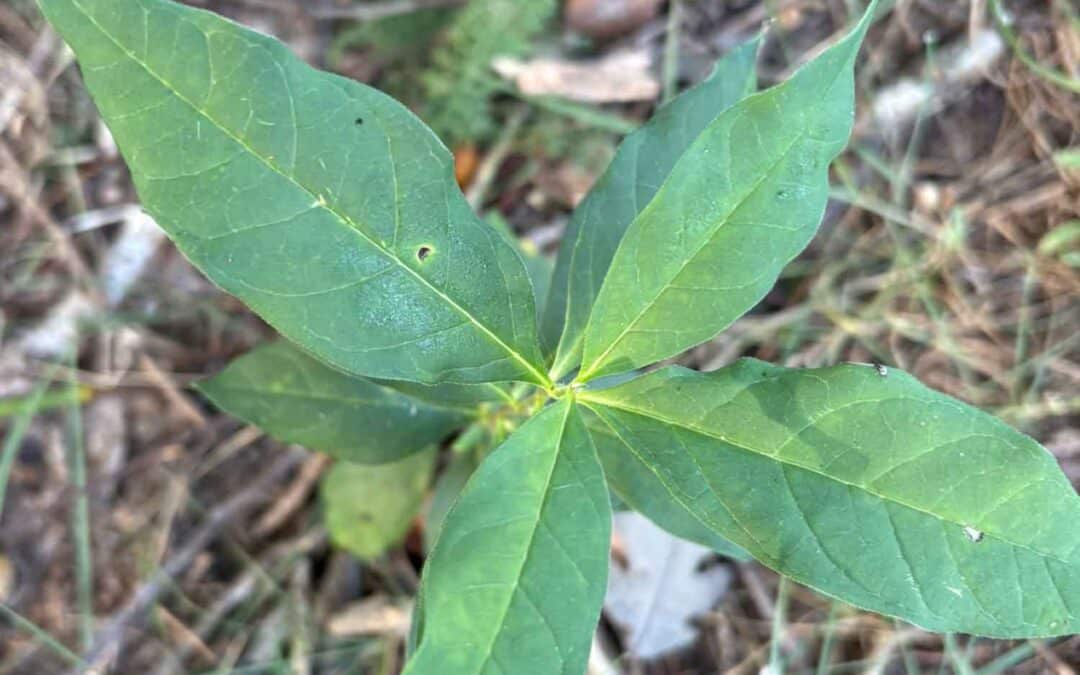
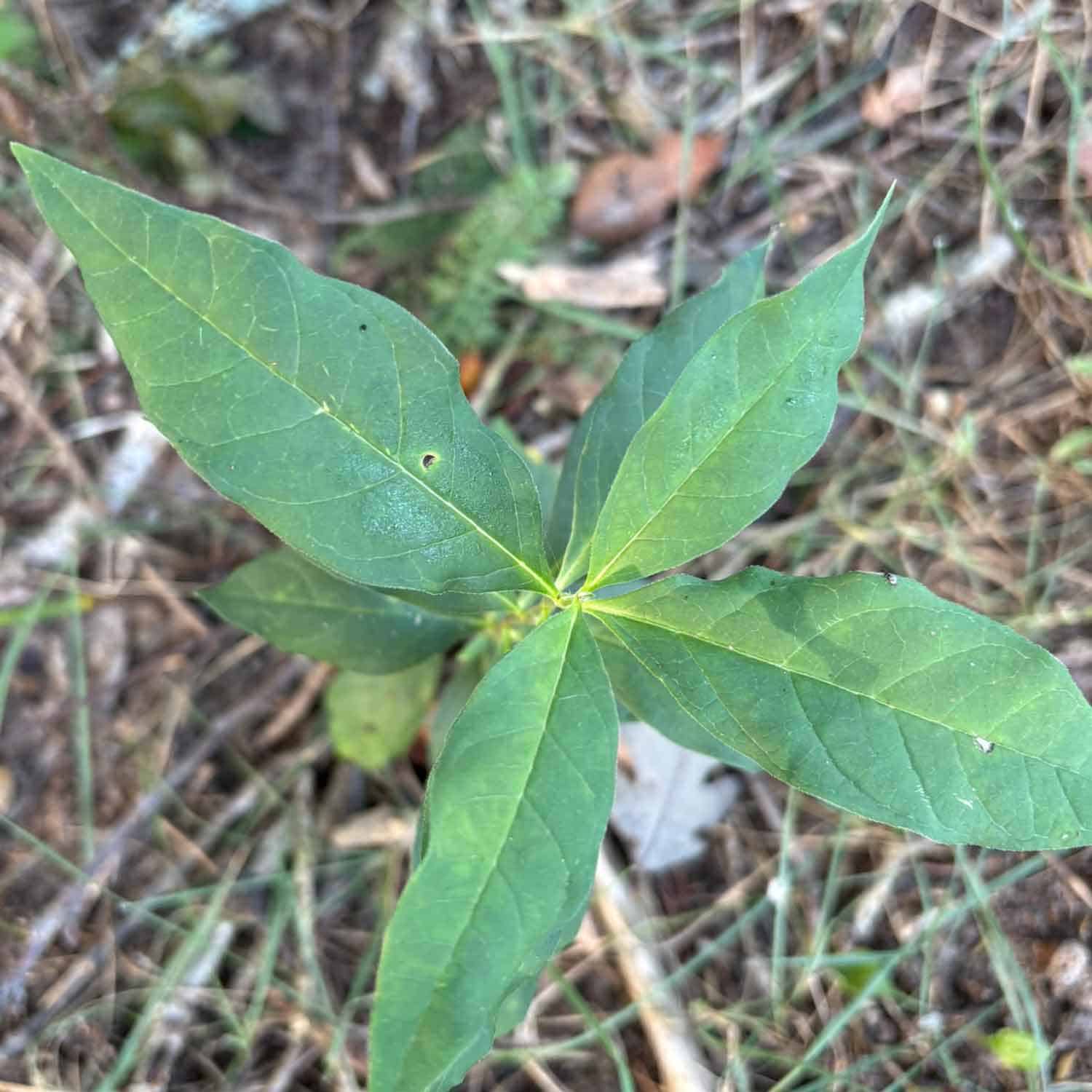
Poke milkweed (Asclepias exaltata) in September after being planted as a plug in May in a shady area of savanna. Plugs were propagated in this case, because only a very limited amount seed with local genetics was available.  

A few years back I wrote about the potential of old pastures and mature old fields dominated by cool season grass, many of which still support important populations of native prairie and savanna species. This is often very good reason on its own to forego broadcast spray of broad-spectrum herbicide, cultivation or other start-from-scratch techniques to re-establish prairie or savanna in those contexts. Another reason is that the alternative—treating a nonnative, cool-season-dominated sod as though it were prairie or savanna by restoring fire and facilitating dispersal of appropriate plant species back—can be wildly successful. The best examples of this that I know are the restoration of savanna pasture Sugar River Savanna and prairie plantings into mature smooth brome (Bromus inermis) Conservation Reserve Program (CRP) plantings at the Mounds View Grassland. While these successes are visually obvious to visitors of those sites, data is needed to help us communicate success and advocate for the associated methods.  

In the summer 2025 issue of The Prairie Promoter I wrote about assessing ecological integrity using mean C, which is the mean of coefficients of conservatism assigned to the flora based on how faithful or “conservative” they are to old-growth natural communities (remnants). Coefficients range from zero (no fidelity to old-growth) to ten (very high fidelity to old-growth). According to Swink and Wilhelm (1994)1, areas with mean C values of 3.5 or greater are generally of at least marginal natural area quality, areas with mean C values of 4.5 or greater are almost certainly remnants with natural area potential, and only rarely do reconstruction projects achieve a mean C higher than 3.5. That still may be true, though I think more efforts are doing better. Please refer to the previous article for more discussion of ecological integrity and the ecological meaning of coefficients.  

Last year I resolved to study the plainly successful prairie plantings into live brome and other exotic cool-season sods at Mounds View Grassland and characterize them in terms of mean C, which is meaningful in and of itself. An additional advantage to studying prairie plantings at Mounds View is the presence of remnant prairies on the same immediate landscape, so remnant prairies’ mean C values were also assessed for reference and compared to those of the prairie plantings. The data I collected will be used to develop a presentation and a manuscript for submission to a regional or restoration-focused journal. Here I share some of the preliminary findings.  

Methods 

I sampled eight relatively mature upland prairie plantings at Mounds View Grassland, a  preserve in eastern Iowa County, Wisconsin owned by The Prairie Enthusiasts. Plantings were generally dry-mesic to borderline mesic. The youngest planting was in its 11th growing season. The oldest was in its 26th growing season. To prepare for each planting, existing sods of cool-season grass were burned for one to three consecutive years in advance of initial seeding to remove thatch and lessen cool-season grass vigor. Most of these cool-season sods had been present for decades and were originally established as smooth brome CRP plantings on land that was previously cultivated. Most prairie plantings received initial broadcast seeding for one or two years with follow-up seeding in lesser amounts subsequently. Seed was broadcast in fall, except for some early-ripening species which were broadcast in summer. Plantings received annual or near-annual early spring burning after seeding (including the spring immediately following fall seeding) for a decade or more. These burns were early enough to avoid killing germinating prairie plants and negative impacts to important prairie cool-season species (March or the first half of April, depending on the conditions).   

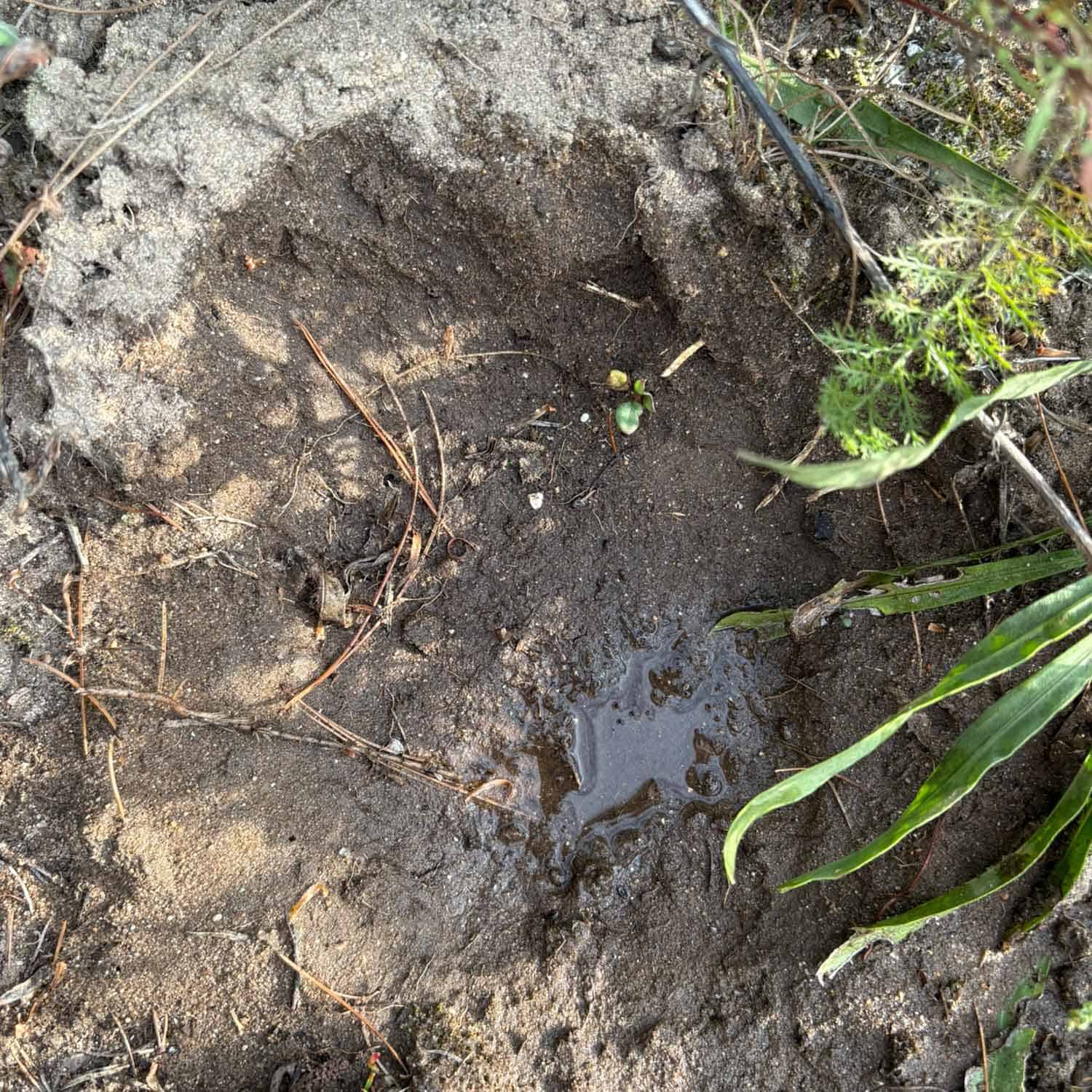
Location where a stiff aster (Ionactis linariifolia) plug was planted and the top was eaten off. I was still watering it, because the crown and roots of the plant were still in the ground.

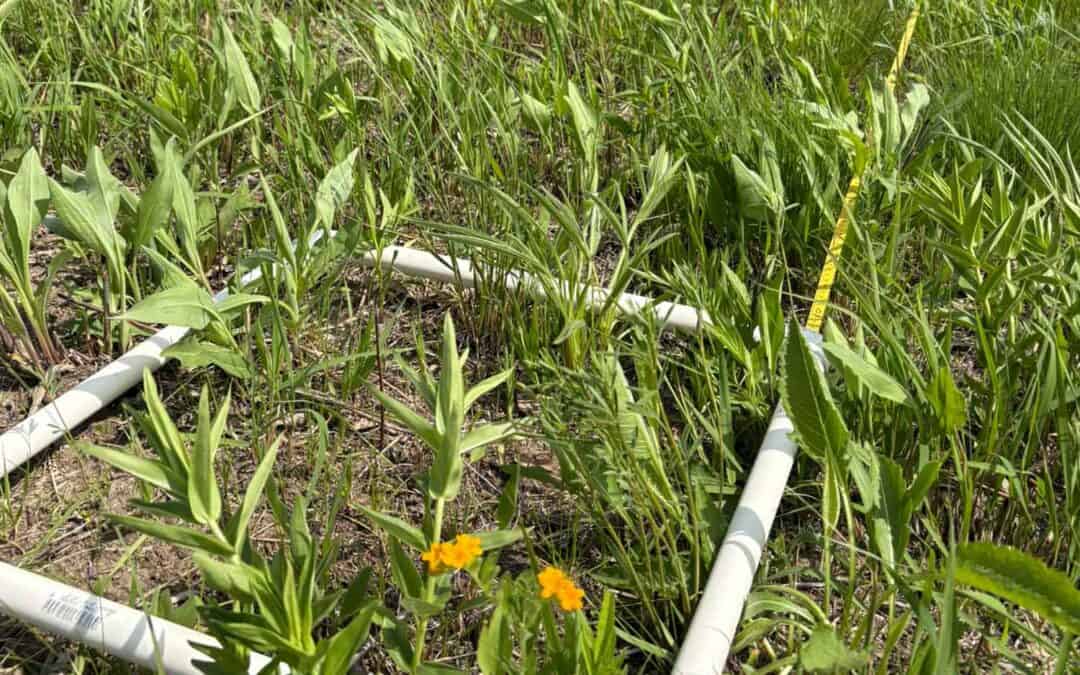
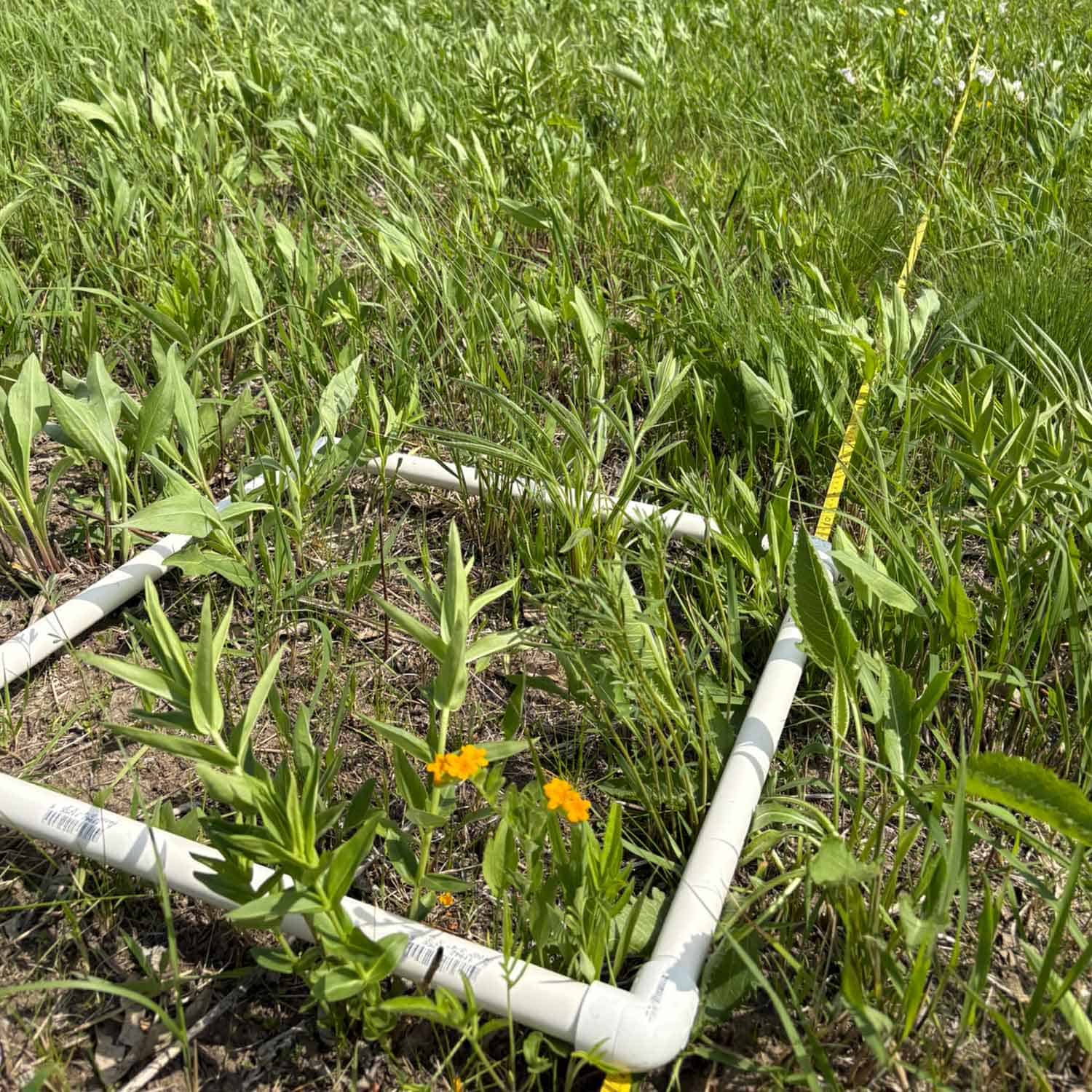
I identified two ten-meter sampling transect locations in each planting prior to field work using aerial photography. Transect locations were selected such that they were dispersed within the planting area, and all portions of transects were at least three meters from edges. Transects were also positioned parallel to slopes to maximize gradients associated with slope positions and underlying soils, bedrock, and moisture. I wanted to capture as much of the variation within planted prairie units as possible. Along each transect I sampled 10 one-quarter meter square sampling areas (quadrats), which were placed randomly on the left or right side of the transect and randomly along the first or second half meter within each of the ten one-meter intervals of the transect. Thus, within each remnant I assessed mean C from a total of twenty subsamples (ten each along two transects). In addition, eight prairie remnants on the same landscape were sampled in the same way, with the exception that a few transects were repositioned to be in burned portions of otherwise unburned remnants. These remnants do generally tend drier than the plantings, because they are located on parts of the landscape that weren’t arable, ranging from dry to borderline mesic at toe-of-slope positions. All field work was conducted between May 15 and May 27, 2025. With two exceptions (one remnant and one planting), all sampling areas had burned since the 2024 growing season. 

Each prairie planting and remnant mean C value was calculated by taking the average of all twenty individual subsample quadrat mean C values. This procedure produces mean C weighted by the frequency of species in the quadrat subsamples; species that occurred in many subsample quadrats had more influence, and those that occurred in only one or a few subsamples had proportionately less. This is of greater interest than mean C calculated from the total list of species in a given planting or remnant, because it distinguishes and assigns higher mean C to areas that have conservative species represented frequently at small scales throughout compared to areas where conservative species are detected at the scale of all sampling within a prairie planting (here the five square meters of total area among quadrats in a unit) or remnant but are sparse such that they are only infrequently detected in subsamples.   

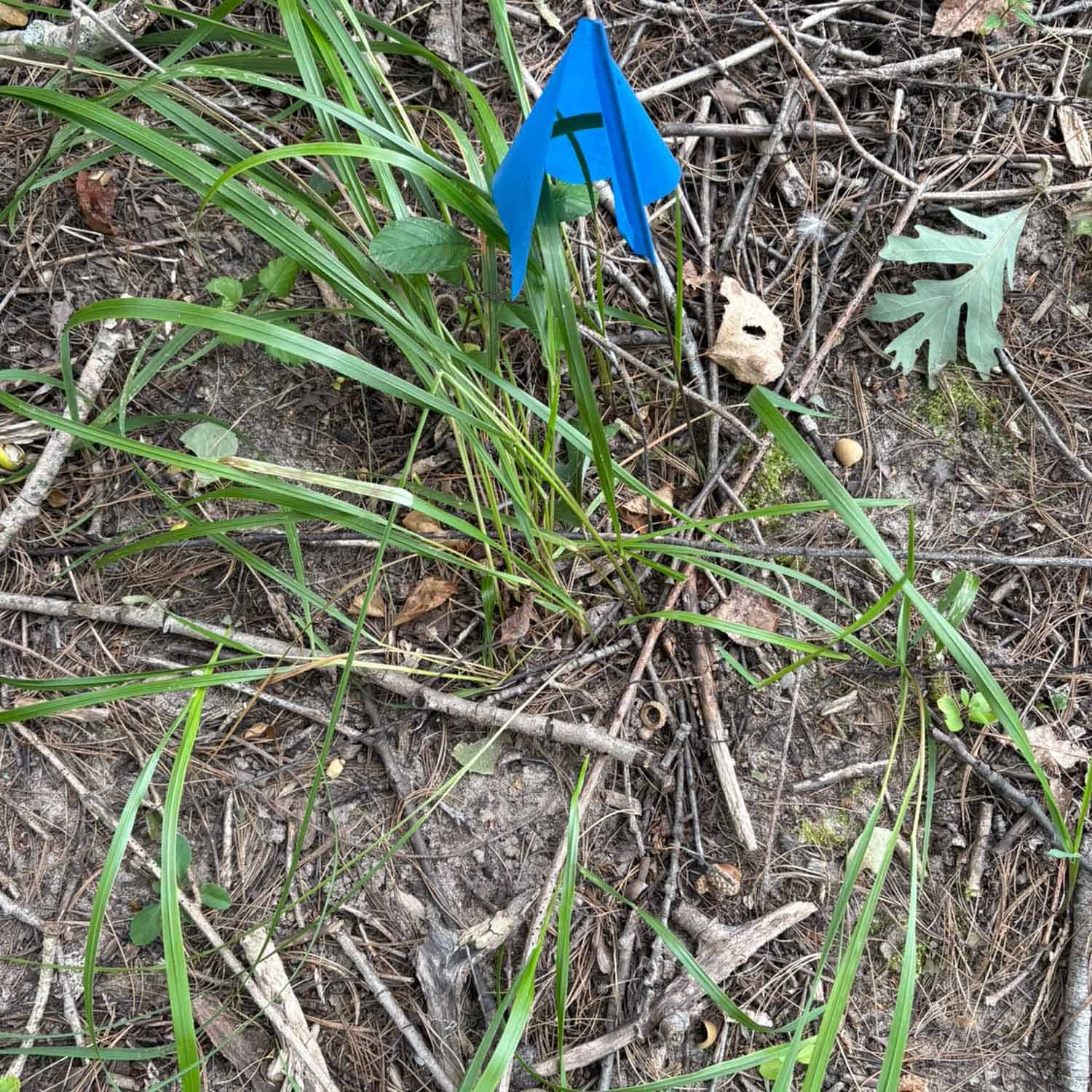
Sweetgrass (Hierochloe odorata) in September after being planted as a plug in moist, sandy savanna in May. It has already spread out by rhizomes several inches in all directions.  

Findings 

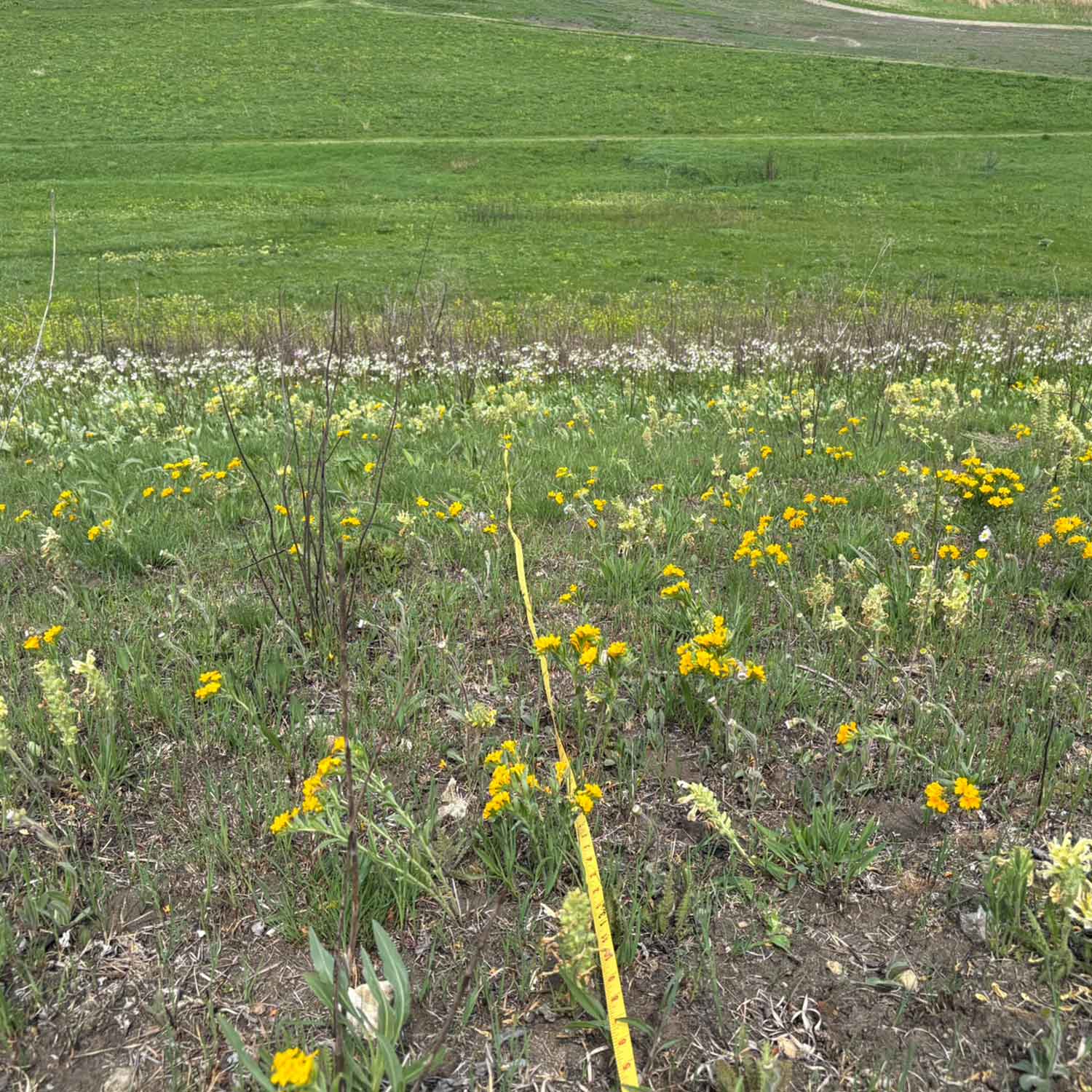
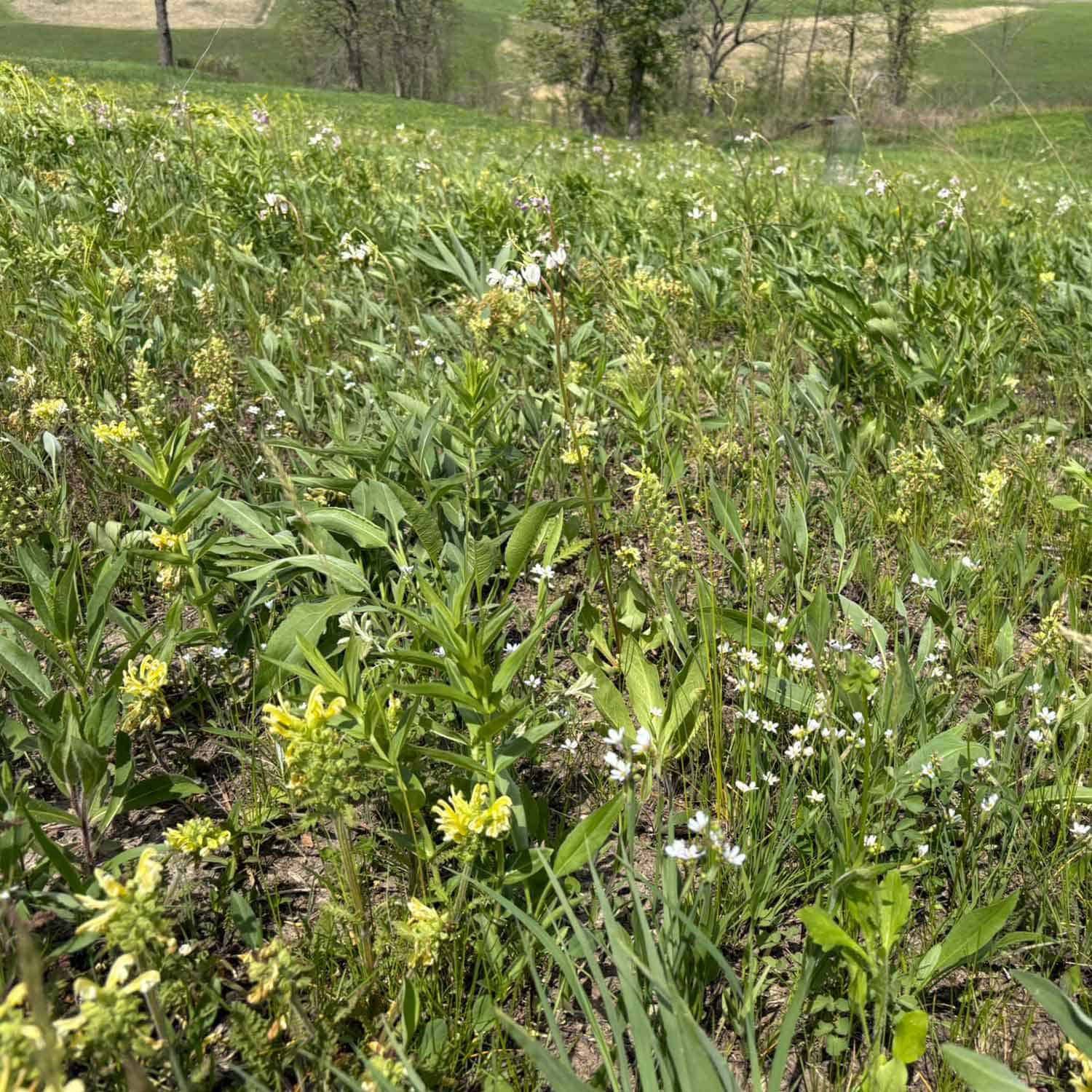
Figures 1-4 are photographs from the plantings and remnants that I sampled. The results were not surprising given how visually impressive the plantings are. Prairie planting mean C values were similar to and fell within the range of mean C values observed on nearby remnants. Many species normally only encountered in remnant, old-growth prairies like hoary puccoon (Lithospermum canescens), wood lily (Lilium philadelphicum), porcupine grass (Hesperostipa spartea), Leiberg’s panic grass (Dichanthelium leibergii), false toadflax (Comandra umbellata) and prairie violet (Viola pedatifida) were encountered in at least one planted prairie. The blog post associated with this article provides a list of all 136 plant species encountered in plantings and remnants during sampling and the number of remnants and plantings they were detected in. Keep in mind that this list does not capture all species present a planted or remnant prairie unit; it captures species abundant and distributed enough to be detected within the five square meters of total sampling in each unit, or sparse species that I was just lucky to detect. Most species that were detected even once would have been apparent to a knowledgeable observer strolling through a unit.  

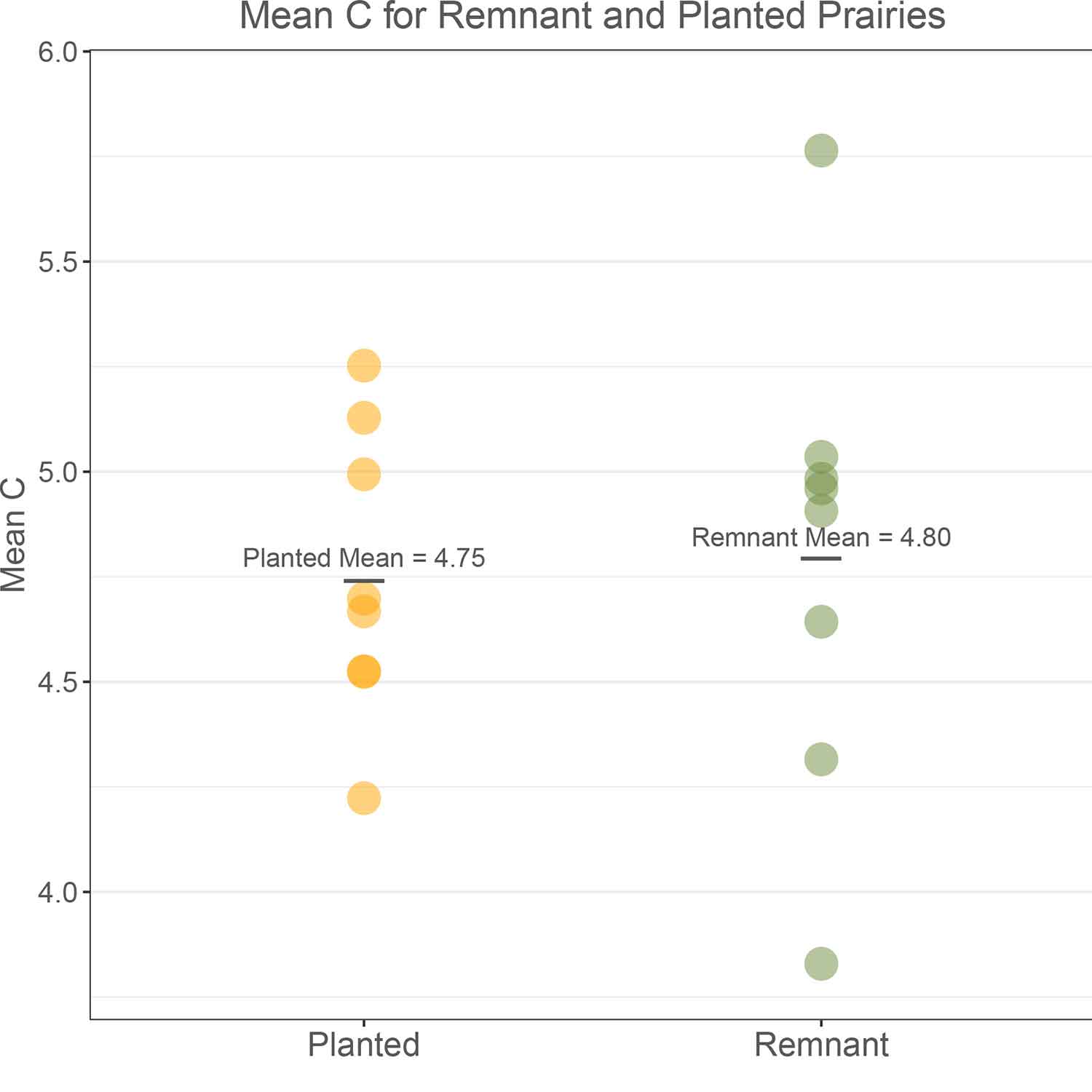
Frequency-weighted mean C among the eight prairie plantings sampled averaged 4.75, which indicates recovery of ecological integrity on par with many remnant natural areas. Values for individual plantings ranged from 4.22 to 5.25. Mean C among the remnants averaged 4.80 and ranged from 3.83 to 5.76. There was not evidence for a statistical difference in mean C between the plantings and the remnants (Wilcoxon test of median difference due to small sample and non-normal data, W = 33, p = 0.96; inference from T-test of mean difference is the same). The data is plotted in figure 5. It should be noted that there are nonetheless differences between the planted and remnant prairies. For example, Richardson’s sedge (Carex richardsonii), Mead’s sedge (Carex meadii), yellow stargrass (Hypoxis hirsuta), violet wood sorrel, (Oxalis violacea) and Great Plains lady’s tresses orchid (Spiranthes magnicamporum) were only observed in remnants. Some of this may be attributed to these species not being included in planting seed mixes or included in only very small amounts. The absence of some of the more xeric species may be attributed to differences in conditions between remnant and planted prairies. In particular, the driest parts of the remnant prairies are drier than most or any parts of the planted prairies.  

The success of these plantings can be attributed to several factors, including the following: 

  • Seeding was diverse, including many conservative species associated with old-growth and species that flower early in the season and are often omitted from plantings (e.g., wood betony, Pedicularis canadensis; prairie blue-eyed grass, Sisyrinchium campestre; false toadflax, Comandra umbellata; etc.). 
  • A vigorous growth of annual and biennial weeds was not released from the seed bank, because broadcast non-selective herbicide spray and cultivation for site preparation were avoided and nonnative, cool-season grasses provided a sort of cover crop as well as immediate fuel for burning.  
  • It’s possible that soils and associated microbial communities in established nonnative, cool-season grass sods had recovered to a degree prior to planting. This needs research. 
  • The existence of remnant prairies nearby on the landscape allowed for recolonization of the plantings by specialist insects and also potentially some plants and microbes (bacteria and fungi).  
  • Wood betony (Pedicularis canadensis) has been used to prevent over-dominance by tall, warm-season grasses and is abundant in the planted prairies.  
  • Very importantly, annual or near annual early spring (mostly dormant) fire created and maintained a thatch-free environment for prairie seeds to germinate and establish and in turn disperse more seeds.  Frequent fire can also reduce nitrogen availability by volatilizing nitrogen out of the system and producing charcoal that binds some of what is not volatilized; most conservative species have an advantage under conditions of low nutrient availability due to greater efficiency and/or retention of nutrients, and a greater propensity for mutualisms like mycorrhizal associations that can alleviate nutrient limitations. Thus, fire has favored elements of the developing prairie community over time and disfavored relatively opportunistic, weedy species. This is an important factor regardless of method of site preparation. Very frequent dormant season burning is the common denominator of the most successful reconstruction and restoration projects I have encountered.  

I did calculate overall mean C for each unit using the mean of coefficients of all species detected among all twenty subsamples. Values calculated at this somewhat larger scale were modestly greater for all plantings and six out of eight remnants (Mean C = 5.15 for plantings and 4.91 for remnants). There are two possible explanations, which are not mutually exclusive. One is that conservative species are still under-represented at small scales due to sparseness or patchiness, implying that plantings may continue to coalesce and stitch back together as plants spread vegetatively or by seed. Likewise, remnants may continue to recover from past land use and fire exclusion with stewardship. The other is that individual conservative species may be more localized within units due to relative specialization along environmental gradients compared to less conservative species, which would result in more conservative species being detected at larger scales. Non-native species like smooth brome (Bromus inermis) and less conservative native species were often sparsely present across many or all subsamples in a unit, and at least some conservative species within units were only detected in positions at either end of or in the middle along transects which were laid out across physical gradients from relative upslope to downslope positions.   

While the planted prairies are still subtly different from remnant prairies, insofar as “native systems are defined substantially by their conservative biota,” (Swink and Wilhelm, 1994), these plantings appear well on their way to recovery. With time, restoration of stabilizing dormant season fire, and efforts to compensate for limiting natural dispersal into sites (and more than a little weed pulling, cutting brush, etc.), it seems almost as though these ecosystems want to reconstitute themselves. This gives me great optimism for these sites and others like them where constant and thoughtful stewards are at work giving them a chance.   

References

1. Swink, Floyd, and Gerould Wilhelm. “Plants of the Chicago region.” Indiana Academy of Science, 1994.

This article appeared in the Spring 2026 edition of The Prairie Promoter, a publication of news, art and writing from The Prairie Enthusiasts community. Explore the full collection and learn how to submit your work here

About The Prairie Enthusiasts 

The Prairie Enthusiasts is an accredited land trust that seeks to ensure the perpetuation and recovery of prairie, oak savanna, and other fire-dependent ecosystems of the Upper Midwest through protection, management, restoration, and education. In doing so, they strive to work openly and cooperatively with private landowners and other private and public conservation groups. Their management and stewardship centers on high-quality remnants, which contain nearly all the components of endangered prairie communities. 
People_Shawn_Kadlec

People_Shawn_Kadlec

Who We Are

Shawn Kadlec

Sunrise Chapter Representative

Contact at: Info@ThePrairieEnthusiasts.org

Shawn grew up in rural Minnesota and has enjoyed the outdoors since his childhood. His first experience with “prescribed fires” was on his grandfather’s farm where they’d periodically burn the drainage ditches and creeks that ran through the property. After a 27-year career in the Army, Shawn and his family returned to Minnesota and settled northeast of the Minneapolis/St. Paul metro area in Chisago City. Shawn got his start with The Prairie Enthusiasts in February 2025 when he and numerous other individuals responded to an inquiry from the Chisago County Soil and Water Conservation District asking if anyone was interested in forming a chapter. Shawn is excited to learn more about our fire-dependent ecosystems and working with landowners and other organizations to better preserve and restore our natural landscapes.

Considerations for Planting Plugs and Other Vegetative Material

Considerations for Planting Plugs and Other Vegetative Material

Considerations for Planting Plugs and Other Vegetative Material

Article and Photos by Dan Carter, The Prairie Enthusiasts Ecologist
July 7, 2025

Poke milkweed (Asclepias exaltata) in September after being planted as a plug in May in a shady area of savanna. Plugs were propagated in this case, because only a very limited amount seed with local genetics was available.  

People ask me about plugs1 from time to time, and I hear a lot of comments about them, so I’ll lay out my considerations related to the use of plugs and other vegetative plant material (roots, rhizomes, bulbs, etc.)2 in restoration and reconstruction projects. Seed is the most important means of establishing appropriate species on a site, but I personally supplement seeding with plugs and dormant roots often. Maybe I’m impatient, but I believe they can be worthwhile under the circumstances listed below:

  • The species is particularly important to establish in the focal ecosystem and seed availability is limited, seed harvest is challenging or reliability of establishment from seed is low. Native violets (Viola spp.) often fit that description. Violets can be established from seed, but using some of that precious seed to produce plugs may result in more violets establishing sooner.
  • You are trying to rescue genetics from a small, unprotected population or amplify a small population on a site you are restoring. In these cases, you’ll only be harvesting small amounts of seed, so producing plugs may ultimately result in more established plants.  
  • The species is a “matrix3” species that also spreads vegetatively by rhizomes, stolons or adventitious shoots from spreading roots. This is especially true for those matrix species for which seed availability is limited. Some examples are wild strawberries (Fragaria virginiana and F. vesca), northern bedstraw (Galium boreale), Mead’s sedge (Carex meadii) and many other long-rhizomatous sedges, sweet grass (Hierochloe odorata) and grove sandwort (Moehringia lateriflora). Other matrix species may be worthwhile to establish from plugs or to augment seeding—even if seed is more available. These include stiff sunflower (Helianthus pauciflorus), western sunflower (Helianthus occidentalis), Plains grass-leaved goldenrod (Euthamia gymnospermoides), prairie coreopsis (Coreopsis palmata), roses (Rosa arkansana and R. caroliniana), etc. Common matrix grasses like side-oats grama (Bouteloua curtipendula) are usually easy to establish from seed, so plugs are unnecessary.  
  • It’s a small-scale, residential project. In such projects, plugs for most species are a better choice than seeds. It’s easier to tell between weeds and desirable plants with plugs, and the planting will establish and look good much sooner. 

There are drawbacks. First, plugs often need to be watered after their initial planting. This is especially true for plugs that are available or ready to plant in late spring. Sometimes I feel like the atmosphere knows I’ve planted plugs, so it decides not to send rain for weeks after planting. The best times to plant plugs are early spring and early autumn and when the soil is moist. However, plugs planted in early spring need to be pre-hardened against cool weather. Dormant roots, bulbs, corms or rhizomes from plants grown in propagation beds are easier because they are acclimated to the season and can be planted any time in the dormant season when the soil is workable. If I plant anything between April 1 and October 1, I assume that rain will fail. I mark the plants with flags, and plant only an amount I know I will have time to water as often as twice a week. If there is consistent soil moisture, plants will generally be well-established and need no special care after four to six weeks.  

Many animals are adept at finding soil disturbances or added moisture associated with planting plugs and other vegetative material, and they often will uproot transplants to cache nuts/seeds or dig for insects or worms. I’ve even seen a video of a tiger salamander digging up freshly planted plugs on the prairie! Sometimes deer eat the tops off, and if the plugs aren’t yet rooting into the surrounding soil, they get pulled out in the process. In my experience, within a given year there tend to be particular areas where many plugs are dug up and other areas where none are dug up. One could try to fortify plants with small cages, but I’m more inclined to accept the losses and try again another time. 

Planting vegetative material generally limits the amount of genetic diversity going into the site. This is especially true when roots/rhizomes of clonal species are planted, which were obtained from only one or a few clones. However, while there is more genetic diversity among seeds broadcast into a site, if seed establishment is low, the result won’t necessarily be the establishment of a population with more genetic diversity. For species that rely largely on clonal spread (e.g., Mead’s sedge), patches that establish can persist almost indefinitely despite limited genetic variation. When we harvest seed from these clonal species on remnant prairies where they’ve woven themselves through almost the entire site, we often don’t know if we are harvesting seed from one, a few or many genetic individuals unless there are conspicuous trait differences between patches or unless we do genetic testing. In such cases it is probably best to obtain material originating from at least a few sites or well dispersed parts of a single site.  

Location where a stiff aster (Ionactis linariifolia) plug was planted and the top was eaten off. I was still watering it, because the crown and roots of the plant were still in the ground.

Sweetgrass (Hierochloe odorata) in September after being planted as a plug in moist, sandy savanna in May. It has already spread out by rhizomes several inches in all directions.  

Plugs can be expensive, whether you buy them from a commercial source or produce them yourself. In the latter case, you’ll need a good medium for starting seeds and growing small plants, appropriate pots/flats, good artificial lighting, fertilizer and time. Vegetative material transplanted directly from outdoor propagation beds to sites is probably the easiest and generally less costly.  However, it is best to remove soil and rinse roots being moved between sites, given the risk of spreading invasive species like jumping worms (Amynthas spp.) or unwanted plants, and even that won’t completely alleviate that risk. Don’t move plant material grown in soil where jumping worms are already known to occur. Finally, the most critical thing to do when you are in the process of planting plugs is to brush away some of the potting medium at the base of the shoot/top of the roots so that you can replace it with a thin layer of the soil from the site where you are planting the plug. Otherwise, moisture will wick from plug’s potting medium directly to the atmosphere and the plug will dry out very quickly. When the plug is planted in the ground, you should not be able to see the potting medium. 

References

1. Plugs are generally small plants grown in flats of between 32 and 72 individual plants.

2. Except under rare circumstances and with permission, it is not ethical to dig and move wild plants. Use plants started from seeds or propagated in nursery beds.

3. Matrix species in this context are either abundant or co-dominant and woven throughout a community. A dry prairie might have a matrix of side-oats grama (Bouteloua curtipendula), little bluestem (Schizachyrium scoparium), and Richardson’s sedge (Carex richardsonii) with a variety of other species embedded within it.

This article appeared in the Fall 2025 edition of The Prairie Promoter, a publication of news, art and writing from The Prairie Enthusiasts community. Explore the full collection and learn how to submit your work here

About The Prairie Enthusiasts 

The Prairie Enthusiasts is an accredited land trust that seeks to ensure the perpetuation and recovery of prairie, oak savanna, and other fire-dependent ecosystems of the Upper Midwest through protection, management, restoration, and education. In doing so, they strive to work openly and cooperatively with private landowners and other private and public conservation groups. Their management and stewardship centers on high-quality remnants, which contain nearly all the components of endangered prairie communities. 
Volunteer Spotlight: Gary Eldred

Volunteer Spotlight: Gary Eldred

Volunteer Spotlight: Gary Eldred

Article by Kay Wienke, Southwest Wisconsin Chapter Board Representative

November 17, 2025

Gary Eldred is the volunteer every organization yearns to have in their membership. He has spent 50 years of his life dedicated to prairie restoration and The Prairie Enthusiasts. He was instrumental in the discovery of the organization’s first prairie (Muralt Bluff Prairie), participated in the first burn there in 1975 and several since. He is also credited with helping to find and acquire  several other prairies for the organization. To discover prairie remnants, Gary has conducted surveys in over a dozen Wisconsin counties and three counties in Iowa.

His service on the ground is legendary. He served as site steward for several prairies at one time, conducting weekly work parties with an experienced group of volunteers. He served as President of the early Southwest Prairie Enthusiasts for its first five years. When the group became The Prairie Enthusiasts in 1993, he served as the organization’s President for 10 years. He continues to serve as Emeritus on the The Prairie Enthusiasts Board and regularly attends the Southwest Wisconsin Chapter meetings, presentations and workdays.

His artwork is an accurate, beautiful representation of nature and prairie species. In 1989, his drawing of a meadowlark on a fence became the organizational logo and continues to this day. Historically his art was sold at Chapter banquets to raise funds for the work of the organization.

All this work and dedication to prairies resulted in Gary Eldred being inducted into the Wisconsin Conservation Hall of Fame in 2021. Thomas Hunt, Southwest Wisconsin Chapter Member, describes him as “a renaissance man—artist, writer, scientist, organizer and leader.”

Gary indicates that when he had a job, it was to support his habit of discovering and preserving prairies. He has spent more hours than can be counted dedicated to prairies and The Prairie Enthusiasts. Gary Eldred is the example we can all strive to become! Thank you, Gary, for your lifelong service!

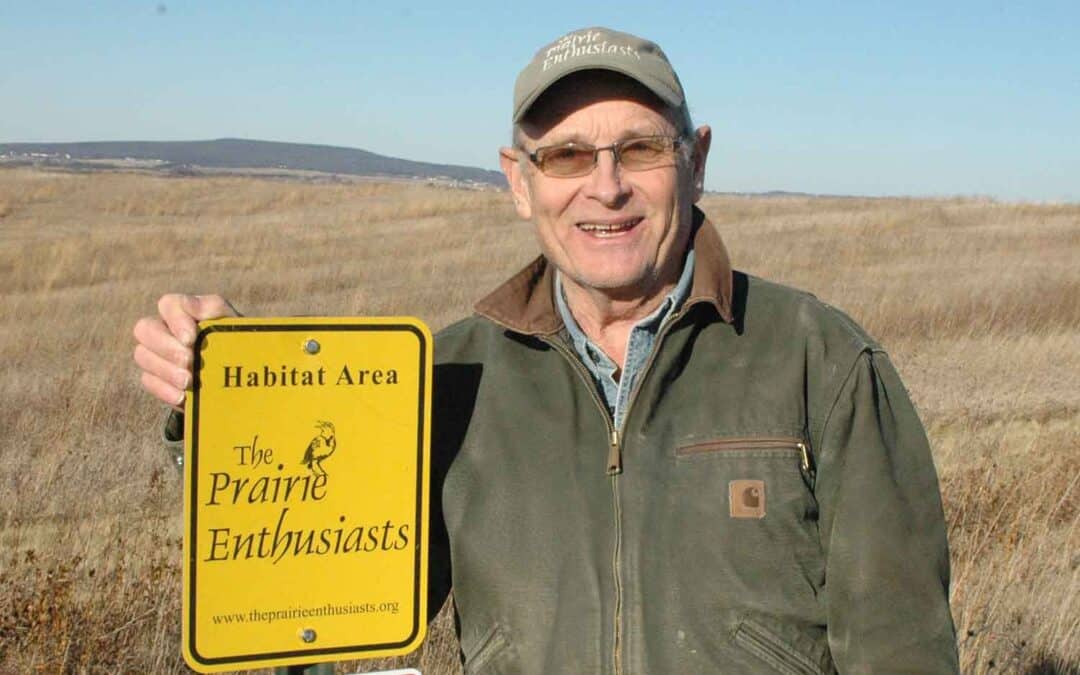
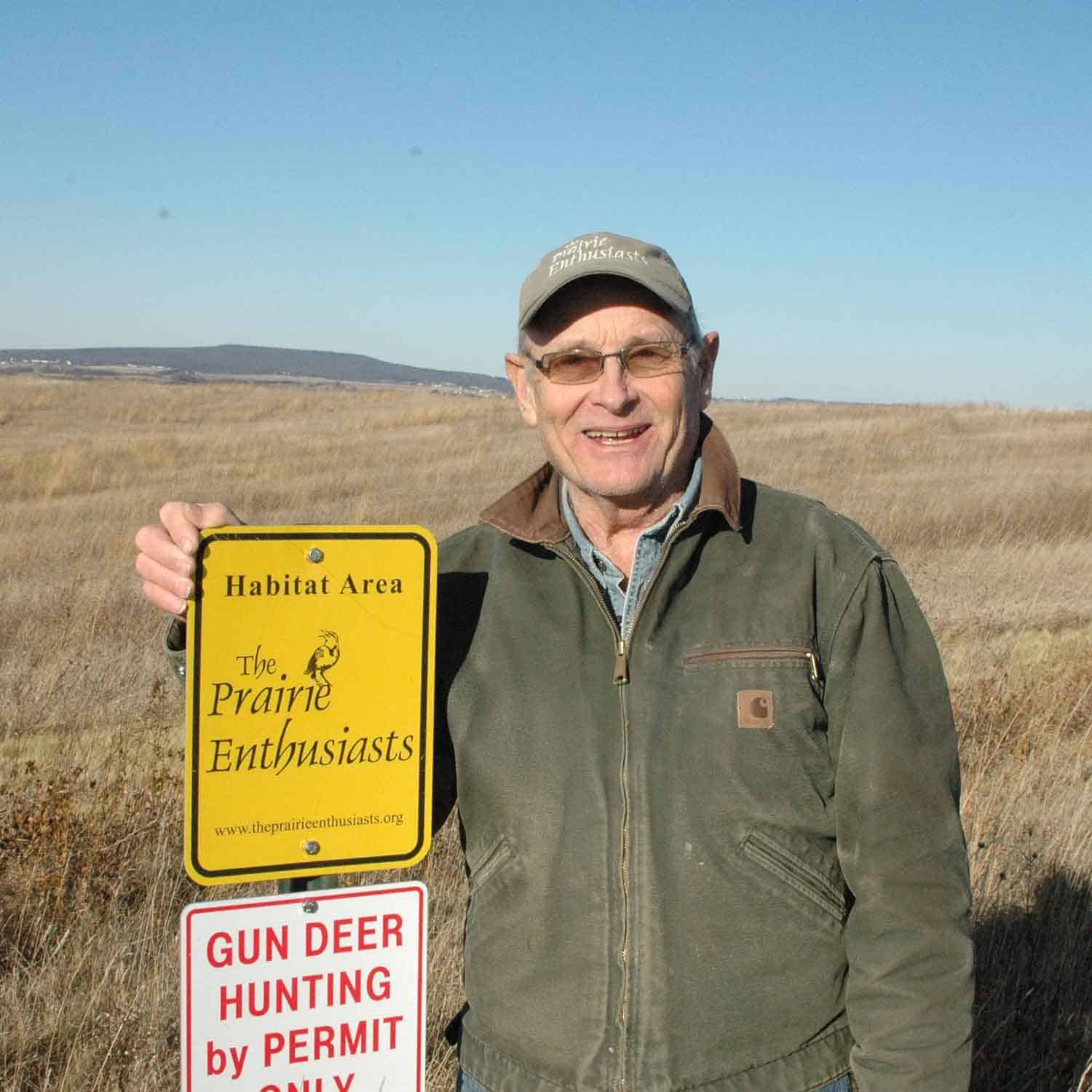
Gary Eldred standing by a boundary sign with the meadowlark illustration he created. Photo by Tim Eisele.

This article appeared in the Fall 2025 edition of The Prairie Promoter, a publication of news, art and writing from The Prairie Enthusiasts community. Explore the full collection and learn how to submit your work here

About The Prairie Enthusiasts 

The Prairie Enthusiasts is an accredited land trust that seeks to ensure the perpetuation and recovery of prairie, oak savanna, and other fire-dependent ecosystems of the Upper Midwest through protection, management, restoration, and education. In doing so, they strive to work openly and cooperatively with private landowners and other private and public conservation groups. Their management and stewardship centers on high-quality remnants, which contain nearly all the components of endangered prairie communities. 
Student Researchers and Local Stewards Team Up to Study How Management Shapes Restored Prairies Under Changing Winters

Student Researchers and Local Stewards Team Up to Study How Management Shapes Restored Prairies Under Changing Winters

Student Researchers and Local Stewards Team Up to Study How Management Shapes Restored Prairies Under Changing Winters

Article by Katherine Charton, Empire-Sauk Chapter Member

November 17, 2025

Former undergraduate researchers Sam August and Benji Jackson survey plant community composition in summer within the long-term experimental plots at Mounds View Grassland. Photo by Michelle Homann.

On a winter morning at The Prairie Enthusiasts’ Mounds View Grassland, the prairie is quiet but alive. Beneath the snow, small mammals race through hidden tunnels, their paths winding between dormant stems. Just below the soil surface, the buds of prairie perennials wait patiently for the thaw, storing energy for the first warm day of spring. Overhead, a hawk scans the whitened landscape while the wind combs through last season’s seedheads. And in the distance, the scrape of shovels cuts through the stillness as bundled-up students push snow into neat piles or clear it away entirely from flag-marked plots. Few humans venture into the prairie at this time of year, but these students are maintaining an experiment unlike any other in the region—an effort to understand how a changing winter is reshaping prairies across the Midwest.

The project began in 2016 as a collaboration between university research ecologists and local land stewards to test how winter snow cover interacts with the type and timing of managed disturbance. It’s a question that weighs on the minds of practitioners across the region who are working to restore the prairies that once stretched unbroken across the landscape. “Disturbance through fire, mowing and other means defines prairie management,” explains Ellen Damschen, Professor of Integrative Biology at the UW-Madison and principal investigator of the project. “Those actions are essential to restoring and maintaining prairie ecosystems. But a key question for stewards is whether they might amplify—or help offset—the stresses of a changing winter.”

In the Midwest, climate change is advancing fastest in the cold months, and once-reliable snow cover is becoming less certain. Snow acts as an insulating blanket, buffering roots and buds from the full force of winter cold. Without that protection, soils can freeze more deeply and cycle between freezing and thawing more often, increasing plant exposure to potentially damaging conditions. Restoration must be planned with this future in mind. “The prairies being planted today will grow under a different climate than the one that shaped them over their evolutionary history, especially in winter,” says Damschen. “Given the likelihood that we’ll continue to lose insulation in the form of snow, we wanted to know whether burning or mowing before winter would alter the insulation provided by plant litter.”

The idea to test this interaction at Mounds View Grassland took root through conversations between Damschen, then-postdoctoral research associate Laura Ladwig, then-doctoral student Jon Henn and Rich Henderson, longtime Empire-Sauk Chapter Board Representative and Mounds View Grassland site steward for The Prairie Enthusiasts. Together they envisioned a living experiment that could serve both science and restoration. Henn and Henderson worked closely to map out 32 200-m2 plots across two prairie restorations at the site. Henderson coordinated management schedules so that experimental spring burns, fall burns and fall mowing could proceed without disrupting ongoing stewardship, while fire crews from The Prairie Enthusiasts and the local land management company Adaptive Restoration provided the expertise and labor to carry out the treatments.

The research team, initially led by Henn, also manipulated snow in 192 4m2 subplots nested within the larger disturbance plots. Using cross-country skis, snowshoes and shovels, student crews trekked to Mounds View Grassland after each snowfall of four inches or more, removing snow from some plots, adding it to others or leaving it untouched. Maintained now for nearly a decade, this experimental design has allowed researchers to explore how management and insulation interact—to see whether, for instance, removing litter before winter exposes plants to deeper frost in low-snow conditions, or whether keeping litter through the winter offers protection and benefits the plant community.

As the project matured, a new generation of researchers stepped in to continue the work. I joined the Damschen Lab as a graduate student in 2019 and inherited the project from Henn, expanding its scope to explore how plant functional traits—characteristics of plants such as stress tolerance and resource acquisition abilities—might predict which species persist or colonize under different combinations of managed disturbance and snow cover. In 2022, Michelle Homann, a current PhD candidate, joined to lead new rounds of data collection and focus on how the treatments influence early spring thaw and seedling emergence. Christopher Warneke, a postdoctoral research associate, took on the role of data manager, ensuring the consistency and quality of thousands of data points gathered each year. Early funding from the Joint Fire Science Program and the National Science Foundation helped launch the work, while continued support from the U.S. Geological Survey Midwest Climate Adaptation Science Center has sustained the experiment over time, allowing for a rare, long-term assessment of ecological change. At every stage, the project’s continuity has depended on collaboration between graduate students, faculty mentors, practitioners, stewards, funders and the dozens of undergraduate assistants who have kept the experiment alive.

I recently led the publication of a peer-reviewed manuscript summarizing results from seven years of data and exploring how plant traits influence community outcomes. We found that fall burns and reduced snow both led to colder minimum winter soil temperatures, with the coldest conditions occurring when the two treatments were combined. That’s likely because prescribed fire removes insulation in the form of litter before plants have a chance to regrow and replenish it, while the snow removal prevents accumulation of snow that would otherwise buffer the soil from the coldest temperatures.

Winter view of the experimental plots at Mounds View Grassland from a nearby hilltop. Photo by Ellen Damschen.

Former graduate student Jon Henn, who helped originate the experiment, joins The Prairie Enthusiasts’ prescribed fire crew to apply a burn treatment at Mounds View Grassland. Photo by Laura Ladwig.

Surprisingly, however, only the management treatments—not the snow manipulations—have produced measurable effects on the composition of species that make-up the plant community so far. We found that both spring and fall burns have resulted in greater increases in species richness than in unmanaged plots, with fall mowing falling somewhere in between, a pattern that aligns with what many practitioners already observe. Despite clear shifts in winter soil conditions and measurable effects on individual species performance, including early life stages, we’ve seen no evidence that altered snow depth is changing the overall composition of these prairie communities. This resilience may stem from the evolutionary history of the species themselves. Most prairie plants are long-lived perennials adapted to disturbance. The same deep roots and underground buds that allow them to survive fire may also protect them from freeze stress.

Digging deeper into the data, subtler patterns have emerged in support of this idea. In young restorations like those at Mounds View Grassland, we typically expect colonization by fast-growing, resource-acquisitive plants. But in the coldest plots—those that were burned in the fall and had snow removed—we found more recruitment of stress-tolerant, slower-growing plants. Among those are wholeleaf rosinweed (Silphium integrifolium), wild quinine (Parthenium integrifolium), big bluestem (Andropogon gerardii), white heath aster (Symphyotrichum ericoides) and prairie dropseed (Sporobolus heterolepis)—plants with tough, nutrient-poor leaves and high tolerance to cold, the botanical hallmarks of endurance.

For now, these restored prairie plant communities appear to be holding steady through the loss of winter snow, but subtle or delayed effects may yet emerge as small shifts—like those seen in colonization trends—accumulate over time. And because the experiment has unfolded during an era of warming winters, it has, in a sense, been running within its own real-world test of change, complicating what the data can reveal. Moreover, the prairies at Mounds View Grassland are still relatively young restorations and don’t yet have the species richness and ecological complexity of remnant prairies, so results may differ in those long-established systems.

In my view, a conservative approach would be to continue keeping litter down through burns to make space for new seedlings, but where possible, those burns should occur in the spring to help soften the potential impacts of warming winters. At the same time, we can’t take disturbance for granted. Fire is essential for maintaining the diversity and function of prairie plant communities, but climate change is shifting weather windows, and practitioners have to stay flexible to burn safely and effectively. In some years, that may mean more fall burning simply to ensure fire remains on the landscape at all.

The lessons from this research extend beyond its scientific findings. The experiment demonstrates how restored prairies can double as living laboratories—places where research questions meet the realities of management. Such work depends on trust and shared learning, where researchers rely on practitioners for on-the-ground expertise and historical context, and practitioners rely on researchers to interpret patterns that can inform future stewardship. At Mounds View Grassland, that collaboration has been ongoing for nearly a decade, spanning three generations of graduate students. Season after season, it reminds us that resilience grows from persistence—from tending the land through uncertainty and trusting that, like the prairie itself, our efforts will endure.

For more information about this research, please see the associated academic papers published in Ecosphere (2022) and American Journal of Botany (2025). The research team thanks the continued support of their collaborators and funders, including The Prairie Enthusiasts, Adaptive Restoration, The Nature Conservancy, the Wisconsin Department of Natural Resources, the National Science Foundation, the Joint Fire Science Program and the U.S. Geological Survey Midwest Climate Adaptation Science Center.

Visit Mounds View Grassland!

Click HERE to learn more

This article appeared in the Fall 2025 edition of The Prairie Promoter, a publication of news, art and writing from The Prairie Enthusiasts community. Explore the full collection and learn how to submit your work here

About The Prairie Enthusiasts 

The Prairie Enthusiasts is an accredited land trust that seeks to ensure the perpetuation and recovery of prairie, oak savanna, and other fire-dependent ecosystems of the Upper Midwest through protection, management, restoration, and education. In doing so, they strive to work openly and cooperatively with private landowners and other private and public conservation groups. Their management and stewardship centers on high-quality remnants, which contain nearly all the components of endangered prairie communities.