Double Oak Savanna

Double Oak Savanna

Double Oak Savanna

This site was gifted to The Prairie Enthusiasts by Alice and Walter Mirk in 2012. This 23-acre site contains remnant and restored prairie, oak savanna and oak woodland. The rugged terrain is home to a number of rare species including purple milkweed (Asclepias purpurascens), prairie Indian plantain (Arnoglossum plantagineum), jeweled shooting star (Dodecatheon amethystinum), pickerel frog (Lithobates palustris) and prairie ring-necked snake (Diadophis punctatus arnyi).


Looking through the trees at Double Oak Savanna. Photo by Dan Carter.

Double Oak Savanna

Looking through the trees at Double Oak Savanna. Photo by Dan Carter. 

This site was gifted to The Prairie Enthusiasts by Alice and Walter Mirk in 2012. This 23-acre site contains remnant and restored prairie, oak savanna and oak woodland. The rugged terrain is home to a number of rare species including purple milkweed (Asclepias purpurascens), prairie Indian plantain (Arnoglossum plantagineum), jeweled shooting star (Dodecatheon amethystinum), pickerel frog (Lithobates palustris) and prairie ring-necked snake (Diadophis punctatus arnyi).

Access & Directions

From the east, go to the intersection of Highway 133 and County Road C west of Woodman. Proceed west on County Road C 4.7 miles to the rock quarry on the right., where we will congregate. From the west, go to the intersection of Highway 18 and County Road C, a few miles east of Prairie du Chien. Drive east on County C for 7.8 miles. Just past the settlement of Millville you will come to the rock quarry on the left.

Google Map

Site Steward

Connect with the Chapter to see how you can care for this rare habitat at an upcoming work party.

This site is stewarded by The Prairie Enthusiasts Southwest Wisconsin Chapter.

Chapter Contact: (Email)

How to Enjoy This Site

Allowed:

  • Outdoor Recreation
  • Hunting (for all species, no permit or reservation required)

How to Enjoy This Site

Allowed:

  • Outdoor Recreation
  • Hunting (for all species, no permit or reservation required)


    Walking through Double Oak Savanna. Photo by Dan Carter.

    More information coming soon!
    Eldred Prairie

    Eldred Prairie

    Eldred Prairie

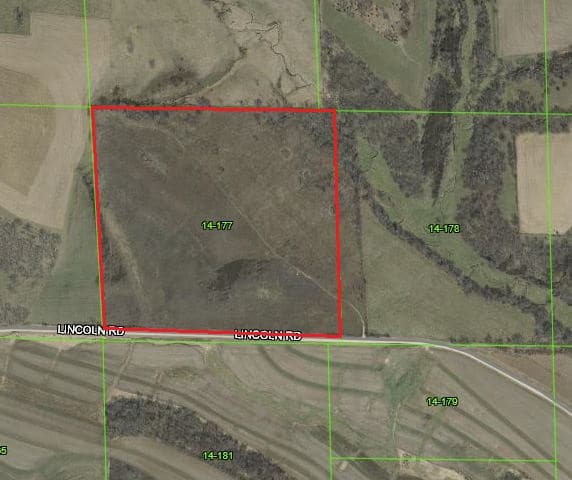
    The 45-acre Ellenboro Prairie, now called Eldred Prairie is located on a low ridge with a dry mesic quality and somewhat sandy soil. About two-thirds of the site has a southern aspect, and one-third a northern aspect.


    Summer at Eldred Prairie. Photo by Michael H. Nee.

    Eldred Prairie

    Summer at Eldred Prairie. Photo by Michael H. Nee.

    The 45-acre Ellenboro Prairie, now called Eldred Prairie is located on a low ridge with a dry mesic quality and somewhat sandy soil. About two-thirds of the site has a southern aspect, and one-third a northern aspect.

    Access & Directions

    Eldred Prairie is located on Lincoln Road just east of Lancaster.

    The easiest way to get there is by way of Highway 129, the highway that diverts Highway 61 traffic around the east side of Lancaster.

    From the north, Lincoln Road is approximately 1 ½ miles south from the north intersection of 61 and 129. From the south, it is about one mile north of the south intersection of 61 and 129.

    Drive east on Lincoln Road for about two miles. Eldred is on the north side of the road and is obviously a conservation area. The entrance gate is at the east end of the property at the top of the hill.

    Google Map

    Site Steward

    Connect with the site steward to see how you can care for this rare habitat at an upcoming work party.

    Site Steward: Ross Shrago (608) 334-6942 or (Email)

    How to Enjoy This Site

    Allowed:

    • Outdoor Recreation
    • Hunting (for all species, no permit or reservation required)

    How to Enjoy This Site

    Allowed:

    • Outdoor Recreation
    • Hunting (for all species, no permit or reservation required)


      Eldred Prairie in bloom. Photo by Gary Eldred.

      What Makes Eldred Prairie Special

      More information coming soon!

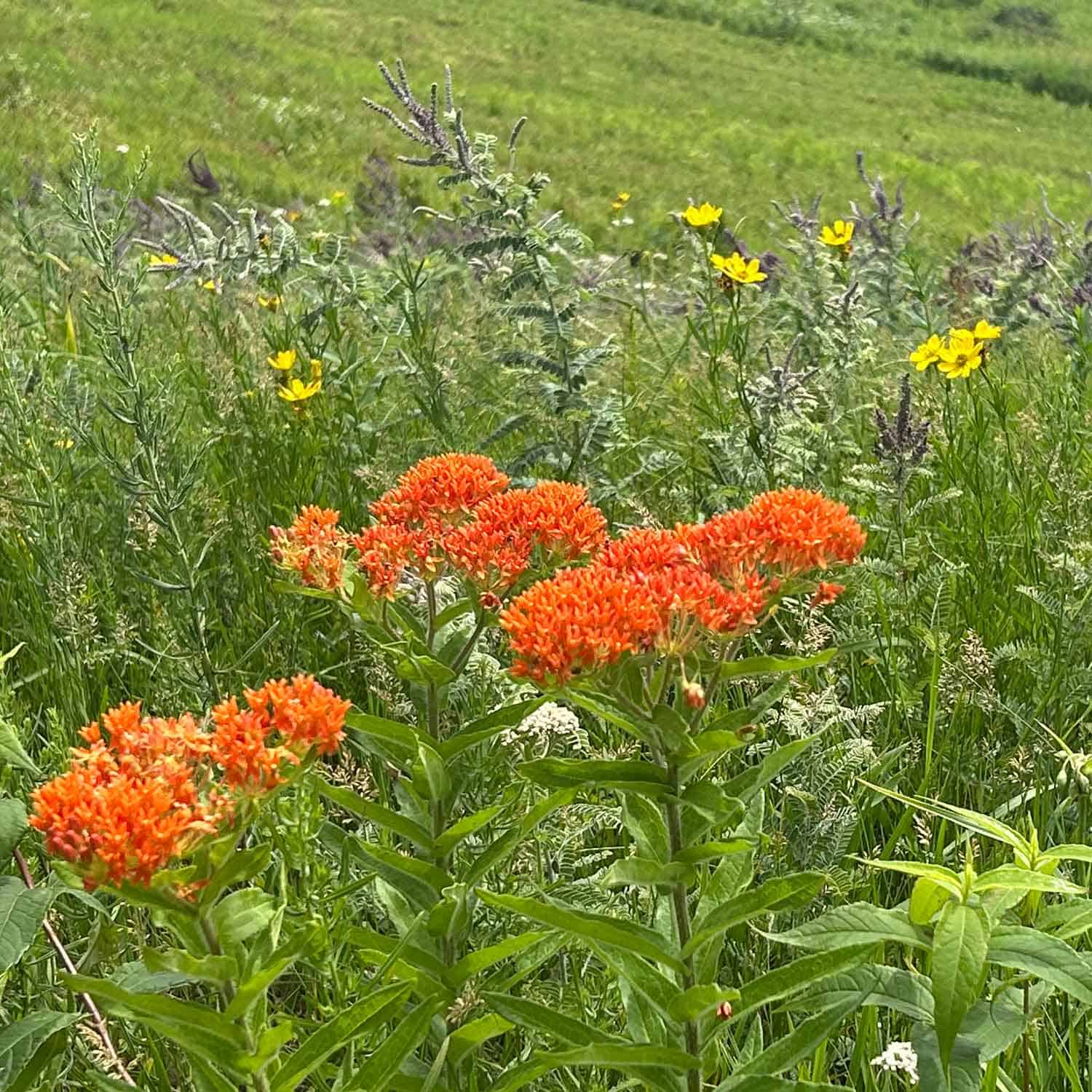
      Butterfly milkweed and leadplant at Eldred Prairie. Photo by Cassidy Coulson.

      How was Eldred Prairie Protected

      Originally called the Ellenboro Prairie, the Southwest Wisconsin chapter changed the name in February 2004 to the Gary Eldred Prairie Preserve to honor Gary Eldred’s many contributions to prairie preservation.

      The site was located by The Prairie Enthusiasts Southwest Wisconsin Chapter members in 1987 while doing a county-wide inventory. Several trips back to the site resulted in a list of over 55 species, including such rarities as cream gentian (Gentiana flavida), wild quinine (Parthenium integrifolium), and tall nut rush (Scleria triglomerata). Several years later a trained botanist from the DNR visited the site to evaluate the quinine population. His comment was “there are probably 10,000 or more plants here!” A purely biased guess is that this may be Wisconsin’s largest single population of this state-threatened species. Over the last 14 years several attempts to purchase the site have been made but not until 2000 was any interest shown in selling. Jaye Maxfield, a dedicated and persistent member of the SWC, was asked by the chapter to help with the project. Meetings were set up with the owners, Grantland Growers, and they expressed an interest in selling. After nearly a year’s effort by Jaye, including paper work, phone calls, filling out forms, back tracking and resubmitting forms and agreements for the sale, closing finally took place on November 13, 2001.

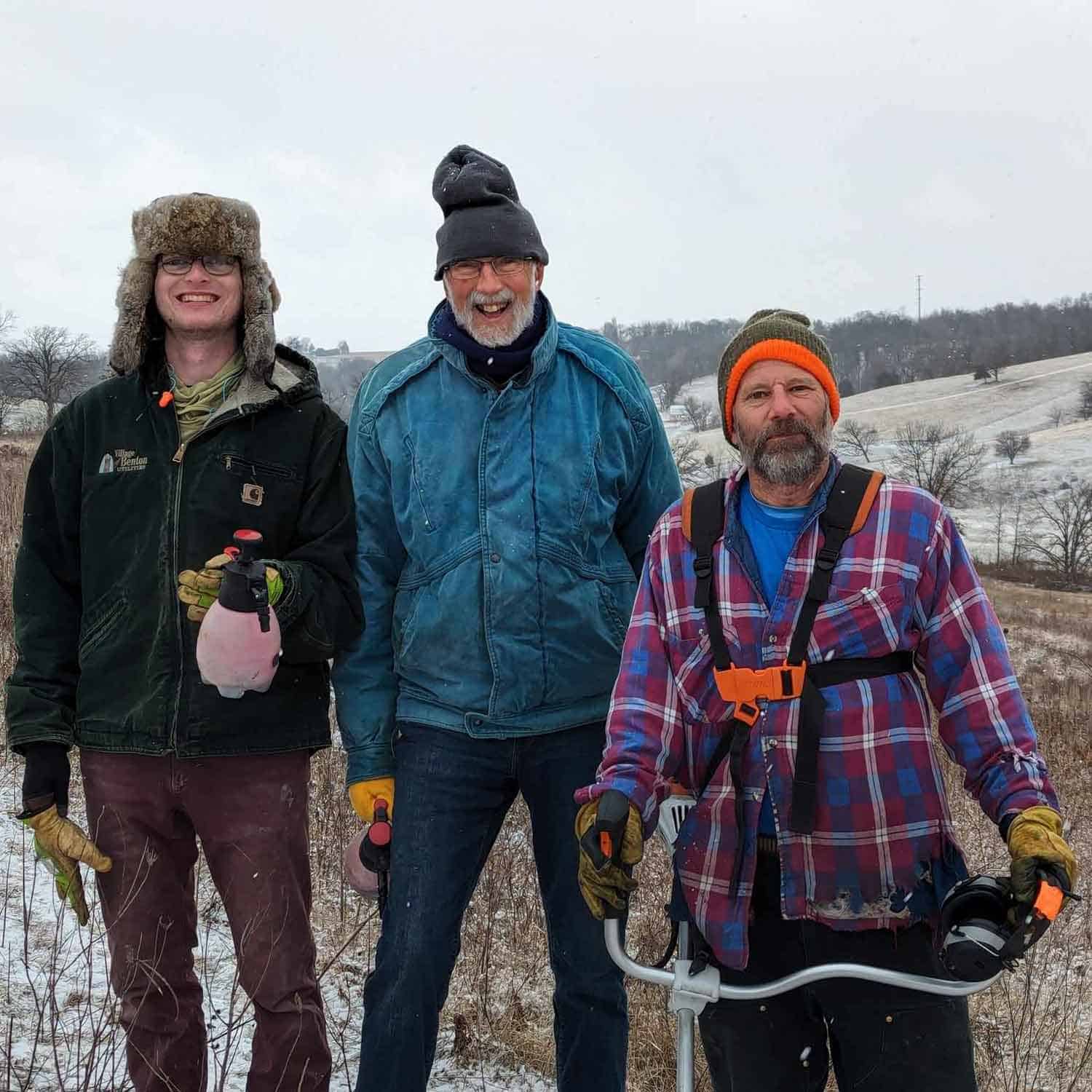
      Southwest Wisconsin Chapter volunteers enjoy a New Year’s Eve work party at Eldred Prairie. Photo by Becky Fernette.

      How You Can Help Eldred Prairie

      Portions of the site are high quality prairie, but others are not. While the Christmas trees have been removed, much of the northern aspect is now covered with briars, brush and aspen. We have done some mowing and burning, but much more, including forestry mowing and girdling of aspen, is required.

      The high-quality prairie is on the south slope. Unfortunately, oak sprouts have been spreading throughout this prairie in ever dense stands. Burning and mowing top kill these stands, but do not kill them. We are now taking a more aggressive approach, including chemical treatment. Crown vetch is a serious problem, though we seem to be making headway with our annual attack. With limited volunteers and limited funds we are able to make progress, but it is slow.

      Check out our Events Calendar to see upcoming work parties or contact the site steward to get involved.

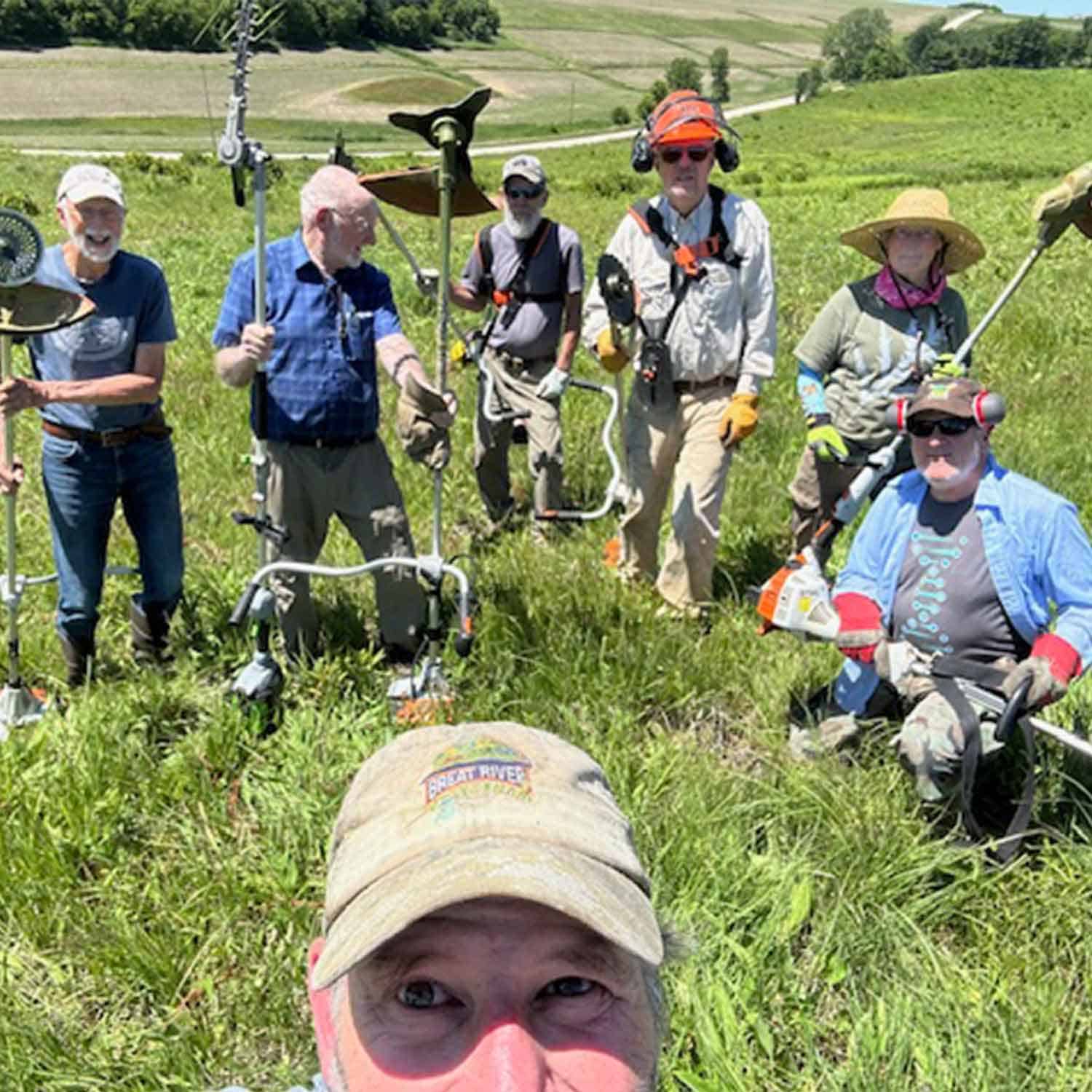
      A brush cutting crew of volunteers at Eldred Prairie. Photo by Bob Costanza.

      Elmoville Prairie

      Elmoville Prairie

      Elmoville Prairie

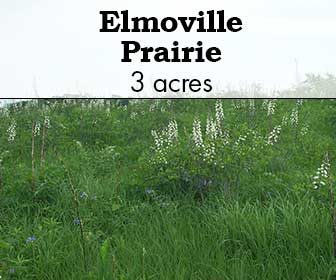
      This 3-acre remnant prairie located in rural Stockton, IL was the first land protection effort of the Northwest Illinois Chapter. Volunteer efforts to bring smooth sumac (Rhus glabra) under control have allowed this site to show off its amazing plant diversity. 


      View of Elmoville Prairie. Photo by Dan Carter.

      Elmoville Prairie

      View of Elmoville Prairie. Photo by Dan Carter. 

      This 3-acre remnant prairie located in rural Stockton, IL was the first land protection effort of the Northwest Illinois Chapter. Volunteer efforts to bring smooth sumac (Rhus glabra) under control have allowed this site to show off its amazing plant diversity. 

      Site Steward

      Connect with the Chapter to see how you can care for this rare habitat at an upcoming work party.

      This site is stewarded by The Prairie Enthusiasts Northwest Illinois Chapter.

      More information coming soon!
      Erbe Grassland

      Erbe Grassland

      Erbe Grassland

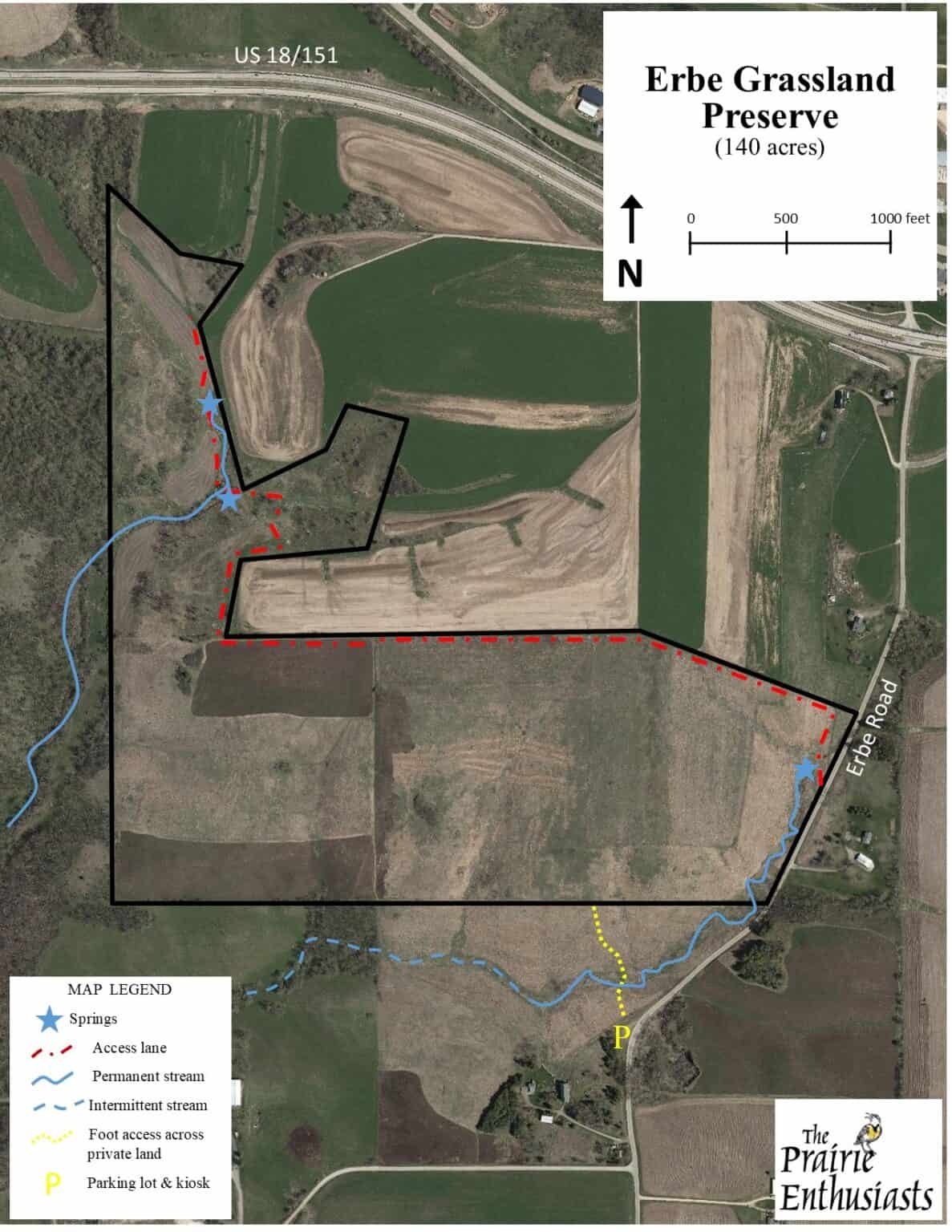
      This 140-acre preserve is located in the Driftless Area of western Dane, Co, WI. The site includes a blend of original remnant prairie and savanna sod and former cropland being restored back to prairie. It also has three springs and two small cold-water streams. There is a wide range of rare and declining species dependent upon the prairie and limited oak savanna habitat.


      Walking through Erbe Grassland. Photo by Ron Lutz II.

      Erbe Grassland

      Walking through Erbe Grassland. Photo by Ron Lutz II. 

      This 140-acre preserve is located in the Driftless Area of western Dane, Co, WI. The site includes a blend of original remnant prairie and savanna sod and former cropland being restored back to prairie. It also has three springs and two small cold-water streams. There is a wide range of rare and declining species dependent upon the prairie and limited oak savanna habitat.

      Access & Directions

      The site is on Erbe Road in the Town of Blue Mounds in Dane County. There is a parking lot and kiosk on Ed Goplin’s land, with a mowed trail that gets visitors up to The Prairie Enthusiasts’ property. Ed has granted access across his land, which The Prairie Enthusiasts help him manage.

      Google Map

      Site Steward

      Connect with the site steward to see how you can care for this rare habitat at an upcoming work party.

      This site is stewarded by The Prairie Enthusiasts Empire-Sauk Chapter.

      Site Steward: Erik Goplin (Email)

      How to Enjoy This Site

      Allowed:

      • Hunting (no permit or reservation required)

          How to Enjoy This Site

          Allowed:

          • Hunting (no permit or reservation required)


              Exploring Erbe Grassland. Photo by Rob Baller.

              What Makes Erbe Grassland Special

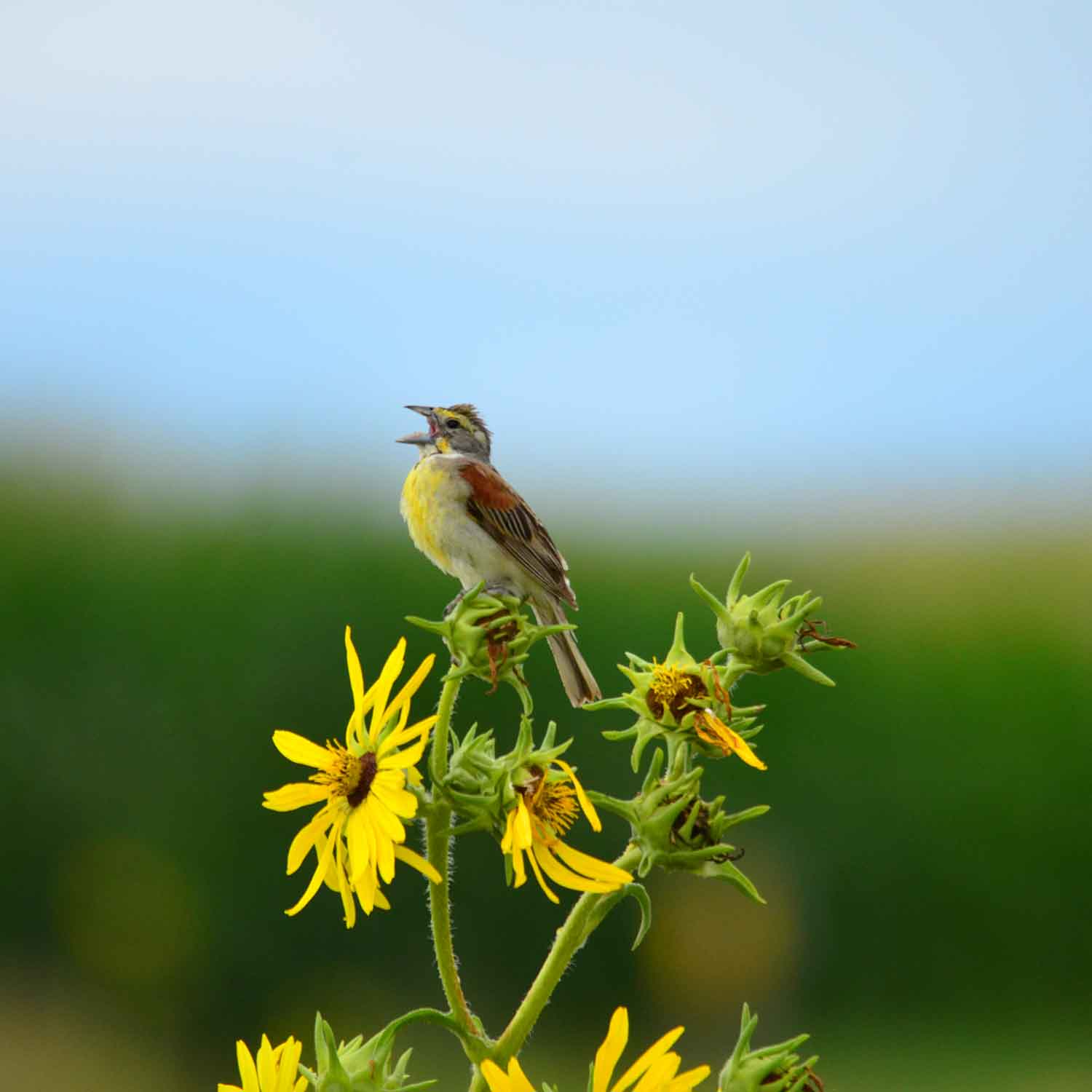
              Erbe Grassland has critical habitat, of local and state conservation significance, for many rare and declining species. Over 100 native prairie plant species are present, including populations of the State Threatened wooly milkweed (Asclepias lanuginosa) and the Sate Special Concern prairie turnip (Pediomelum esculentum). The State Endangered regal fritillary butterfly is present, along with other uncommon prairie-dependent insects. Lastly, the preserve provides critical nesting and foraging habitat for nine grassland/savanna bird Species of Greatest Conservation Need (SGCN); Bell’s vireo (Threatened), upland sandpiper (Threatened), Henslow’s sparrow (Threatened), bobolink, grasshopper sparrow, short-eared owl, dickcissel, eastern meadowlark, and red-headed woodpecker.   

              Dickcissel on compass plant at Erbe Grassland. Photo by Joshua Mayer.

              How was Erbe Grassland Protected

              Erbe Grasslands was established in 2007 with an initial 64-acre parcel acquired from the Losenegger family. In 2012 and 2022, 36-acre and 40-acre parcels were added; acquired from the Ihm and Goplin families respectively. Grants to The Prairie Enthusiasts from the WI State Knowles-Nelson Stewardship Fund and the Dane County Conservation Fund helped make this possible. 

              At time of acquisition, the original 64-acre parcel consisted of 30 acres of treeless pasture (most of which was unplowed remnant prairie sod), 26 acres of active cropland, 5 acres of brush pasture, and a 3 acre walnut grove. The walnuts were likely planted in 1935 by the Civilian Conservation Corps (CCC) crew stationed in Mt. Horeb. They also built a retention dam on the property, that is still present today. Because a goal for the property is to provide critical habitat for grassland birds, the walnuts and much of the brush were removed in the winter of 2008-2009. The work was funded by the Wisconsin DNR Pheasant Stamp and Landowner Incentive Programs, along with funds from the Wildlife Conservation Society.

              The 2012 36-acre addition consisted of 6 acres of cropland and 30 acres of an unplowed blend of degraded remnant prairie and overgrown oak savanna. The overgrown savanna and prairie are in the process of being restored, trees and brush have been removed, and the cropland has been planted to prairie. Grants from the US Fish and Wildlife Service and WI DNR Turkey Stamp Fund have assisted this work.

              The 2022 40-acre addition consisted of high-quality remnant prairie, former cropland planted to prairie, and pastureland being restored to prairie. The Prairie Enthusiasts had been working with the landowner on the management and restoration of this parcel for 20 years.

              In 2025, 77 acres of the Uren Trust farm were added to Erbe Grassland. The land was mostly farmland, but is being restored to prairie in the hopes of expanding the habitat for rare species like the State Endangered regal fritillary butterfly.

              The site is within the Military Ridge Prairie Heritage Area, a cooperative conservation effort of federal, state, county, and private conservation groups.   

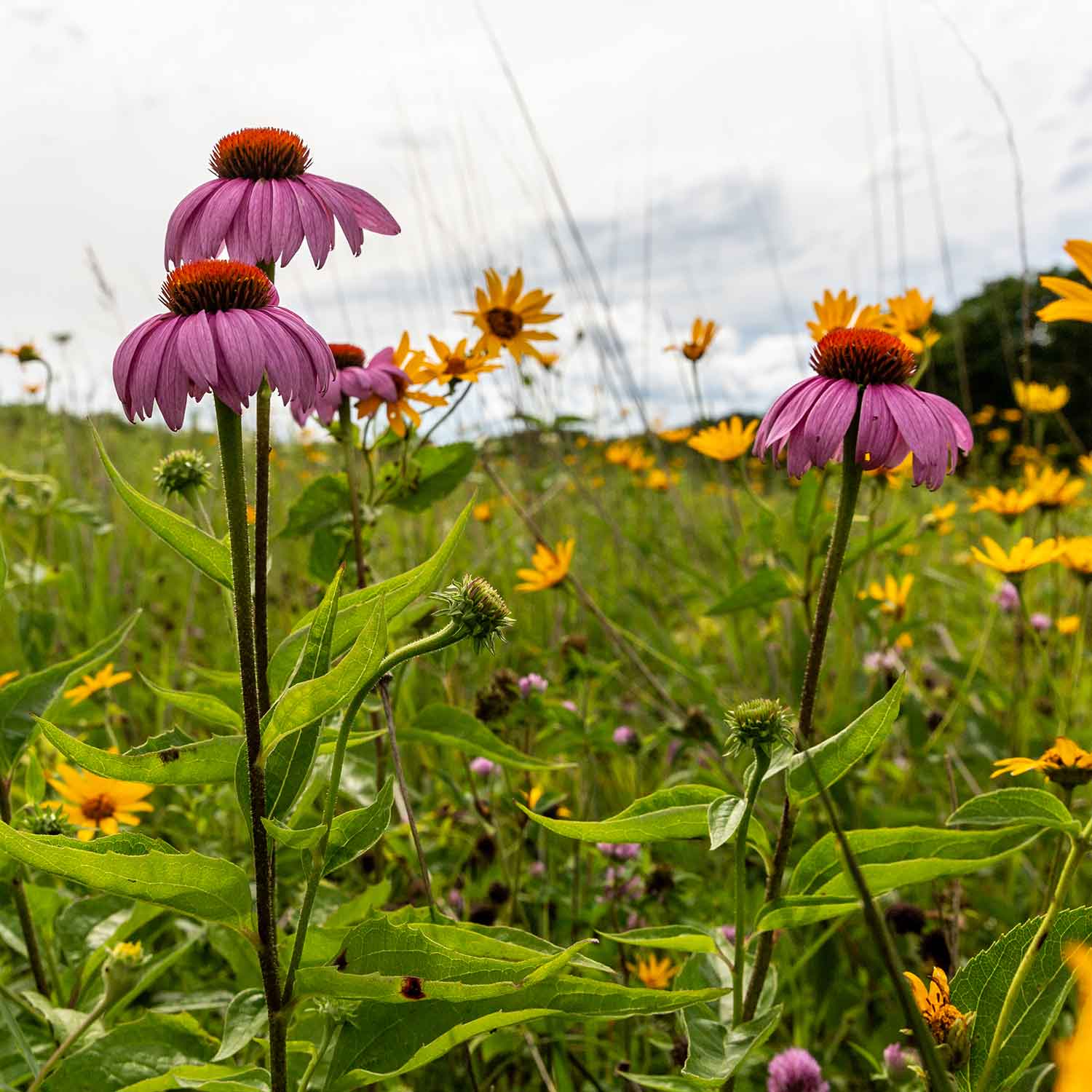
              Flowers in bloom at Erbe Grassland. Photo by Ron Lutz II.

              How You Can Help Erbe Grassland

              The primary management goal for Erbe Grassland is to recover and maintain as much of the site’s original prairie/savanna ecosystem as is feasible. Including habitat for grassland birds and other native animal species associated with treeless grassland ecosystems.

              Although much of the original pasture was unplowed on the site when it was accquired, past grazing disturbance was so severe that relatively little of the original native prairie vegetation remained. A survey at the time of acquisition revealed only 34 native prairie species in low abundance. Additional prairie vegetation has since been seeded into the pasture sod and all the cropland has been planted to prairie. The prairie is well on its way to recovery. However, it will likely take a century or more before it is fully recovered to is original state.

              Although grants have been assisting the restoration and management work at Erbe Grassland, volunteers have been critical to the effort and there is still much to accomplish.

              Check out our Events Calendar to see upcoming work parties or contact the site steward to get involved.

              Grace Vosen among the flowers at Erbe Grassland. Photo by Ron Lutz II.

              Feist Prairie

              Feist Prairie

              Feist Prairie

              This property is a 3 acre site with 1 acre of remnant prairie. Although small, it contains a large number of species on land that was never cultivated, pastured, or sprayed.


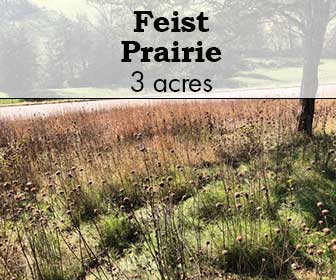
              View of Feist Prairie. Photo by Gary Eldred.

              Feist Prairie

              View of Feist Prairie. Photo by Gary Eldred. 

              This property is a 3 acre site with 1 acre of remnant prairie. Although small, it contains a large number of species on land that was never cultivated, pastured, or sprayed.

              Access & Directions

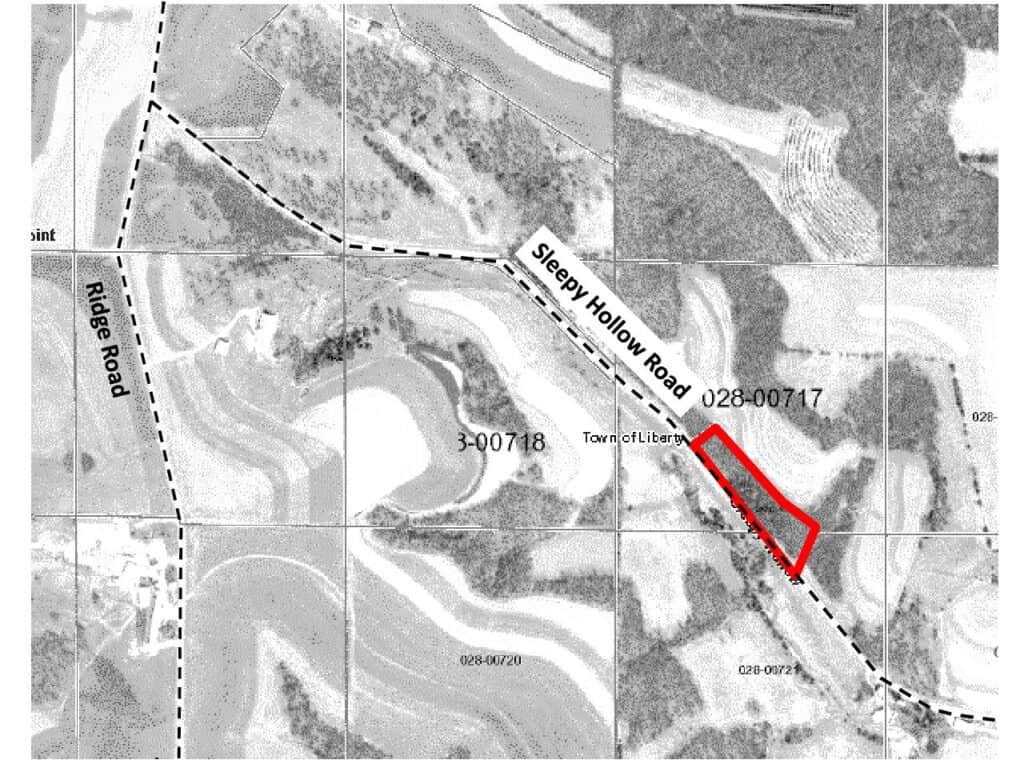
              From Stitzer, head east on County Rd E. Turn right (south) on Ridge Road, then left (east) on Sleepy Hollow Rd. The prairie is approximately .6 miles on the left.

              Google Map

              Site Steward

              Connect with the site steward to see how you can care for this rare habitat at an upcoming work party.

              This site is stewarded by The Prairie Enthusiasts Southwest Wisconsin Chapter.

              Site Steward: Becky Fernette: (608) 379-0781 or (Email)

              How to Enjoy This Site

              Allowed:

              • Outdoor Recreation
              • Hunting (for all species, no permit or reservation required)

              How to Enjoy This Site

              Allowed:

              • Outdoor Recreation
              • Hunting (for all species, no permit or reservation required)


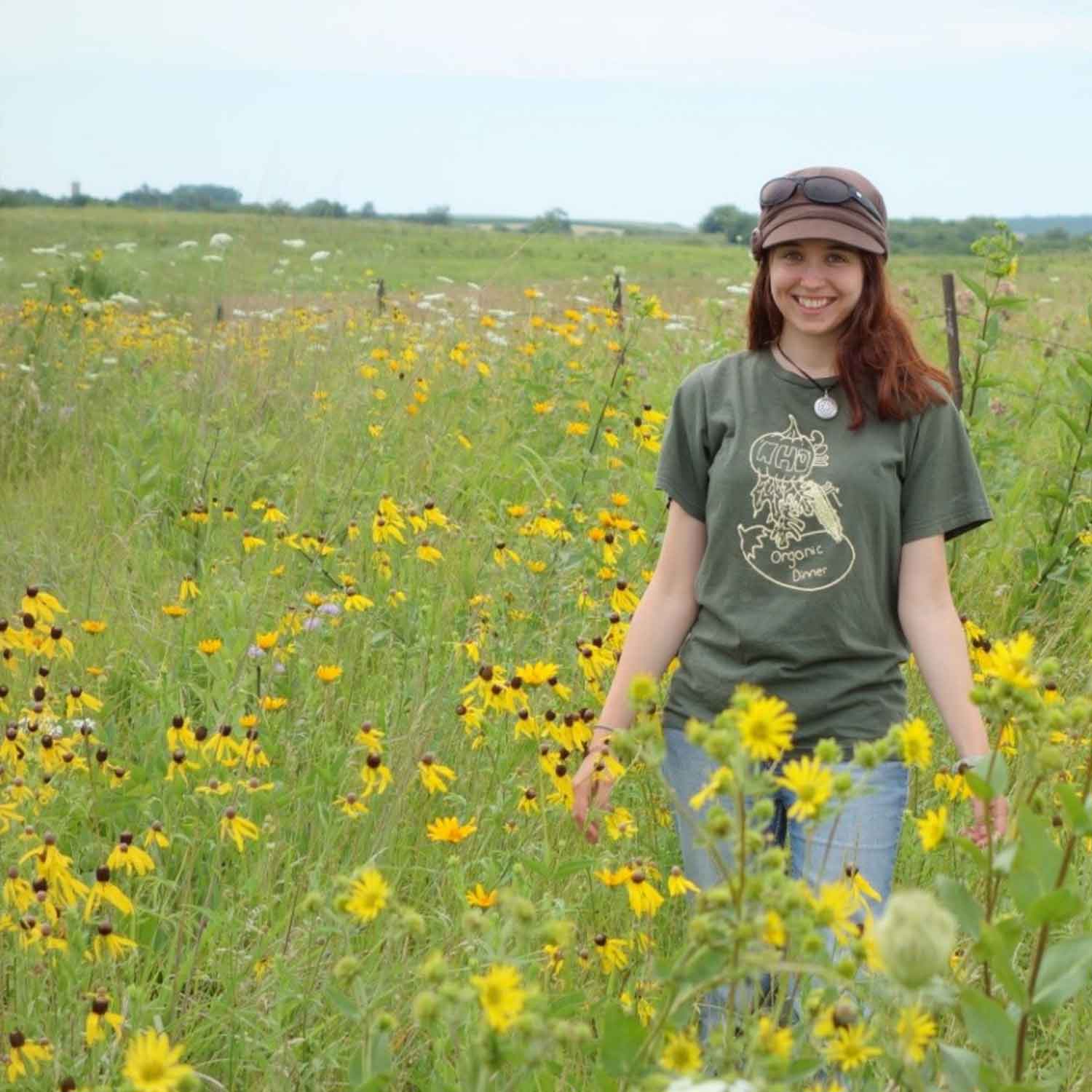
                  Among the wildflowers. Photo by Gary Eldred.

                  What Makes Feist Prairie Special

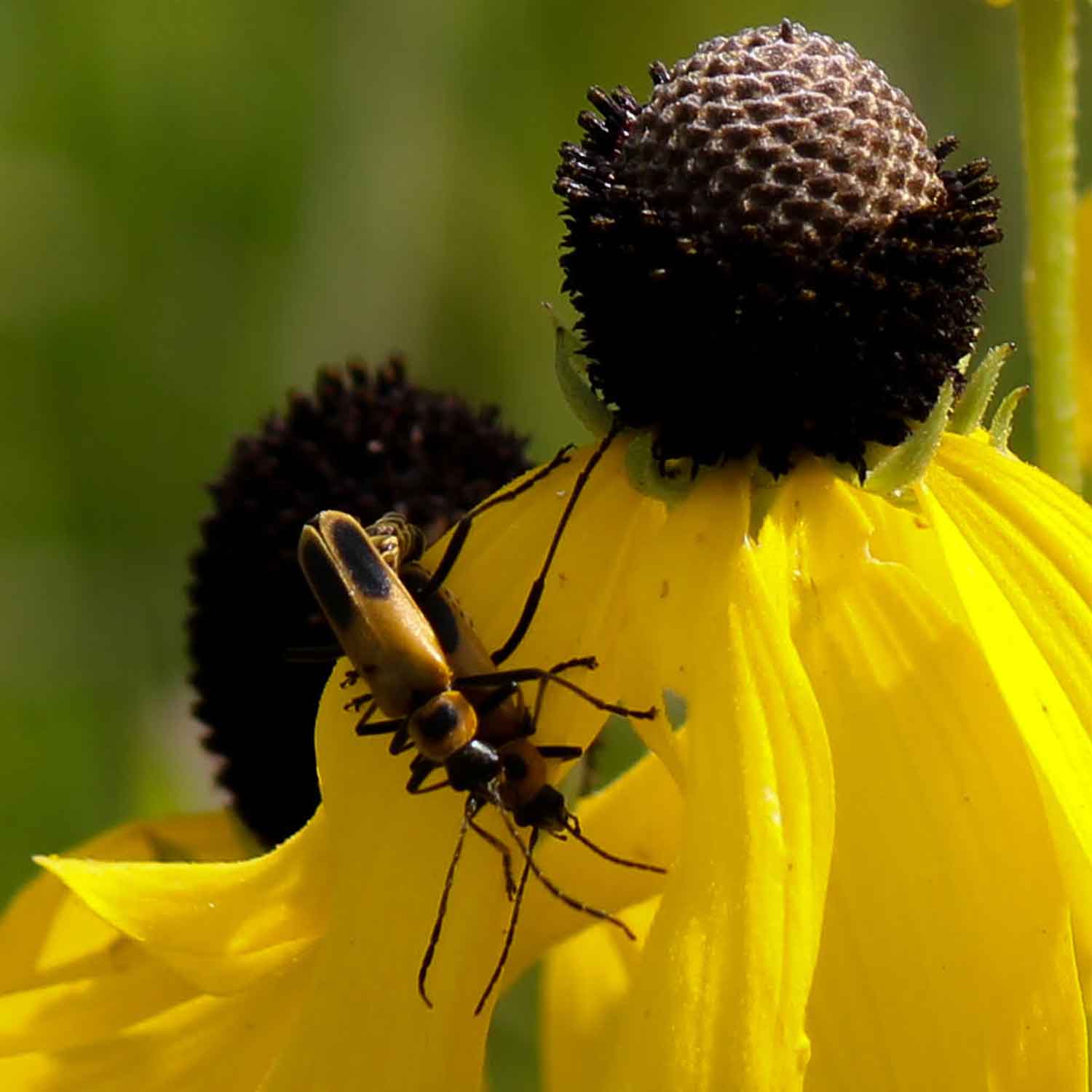
                  Rare insects have been observed on this site: Goldenrod soldier beetle (Chauliognathus pensylvanicus) and Robber fly (Promachus vertebratus).

                  Goldenrod soldier beetle on yellow coneflower. Photo by Harry Peterson.

                  How was Feist Prairie Protected

                  Gerald and Patricia Feist, who owned this parcel as part of their larger farm operation, sold this site to the Southwest Chapter after many years of leasing the land. The farm had been in the Feist family since 1875; this site is a wonderful example of a pre-European settlement prairie/savanna community. 

                  This site was purchased by The Prairie Enthusiasts in 2013.

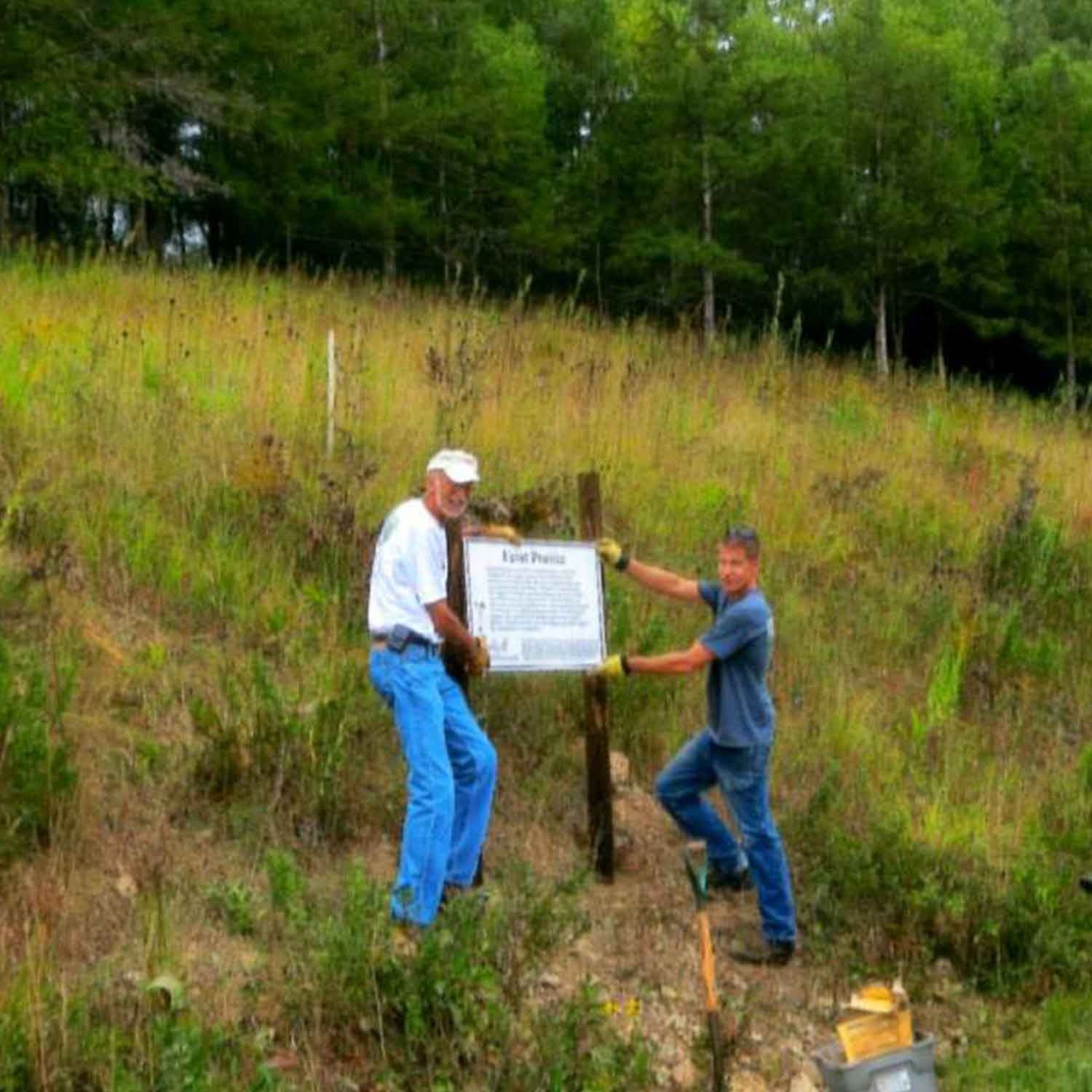
                  Mounting the sign at Feist Prairie. Photo by unknown photographer.

                  How You Can Help Feist Prairie

                  Current efforts include removing woody invasives and trees to expand the range of the original remnant. 

                  Check out our Events Calendar to see upcoming work parties or contact the site steward to get involved.

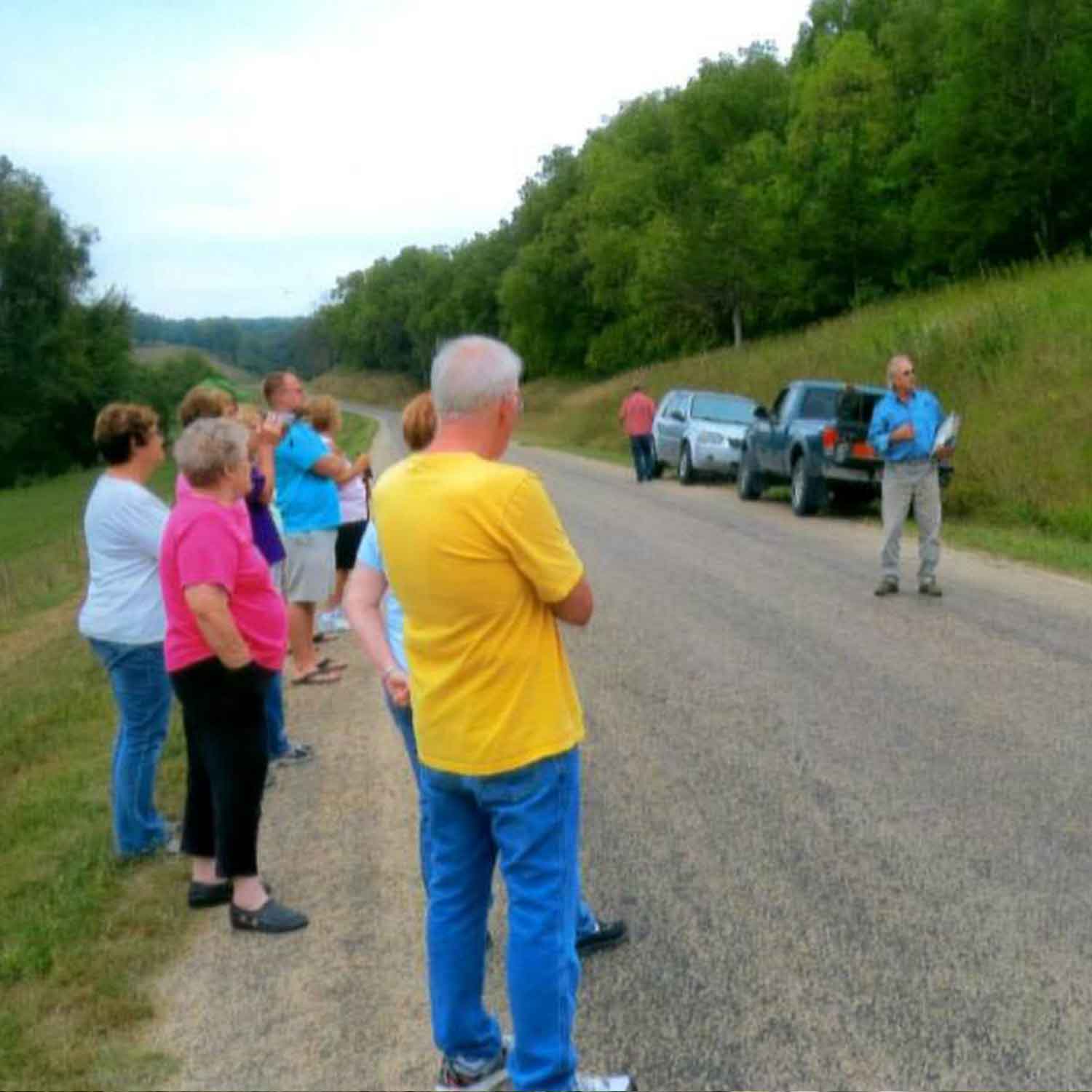
                  Folks gather to hear the Feist Prairie dedication. Photo by unknown photographer.