Hauser Road Prairie

Hauser Road Prairie

Hauser Road Prairie

Located just north of Waunakee, WI, this 45-acre site is the largest remaining single piece of the original 100-square mile Empire Prairie that once covered much of what is now northern Dane County and southern Columbia County. The site’s ridge top hill has many areas of shallow soil over dolomite bedrock, and the abundance of glacially-deposited boulders prevented it from being tilled; it was lightly grazed for 100 years until the 1990’s. Hauser Road Prairie is only 15 miles from downtown Madison, and has the unusual feature for a prairie remnant—a view of the Wisconsin state capitol from the hilltop! This is an important natural feature in a rapidly developing area.


Exploring Hauser Road Prairie in the summer. Photo by Rob Baller.

Hauser Road Prairie

Exploring Hauser Road Prairie in the summer. Photo by Rob Baller.

Located just north of Waunakee, WI, this 45-acre site is the largest remaining single piece of the original 100-square mile Empire Prairie that once covered much of what is now northern Dane County and southern Columbia County. The site’s ridge top hill has many areas of shallow soil over dolomite bedrock, and the abundance of glacially-deposited boulders prevented it from being tilled; it was lightly grazed for 100 years until the 1990’s. Hauser Road Prairie is only 15 miles from downtown Madison, and has the unusual feature for a prairie remnant—a view of the Wisconsin state capitol from the hilltop! This is an important natural feature in a rapidly developing area.

Access & Directions

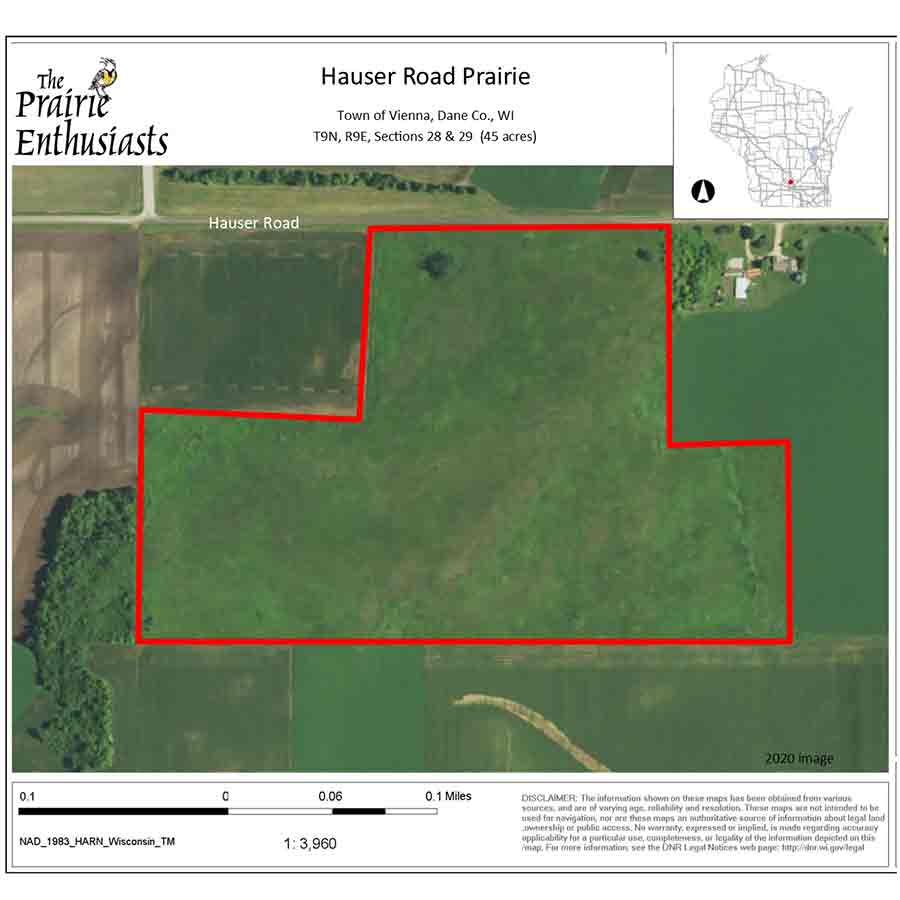
Hauser Road Prairie is located 4 miles north of Waunakee, WI on the south side of Hauser Road. From the junction of Hwys 19 and 113 in Waunakee, take Hwy 113 north 2.5 miles to Madigan Road (right turn), follow Madigan Road for 1 mile to Hauser Road, turn right. Site is 0.2 miles on the right. Park along the road well off the pavement.

Google Map

Site Steward

Connect with the site steward to see how you can care for this rare habitat at an upcoming work party.

Site Steward: Randy Hoffman: (608) 849-4502 or (Email)

How to Enjoy This Site

Allowed:

  • Walking
  • Bird watching
  • Hunting & trapping (all species; contact site steward)
  • Cross country skiing

    Not Allowed:

    • Bicycles or vehicles
    • Pets
    • Campfires
    • Collection of seed, flowers, plants or the removal of rocks or other natural objects

    How to Enjoy This Site

    Allowed:

    • Walking
    • Bird watching
    • Hunting & trapping (all species; contact site steward)
    • Cross country skiing

      Not Allowed:

      • Bicycles or vehicles
      • Pets
      • Campfires
      • Collection of seed, flowers, plants or the removal of rocks or other natural objects


      Taking in the view of Hauser Road Prairie. Photo by Rob Baller.

      What Makes Hauser Road Prairie Special

      A total of 148 prairie plant species have been found on site so far. Some prairie plants sensitive to grazing apparently survived in a narrow strip between the plow line and the fence or as very rare, scattered individuals in some cases. Over the past 30 years these rarities are starting to recolonize the former pasture. They include prairie phlox, leadplant, compass plant, rosinweed, rattlesnake master, and prairie blazingstar. For more details, read the article “Hauser Road Prairie Now Under TPE Care and Protection” by Rich Henderson in the March 2016 issue of The Prairie Promoter.

      There are also populations of two state-threatened plants, ten species of specialized leafhoppers found only on prairie remnants, as well as badgers and an array of grassland birds.

      Notable Plants

      • shooting star
      • pasqueflower (Anemone patens)
      • prairie violet (Viola pedatifida)
      • birdfoot violet (Viola pedata)
      • prairie smoke (Geum triflorum)
      • cylindrical (dwarf) blazingstar (Liatris cylindracea)
      • showy goldenrod (Solidago speciosa)
      • stiff gentian (Gentianella quinquefolia)
      • prairie gentian (Gentiana puberulenta)
      • purple prairie clover (Dalea purpurea)
      • prairie gentian (Gentiana puberulenta)
      • stiff gentian (Gentianella quinquefolia)
      • Hill’s Thistle (Cirsium hillii) – state-threatened
      • edible valerian (Valeriana edulis)
      • smooth white lettuce (Prenanthes alba)
      • heart-leaved golden Alexander (Zizia aptera)
      • and various goldenrods and asters

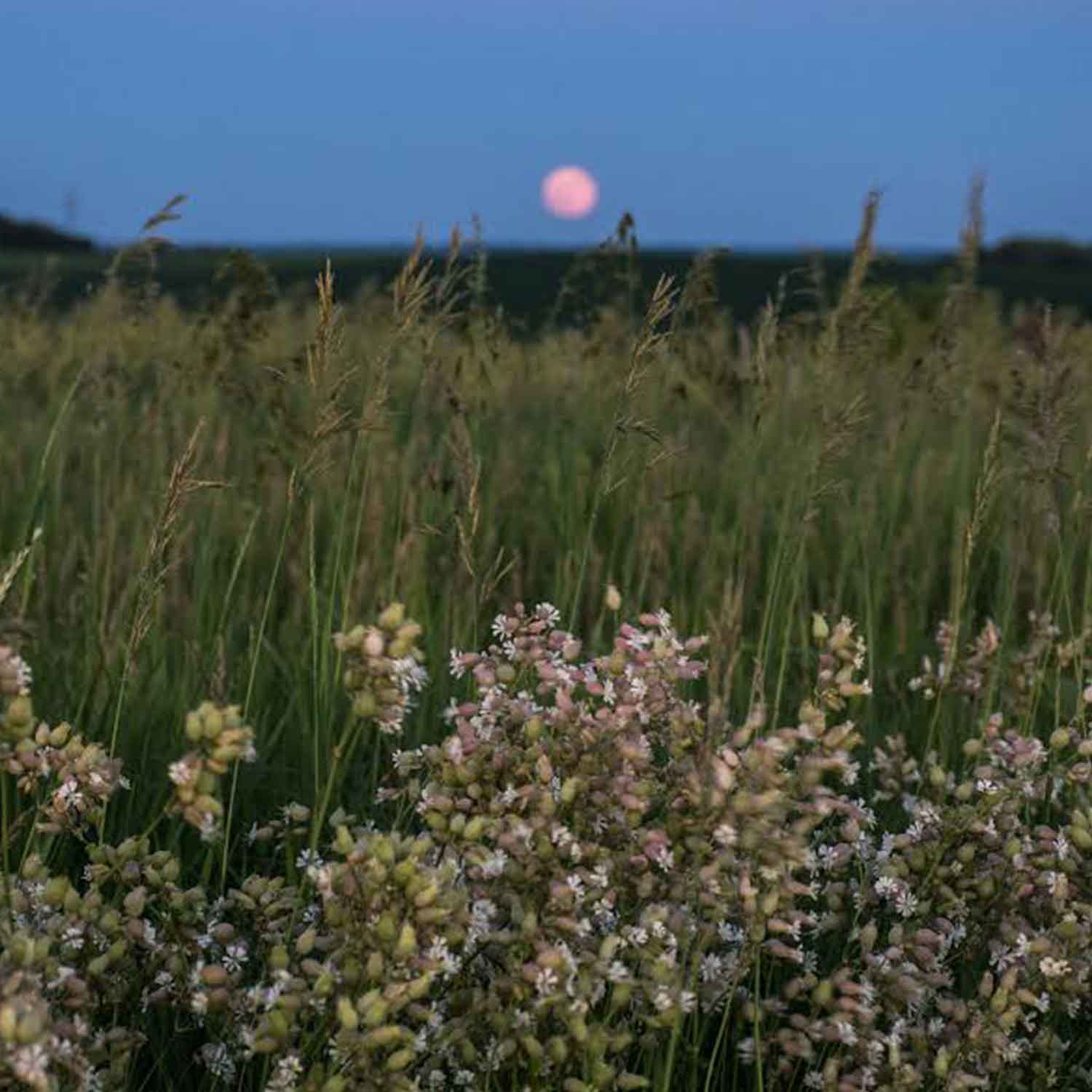
      Strawberry moon over Hauser Road Prairie. Photo by Kurt Westbrook.

      How was Hauser Road Prairie Protected

      In July of 2014, The Prairie Enthusiasts took on the ownership, care, and management of Hauser Road Prairie. With grants from the Wisconsin DNR Knowles-Nelson Stewardship Program and the Dane County Conservation Fund and a loan from The Conservation Fund (a national non-profit), The Prairie Enthusiasts acquired title to this impressive big sky ridge of natural heritage.
       
      The permanent protection of Hauser Road Prairie was the culmination of 22 years of effort by The Prairie Enthusiasts and the Wisconsin Department of Natural Resources (WIDNR) Natural Areas Program. In the early 1980s, the conservation community became aware that prairie was surviving in the 45-acre pasture along Hauser Road. In 1992, The Prairie Enthusiasts volunteers reached out to the new owners of the site to inform them of the treasure they had and offered advice, help and encouragement in conserving the site. From 2000 to 2014, the Natural Areas Program leased the land and conducted several prescribed burns and some brush control. The Prairie Enthusiasts also mowed sweet clover and provided other weed control measures during this time.

      In 2013, the owners, Mike and Susan Zauner, decided they would like the site permanently protected. The Natural Areas program negotiated with them to buy the site and to designate it a State Natural Area, but the project was not accepted by the WI DNR administration. The Prairie Enthusiasts offered to step in and acquire the site by applying for grants from Knowles-Nelson Stewardship Program and the Dane County Conservation Fund, which covered three-quarters of the acquisition expenses. The Prairie Enthusiasts was able to pay the remainder thanks to generous donations from members from across the organization. 
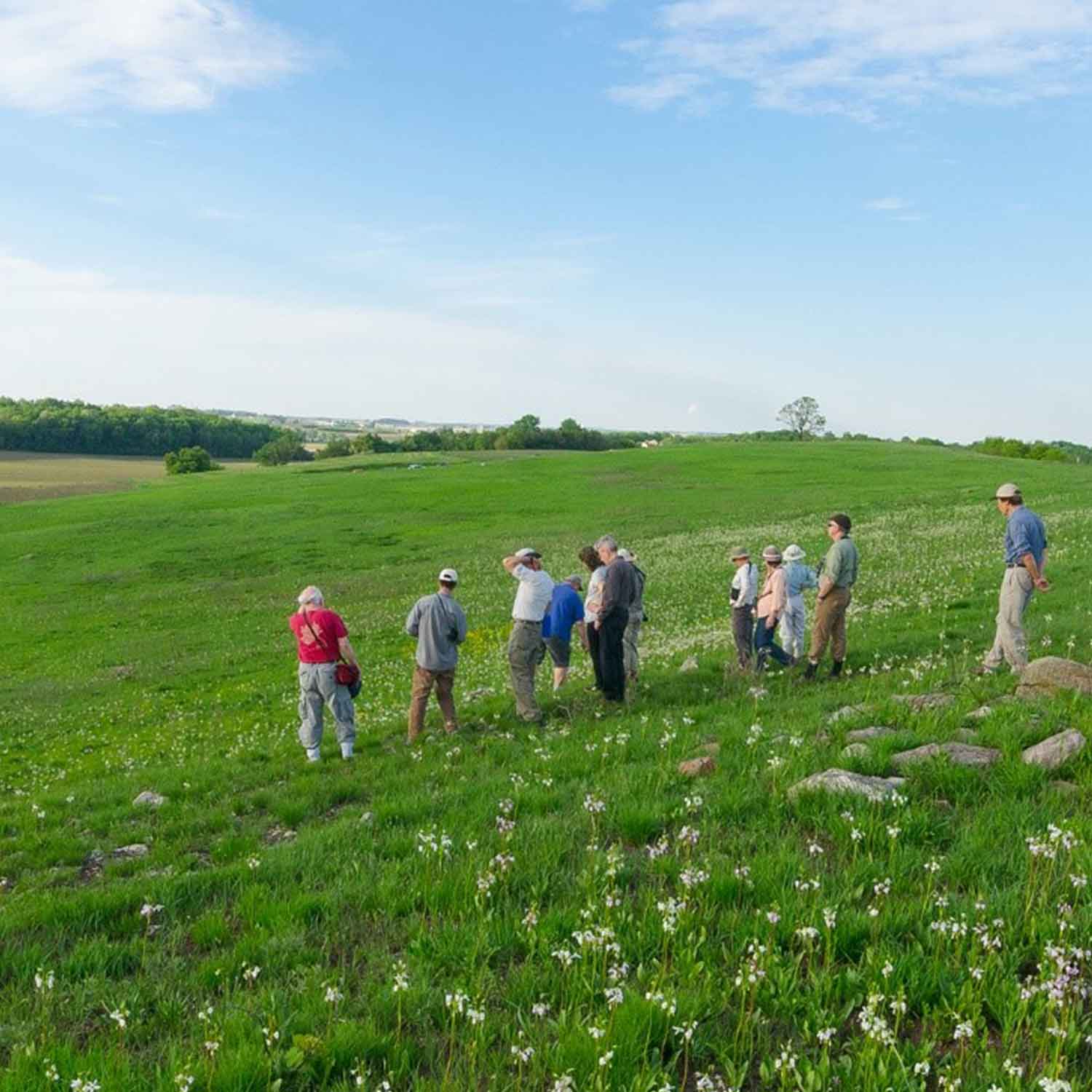
      Looking out over Hauser Road Prairie. Photo by Joshua Mayer.

      How You Can Help Hauser Road Prairie

      With a grant from the U.S. Fish & Wildlife Service Private Lands Program and the efforts of site steward Randy Hoffman and other volunteers, great progress has been made at Hauser Road Prairie removing trees and brush from the preserve.

      The years of grazing took its toll on the composition of the prairie vegetation, eliminating some species, reducing others and allowing non-native grasses to invade, especially in the deeper soils areas. However, much of the original prairie ecosystem survived and has been making a good recovery since the cessation of grazing and the implementation of an occasional prescribed burn from 2000 to 2013.

      Fortunately, there are several high-quality small prairie remnants within a few miles of the preserve harboring the full range of prairie species native to the area. Our management goal for Hauser Road Prairie is to bring seed from those remnants to the preserve to accelerate its recovery and to reintroduce lost species such as wood lily, wood betony and rough white lettuce. With burning and inter-seeding, we hope to bring back most, if not all, of the site’s original diverse prairie plant community over the next 30 years.

      Volunteers are vital to the management of this prairie. Join us for a workday on Hauser Road Prairie and the other prairie remnants in the area to collect and plant seed, control weeds and brush, conduct biological monitoring and help with other management activities.

      Check out our Events Calendar to see upcoming work parties or contact the site steward to get involved.

      Prescribed burn at Hauser Road Prairie. Photo by Kevin McKown.

      Handrick Grassland

      Handrick Grassland

      Handrick Grassland


      Lupines at Handrick Grassland. Photo by Reid Bartholomew.

      Handrick Grassland

      Lupines at Handrick Grassland. Photo by Reid Bartholomew. 

      Site Steward

      Connect with the Chapter to see how you can care for this rare habitat at an upcoming work party.

      This site is stewarded by The Prairie Enthusiasts Empire-Sauk Chapter.

      Upcoming Events Here

      No event found!

      More information coming soon!

      Gasser Sand Barren

      Gasser Sand Barren

      Gasser Sand Barren


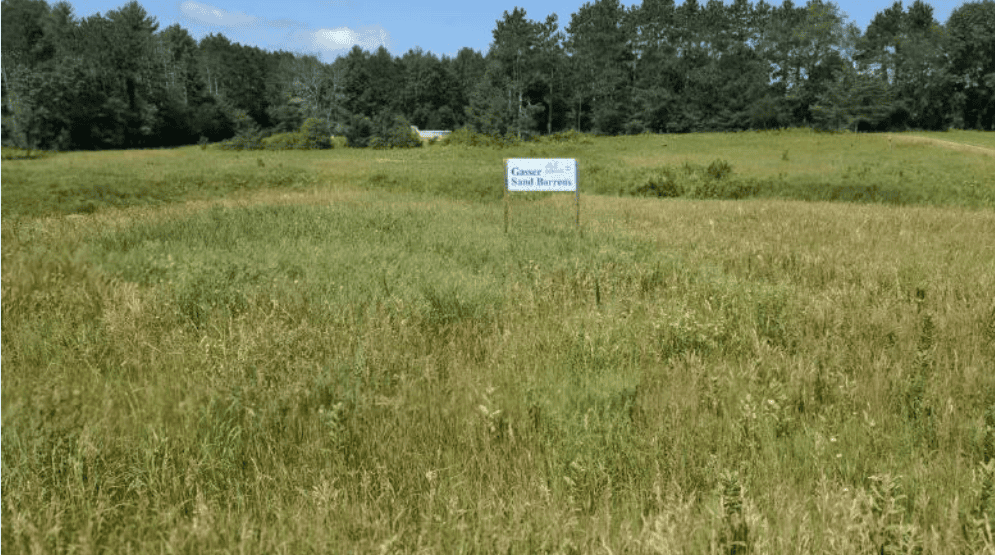
      Walking through Gasser Sand Barren. Photo by Scott Weber.

      Gasser Sand Barren

      Walking through Gasser Sand Barren. Photo by Scott Weber. 

      Site Steward

      Connect with the Chapter to see how you can care for this rare habitat at an upcoming work party.

      This site is stewarded by The Prairie Enthusiasts Empire-Sauk Chapter.

      Upcoming Events Here

      No event found!

      More information coming soon!

      Foxglove Savanna

      Foxglove Savanna

      Foxglove Savanna


      Prairie sunrise. Photo by Gary Shackelford.

      Foxglove Savanna

      Prairie sunrise. Photo by Gary Shackelford. 

      Site Steward

      Connect with the Chapter to see how you can care for this rare habitat at an upcoming work party.

      This site is stewarded by The Prairie Enthusiasts Empire-Sauk Chapter.

      More information coming soon!

      Erbe Grassland

      Erbe Grassland

      Erbe Grassland

      This 140-acre preserve is located in the Driftless Area of western Dane, Co, WI. The site includes a blend of original remnant prairie and savanna sod and former cropland being restored back to prairie. It also has three springs and two small cold-water streams. There is a wide range of rare and declining species dependent upon the prairie and limited oak savanna habitat.


      Walking through Erbe Grassland. Photo by Ron Lutz II.

      Erbe Grassland

      Walking through Erbe Grassland. Photo by Ron Lutz II. 

      This 140-acre preserve is located in the Driftless Area of western Dane, Co, WI. The site includes a blend of original remnant prairie and savanna sod and former cropland being restored back to prairie. It also has three springs and two small cold-water streams. There is a wide range of rare and declining species dependent upon the prairie and limited oak savanna habitat.

      Access & Directions

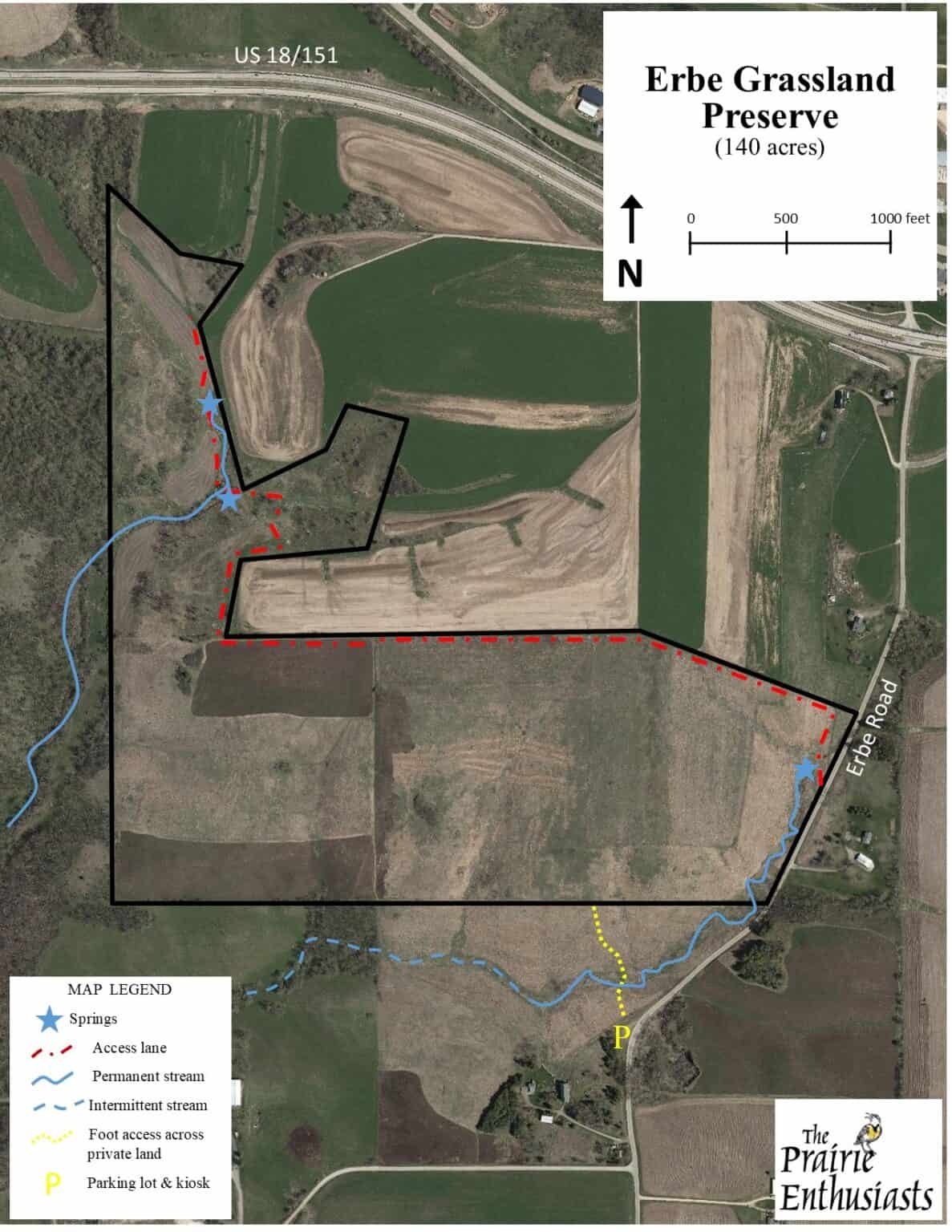
      The site is on Erbe Road in the Town of Blue Mounds in Dane County. There is a parking lot and kiosk on Ed Goplin’s land, with a mowed trail that gets visitors up to The Prairie Enthusiasts’ property. Ed has granted access across his land, which The Prairie Enthusiasts help him manage.

      Google Map

      Site Steward

      Connect with the site steward to see how you can care for this rare habitat at an upcoming work party.

      This site is stewarded by The Prairie Enthusiasts Empire-Sauk Chapter.

      Site Steward: Erik Goplin (Email)

      Upcoming Events Here

      No event found!

      How to Enjoy This Site

      Allowed:

      • Hunting (no permit or reservation required)

          How to Enjoy This Site

          Allowed:

          • Hunting (no permit or reservation required)


              Exploring Erbe Grassland. Photo by Rob Baller.

              What Makes Erbe Grassland Special

              Erbe Grassland has critical habitat, of local and state conservation significance, for many rare and declining species. Over 100 native prairie plant species are present, including populations of the State Threatened wooly milkweed (Asclepias lanuginosa) and the Sate Special Concern prairie turnip (Pediomelum esculentum). The State Endangered regal fritillary butterfly is present, along with other uncommon prairie-dependent insects. Lastly, the preserve provides critical nesting and foraging habitat for nine grassland/savanna bird Species of Greatest Conservation Need (SGCN); Bell’s vireo (Threatened), upland sandpiper (Threatened), Henslow’s sparrow (Threatened), bobolink, grasshopper sparrow, short-eared owl, dickcissel, eastern meadowlark, and red-headed woodpecker.   

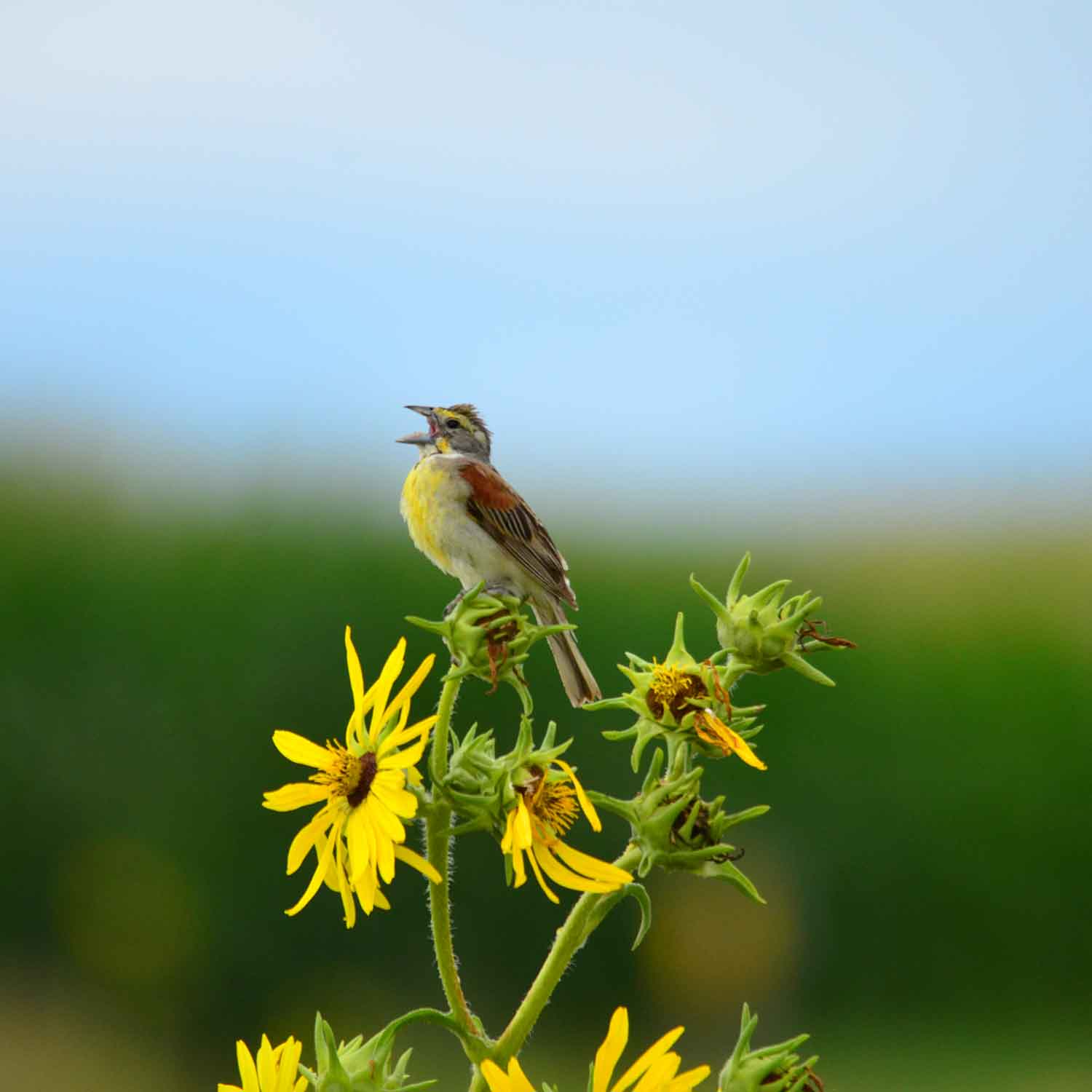
              Dickcissel on compass plant at Erbe Grassland. Photo by Joshua Mayer.

              How was Erbe Grassland Protected

              Erbe Grasslands was established in 2007 with an initial 64-acre parcel acquired from the Losenegger family. In 2012 and 2022, 36-acre and 40-acre parcels were added; acquired from the Ihm and Goplin families respectively. Grants to The Prairie Enthusiasts from the WI State Knowles-Nelson Stewardship Fund and the Dane County Conservation Fund helped make this possible. 

              At time of acquisition, the original 64-acre parcel consisted of 30 acres of treeless pasture (most of which was unplowed remnant prairie sod), 26 acres of active cropland, 5 acres of brush pasture, and a 3 acre walnut grove. The walnuts were likely planted in 1935 by the Civilian Conservation Corps (CCC) crew stationed in Mt. Horeb. They also built a retention dam on the property, that is still present today. Because a goal for the property is to provide critical habitat for grassland birds, the walnuts and much of the brush were removed in the winter of 2008-2009. The work was funded by the Wisconsin DNR Pheasant Stamp and Landowner Incentive Programs, along with funds from the Wildlife Conservation Society.

              The 2012 36-acre addition consisted of 6 acres of cropland and 30 acres of an unplowed blend of degraded remnant prairie and overgrown oak savanna. The overgrown savanna and prairie are in the process of being restored, trees and brush have been removed, and the cropland has been planted to prairie. Grants from the US Fish and Wildlife Service and WI DNR Turkey Stamp Fund have assisted this work.

              The 2022 40-acre addition consisted of high-quality remnant prairie, former cropland planted to prairie, and pastureland being restored to prairie. The Prairie Enthusiasts had been working with the landowner on the management and restoration of this parcel for 20 years.

              In 2025, 77 acres of the Uren Trust farm were added to Erbe Grassland. The land was mostly farmland, but is being restored to prairie in the hopes of expanding the habitat for rare species like the State Endangered regal fritillary butterfly.

              The site is within the Military Ridge Prairie Heritage Area, a cooperative conservation effort of federal, state, county, and private conservation groups.   

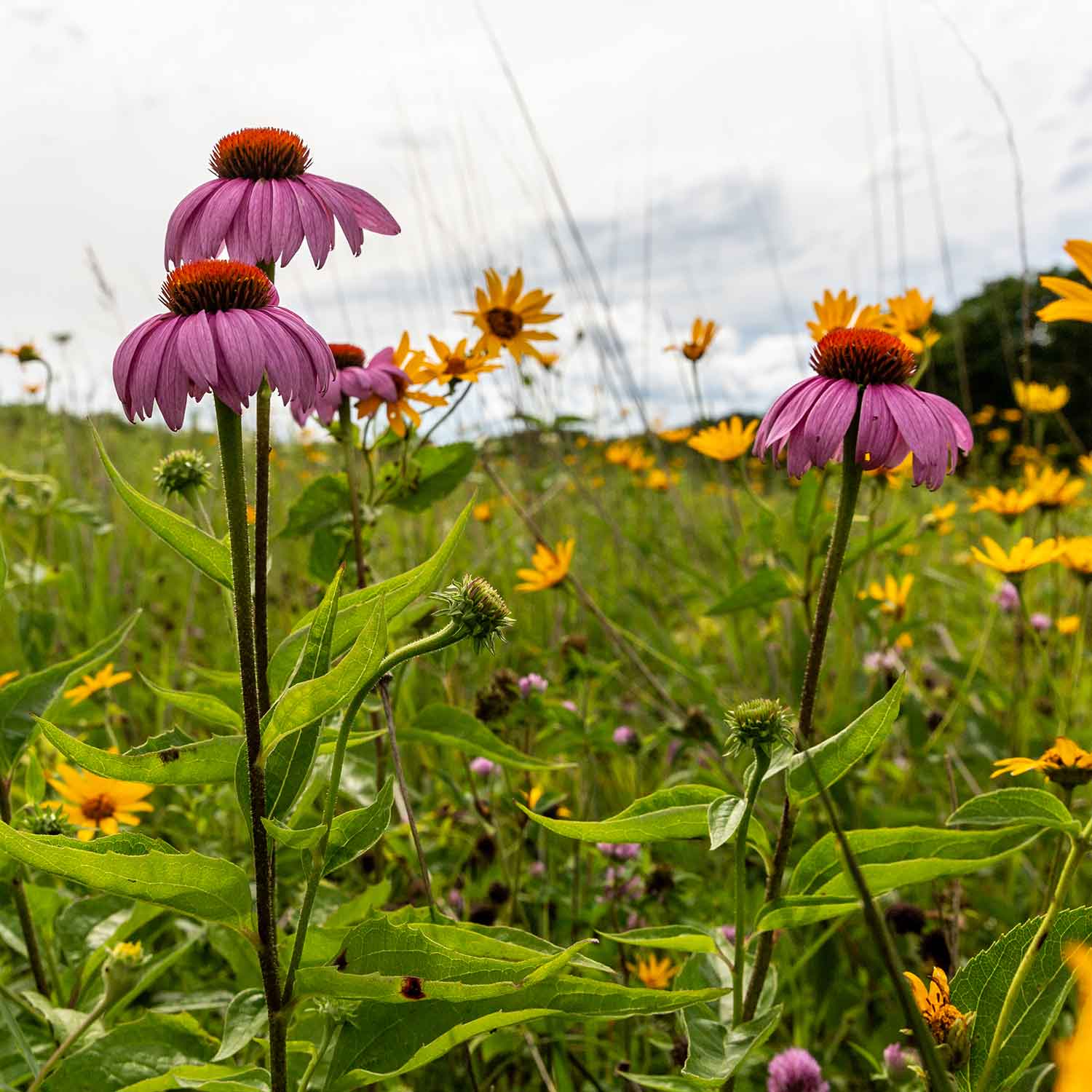
              Flowers in bloom at Erbe Grassland. Photo by Ron Lutz II.

              How You Can Help Erbe Grassland

              The primary management goal for Erbe Grassland is to recover and maintain as much of the site’s original prairie/savanna ecosystem as is feasible. Including habitat for grassland birds and other native animal species associated with treeless grassland ecosystems.

              Although much of the original pasture was unplowed on the site when it was accquired, past grazing disturbance was so severe that relatively little of the original native prairie vegetation remained. A survey at the time of acquisition revealed only 34 native prairie species in low abundance. Additional prairie vegetation has since been seeded into the pasture sod and all the cropland has been planted to prairie. The prairie is well on its way to recovery. However, it will likely take a century or more before it is fully recovered to is original state.

              Although grants have been assisting the restoration and management work at Erbe Grassland, volunteers have been critical to the effort and there is still much to accomplish.

              Check out our Events Calendar to see upcoming work parties or contact the site steward to get involved.

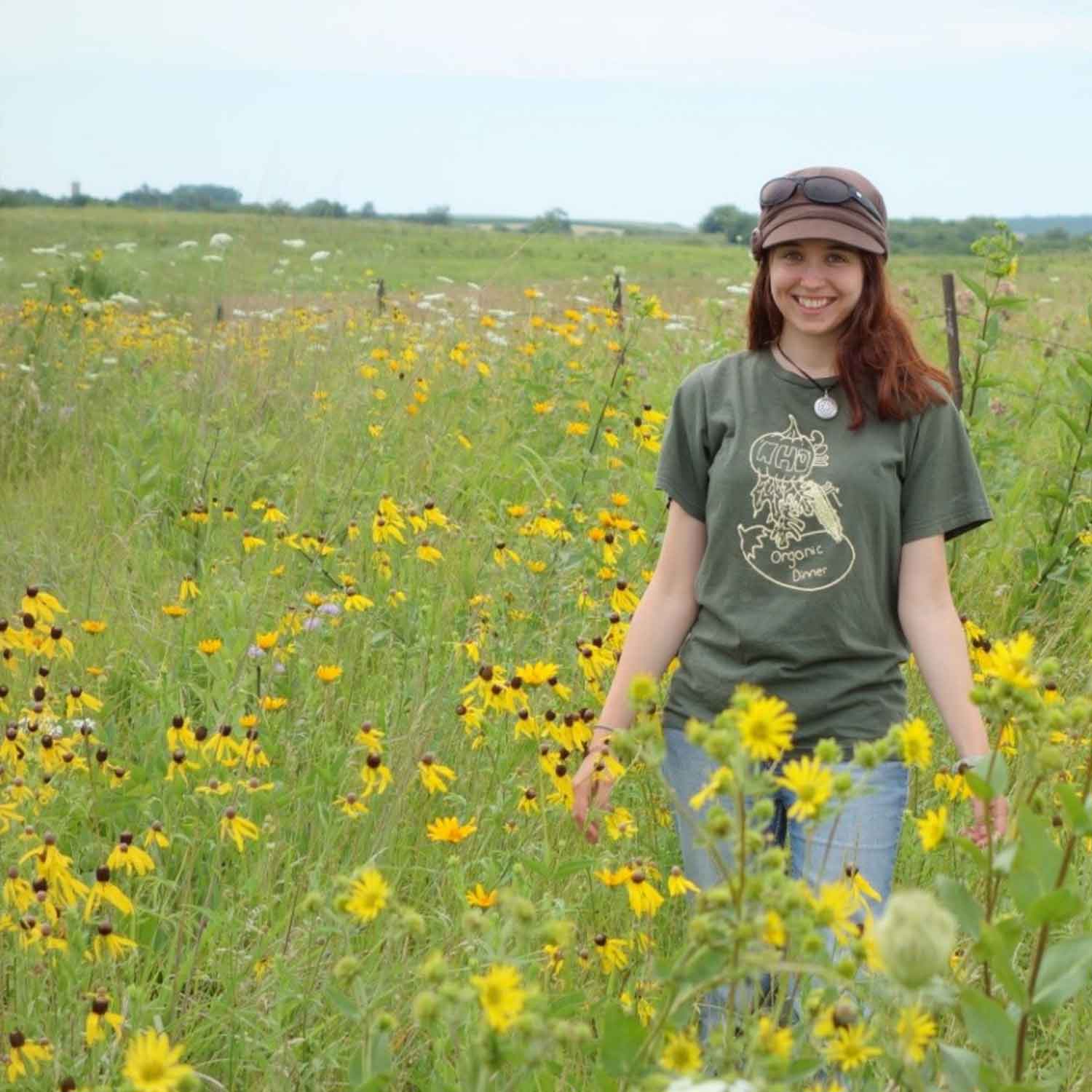
              Grace Vosen among the flowers at Erbe Grassland. Photo by Ron Lutz II.