Parrish Oak Savanna

Parrish Oak Savanna

Parrish Oak Savanna


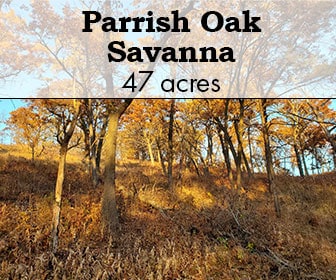
Summer at Parrish Oak Savanna. Photo by Rob Baller.

Parrish Oak Savanna

Summer at Parrish Oak Savanna. Photo by Rob Baller. 

Site Steward

Connect with the Chapter to see how you can care for this rare habitat at an upcoming work party.

This site is stewarded by The Prairie Enthusiasts Empire-Sauk Chapter.

More information coming soon!

Shea Prairie

Shea Prairie

Shea Prairie

This 103-acre preserve is located within the dissected, un-glaciated landscape of southwest WI. It lies within what was once a large prairie that extended north to the Military Ridge, covering many thousands of acres. The preserve is within the 50,000-acre Military Ridge Prairie Heritage Area (MRPHA). The MRPHA has been identified as one of the best opportunities in Wisconsin for prairie/grassland conservation on a landscape scale. In addition to grassland bird use of the area, there are three state-listed plant species at the site: prairie turnip (Pediomelum esculentum), Richardson’s sedge (Carex richardsonii), and Hill’s thistle (Cirsium pumilum).


Walking through Shea Prairie during wetland monitoring. Photo by Rob Baller.

Shea Prairie

Walking through Shea Prairie during wetland monitoring. Photo by Rob Baller.

This 103-acre preserve is located within the dissected, un-glaciated landscape of southwest WI. It lies within what was once a large prairie that extended north to the Military Ridge, covering many thousands of acres. The preserve is within the 50,000-acre Military Ridge Prairie Heritage Area (MRPHA). The MRPHA has been identified as one of the best opportunities in Wisconsin for prairie/grassland conservation on a landscape scale. In addition to grassland bird use of the area, there are three state-listed plant species at the site: prairie turnip (Pediomelum esculentum), Richardson’s sedge (Carex richardsonii), and Hill’s thistle (Cirsium pumilum).

Access & Directions

In Brigham Township, Iowa County, Wisconsin (T6N, R5E, Section 26, W 1/2 of SW ¼). The preserve lies along the east side of Mounds View Road, ¾ miles south from the intersection of Mounds View and Prairie Grove Road. Address is: 3095 Mounds View Road, Barneveld, WI. This site is part of Mounds View Grassland.

Google Map

Site Steward

Connect with the site steward to see how you can care for this rare habitat at an upcoming work party.

This site is stewarded by The Prairie Enthusiasts Empire-Sauk Chapter.

Site Steward: Rich Henderson: (608) 845-7065 or (Email)

Upcoming Events Here

No event found!

How to Enjoy This Site

Allowed:

  • Outdoor Recreation
  • Hunting: Ring-Necked Pheasant (all seasons; no permit required)
  • Hunting: Wild Turkey (spring only; no permit required)
  • Hunting: Waterfowl (all seasons; no permit required)
  • Hunting: White Tailed Deer (bow, crossbow, muzzleloader; no permit required)
  • Hunting: White Tailed Deer (Rifle, Shotgun; permit required)

How to Enjoy This Site

Allowed:

  • Outdoor Recreation
  • Hunting: Ring-Necked Pheasant (all seasons; no permit required)
  • Hunting: Wild Turkey (spring only; no permit required)
  • Hunting: Waterfowl (all seasons; no permit required)
  • Hunting: White Tailed Deer (bow, crossbow, muzzleloader; no permit required)
  • Hunting: White Tailed Deer (Rifle, Shotgun; permit required)


      Exploring Shea Prairie on a hike. Photo by Rob Baller.

      What Makes Shea Prairie Special

      Of the 103 acres, it currently has 7 acres of good quality dry & dry-mesic remnant prairie, 6 acres of unplowed mesic prairie sod over-grown by trees & brush and severely degraded by grazing, 11 acres of cold water trout stream and stream bank habitat, 2 acres of degraded spring seeps, ephemeral pond, and organic (peat/muck) wet soil, and lastly 36 acres of Federal Conservation Reserve Program (CRP) grassland.

      At the time of the original land survey in 1832, the preserve was entirely prairie, including sedge meadow in the wettest areas. The property is traversed from north to south by William’s Creek, and there are several areas of ground water discharge (seeps), including a small ephemeral pond, where the valley floor meets the uplands. In the SE corner of the preserve, the land rises quickly to over 100 ft above the valley bottom. This high ground is where the prairie sod is located. The substrate is composed of Platteville and Galena dolomites, with a band of St. Peter’s sandstone near the base of the slope. The latter formation is exposed at the surface in places. The soils across the Property are predominantly silty to silt loam in texture. There is a layer of thin silt loam on the high ground and deep (> 4 ft thick) silty alluvium in the valley bottom. There is a deposit of wet organic (peat/muck) soil east of the stream that is approximately 2 acres in size.

      The preserve is significance for its remnant prairie vegetation and associated rare insects, and as wildlife habitat at both local and state levels. In fact, it may play a critical role in prairie ecosystem conservation in Wisconsin, for it lies within the 50,000-acre Military Ridge Prairie Heritage Area (MRPHA). The MRPHA has been identified by the Wisconsin Department of Natural Resources (DNR) as one of the best opportunities in the state for prairie/grassland conservation on a landscape scale. Due to the area’s importance, there is a formal partnership of over a dozen public and private conservation organizations and agencies focusing resources into the MRPHA in an attempt to maintain and restore prairie and grassland habitat within a matrix of working farmland. The MRPHA currently supports critical habitat for many grassland dependent birds such as western meadowlarks, grasshopper sparrows, Henslow sparrows, dickcissels, bobolinks, northern harriers, and upland sandpipers that have been in decline in recent decades. It is also home to a major concentration of the state-endangered regal fritillary butterfly (Speyeria idalia) which requires large tracts of prairie sod, as well as many other rare and endangered prairie insects and plants.

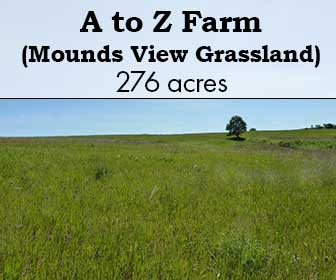
      Specifically, the Shea Prairie is part of a sub area within the MRPHA called the Mounds View Prairie Complex, which is one of the three most significant concentrations of prairie sod and grassland bird habitat within the MRPHA. The Shea Prairie Preserve is immediately adjacent to, or within 1/4 mile of, important tracts of high quality prairie remnants with rare and declining species and extensive acres of grasslands enrolled in CRP. The property connects to the 276-acre A to Z tract which was recently protected by TNC, and is soon to be transferred to The Prairie Enthusiasts for management. With continued restoration and management, the Shea Prairie’s 62 acres will provide important habitat for many area-sensitive grassland birds and other rare and declining prairie species.

      Much of the high ground in the SE corner of the property is too rocky and thin-soiled to have been tilled. Thus, it supports original unplowed prairie sod which ranges from dry to mesic in soil moisture on W and NW facing aspects. The remnant sod is in varying stages of degradation due to both brush/tree invasion in recent decades and past livestock grazing. However, grazing has been absent for at least 32 years, and approximately half the prairie sod (the drier half of the moist spectrum) has rebounded to a state of moderate to good quality prairie vegetation. In the past few years, the recovery has been accelerated by active management through a management. The remainder of the original unplowed prairie sod is dry-mesic to mesic in nature, and is extremely degraded by heavy tree/brush invasion and past grazing. The most level portion of this area may have been plowed a long time ago, but there is no cleared evidence of old plow lines to confirm this.

      Based on original land survey records and current conditions, the entire bottomland of the preserve was likely mesic to wet prairie with pockets of sedge meadow at the time of settlement. Most of it is retired cropland, seeded in brome, that has been enrolled in the CRP. The stream running through the property supports trout and is of very good water quality according to a Biotic Index based on stream invertebrates collected by the DNR. It has areas of sand and gravel bottom, and rock riffles, with natural oxbows present. There is some very limited native wet prairie and sedge meadow vegetation along parts of the stream and in a few of the wettest pockets away from the stream. Some of these pockets have organic soil, with native wetland vegetation starting to reestablish, and a small ephemeral pond with breeding frogs (chorus frogs, spring peepers, Cope’s gray treefrogs, and toads) in the spring. Willow and other tree invasion has been occurring along the stream over the past 50 or more years. Along the east edge of the lowland where it meets the uplands, there is a small area of raised peat that appears to have been a perched a fen. Now, it is overgrown with boxelder and is beginning to oxidize. Some bluejoint grass, Jacob’s ladder, and a few other fen associates are still evident, but extremely limited. There is another small groundwater discharge area near the base of the north end of the prairie remnant hill, with sedges and other wet meadow species reestablishing. The entire bottomland area has great potential as grassland bird habitat, and, with prairie restoration, it will eventually provide critical refuge for the state-endangered regal fritillary butterflies during dry years. The property’s cold water stream and spring/seep wetland areas are significant for the MRPHA, for they provide important habitat diversity to this generally dry upland landscape.

      Thorough biological surveys of the property have yet to be done, but some information is available. Birds observed at the site include the State-Threatened Bell’s vireo and various other grass & brush land species such as woodcock, eastern meadowlark, grasshopper sparrow, sedge wren, field sparrow, brown thrasher, willow flycatcher, clay-colored sparrow, and the Northern shrike. Three state-listed plant species have been found: prairie turnip, Richardson’s sedge, and Hill’s thistle. There are strong displays of rough blazingstar, hoary puccoon, shooting star, and cream Baptisia on the better remnant sod. The state-threatened regal fritillary butterfly moved onto the property two years ago, from adjacent land, as trees and brush were removed and fire reintroduced.

      Pond at the wetland found at Shea Prairie. Photo by Joshua Mayer.

      How was Shea Prairie Protected

      Bordner’s 1936 Land Use Economic Inventory listed the upland prairie areas of the Shea Prairie Preserve as pasture and the lowlands as a combination of pasture and cleared cropland. John and Diane Shea moved on to the farm in 1974, but they never pastured the prairies. They grew crops in the bottomlands along William’s Creek until enrolling the fields in the Conservation Reserve Program in 1998. The non-cropland portions of the bottomland were burned once sometime in the 1980’s. The remnant prairie was not burned during their ownership.

      In the mid 1990s, Rich Henderson, while gathering information for a DNR study on landscape-scale management opportunities in WI for grasslands and savanna ecosystems, identified the Shea property as likely having remnant prairie. The ID was made using aerial photos and long-distance observation across the valley. In June 2000, Scott Sauer and Eric Maurer, working on a DNR Prairie Insect Inventory Project, visited the site with owner’s permission. They appear to have been the first ecologists to visit the Shea Prairie. In 2003, Kristin Westad, as the field coordinator of the newly established MRPHA Project, contacted the Sheas to inform them of the biological importance of the Project area and the significance of their property within it. At about the same time, Amy Staffen, working for The Prairie Enthusiasts on land management projects and in coordination with Kristin, contacted the Sheas to see if they would be interested in entering into an agreement to allow management/restoration of their prairie remnant. They were very receptive, and entered into an informal agreement with The Prairie Enthusiasts, and eventually an agreement with the U.S. Fish & Wildlife Service (FWS) as well.

      In the spring of 2004, Kristin Westad (representing The Prairie Enthusiasts) and Derek Johnson (with TNC) met with the Sheas to explore the possibility of permanent protection of their prairie. The Sheas were very supportive of the idea. TNC (starting with Derek and ending with Rodney Walter) and The Prairie Enthusiasts (Rich Henderson) continued discussions with the Sheas that culminated with 62 acres becoming a The Prairie Enthusiasts Preserve on August 18, 2006. Protection of this site was made possible by a grant from the Knowles-Nelson State Stewardship Fund, donations to The Prairie Enthusiasts from Pheasants Forever Dane & Iowa County Chapters and several private individuals, help and guidance from TNC, and of course the support and cooperation of the Shea family. We are very grateful to them all.

      Shea Prairie was dedicated during a ceremony on October 28, 2006.

      Shea Prairie dedication ceremony on October 28, 2006 featuring (left to right): Site Steward and Board Representative Rich Henderson, landowners Diane and John Shea, and former Executive Director Renae Mitchell. Photo by unknown photographer.

      How You Can Help Shea Prairie

      Half of the open prairie sod was burned on April 13, 2004, by Empire-Sauk Chapter volunteers. From April-August, 2004, contractors were hired by The Prairie Enthusiasts, paid for by a U.S. Fish & Wildlife Service (FWS) grant, to clear trees from the best prairie areas. They also pulled/dug/cut parsnip and sweet clover in the prairies during June-August. Volunteers continued with parsnip and sweet clover control, and tree/brush removal on the prairie remnants, in 2004 & 2005. In the winter of 2005&06, 2/3 of the trees along the stream were removed by contractors under agreement with FWS Private Lands Program.

      Even with the significant work that has been done, the Shea Prairie Preserve is still very much a work in progress, but one with great potential for making a major contribution to both short and long-term prairie ecosystem conservation in WI. At least 2/3 of the tree and brush removal still remains, invasive weeds are not yet fully under control (including some serious patches of reed canary-grass), many acres need to be planted to prairie, and there are wetlands to restore and a cold water stream to improve. There are also improvements needed to facilitate limited public use that comes with state grants and good neighbor relations, improvements such as a parking lot, a kiosk, and posting of property boundaries. With the help of ongoing and additional land management grants and the dedication of our many The Prairie Enthusiasts volunteers, we are confident in reaching our goal of restoring a rich and diverse prairie ecosystem that ranges from wet to dry.

      Check out our Events Calendar to see upcoming work parties or contact the site steward to get involved.

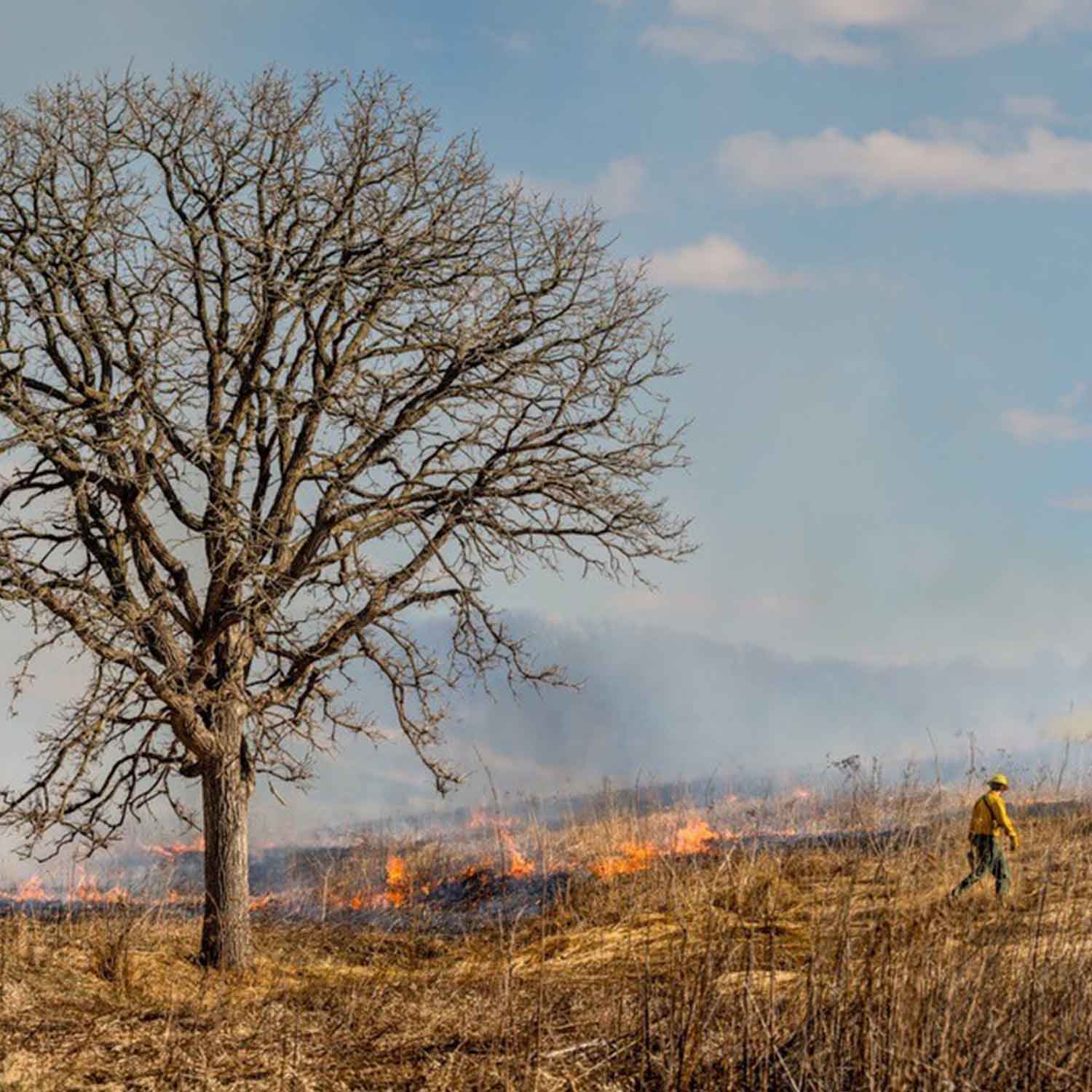
      Burn crew member patrolling a prescribed burn at Shea Prairie. Photo by Jim Wilson.

      Schurch-Thomson Prairie

      Schurch-Thomson Prairie

      Schurch-Thomson Prairie

      This site is a 193-acre farm in the Military Ridge Prairie Heritage Area with mix of prairie, savanna, woodland, and agricultural fields that provides habitat for several rare and endangered species. It has over 220 species of native plants and supports many butterflies and other prairie insects, as well as rare grassland birds and animals like the badger and bull snake.


      A bird looks out over Schurch-Thomson Prairie. Photo by Ron Lutz II.

      Schurch-Thomson Prairie

      A bird looks out over Schurch-Thomson Prairie. Photo by Ron Lutz II.

      This site is a 193-acre farm in the Military Ridge Prairie Heritage Area with mix of prairie, savanna, woodland, and agricultural fields that provides habitat for several rare and endangered species. It has over 220 species of native plants and supports many butterflies and other prairie insects, as well as rare grassland birds and animals like the badger and bull snake.

      Access & Directions

      This site lies along Reilly Road off of County Highway F, south of Barneveld. Parking location denoted with a “P” on the map. Address is: 8624 Reilly Rd, Barneveld, WI. This site is part of Mounds View Grassland.

      Google Map

      Site Steward

      Connect with the site steward to see how you can care for this rare habitat at an upcoming work party.

      This site is stewarded by The Prairie Enthusiasts Empire-Sauk Chapter.

      Site Steward: Rich Henderson: (608) 845-7065 or (Email)

      Upcoming Events Here

      How to Enjoy This Site

      Allowed:

      • Outdoor Recreation
      • Hunting: Ring-Necked Pheasant (all seasons; no permit required)
      • Hunting: Wild Turkey (spring only; no permit required)
      • Hunting: Waterfowl (all seasons; no permit required)
      • Hunting: White Tailed Deer (bow, crossbow, muzzleloader; no permit required)
      • Hunting: White Tailed Deer (Rifle, Shotgun; permit required)

      How to Enjoy This Site

      Allowed:

      • Outdoor Recreation
      • Hunting: Ring-Necked Pheasant (all seasons; no permit required)
      • Hunting: Wild Turkey (spring only; no permit required)
      • Hunting: Waterfowl (all seasons; no permit required)
      • Hunting: White Tailed Deer (bow, crossbow, muzzleloader; no permit required)
      • Hunting: White Tailed Deer (Rifle, Shotgun; permit required)


          Coneflowers at Schurch-Thomson Prairie. Photo by Tim Eisele.

          What Makes Schurch-Thomson Prairie Special

          In spring, the prairie remnants are covered with tens of thousands of shooting stars, a native prairie wildflower.

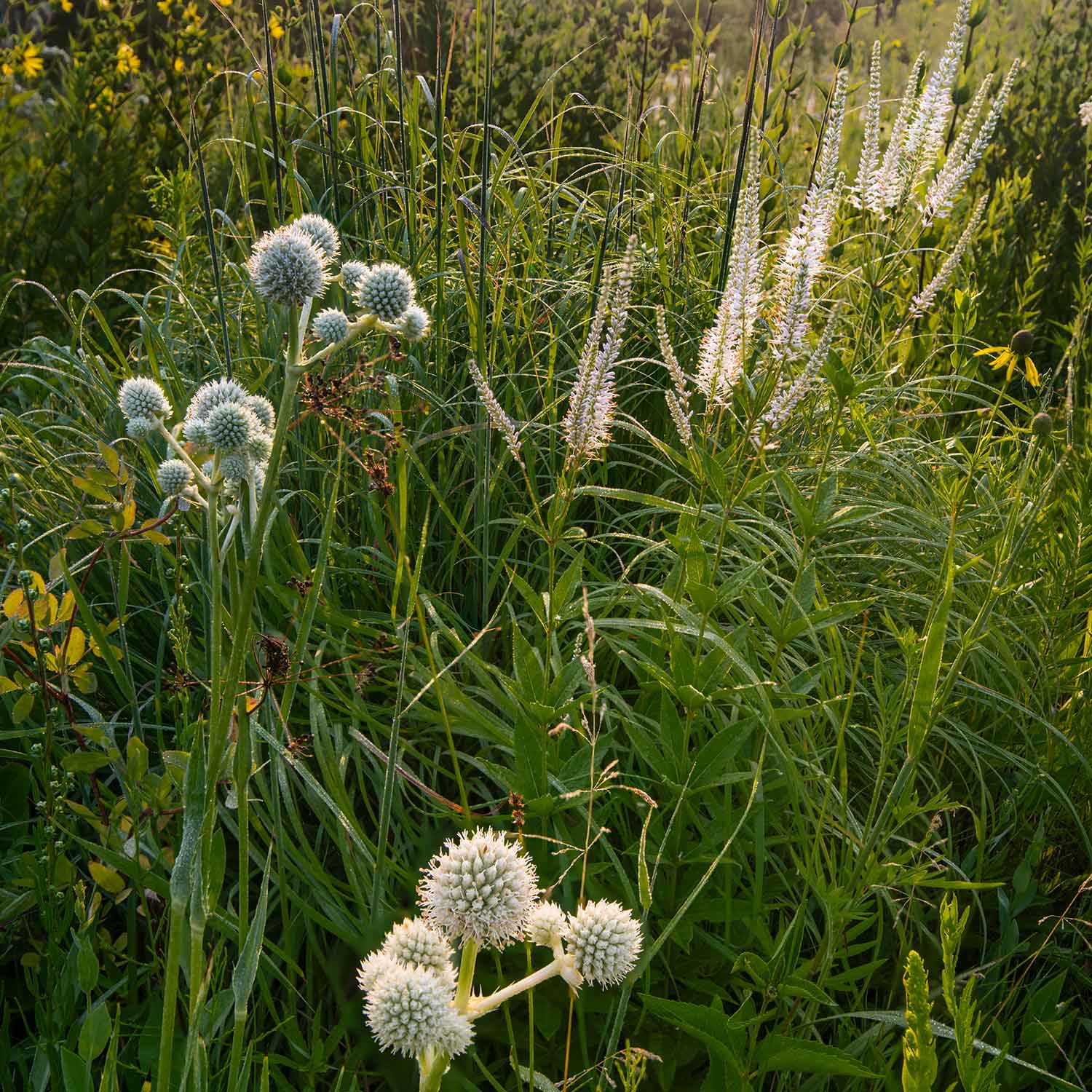
          Rattlesnake master in the morning at Schurch-Thomson Prairie. Photo by Jim Wilson.

          How was Schurch-Thomson Prairie Protected

          The Prairie Enthusiasts volunteers have been working with Dennis and Joan Schurch Thomson for about 20 years to restore the original prairies and savannas on the farm. The Schurch-Thomson Prairie was dedicated during a ceremony on June 9, 2007.

          Rich Henderson with Dennis and Joan Schurch Thomson. Photo by unknown photographer.

          How You Can Help Schurch-Thomson Prairie

          Continued restoration and management will remove invasive species that threaten the health of the prairie and savanna remnants and restore water quality in the stream that runs through the property.

          Check out our Events Calendar to see upcoming work parties or contact the site steward to get involved.

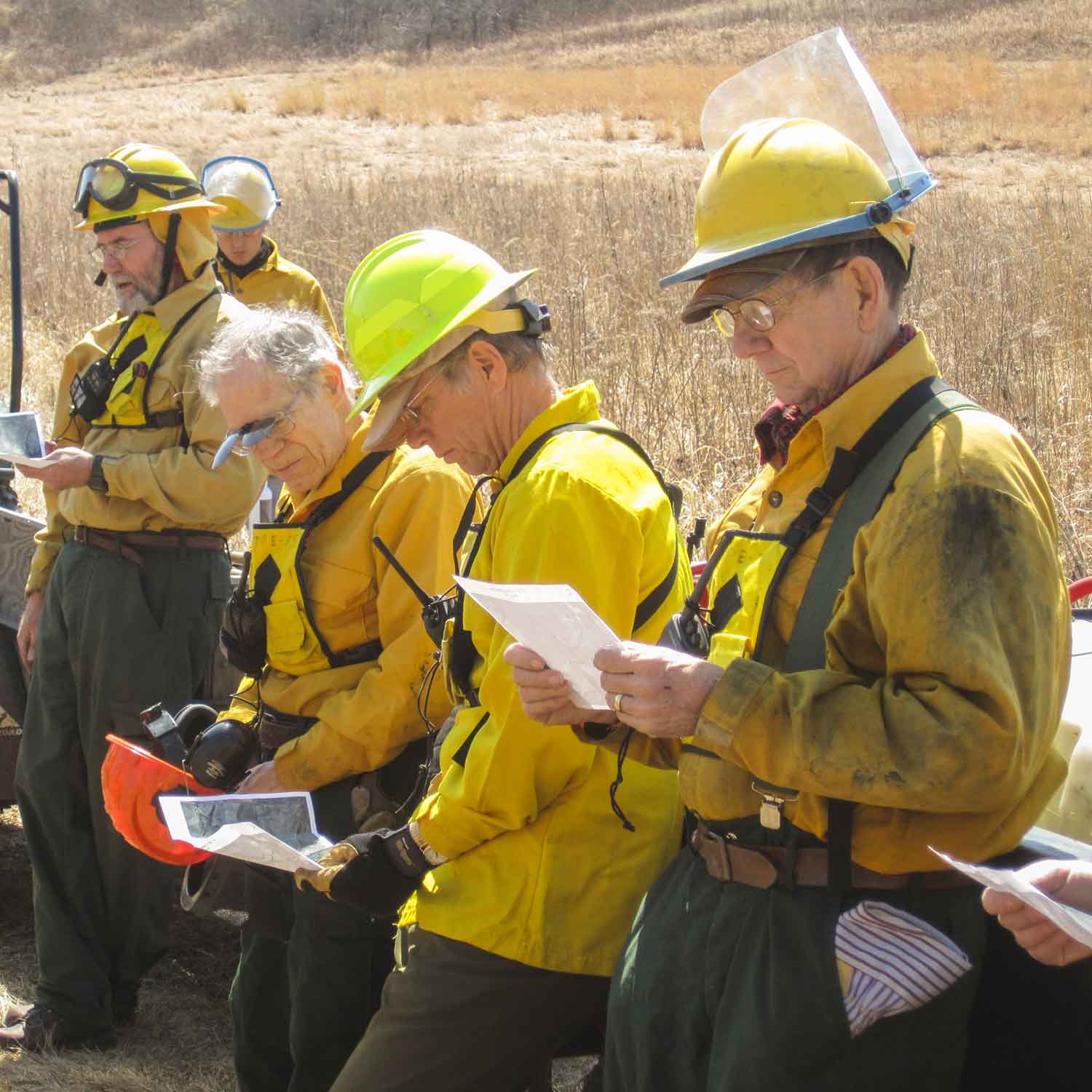
          Burn crew at Schurch-Thomson Prairie. Photo by Paul Kaarakka.

          A to Z Farm

          A to Z Farm

          A to Z Farm

          This property has mowed lanes and some moderate slopes.


          Interns at A to Z Farm. Photo by Rob Baller.

          A to Z Farm

          Interns at A to Z Farm. Photo by Rob Baller. 

          This property has mowed lanes and some moderate slopes.

          Site Steward

          Connect with the site steward to see how you can care for this rare habitat at an upcoming work party.

          This site is stewarded by The Prairie Enthusiasts Empire-Sauk Chapter.

          Site Steward: Rich Henderson (Email)

          Upcoming Events Here

          No event found!

          More information coming soon!

          Kalscheur Oak Savanna

          Kalscheur Oak Savanna

          Kalscheur Oak Savanna

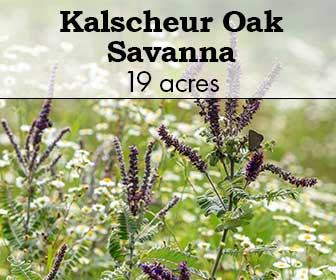
          This 19.06 acre property harbors 212 native plant species, including a population of the rare Hill’s thistle, a Threatened Species in Wisconsin. In the southern part of the property is a cold water stream and wet meadow which rises up to meet a south facing slope of St. Peter’s sandstone covered with dry prairie and oak savanna. As you go to the highest points of the property, there is a thin cap of dolomite over the sandstone. Where the uplands meet the wetlands there is ground water discharge forming springs and perched wetlands raised several feet above the rest of the wetland habitat.


          Leadplant among the flowers at Kalscheur Oak Savanna. Photo by Ron Lutz II.

          Kalscheur Oak Savanna

          Leadplant among the flowers at Kalscheur Oak Savanna. Photo by Ron Lutz II. 

          This 19.06 acre property harbors 212 native plant species, including a population of the rare Hill’s thistle, a Threatened Species in Wisconsin. In the southern part of the property is a cold water stream and wet meadow which rises up to meet a south facing slope of St. Peter’s sandstone covered with dry prairie and oak savanna. As you go to the highest points of the property, there is a thin cap of dolomite over the sandstone. Where the uplands meet the wetlands there is ground water discharge forming springs and perched wetlands raised several feet above the rest of the wetland habitat.

          Access & Directions

          This site is located on County Highway K, two miles south of the village of Hollandale in Iowa County, Wisconsin. The property is landlocked, but The Prairie Enthusiasts does have an undeveloped right-of-way which permits legal access.

          Google Map

          Site Steward

          Connect with the site steward to see how you can care for this rare habitat at an upcoming work party.

          This site is stewarded by The Prairie Enthusiasts Empire-Sauk Chapter.

          Site Steward: Pat Handrick: (608) 354-3467 or (Email)

          Upcoming Events Here

          No event found!

          How to Enjoy This Site

          Allowed:

          • Outdoor Recreation
          • Hunting: Wild Turkey (spring season only; no permit or reservation required)
          • Hunting: White Tailed Deer (bow, crossbow, and muzzleloader season; no permit or reservation required)
          • Hunting: White Tailed Deer (gun season; permit and reservation required)

          How to Enjoy This Site

          Allowed:

          • Outdoor Recreation
          • Hunting: Wild Turkey (spring season only; no permit or reservation required)
          • Hunting: White Tailed Deer (bow, crossbow, and muzzleloader season; no permit or reservation required)
          • Hunting: White Tailed Deer (gun season; permit and reservation required)


              Walking through Kalscheur Oak Savanna. Photo by Ron Lutz II.

              What Makes Kalscheur Oak Savanna Special

              More information to come!

              Monarch butterfly atop hill’s thistle. Photo by Ron Lutz II.

              How was Kalscheur Oak Savanna Protected

              This site had served as a pasture for many decades. In the early 1990s, volunteers with the Southwest Wisconsin Chapter of The Prairie Enthusiasts, while surveying for remnants, discovered prairie vegetation here. They approached owner James Kalscheur about the possible purchase of the parcel. In December 1994, with kindly assistance from the Natural Land Institute and the new WI State Stewardship Grant Program, we completed the purchase. Mr. Kalscheur then generously noted cash back to The Prairie Enthusiasts for a land management endowment for the site.
               
              In January 1996, restoration began in earnest when Southwest Wisconsin Chapter member David Lowe felled around 150 trees and fellow Prairie Enthusiast Ron Nieman removed all of the downed trees with his tractor and skidder. Trees removed included black cherry, slippery elm, basswood, walnut, paper birch and aspen. Some trees were processed at a saw mill and the remainder was processed into nearly 30 cords of firewood by The Prairie Enthusiasts volunteers. Since then, many additional hours have been spent clearing small trees and shrubs. In the summer of 1996, 150 purple milkweed seedlings were planted on the site. In the fall, portions of the site experienced fire for the first time in many years. 

              A bumblebee collects nectar from a cream wild indigo (Baptisia bracteata). Photo by Ron Lutz II.

              How You Can Help Kalscheur Oak Savanna

              Removal of woody vegetation and exotic species will remain high priorities for years to come. A carefully planned fire regimen will also be applied.

              Check out our Events Calendar to see upcoming work parties or contact the site steward to get involved.

              Empire-Sauk Chapter burn crew members after a burn at Kalscheur Oak Savanna. Photo by Eric Preston.