Rare Sand Barrens Ecosystem Preserved in Southeast Wisconsin

Rare Sand Barrens Ecosystem Preserved in Southeast Wisconsin

Rare Sand Barrens Ecosystem Preserved in Southeast Wisconsin    

Written by Reid Bartholomew
July 7, 2025

Photo by Jessica Bizub

EAGLE, WIWisconsinites can now visit one of Southeast Wisconsin’s rarest kinds of habitats just outside of Milwaukee. Mukwonago River Oak Barrens, a 61-acre property protected by The Prairie Enthusiasts in June of this year, features sand barren habitat, an incredible diversity of plant and animal life, and access to the pristine Mukwonago River. 

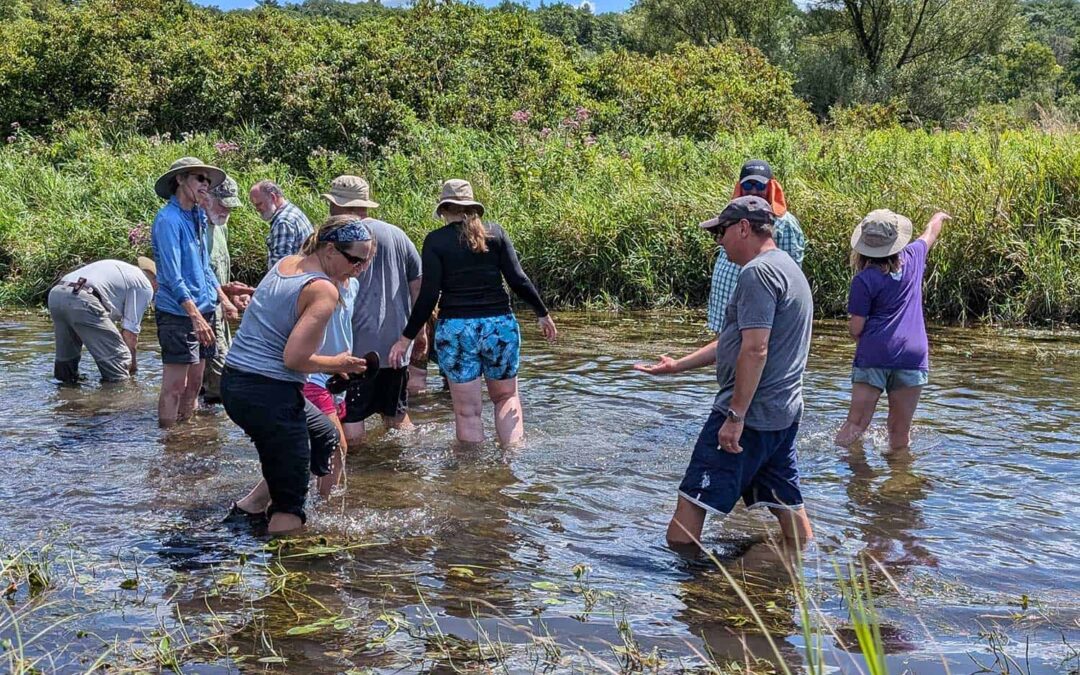
Located in Waukesha County, WI, Mukwonago River Oak Barrens harbors one of the finest remaining examples of sandy oak barrens in the region—an ecosystem rare in Southeast Wisconsin. The 61 acres of the former Christmas tree farm is teeming with life, supporting 275 native plant species within a mosaic of sedge meadow, moist savanna, and prairie. The Mukwonago River winds through the property in a lazy flow that belies the activity beneath the surface; over 50 species of fish can be found in the river, rivalling the diversity of much larger systems like the Wisconsin River and Mississippi Rivers. 

Pamela Meyers has been caring for the property for decades, working with her neighbors to support the health of the watershed and improve the quality of the habitat on the site. Knowing that the land was special, she has been bringing botanists, biologists, and ecologists to the property over the years so that she can understand the habitat better. 

One of those experts was The Prairie Enthusiasts Ecologist, Dan Carter. When the two walked the property together four years ago, Dan immediately saw what Pamela did—an ecosystem exceedingly rare in the region. 

“This piece of habitat has survived where so much has been lost to invasive brush and development—there’s almost nothing else like this in Southeastern Wisconsin,” Dan says. 

The site represents a swell of Prairie Enthusiasm in the Glacial Prairie Chapter—the second property protected by the Chapter, it is the largest site that they have protected to date. The presence of such rare habitat and the abundance of life that it supports has drawn together a tight-knit community dedicated to restoring the land to its full potential.  

For a year prior to The Prairie Enthusiasts protecting the site, volunteers with the Glacial Prairie Chapter have shown up weekly to steadily expand the footprint of the most valuable habitats on the site, linking the remnant old-growth ecosystems together into a single unit. The work is strenuous—massive Scotch pines leftover from the years as a Christmas tree farm are removed to provide light for native species in the oak barrens, and every acre cleared requires diligent follow-up of prescribed burns and the sowing of native seeds—but Pamela has marveled at the willingness of Prairie Enthusiasts to get their hands dirty to care for the 275 native species on the site. 

Located under an hour from Milwaukee in Waukesha County and minutes away from several units of the Kettle Moraine State Forest, the Mukwonago River Oak Barrens is open to the public for a variety of outdoor recreation, including bird watching, hiking, and hunting. The site’s protection creates opportunities for education on ecology and land management practices for volunteers and local landowners alike. 

Support from Wisconsin’s Knowles-Nelson Stewardship Program and Members of The Prairie Enthusiasts have helped make the protection of this fire-dependent ecosystem possible.  

To learn more about Mukwonago River Oak Barrens, including recreational information and volunteer opportunities, visit ThePrairieEnthusiasts.org/Project/Mukwonago-River-Oak-Barrens. 

About The Prairie Enthusiasts 

The Prairie Enthusiasts is an accredited land trust that seeks to ensure the perpetuation and recovery of prairie, oak savanna, and other fire-dependent ecosystems of the Upper Midwest through protection, management, restoration, and education. In doing so, they strive to work openly and cooperatively with private landowners and other private and public conservation groups. Their management and stewardship centers on high-quality remnants, which contain nearly all the components of endangered prairie communities. 

Primary Contact: Sarah Barron, Advancement Manager 

608-676-7806 

SBarron@ThePrairieEnthusiasts.org 

Secondary Contact: Debra Behrens, Executive Director 

608-676-0985 

DBehrens@ThePrairieEnthusiasts.org 

Meet the Prairie Enthusiasts Volunteers Who Are Changing the World

Meet the Prairie Enthusiasts Volunteers Who Are Changing the World

Meet the Prairie Enthusiasts Volunteers Who are Making a Lasting Impact

Story by Kysh Lindell, AmeriCorps Member

Collage of Prairie Enthusiasts. Photo credits below.

Who do you picture when you hear the words ‘Prairie Enthusiast?’  

Maybe you envision a group of people standing neck deep in big bluestem and bright yellow coneflower blooms, smiling under their sunhats. Maybe a Nomex-clad figure expertly wielding a drip torch and silhouetted in smoke. Or perhaps you see flashes of blaze orange helmets and chainsaws, small hands picking fluffy white seeds and binoculars whipping out to catch sight of a bird.  

Chances are the people you imagined are not just casual prairie-goers, but volunteers—the people working to steward and share our last remaining prairies, oak savannas and other fire-dependent ecosystems. When it comes to land management, land protection, education and outreach, it doesn’t get more boots-on-the-ground than The Prairie Enthusiasts’ volunteers.  

Whether they are organizing work parties, removing invasive species, leading prairie tours, raising funds to protect land, conducting prescribed burns or collecting native seed, volunteers from our twelve grassroots chapters dedicate countless hours of their time to protecting and promoting prairies across Wisconsin, Minnesota and Illinois each year. Without these volunteers, thousands of acres of native prairie may not exist at all. 

What is perhaps most unique about our volunteers is their breadth of talent and complete dedication to their cause. Our community is bursting with skilled artists and photographers, writers and storytellers, botanists, ecologists and restoration experts, leaders and educators—many of whom have spent decades lending their unique gifts to the shared mission of protecting prairies. Without this enduring enthusiasm and continued generosity, neither our community nor the prairies we steward would be as vibrant as they are today.  

In celebration of National Volunteer Week (April 20-26), we are spotlighting some of the incredible volunteers who contribute their time and talents to caring for the last remaining prairies in the Upper Midwest. And who better to hear from than their fellow volunteers? Read on for profiles of volunteers who are making a positive impact on the land and their local communities, submitted by members of their chapter. Thank you volunteers!

Laura watching a bumble bee. Photo by Pam Johnson.

Laura (left) on a survey walk. Photo by Pam Johnson.

Laura Dufford

Submitted by Jay Rutherford, Northwest Illinois Chapter (NIPE)

Laura served as a member of the chapter’s steering committee, assisting with everything from CRP contracts to helping to coordinate and host field trips. As a survey team member she participated in documenting a variety of spring and summer species at Hanley Savanna. Laura spent hours collecting, sorting, and mixing native seed for the Northwest Illinois Chapter’s latest restoration planting. She acted as our chapter’s volunteer liaison, providing lunch to hardworking volunteers at the chapter’s annual ‘Thank You’ gathering to conclude the harvest season. 

Laura possesses a truly generous and giving spirit! She remains dedicated and willing to tackle multiple responsibilities—all with good humor and a kind heart. In her 30+ years of volunteering for Northwest Illinois she has stepped forward to assume leadership roles, assisted with many types of field work, including a host of seed program tasks, plus engaged in outreach to both chapter members and new friends. Nature is her inspiration—as she says, “Being out on the prairie is important to my soul”.   

Jim “Flapper” Lynch

Submitted by Addeline Theis Paradis, Many Rivers Chapter

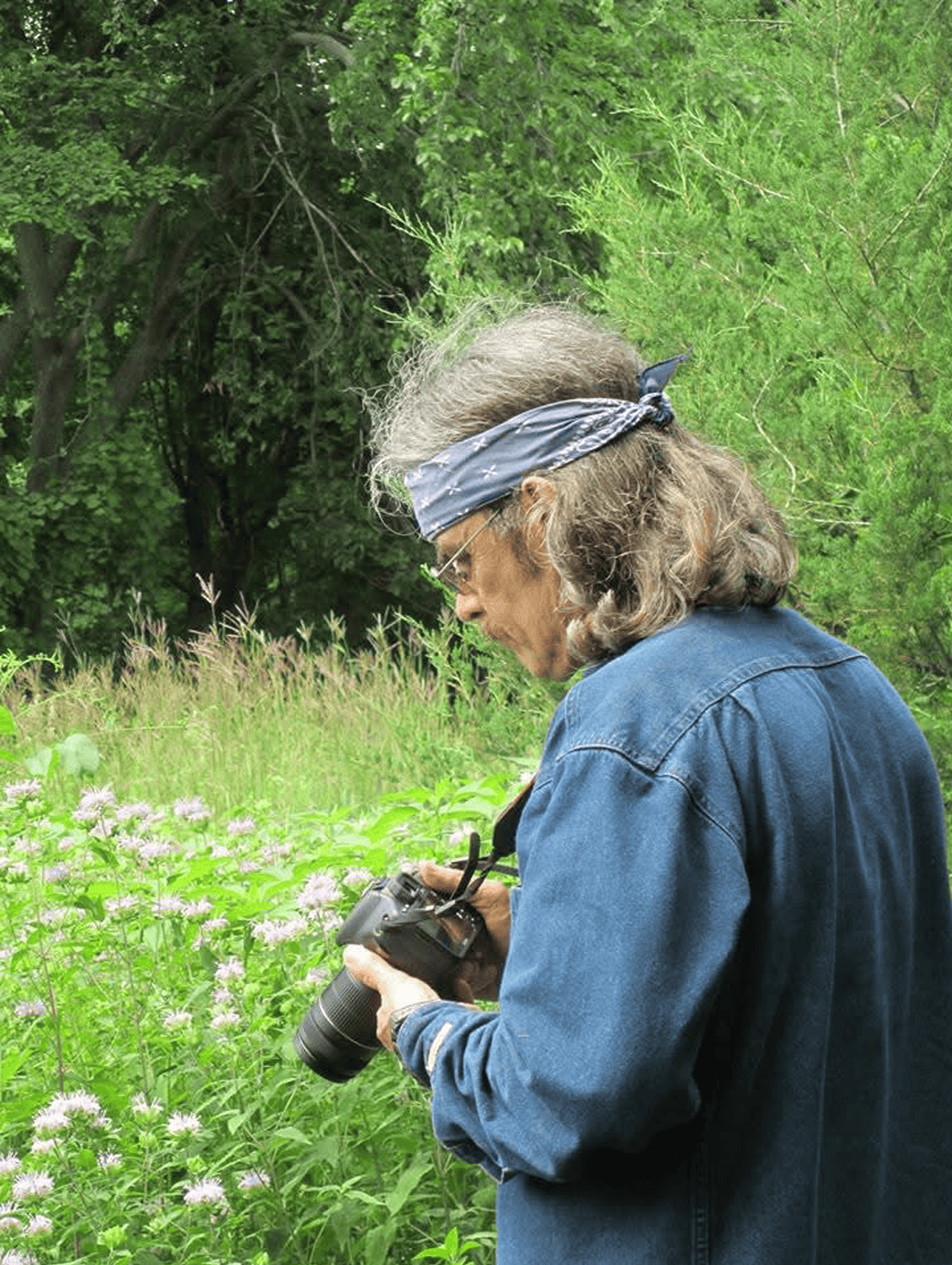
Jim Lynch (fondly known as “Flapper”)  is a great volunteer. He is our communication expert. He puts out all of our email notifications for upcoming events, burns, or anything that needs attention.  He adds photos and does a great job designing a poster for events.  Best of all, he gets the information out promptly and sends additional reminders, which has increased our members’ participation.  

He has done this for over 8 years and has had to learn new emailing systems as The Prairie Enthusiasts changed their formats, but has always done so with patience and fortitude. 

Fun fact: His nickname “Flapper” came out of his participation in a band many years ago, but stuck when he got involved with The Prairie Enthusiasts, for obvious reasons. He and Randy Schindle have had a long-standing competition regarding how many species are present on each of their prairie pieces. 


Flapper photographing the prairie. Photo by unknown Many Rivers Chapter volunteer.

Nancy Gloe. Photo by unknown Glacial Prairie Chapter volunteer.

Nancy Gloe

Submitted by Kat O’Connell Valuch, Glacial Prairie Chapter 

Nancy Gloe is everywhere. She is leading SNA workdays and attending our other workdays. She put in over 70 hours at the Mukwonago River Oak Barrens in 2024—planting plugs, cutting and pulling brush, collecting seeds, staging and burning brush piles, helping with prescribed burns. 

Nancy is a great volunteer because she is consistent, seeks to better understand why we’re doing things and asks critical questions, is welcoming and helpful to newer volunteers, and she just works really hard. It can be difficult to peal Nancy away from tasks at the end of a workday. 

At the Mukwonago River Oak Barrens, she was my only very regular volunteer for a while, but she has been very important in helping to engage new volunteers as they show up, and I credit her with helping develop a pretty consistent and solid volunteer group.  

Fun fact: In 2011, Nancy participated in a protest against the proposed Keystone XL pipeline and volunteered to be arrested alongside fellow climate activists in Washington, D.C. She was only in custody for a few hours and released when she paid $100, but the pipeline was ultimately never built. 

Peter Hartman

Submitted by Gabe Ericksen, Minnesota Driftless Chapter

Peter Hartman has been a steadfast volunteer within our chapter for a number of years. After serving some time as chapter treasurer, he continues to offer guidance and support to our elected board.

This year, Peter has taken on the additional role of Coordinator between our chapter, the City of Winona and Winona State University. His efforts to foster collaboration on the Garvin Heights Overlook prairie and oak woodland spaces have catalyzed a great deal of volunteerism and energy within the Winona community. As a retired soil scientist for the NRCS, Peter can still sometimes be found probing the ground for clues about its composition and history. He’s certainly not one who is afraid to get his hands dirty!

Thanks for all of your enthusiasm and generosity within our chapter, Peter! 

Peter collecting and analyzing soil samples. Photos by unknown Minnesota Driftless Chapter volunteer.

Jessica Bizub

Jessica Bizub

Submitted by Kat O’Connell Valuch, Glacial Prairie Chapter 

Jessica had a tremendous lift for the Glacial Prairie Chapter and The Prairie Enthusiasts this last year as the past Glacial Prairie Chapter Chair, Board Representative, and Chair of the Education Committee. She put in countless hours doing a lot of work behind the scenes and at various workdays and prescribed burns. She is transitioning to Prairie Enthusiasts Staff (!) and her leadership will be missed by the Glacial Prairie Chapter.

Jessica is a great volunteer because she is always willing to go the extra mile. She is also incredibly thoughtful and conscientious.  

Fun fact: Jessica played drums in a death metal band in high school.


Bob Retko

Submitted by Becky Fernette and Kay Wienke, Southwest Wisconsin Chapter

Bob spent his career (49 years) near Milwaukee working on and managing a 40-acre property with outdoor sculptures, lawn and prairie areas.

Currently, Bob is the Site Steward for Iris Drive and has worked closely with Gary Eldred to make sure the transition from Gary to Bob has gone smoothly. He has spent time cutting brush in a savanna area there, burning brush piles and facilitating a prairie burn on the west unit there this spring. He is also an active member of the Chapter Land Management Committee.


Bob enjoying the prairie. Photo by Kay Wienke.

Kevin at a work party at Giordano Oak Barrens. Photo by Rob Baller.

Kevin McKown

Submitted by Rich Henderson, Empire-Sauk Chapter

Kevin volunteers at multiple sites and attends many work parties. He has done all kinds of volunteer work, including tree and brush clearing, prescribed burning, seed cleaning and planting wild strawberries into restorations. He also helps conduct bird surveys and lead bird hikes.

We’re grateful that he’s always willing to help when he can, and that he brings his knowledge and enthusiasm for birds to our events.

Fun fact: Kevin has participated in the American Birkebeiner for many years. 

Marc Johnson

Submitted by Matt Dettlaff, Prairie Sands Chapter

In addition to volunteering to be our chapter Treasurer, Marc is a stalwart participant in our work days. Additionally, he also volunteers on Jeb Barzen’s burn crews around our area.

How It’s Made: Parsnip Predators

How It’s Made: Parsnip Predators

How It’s Made: Parsnip Predators

Summer 2024 Chapter Update by Rebecca Gilman and Charles Harmon. Photos by Rebecca Gilman.

Nick Faessler, Jerry Newman, Den Oostdik, Chris Roberts, Fred Faessler and Tom Mitchell with a crate of finished Predators

What’s a Prairie Enthusiast to do when the skies of February turn gloomy? Members of the Prairie Bluff Chapter spent the short days of winter—as they have for years—producing the tool that tames the nightmare that is wild parsnip (Pastinaca sativa). 

If you’re lucky enough not to know it, wild parsnip is an aggressive invasive that spreads like wildfire and burns like it too. Handling the plant without proper protection can be dangerous. If an unsuspecting weed-puller gets sap from wild parsnip on their skin and the sap is then exposed to UV light, it causes phytophotodermatitis, or burn-like blisters. That’s the scenario that faced George and Kay Barry, stewards of a prairie planting at Honey Creek Park in Monroe, WI, in the early 1990’s. Presented with a field full of parsnip, Kay turned to The Prairie Enthusiasts for help. 

As chapter member Rob Baller recalls, “I contacted Mark Martin, (of the Wisconsin DNR), and asked how the State Natural Area crew treated parsnip. He told me that crew members sharpen spades, and on prairie remnants they jab the plant a couple inches from the base, angling the blade so it intercepts and slices the root an inch or two below-ground. Then, with gloves on, they pull out the severed plant. A parsnip with the root crown so severed will not resprout.” 

Rob took Mark Martin’s idea and ran with it, straight back to his workbench. Using scrap metal, the handle from an old snow shovel, and plenty of nuts and bolts, he fashioned the prototype of what we now call the “Parsnip Predator.” After trying it out, “Kay was all smiles,” Rob says.   “’Can you make more of these?’ she asked.”   

Rob turned to Nick and Fred Faessler and asked the brothers if they thought the tool could be put into mass production. Another chapter member, Julia O’Reilly, saw commercial potential in the tool and volunteered to be the implement’s first dealer. Nick and Fred retired to Nick’s shop and began experimenting. Eventually, they settled on a modified number two shovel with a notched blade as the best design. The tool allows users to cut the parsnip root crown and is strong enough to pry the parsnip out of the ground once severed.  (“Everyone wants to pry,” Rob notes.) 

Nick Faessler remembers that they made the first batch of 30 Parsnip Predators with no idea of whether or not any of them would sell. The predator was an instant hit, however. Over the years, the Prairie Bluff Chapter saw sales increase yearly and shipped the tool from coast-to-coast. Now sales and shipping are handled by The Prairie Enthusiasts awesome staff in Viroqua, with Prairie Bluff Chapter and the organization as a whole sharing the profits. 

Nick Faessler cuts Predator blades

Chris Roberts secures handles

This past February, a visitor to Nick’s shop witnessed what is now a well-oiled, Parsnip Predator assembly line. Nick begins the process by cutting a notched tip in the shovel’s blade with a plasma-cutter. At the next station, the rivets that attach the shovel’s handle to the blade are ground off so that the handle can be turned 90-degrees and carefully aligned. During the next step, a new hole is drilled in the handle and a bolt is inserted, tightened and ground downAnother group of volunteers then polishes the sharp edges on the blade and applies a protective coating of paint. The final step is to brand the handle of each shovel with the registered “Parsnip Predator” trademark. (The “Parsnip Predator” moniker was coined by Rob Baller’s landlord and adopted in lieu of another suggestion, “The Root Canaller.”) 

The group of volunteers on hand in Nick’s shop that day made the work look easy. But take it from that visitor who briefly wielded a power tool herself, crafting a Parsnip Predator is not as easy as it looks. Only through years of working together have the volunteers on hand that day—Nick Faessler, Chris Roberts, Billy Eisenhuth, Fred Faessler, Jackson Lancaster, Tom Mitchell, Todd Argall, John Ochsner, Steve Hubner, Den Oostdik and Jerry Newman—created a seamless system that was beautiful to behold.   

Over the years, sales of the Parsnip Predator have not only helped to eradicate a noxious invasive, they’ve also helped to preserve and protect the prairies we cherish. If you’re not already a proud owner of a predator, consider purchasing one today. Every Parsnip Predator is handmade in Wisconsin, with love. 

John Ochsner applies protective coats of paint

Den Oostdik grinds off the original bolts

This article appeared in the Summer 2024 edition of The Prairie Promoter, a publication of news, art and writing from The Prairie Enthusiasts community. Explore the full collection and learn how to submit your work here.

Positive Changes on Pleasant Bluff

Positive Changes on Pleasant Bluff

Positive Changes on Pleasant Bluff

Story by Eric Ressel, Minnesota Driftless Chapter volunteer 

Drone image of prescribed burn at Pleasant Bluff.

As I approached Pleasant Bluff, just south of Winona, MN, I asked myself if this was the same location I visited a few years earlier, since this hillside was once densely infested with an onslaught of buckthorn and encroaching eastern red cedars. Since then, the Minnesota Driftless Chapter of The Prairie Enthusiasts has contributed substantially to ecological restoration on this impressive prairie remnant. Over 18 acres along the spine of this formidable bluff, which sits above the banks of the Mississippi River, have been restored due to the diligent, hard work from folks like Gabe Ericksen, who has spent countless hours traversing the steep terrain to cut and remove the cedars, eradicate invasive brush, and implement numerous prescribed burns over the years. Gabe is a restoration practitioner through his contracting business, Land Spirit Design Landscaping, and he has been the tip of the restoration spear on Pleasant Bluff, assisted by the landowners and the Minnesota Driftless Chapter.

At a mid-March occasion in 2023, a diverse crew was assembled to assist Gabe with an 11-acre prescribed burn on this precipitous goat prairie. Thirty people of all ages and backgrounds, from children to seniors, joined together to conduct a safe and successful prescribed burn. Many of the participants were members of the Minnesota Driftless Chapter of The Prairie Enthusiasts, but many of the participants weren’t. A substantive way in which the Minnesota Driftless Chapter of The Prairie Enthusiasts contributed to the burn was by loaning the Chapter’s prescribed burn equipment to Gabe for the day’s burn.

The slope of this lofty bluff approaches 60% and is nothing short of intimidating. On this day, thanks to restoration efforts, the fuel-bed consisted primarily of native warm-season grasses and wildflowers, with some scattered pockets of shrubs. The climb up the mowed firebreak was grueling for the whole group. At the top, along the ridge overlooking the Mississippi River, Steve Winter having been designated as the burn boss by Gabe, provided the crew with an overview of why we burn such fire-dependent ecosystems, and he demonstrated fire behavior on steep terrain. He also highlighted numerous safety considerations, such as tumbling rocks and tripping hazards. Steve educated the group on the importance of clear communication, being familiar with the weather and environmental conditions, such as the optimal wind direction and humidity, and being aware of the safety zones and escape routes at this particular site. Once everyone confirmed they were comfortable implementing the burn, we broke into several smaller crews that were positioned along the ridge and others down the steep firebreak on the northwestern side. 


From the ridge we patiently waited for the progression of the fire from the ignition point, which was slow-going due to the calm conditions. My crew discussed strategy and stayed in contact with Steve and Gabe over the radio. We kept a careful watch as the gradually growing flames moved diagonally down the hillside. However, with barely a breeze the fire crept ever slowly, so Steve instructed me and fellow member Bill Hovell to ignite a shirt strip fire directly down the slope, which allowed the flames to spread more quickly in both lateral directions in the dense Indian grass (Sorghastrum nutans), side-oats grama (Bouteloua curtipendula), and little bluestem (Schizachyrium scoparium). Bill and I worked our way down the steep slope towards the county road on the lower edge of the prairie where we rendezvoused with our other crew members, whom I literally passed the torch to so they could get some ignition experience. It was in that moment that I watched my greener group members become less fearful, and more comfortable and excited to use fire as an ecological tool! 

In the meantime, another crew worked the line along the northern edge of the burn unit as the flames continued to consume the fuel down the slope. In the heat of the moment, the landowner, Paul Richards, was able to capture some stunning drone footage. I wondered what the children, who were positioned in a safety zone at the top of the ridge, and upwind from the fire, were thinking as they watched the fire grow from a safe distance. I’m sure this experience proved to be exhilarating, educational, and memorable for them. Along with the children, I hoped our new participants and the students that attended Steve’s burn school would also be inspired to continue with the restoration legacy. 

Volunteer Gabe Ericksen burning. Photo by Laurie Arzaga.

Our crew continued to walk along the lower edge. We eventually met up with Gabe and his partner, and we extended the line as far east as possible. As the heat intensified above us and behind us, we ducked down into the refuge of a safety zone represented by a buckthorn thicket, which had little flammable fuel on the ground, as the flames progressed through the portions of the burn unit. I turned around and gave a gleeful smile as the sweltering flames made contact with many stems of the aggressive woody plants that are constantly trying to establish in prairies such as the one we were burning that day. We then moved again to our county road safety zone farther below, which we followed back to meet the main group. Gabe once again targeted the buckthorn as he ignited the strip of vegetation along the roadside edge, allowing the fire to burn up the slope and make contact with many buckthorn stems. We allowed the fire to spread up the slope into a grove of old white oaks that will surely benefit from the fire with more space to stretch their limbs.

We met to start mopping up and to review the outcome of the successful burn. Most of the group members then left, but I was greatly impressed by those devoted enthusiasts who decided to stay well into the evening. Gabe and Josh Lallaman led this late-night effort, which was carefully supervised into the early morning hours, and they were able to effectively burn an additional 3-acre area. The night burn looked equally serene and intensely dramatic. To me, this illuminating scene was the perfect illustration of the power of fire. It showed why prescribed burning promotes creation through destruction, making it an essential tool to encourage natural rejuvenation and regrowth, which helps to maintain prairies and savannas by preventing their conversion to other vegetation communities. Once again, demonstrating that fire is the ultimate management method to set back undesirable invasive vegetation, while stimulating the growth and reproduction of native grasses and wildflowers.  

As I drove south to head home along the mighty river, I reflected on the progress of this goat prairie from its previous poor condition, choked by buckthorn, to a thriving, fully functional ecosystem that is driven and dependent on fire. Now this unique ecological community can thrive in the southwestern-facing sunshine, while supporting an array of rare plant and animal species. I contemplated the logistics and timeframe for completing restoration efforts on similar sites, since the majority of the goat prairies in the Driftless Area, along with associated oak savannas and woodlands, have become degraded in part because of altered fire regimes. I thought of the historic photos portraying a landscape where trees weren’t as abundant along the Mississippi River Valley. Those historic conditions were largely due to frequent landscape burning by Indigenous Peoples. As Indigenous Peoples were displaced by European Americans, Indigenous land stewardship practices like prescribed burning were also displaced. Fires were often viewed as harmful by European Americans, and woody vegetation increased greatly in the Driftless Area, including on Pleasant Bluff. With the increasing prevalence of woody vegetation, including invasive species such as buckthorn, we’re witnessing a correlated decline in health of rare plant communities and an overall decrease in plant diversity.

“It made me proud to be a part of such an ambitious chapter of like-minded, well-educated enthusiasts who are passionate about ecological restoration and conservation education.”

The Pleasant Bluff prescribed burn was just one example of how dedicated members of the Minnesota Driftless Chapter are eager to save ecosystems. Their tireless restoration work, outreach efforts and mentorship are also an inspiration for others. It made me proud to be part of such an ambitious chapter of like-minded, well-educated enthusiasts who are passionate about ecological restoration and conservation education.

I want to thank the Pleasant Bluff landowners, Paul and Melissa (Missy) Richards, for their ongoing involvement and enthusiasm for the restoration and management of Pleasant Bluff. Their commitment to conservation and stewardship of the beautiful bluff prairies, woodlands, and oak savannas on their Winona County property is exemplary. Missy summarizes the continual progress of their beloved prairie: “We have deep appreciation for all the collaborative work between The Prairie Enthusiasts volunteers, experts in the field, U.S. Fish and Wildlife Service and Land Spirit Design Landscaping. We recognize and appreciate being a part of something so much bigger than us. It gives us the opportunity to showcase the importance and impact of land restoration to our neighbors, family and friends. The ability to have a community partner with us on this journey makes Pleasant Bluff so much better.”


You, too, can follow their inspirational journey on the Richards’ Instagram page (@pleasantbluff_winonamn). Since the burn last spring, with help from Gabe, the Richards have continued their brush management efforts to lessen the buckthorn pressure across additional areas on the bluff. They have also documented dozens of native wildflowers on the bluff and often find new species. We encourage you to follow the Minnesota Driftless Chapter Facebook page to learn what additional prescribed burns and restoration efforts will take place.

I’ll be thrilled for the opportunity to return to this unique and productive dry bluff prairie to work once again with our devoted chapter members and these dedicated landowners, and to observe the positive and dynamic changes to this ecological gem along the river. On behalf of the Minnesota Driftless Chapter, we hope you can come join us.

Seven people and a dog gathered around a table and smiling at the camera.

Nighttime prescribed burn mop-up. Photo by Joshua Lallaman.

This article appeared in the Spring 2024 edition of  The Prairie Promoter, a publication of news, art and writing from The Prairie Enthusiasts community. Explore the full collection and learn how to submit your work here

Prairie Enthusiasm Ignites in the Twin Cities

Prairie Enthusiasm Ignites in the Twin Cities

Prairie Enthusiasm Ignites in the Twin Cities

Story by Kysh Lindell, The Prairie Enthusiasts AmeriCorps Member

The Prairie Enthusiasts is thrilled to announce the formation of a new chapter! The Minnesota Oak Savanna Chapter will be serving Anoka, Carver, Dakota, Hennepin, Isanti, Ramsey, Scott, Sherburne and Wright Counties.

Though a third of Minnesota was once prairie, less than 2% of Minnesota’s native grassland habitats remain. The Minnesota Oak Savanna Chapter is so named because of the historic abundance of oak savanna ecosystems in what today comprises the greater Minneapolis-St. Paul metro area. These open grassland habitats are comprised of scattered oak trees and an understory of sun-loving prairie plants, both of which support fascinating native wildlife like the state-endangered Henslow’s sparrow and federally-endangered rusty patched bumblebee. Though agriculture and urban development have largely replaced these essential native ecosystems, a few remnants—extraordinarily rare sites that have been largely undisturbed and retain most of their original plant communities—have persevered.

Wild lupine (Lupinus perennis) by Alex Carroll, Minnesota Oak Savanna Chapter Contact.

Inspired by an outpouring of interest in caring for native ecosystems, the Chapter is invested in providing hands-on education, training and volunteer opportunities for everyone in the local community, regardless of experience level. Attendees at local education events and work parties can expect to learn what makes prairie so unique, how to identify and control invasive plant species, how to enhance habitat for pollinators and how to conduct prescribed burns. Along with these tangible skills, the Chapter strives to inspire hope. “In the face of climate change it’s easy for people to feel discouraged, dispirited and powerless. We believe that creating community, exploring the wonders of our native places and joining together in skillful work to protect and restore such places is uplifting, hope-inducing and rewarding,” says Minnesota Oak Savanna Chapter Board Representative Greg Heberlein.

Beyond the proven environmental benefits of stewarding native ecosystems—from providing critical habitat for threatened wildlife and enhancing soil health to combating carbon emissions and improving water quality—Minnesotans stand to gain a priceless connection to the natural communities in their own backyards. “I grew up in Minnesota, and I lived there for 40 years without really knowing what a prairie was until a few years ago,” says Debra Behrens, Executive Director of The Prairie Enthusiasts. “Thinking of young people learning about the land around them and being inspired to care for that land… it’s truly a wellspring of hope.”

Please join us in welcoming our new Chapter and stay tuned for upcoming events! For more information, contact Info@ThePrairieEnthusiasts.org or click here to sign up for Chapter emails.


This article appeared in the Spring 2025 edition of The Prairie Promoter, a publication of news, art and writing from The Prairie Enthusiasts community. Explore the full collection and learn how to submit your work here.