by The Prairie Enthusiasts | Jun 4, 2020 | News
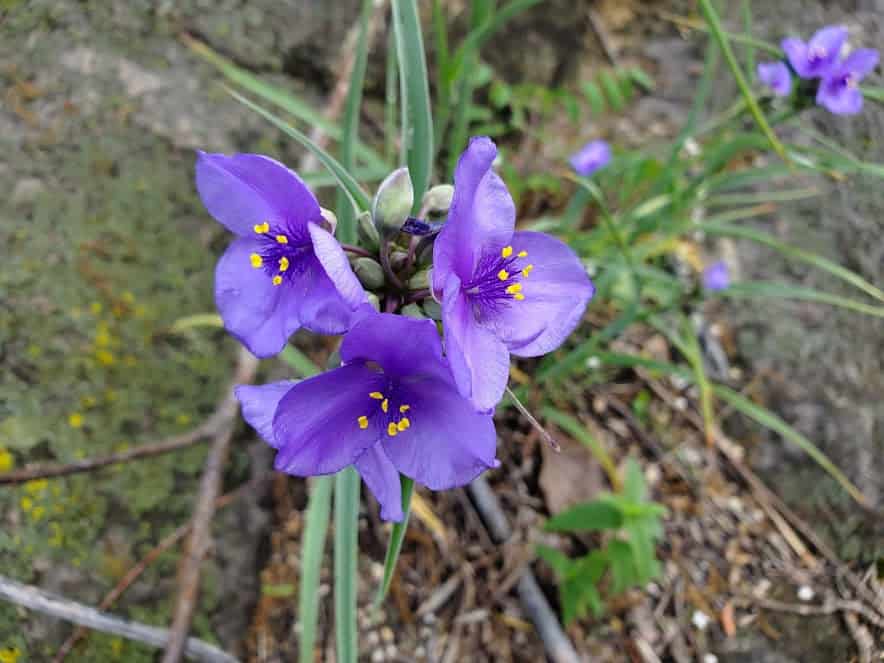
This week the savanna’s purple lupines (Lupinus perennis) and pink wild geraniums (Geranium maculatum) are being replaced by spiderworts (Tradescantia ohiensis). According to past years’ local records, spiderworts are blooming later than normal this year. The cool spring, together with the lack of burning, make this year’s blooming plants on the hillsides appear to be less striking than in past years. But up close they are still a beautiful and impressive plant.
Many birds are fully occupied with nesting. Andy Sleger observed a female Rose-breasted Grosbeak exiting a nest and took a photo. Rose-breasted Grosbeak nests appear to be flimsy but tend to hold up well. At least the species appears to be a successful nester, based on the number of young grosbeaks that show up with their parents at bird feeders every year.

Another nesting critter that Andy found was a large snapping turtle. This turtle was just starting to lay her eggs in a nice sandy area. Unfortunately, the area is on a management use trail. Turtle nesting is often unsuccessful. Turtles face obstacles, like roads and other impediments as they head to and from nesting sites. Nest predation is also a significant source of loss, with 90 to 100% of all turtle nests failing due to predators in some areas. With turtle populations declining, we need to protect turtles as much as we can. Check out the WDNR website for more information on how you can help.

Photos:
Spiderwort (Tradescantia ohiensis), photo by Pat Trochlell
Rose-breasted Grosbeak nest, photo by Andy Sleger
Snapping turtle laying eggs, photo by Andy Sleger
by The Prairie Enthusiasts | Jun 4, 2020 | News
Spring is quickly growing into summer. Here are a few photos that captured our attention this past month. So fun to see what is happening in and around the prairie. One way of looking at these images is called Phenology which is the study of reoccurring life cycles that are driven by the environment. The timing of these events are related to both short – and long-term variability in climate. Do these images look familiar, can you identify them?

Photo by Joe Rising

Photo by Joe Rising

Photo by Pat Trochlell
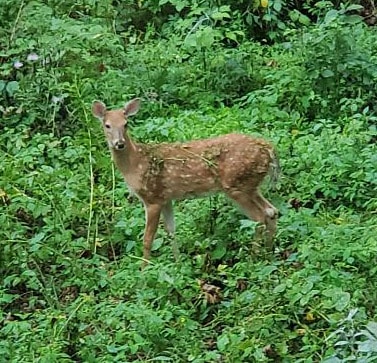
Photo by Pat Handrick

Photo by Ken Erickson

Photo by Joe Rising

Photo by Pat Trochlell

Photo by Christine Larson

Photo by Freya Rising

Photo by Gail Erickson

Photo by Pat Trochlell

Photo by Steve Engber

Photo by Pat Trochlell

Photo by Christine Larson
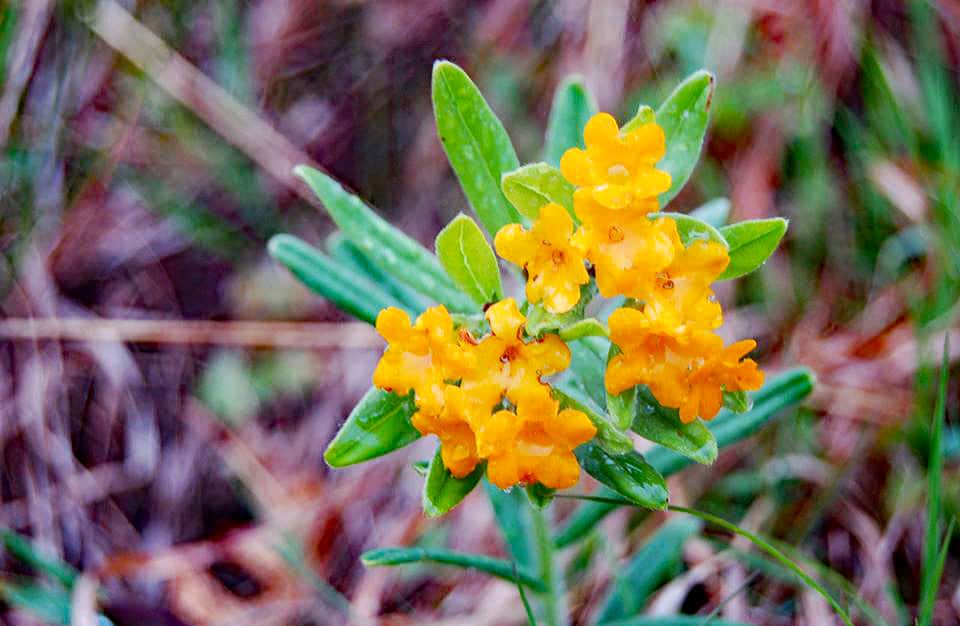
Photo by Stephen Winter

Photo by Jim Rogala
by The Prairie Enthusiasts | May 1, 2020 | News
 Please enjoy these beautiful Spring photos contributed by our members! Let go of the last bits of winter and take a virtual walk through Nature and witness the new beginnings of growth on the Prairie. Welcome back sunshine to our land and our lives!
Photo by Joe Rising

Photo by Christine Larson

Photo by Denise Friesen

Photo by Christine Larson

Photo by Christine Larson

Photo by Denise Friesen

Photo by Christine Larson

Photo by Chris Kirkpatrick

Photo by Joe Rising


Photo by Joe Rising

Photo by Denise Friesen

Photo by Joe Rising

Photo by Christine Larson

Photo by Jerry Newman

Photo by Lisa Culp
by The Prairie Enthusiasts | May 1, 2020 | News
 Happy May Day 2020! This may be one of the the most important days of the year. Symbolically, this day represents the return of life and fertility to the world. Astrologically, today marks the midpoint of Spring, half way between the Spring Equinox and Summer Solstice.
Traditionally, children gather flowers and make May Baskets to give to their neighbors. Hopefully, a lot of dandelions and violets are in them, not our special, ephemeral wildflowers.
For the Prairie Enthusiasts, we look forward to a successful year of growth and stewardship. Today, we celebrate Spring and our deep roots in the Earth’s enduring cycles. Over the next few weeks we will witness one of Earth’s great seasonal cycles of bird migration.
Keep your eyes on the sky and Prairie for daily new arrivals; have you spotted a Blue Bird yet? 
Nature gives us life, hope, sustenance and solace. Nature Therapy, sometimes referred to as ecotherapy, describes the benefits associated with an individuals presence within nature. This is easy to find on the prairies and in oak savannas. We hope you will get out in Nature and better yet, onto our preserves and improve your health and well being. Being on the Prairie is very grounding, think of the Prairie’s deep roots in the Earth. Feel the Prairie plants reaching for the Sun. This is similar to the ancient concept of Forest Bathing which combines a variety of experiences in the natural environment. There is a lot of unseen interactions between a person and the soil, native grasses, pollen, bees and all the creatures of the prairie. Renew yourself in nature, experience the sights, sounds, and smells of the prairie. Feel the sun and the breeze. Prairie therapy is restorative!
May Day is a good day to feel the cycle of the seasons… as well as every other day. May Day reminds us to stay connected to the Earth, Sun, Wind and Water. Get out on the prairie and get some Nature Therapy!

by The Prairie Enthusiasts | May 1, 2020 | News
 The main theme of this series of posts is the sense of nature that gives us strength and healing. The poetry of Wendell Berry often does that. He was in touch with the earth, though often from a more agricultural standpoint. He once wrote a poem about stones, from a farmer’s point of view. They are obstacles, needing to be broken up and removed so that the land can be cultivated. But Berry also shows regard and respect for these stones, for what he calls their music, mute in them until he connects to them and they connect him to the ground.
Photo by Stephen Winter
“The Stones” by Wendell Berry
I owned a slope full of stones.
Like buried pianos they lay in the ground,
shards of old sea-ledges, stumbling blocks
where the earth caught and kept them
dark, an old music mute in them
that my head keeps now I have dug them out.
I broke them where they slugged in the dark
cells, and lifted them up in pieces.
As I piled them in the light
I began their music. I heard their old lime
rouse in breath of song that had not left me.
I gave pain and weariness to their bearing out.
What bond have I made with the earth,
having worn myself against it? It is a fatal singing
I have carried with me out of that day.
The stones have given me music
that figures for me their holes in the earth
and their long lying in them dark.
They have taught me the weariness that loves the ground,
and I must prepare a fitting silence.
From Farming: A Handbook
by Wendell Berry
by The Prairie Enthusiasts | May 1, 2020 | News
This week more reptiles and amphibians are becoming active. The musical trill of American Toads can now be heard from some ponded wetlands. Toads typically breed when water temperatures are over 60⁰ F but may be heard singing from late April until mid-summer.
Bird’s-foot violets are starting to bloom in prairie areas. Bird’s-foot violets can be distinguished from the similar prairie violets by their protruding orange stamens which resemble a beak.
Red-headed Woodpeckers are known to be aggressive toward other birds, often seen chasing the much larger Pileated Woodpeckers where they co-exist. They become even more aggressive during this time of year, particularly with other Red-headed Woodpeckers, as they compete for nesting habitat and mates. Red-headed Woodpeckers are an iconic species of oak savannas. Steep population declines after the mid-1900’s were primarily due to habitat loss. Prescribed burning for oak savanna restoration creates more openings in the forest canopy and dead trees which are critical components for species recovery.