Marowski Bluff Prairie

Marowski Bluff Prairie

Marowski Bluff Prairie

This site features a steep bluff prairie with a stunning view of the Mississippi River. Situated between Rush Creek and Sugar Creek Bluff State Natural Areas, this high-quality prairie contributes to an important protection corridor linking them together. 


Butterfly milkweed at Marowski Bluff Prairie. Photo by Sarah Barron.

Marowski Bluff Prairie

Butterfly milkweed at Marowski Bluff Prairie. Photo by Sarah Barron. 

This site features a steep bluff prairie with a stunning view of the Mississippi River. Situated between Rush Creek and Sugar Creek Bluff State Natural Areas, this high-quality prairie contributes to an important protection corridor linking them together.

Access & Directions

This site is located at 61675 Grand Vista Rd, Ferryville, WI.

Google Map

Site Steward

Connect with the Chapter to see how you can care for this rare habitat at an upcoming work party.

This site is stewarded by The Prairie Enthusiasts Coulee Region Chapter.

How to Enjoy This Site

Allowed:

  • The prairie is open to the public. Uses allowed must align with the Village of Ferryville.

    How to Enjoy This Site

    Allowed:

    • The prairie is open to the public. Uses allowed must align with the Village of Ferryville.


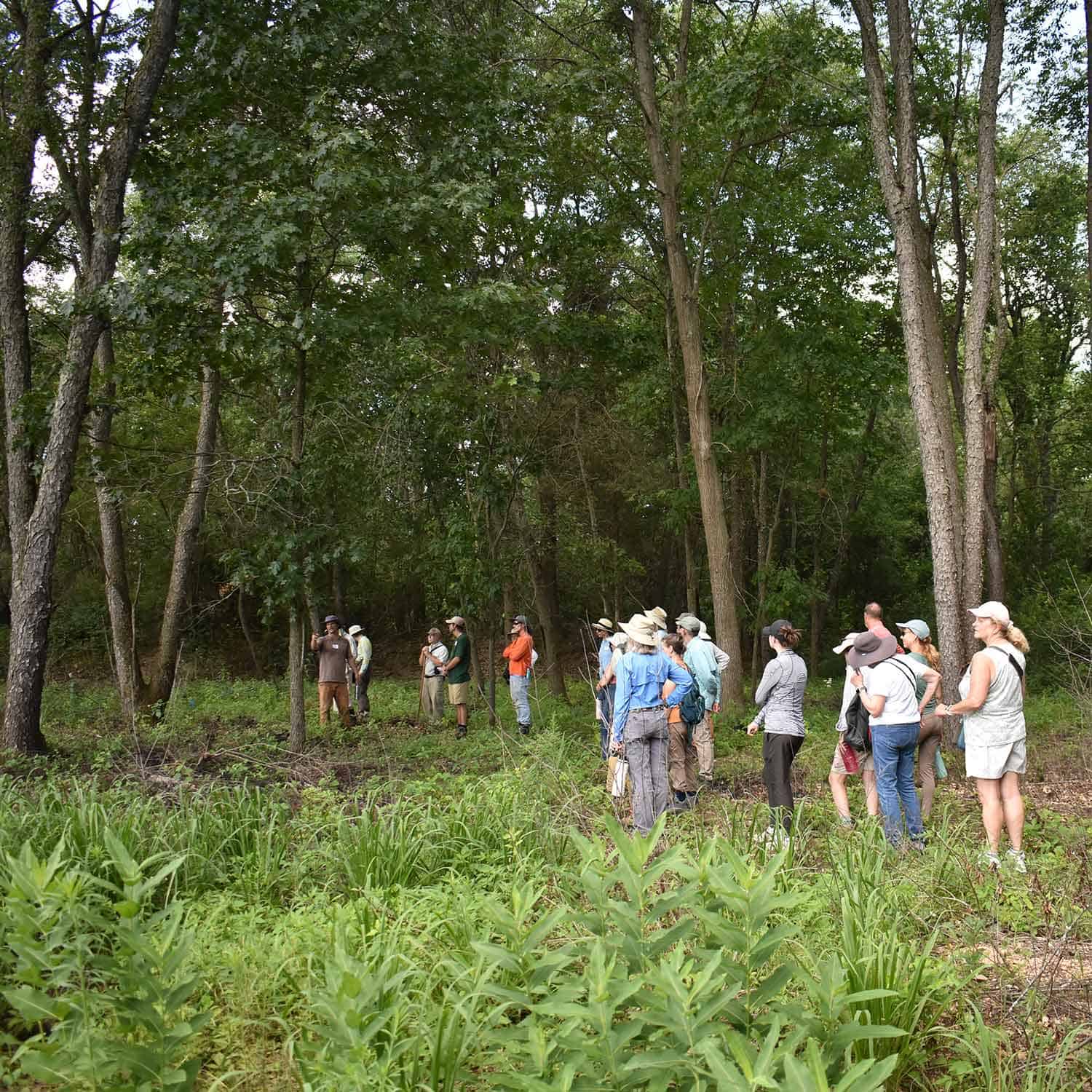
      Hikers explore Marowski Bluff Prairie at a summer gathering event. Photo by Sarah Barron.

      What Makes Marowski Bluff Prairie Special

      The Prairie Enthusiasts seek to protect as many prairie remnants as possible, especially when they are part of a larger complex. In the Driftless Area, these complexes are often a series of noncontiguous bluff prairies on south- to west-facing slopes that are sometimes called archipelagos. The Wisconsin DNR has identified Rush Creek State Natural Area as a high-priority protection area, in part because of the extensive bluff prairies found along the Mississippi River. A little further south along the river, the Mississippi Valley Conservancy (MVC), owns and manages Sugar Creek Bluff, another State Natural Area with high-quality bluff prairies. Between these two properties are a series of privately-owned bluff prairies above Ferryville, WI.

      Marowski Bluff Prairie contains a high-quality prairie with a full complement of bluff prairie plants such as dwarf blazing star, silky and aromatic aster, hoary puccoon, short green milkweed, leadplant and prairie dropseed. “I’m very happy to save this unique piece of land as it represents not only disappearing habitat but also the very character and uniqueness of the Driftless Area,” Dr. Marowski enthused. “The strategic location of the land between Rush Creek State Natural Area and Sugar Creek Bluff State Natural Area facilitates migration of many species of animals between both areas”. That was evident in our sighting of a black rat snake crossing the road by the site during one of our visits. The site’s position within the large archipelago also provides potential for exchange of plant genetics across the otherwise isolated bluff prairies.
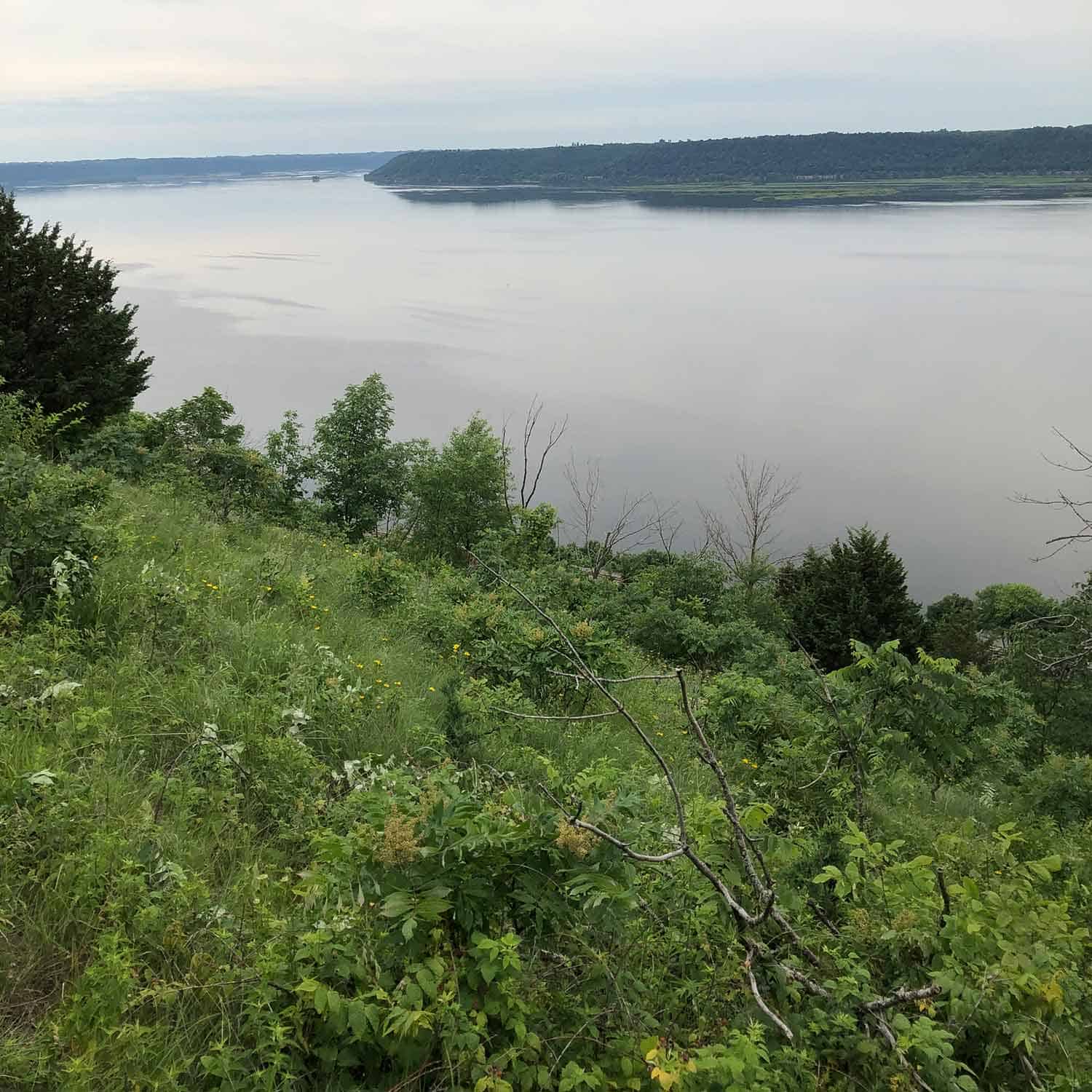
      A view from atop Marowski Bluff Prairie. Photo by Jim Rogala.

      How was Marowski Bluff Prairie Protected

      “I’m very happy to save this unique piece of land as it represents not only disappearing habitat but also the very character and uniqueness of the Driftless Area.” — Dr. Marowski, the generous landowner preserving a prairie for future generations.  

      When Dr. Marowski, a cardiologist living near Milwaukee, stood upon a steep bluff above the town of Ferryville, he was in awe of the stunning view. The Mississippi River, blue and majestic stretched below him, and to the north and south, the unique and ancient landscape filled the horizon. At his feet, he took notice of prairie flowers rarely seen any more and quickly understood the conservation value of the property.

      In December 2023, Dr. Marowski generously arranged for the protection of his 11-acre property by The Prairie Enthusiasts, ensuring the land will be stewarded and enjoyed for generations to come. Additional support from Mississippi Valley Conservancy, the Natural Resources Foundation of Wisconsin and Wisconsin’s Knowles-Nelson Stewardship Program helped make this protection project possible. Dr. Marowski also gifted The Prairie Enthusiasts with a land management endowment, which will provide resources to steward the habitat far into the future.  

      Stewardship of this prairie already began back in July of 2022. Working with Dr. Marowski, The Prairie Enthusiasts Coulee Region Chapter began restoration work on the bluff prairie. Volunteers removed some areas of sumac, red cedars and other aggressive vegetation from the site. There was already a healthy plant community there, with prairie plants like dwarf blazing-star and leadplant, as well as various birds, insects and reptiles that live on the site. The stewardship work that started and will continue in perpetuity will ensure this rare prairie ecosystem thrives.  
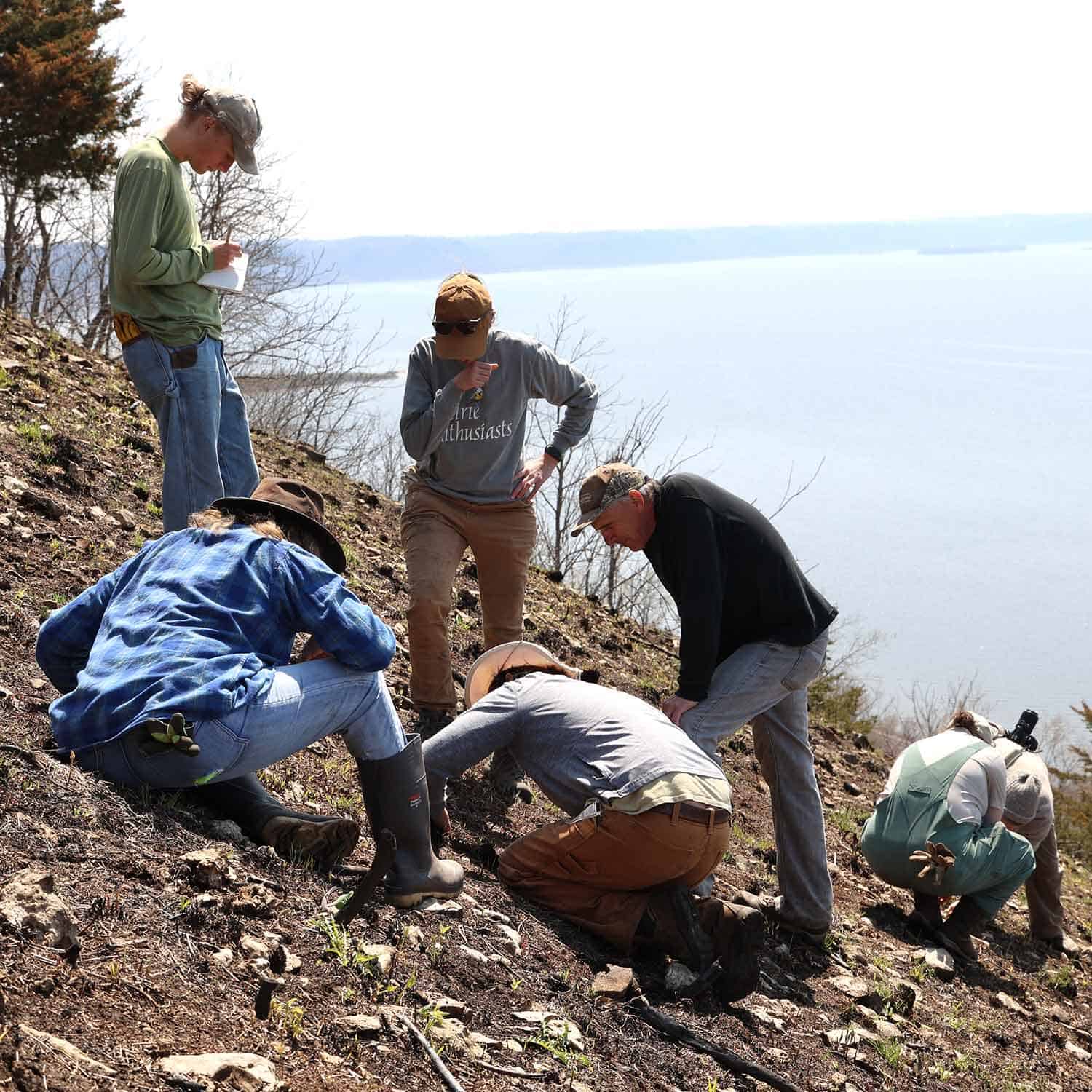
      Coulee Region Chapter volunteers observe early results from a recent spring burn at an Earth Day work party at Marowski Bluff Prairie. Photo by Connie Weedman.

      How You Can Help Marowski Bluff Prairie

      Even though the remnant prairie at the site is in outstanding condition, it will need consistent land stewardship to remove and prevent tree and woody brush encroachment, which can shade out prairie plants. Part of that stewardship will be returning fire to the site using prescribed burns at regular intervals. The Prairie Enthusiasts Coulee Region Chapter invites the public to participate in upcoming work parties no matter what your experience level. Work parties will be scheduled during winter as weather permits. Additional volunteer opportunities and field trips are also available.

      Check out our Events Calendar to see upcoming work parties or contact the site steward to get involved.
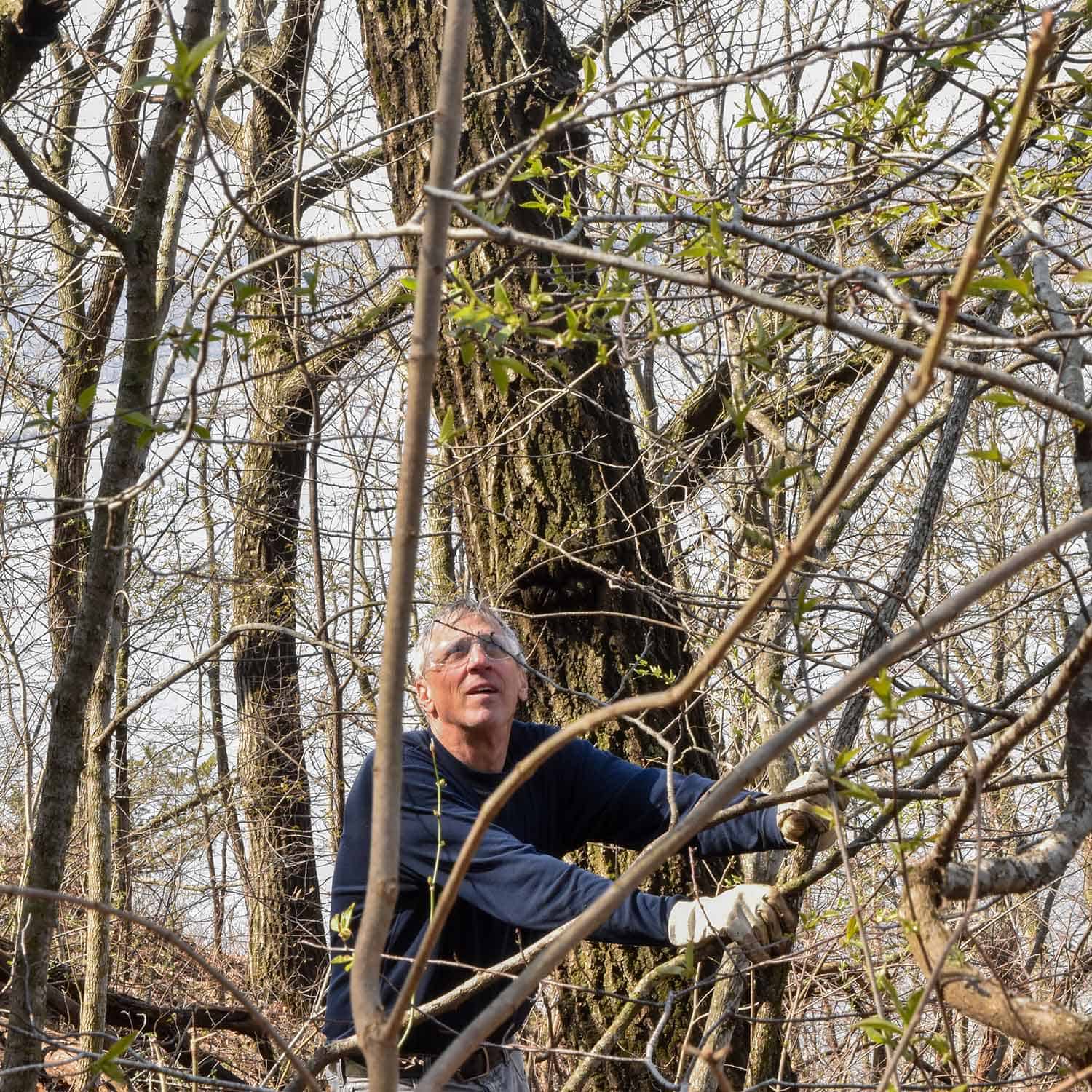
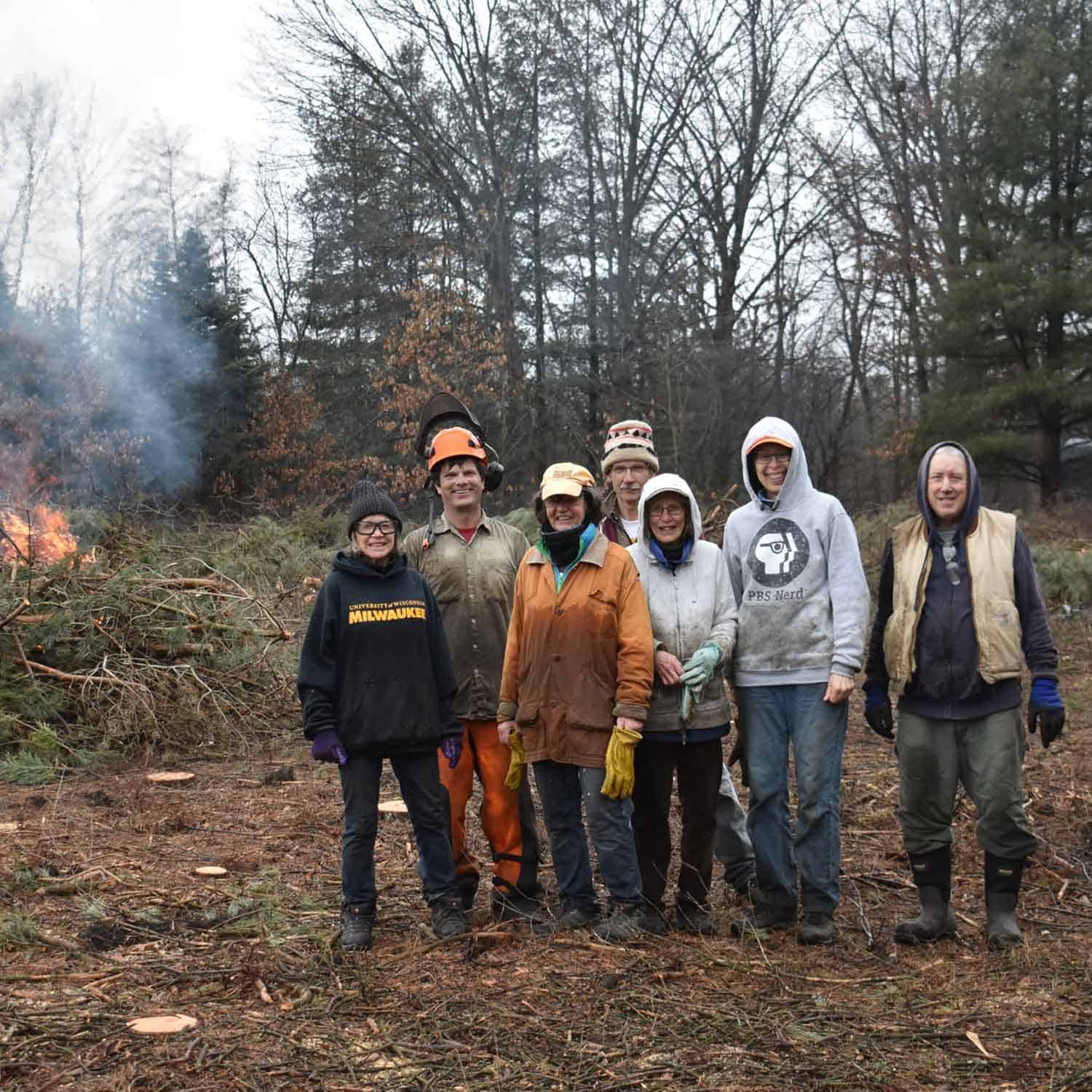
      Volunteer Jim Rogala clears brush at a Marowski Bluff Prairie work party. Photo by Sarah Barron.
      Meinert Prairie

      Meinert Prairie

      Meinert Prairie

      This site is a small prairie located in the very far corner of the Allen Meinert farm. Native species abound across the landscape of this prairie.


      Summer on Meinert Prairie. Photo by Rob Baller.

      Meinert Prairie

      Summer on Meinert Prairie. Photo by Rob Baller.

      This site is a small prairie located in the very far corner of the Allen Meinert farm. Native species abound across the landscape of this prairie.

      Access & Directions

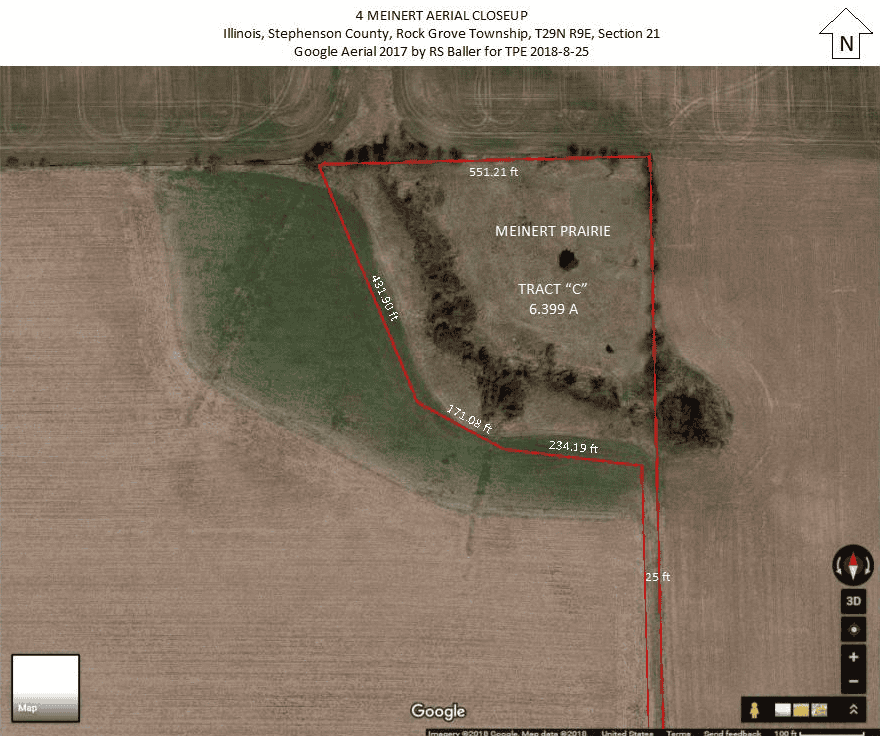
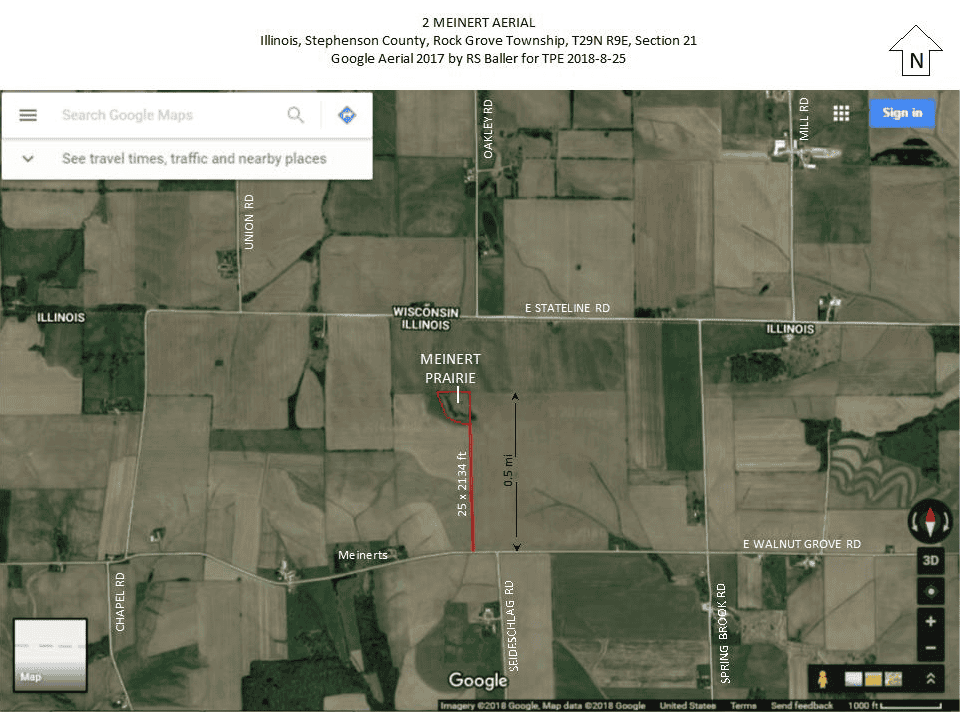
      Township 29 North, Range 9 East, Section 21, Rock Grove Township, Stephenson County, IL. Coordinates: 42 degrees 29’ 48.33’’ North; 89 degrees 27’ 55.27’’ West.

      In the North East corner of Stephenson County, travel West on Walnut Grove Road and turn right just a few hundred feet past Siedschlag Road. There is a 25 feet lane that proceeds North approximately ½ miles.

      The prairie is in an area of Dolomite lime rock that has a large ditch cutting from South East to the North West.

      Site Steward

      Connect with the site steward to see how you can care for this rare habitat at an upcoming work party.

      This site is stewarded by The Prairie Enthusiasts Prairie Bluff Chapter.

      Site Steward: Nick Faessler (Email)

      How to Enjoy This Site

      Allowed:

      • Hiking

        How to Enjoy This Site

        Allowed:

        • Hiking


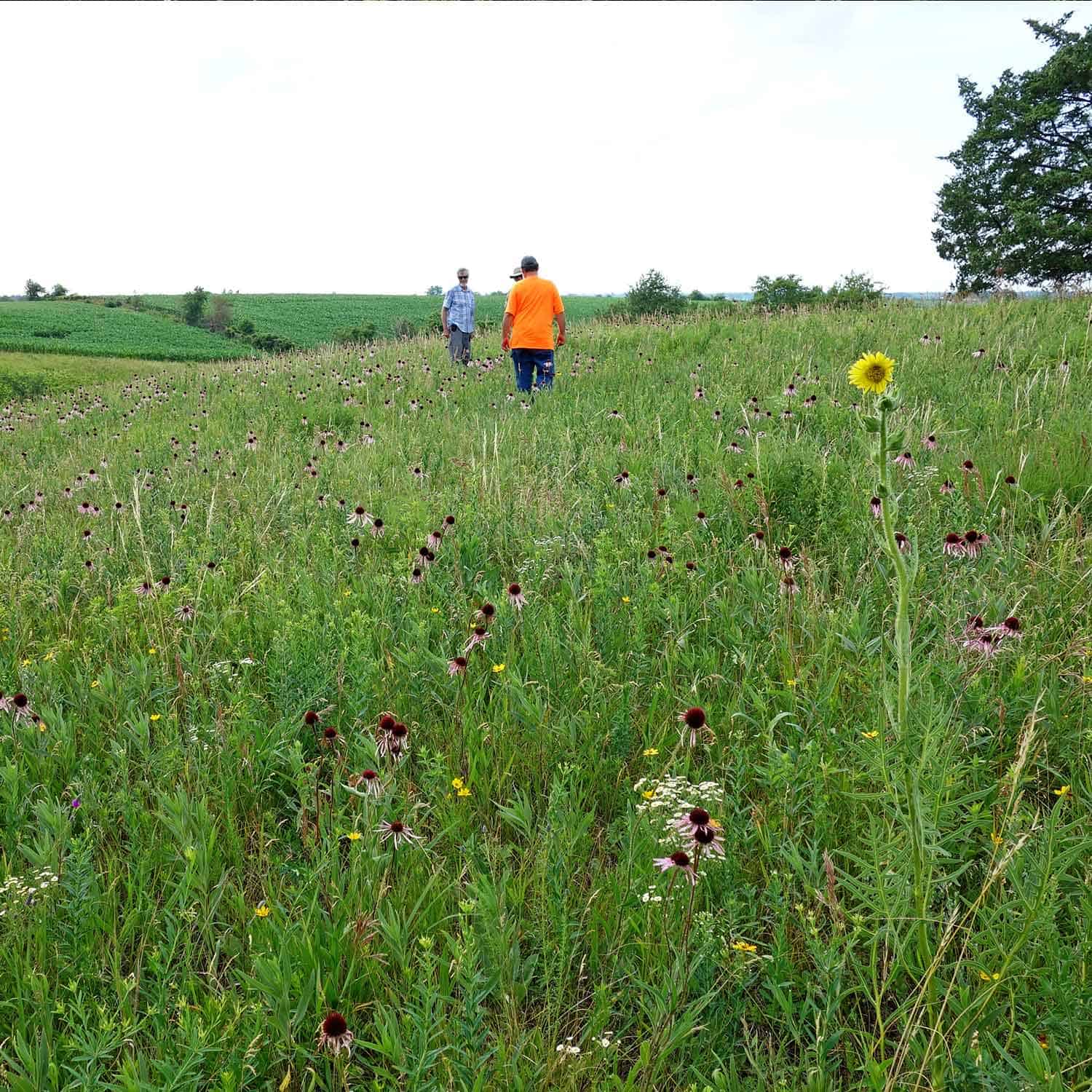
          Prairie Enthusiasts among coneflowers at Meinert Prairie. Photo by Rob Baller.

          What Makes Meinert Prairie Special

          The elevation of this site is 1030 feet above sea level.

          It was never tilled as there is a large ditch that prevented access by farm tractors allowing the native flora to survive. Allen Meinert told of potatoes grown there a few years.

          Learn more about plants found on this site through the Meinert Prairie Plant List.

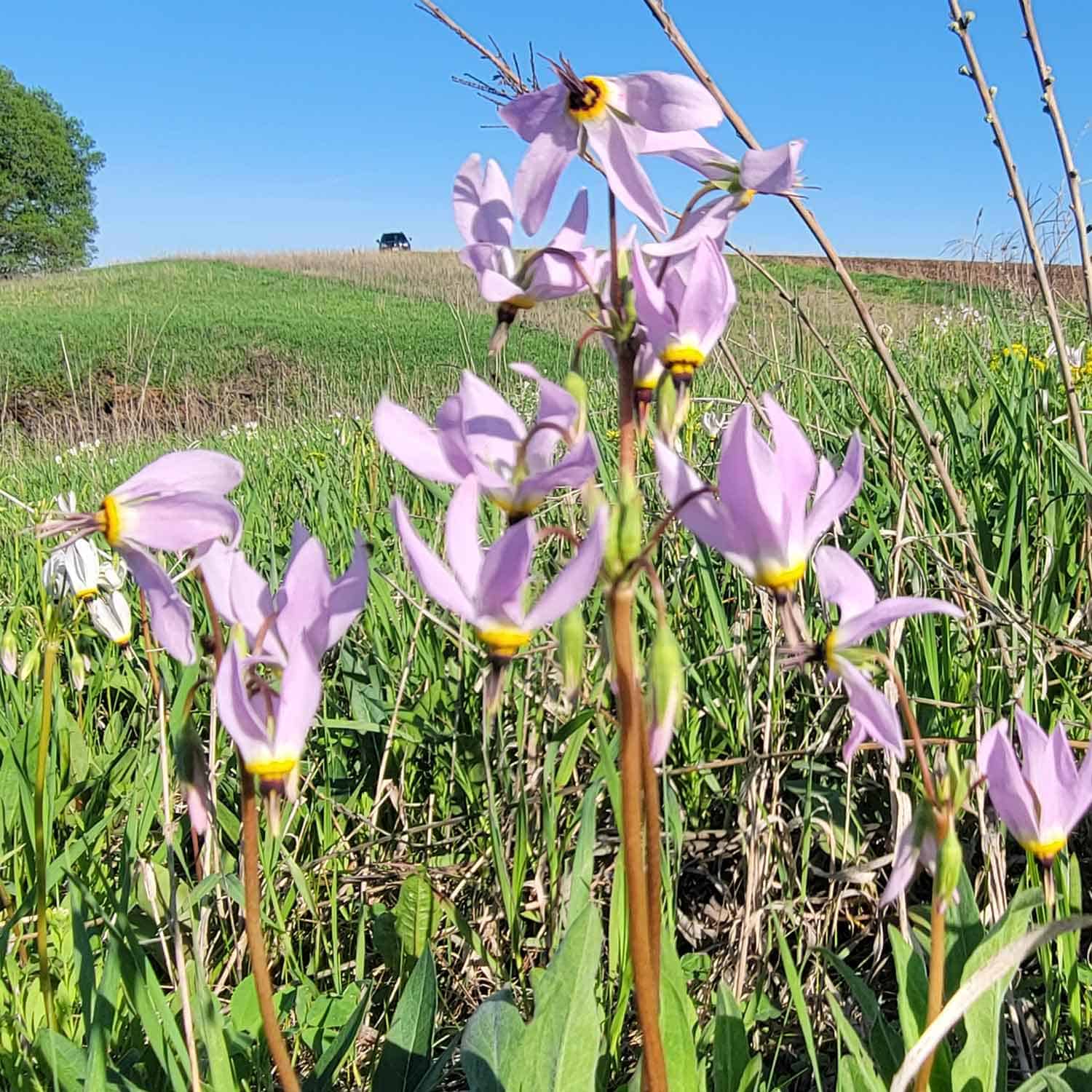
          Shooting star at Meinert Prairie. Photo by Nick Faessler.

          How was Meinert Prairie Protected

          More information coming soon!

          Meinert Prairie in summer. Photo by Rob Baller.

          How You Can Help Meinert Prairie

          Management at Meinert Prairie will include pulling sweet clover and cutting sumac. Seeds will be collected and spread to the South and West sides as a buffer to the original prairie site. Lots of trees and brush have been removed along with wire rolls and posts.

          The Meinert Prairie is managed by volunteers of The Prairie Enthusiasts forever to allow the 75 plus native species to thrive. The Prairie Bluff Chapter’s management of Meinert Prairie includes removing weeds and brush that threaten the native flora. Volunteers do prescribed burns as needed to ensure native grasses and forbs the chance to thrive.

          The parcel is regularly burned, but only about one third at one time to insure invertebrates have a chance to survive.

          The Prairie Bluff Chapter does tours led by knowledgeable volunteers to promote education and appreciation of fire dependent ecosystems. Volunteers also have assisted others in their scientific studies of prairie plants, insects and other native life on the prairie.

          Check out our Events Calendar to see upcoming work parties or contact the site steward to get involved.

          Members gather for a prairie hike at Meinert Prairie. Photo by Rob Baller.

          Mounds View Grassland

          Mounds View Grassland

          Mounds View Grassland

          This site is the largest preserve owned by The Prairie Enthusiasts, spanning 830 acres. The long-term goal for the site is to restore, as much as feasible, its original prairie, along with some limited oak savanna, and the associated wetlands and cold-water streams. The site was protected for its remnants of original prairie and the many rare and declining grassland plants, insects, amphibians, reptiles, and birds that inhabit the site. The preserve and surrounding open landscape provide excellent, critical habitat for rare and declining grassland birds. In addition, the preserve has cold-water streams, springs, seeps, and wetlands that add much to its biological diversity. There is also some oak savanna inhabited by red-headed woodpeckers and other birds, animals, and plants that require such habitat.


          June bloom at Mounds View Grassland. Photo by Eric Preston.

          Mounds View Grassland

          June bloom at Mounds View Grassland. Photo by Eric Preston. 

          This site is the largest preserve owned by The Prairie Enthusiasts, spanning 830 acres. The long-term goal for the site is to restore, as much as feasible, its original prairie, along with some limited oak savanna, and the associated wetlands and cold-water streams. The site was protected for its remnants of original prairie and the many rare and declining grassland plants, insects, amphibians, reptiles, and birds that inhabit the site. The preserve and surrounding open landscape provide excellent, critical habitat for rare and declining grassland birds. In addition, the preserve has cold-water streams, springs, seeps, and wetlands that add much to its biological diversity. There is also some oak savanna inhabited by red-headed woodpeckers and other birds, animals, and plants that require such habitat.

          Access & Directions

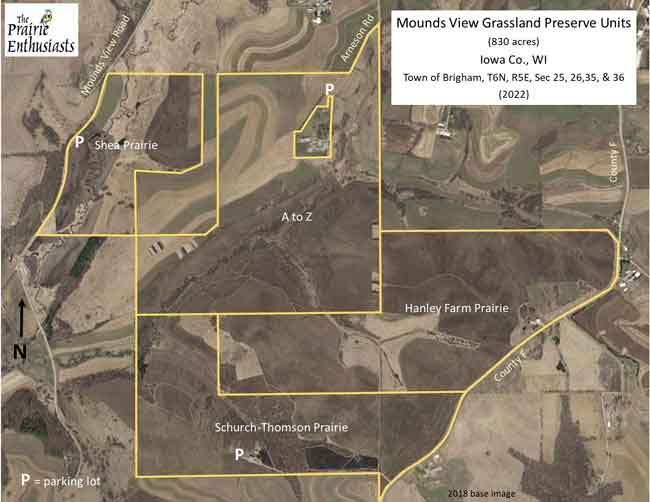
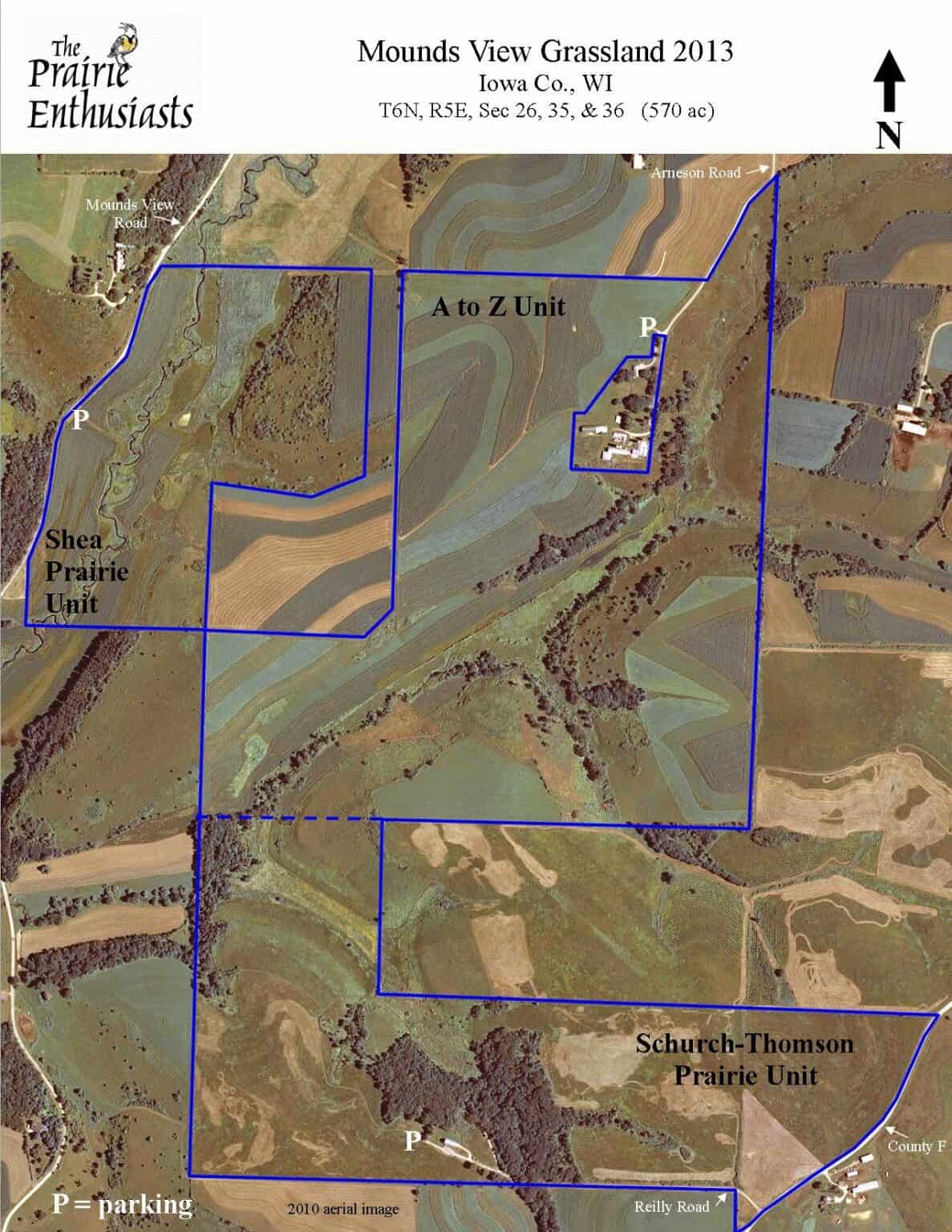
          The Mounds View Grassland preserve is located south of US Highway 18/151 between Barneveld and Blue Mounds, Wisconsin. The properties are situated between County Highway F and Mounds View Rd. See site-specific pages for access points. Addresses are:

          A to Z Farm (3200 Arneson Road, Barneveld) – Google Map

          Shea Prairie (3095 Mounds View Road, Barneveld) – Google Map

          Schurch-Thomson Prairie (8624 Reilly Rd, Barneveld) – Google Map

          Site Steward

          Connect with the site steward to see how you can care for this rare habitat at an upcoming work party.

          This site is stewarded by The Prairie Enthusiasts Empire-Sauk Chapter.

          Site Steward: Rich Henderson: (608) 845-7605 or (Email)

          How to Enjoy This Site

          Allowed:

          • Outdoor Recreation
          • Hunting: Ring-Necked Pheasant (all seasons; no permit required)
          • Hunting: Wild Turkey (spring only; no permit required)
          • Hunting: Waterfowl (all seasons; no permit required)
          • Hunting: White Tailed Deer (bow, crossbow, muzzleloader; no permit required)
          • Hunting: White Tailed Deer (Rifle, Shotgun; permit required)

          How to Enjoy This Site

          Allowed:

          • Outdoor Recreation
          • Hunting: Ring-Necked Pheasant (all seasons; no permit required)
          • Hunting: Wild Turkey (spring only; no permit required)
          • Hunting: Waterfowl (all seasons; no permit required)
          • Hunting: White Tailed Deer (bow, crossbow, muzzleloader; no permit required)
          • Hunting: White Tailed Deer (Rifle, Shotgun; permit required)


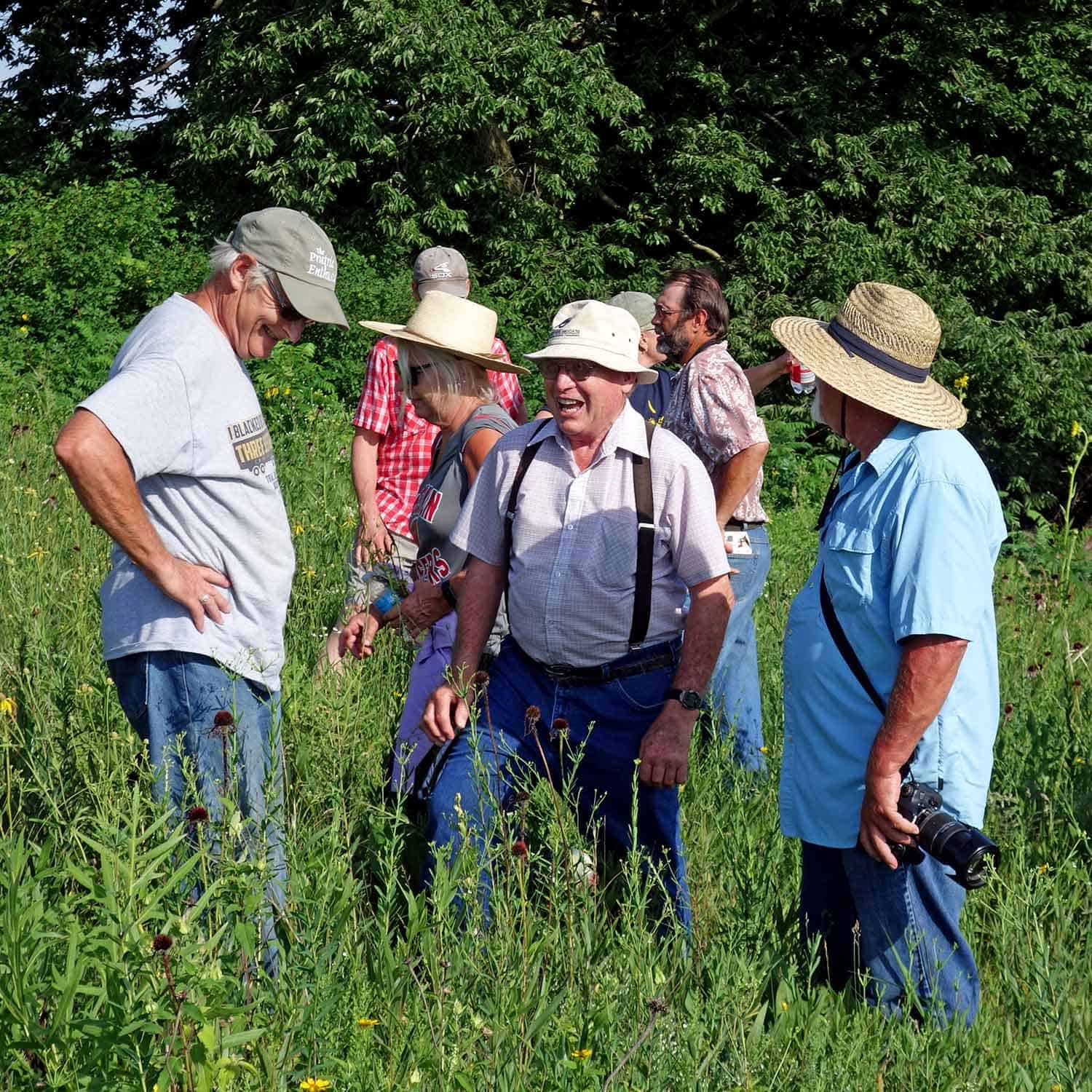
            Wildflower hike at Mounds View Grassland. Photo by Rob Baller.

            What Makes Mounds View Grassland Special

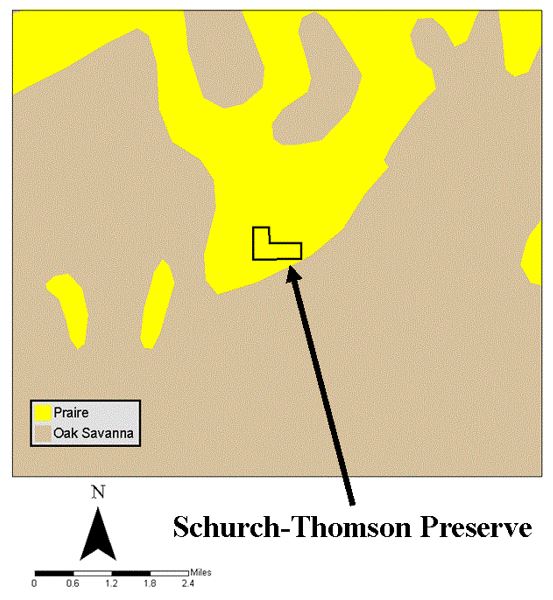
            The preserve is significant for its remnant prairie vegetation and associated rare insects, and as wildlife habitat at both local and state levels, such as the Wisconsin-endangered/Federal Special Concern Species regal fritillary butterfly (Speyeria idalia) as well as many declining grassland bird species including bobolink, dickcissel, upland sandpiper, and Bell’s vireo. In fact, it may play a critical role in prairie ecosystem conservation in Wisconsin, for it lies within the 95,000+ acre Military Ridge Prairie Heritage Area (MRPHA). The MRPHA has been identified as the highest priority for landscape-scale grassland protection and management in Wisconsin by the Wisconsin Department of Natural Resources and represents one of the best opportunities in the Midwest to protect prairie remnants and area sensitive species. The agricultural history of the area has helped keep the landscape much as it was when the first settlers saw it (Figure 1) and has made it possible for plants and animals like grassland birds, which have disappeared in more developed parts of the Midwest, to survive. The Mounds View Prairie complex is one of the three most significant concentrations of prairie sod and grassland bird habitat within the MRPHA.

            Over 400 plant species can be found on Mounds View Grassland, nine of special concern, state or federally threatened, or endangered.

            In addition to grassland plants, insect and birds, the site is home to many amphibian, reptilian and mammalian prairie species, including our state animal – the badger! Along with prairie and oak savanna habitats, the preserve has cold-water streams, springs, seeps, and wetlands that add much to its biological diversity.

            The Prairie Enthusiast’s long-term goal for the Mounds View Grassland is to restore, as much as feasible, its original prairie, along with some limited oak savanna.  It is also The Prairie Enthusiast’s intent to expand the preserve should opportunities arise.

            The current cover on the 830-acre preserve is:

            • 33% – Planted Prairie
            • 26% – Non-Native Cool-Season Grass
            • 13% – Active Cropland
            • 10% – Remnant Prairie (not grazed)
            • 8% – Woodland & Brush
            • 5% – Wetland & Streams
            • 3% – Savanna Restorations
            • 3% – Pastured Remnant-Prairie Sod

            Figure 1

            Natural History

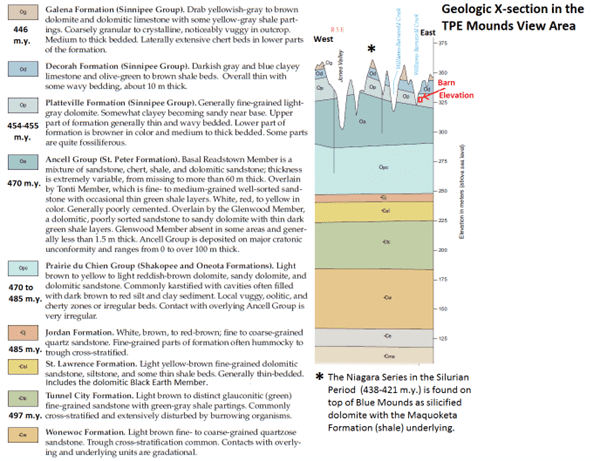
            Mounds View Grassland lies near the eastern edge of Wisconsin’s driftless, or unglaciated, region. Its bedrock geology was formed 450-470 million years ago during the middle Ordovician period of the Paleozoic era. The Galena, Decorah and Platteville Formations remaining as dolomitic ridges rising 1150 feet above sea level surround the site, providing breathtaking panoramic views. The gently rolling hilltops of dolomite slope down to shallow valleys with the side slopes covered in St. Peter’s sandstone (Figure 2). The excavations of recently constructed badger dens can be observed in the easily excavated sandy soils.   The St. Peter Sandstone is underlain by dolomitic rocks of the Prairie du Chien Group (Figure 3), which are not observable at Mounds View.

            The Galena and Platteville Ordovician formations contain more fossils than any other geologic strata in Wisconsin. While stromatolites and oolites are lacking, the environment at the time was very hospitable to a broad range of bottom-dwelling, shell-forming animals such as brachiopods, bryozoans, corals, clams, and crinoids.

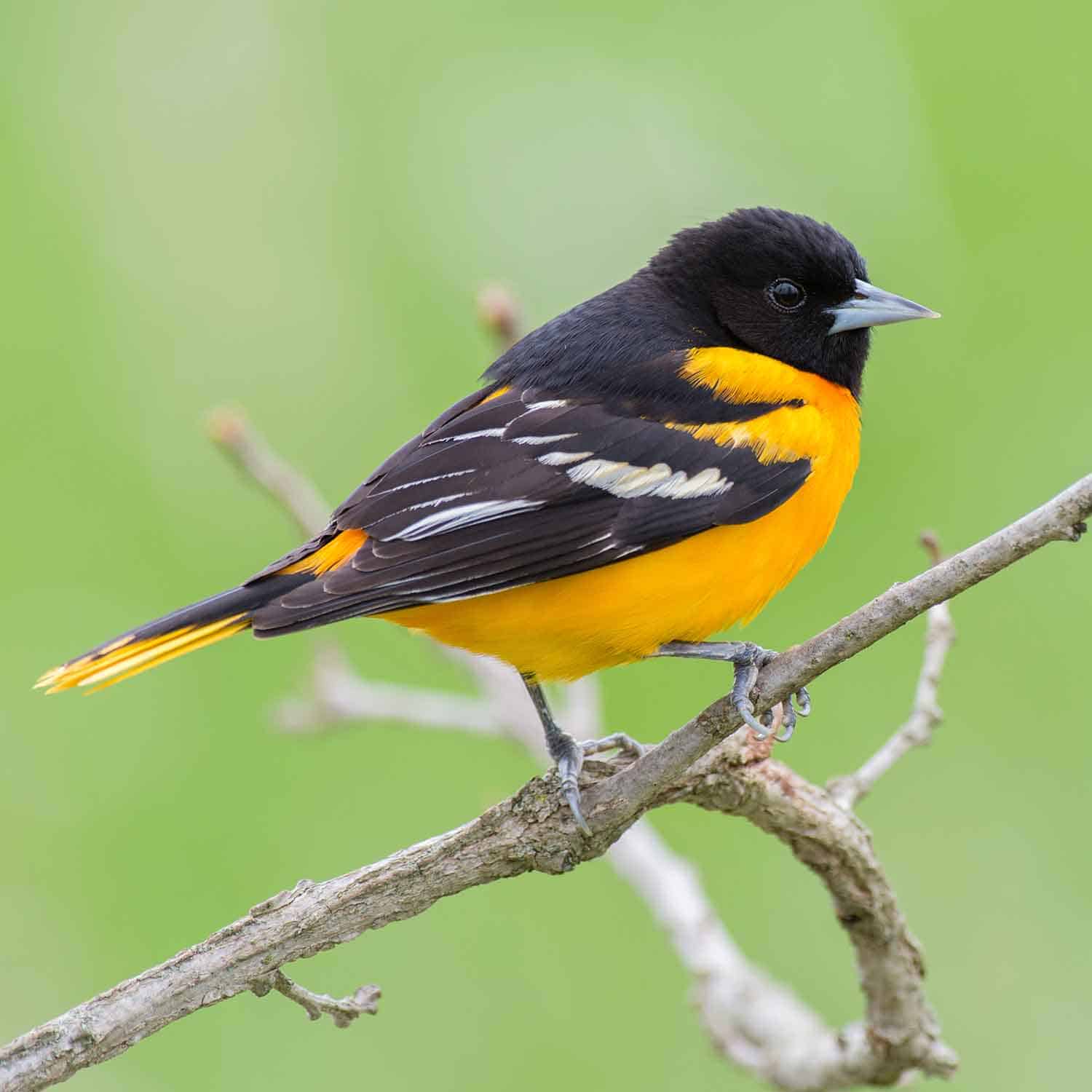
            Baltimore oriole at Mounds View Grassland. Photo by Eric Preston.

            Figure 2

            Figure 3

            How was Mounds View Grassland Protected

            Permanent protection began in 2007. More details to come!

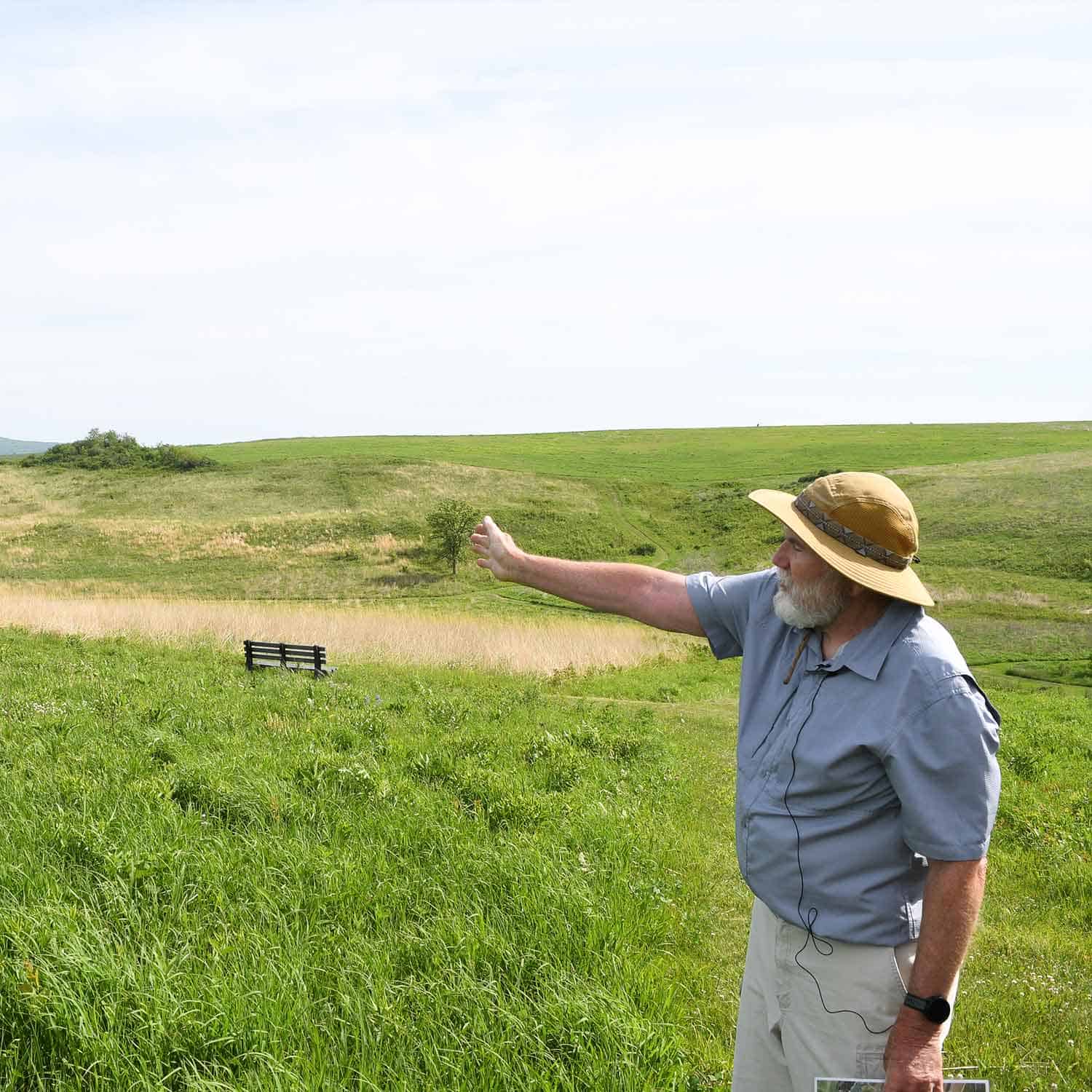
            Site Steward Rich Henderson at Mounds View Grassland. Photo by Sarah Barron.

            How You Can Help Mounds View Grassland

            Some restoration work was begun in 2000, but most work has been done since 2007, after permanent protection began. In addition to planting prairie vegetation, approximately 59 acres have been cleared of dense trees and brush that had invaded the site over the previous 60 years. More clearing still needs to be done, along with additional weed control and planting of prairie seed. Restoration of the cold-water streams and wetlands began in 2012, with more worked planned.

            There is still much to do, and it will take many decades to even begin to approach what the original ecosystems were like, but we are off to a very good start. It is also The Prairie Enthusiast’s intent to expand the preserve should opportunities arise.

            The restoration and management work to date has been done mostly by volunteers and interns and aided by paid The Prairie Enthusiasts land management staff and contractors paid for with grants from the US Fish & Wildlife Service, WI Department of Natural Resources, Wildlife Conservation Society, Paul E. Stry Foundation, Alliant Energy Foundation, and private donations.

            Check out our Events Calendar to see upcoming work parties or contact the site steward to get involved.

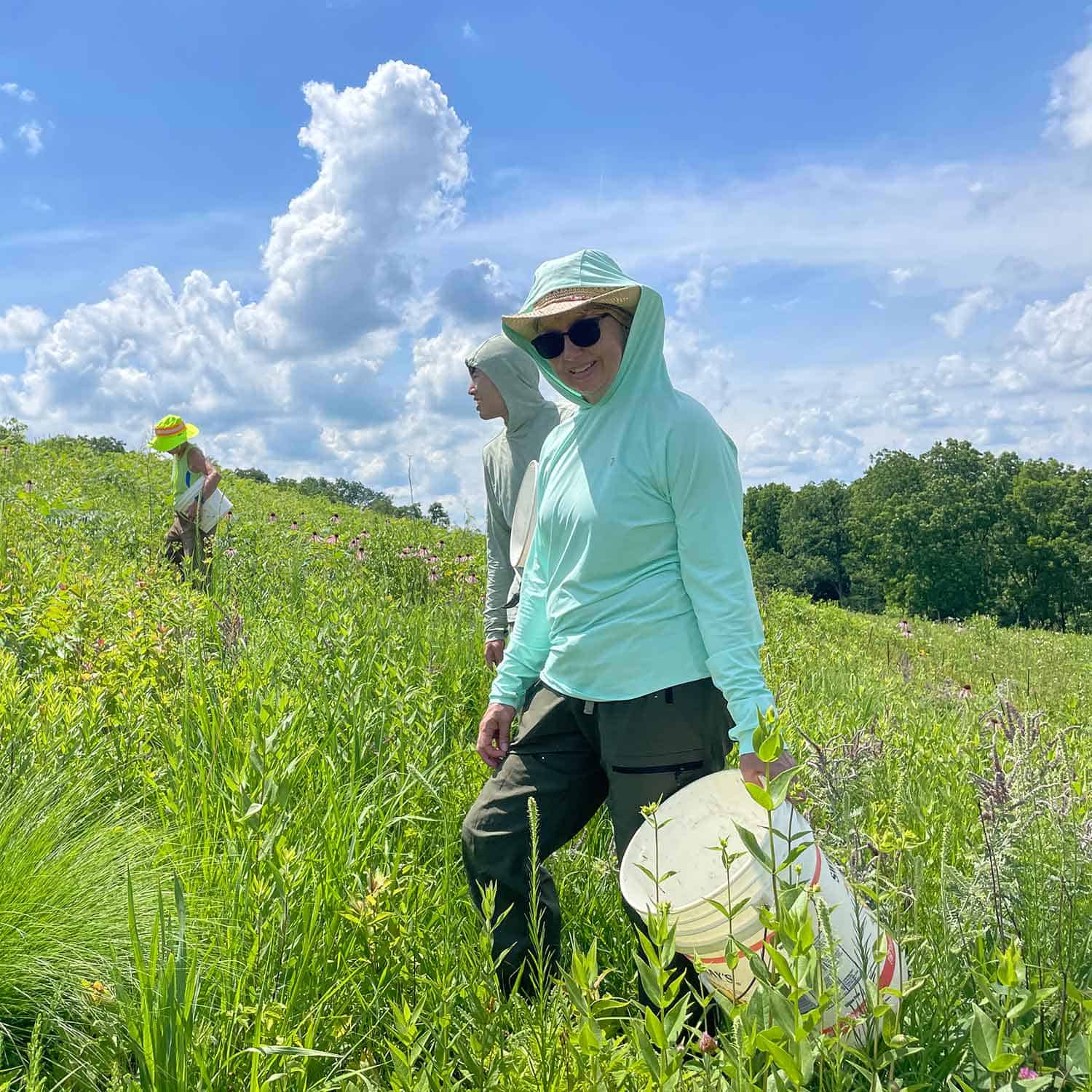
            Volunteers collect seed at Mounds View Grassland. Photo by Rob Baller.

            Mukwonago River Oak Barrens

            Mukwonago River Oak Barrens

            Mukwonago River Oak Barrens

            You can now visit one of Southeast Wisconsin’s rarest kinds of habitats just outside of Milwaukee. This 61-acre property features sand barren habitat, an incredible diversity of plant and animal life, and access to the pristine Mukwonago River. 


            Blazing star thriving in a restored area of Mukwonago River Oak Barrens. Photo by Dan Carter.

            Mukwonago River Oak Barrens

            Blazing star thriving in a restored area of Mukwonago River Oak Barrens. Photo by Dan Carter. 

            You can now visit one of Southeast Wisconsin’s rarest kinds of habitats just outside of Milwaukee. This 61-acre property features sand barren habitat, an incredible diversity of plant and animal life, and access to the pristine Mukwonago River. 

            Access & Directions

            Off of Waukesha County Hwy LO between the intersection of County Hwy E and Rainbow Springs Nature Preserve.

            From State Highway 83 in the Village of Mukwonago, proceed west on Eagle Lake Avenue (County LO) for about 4.9 miles. The entrance is on the south (left) side of the road about 0.1 miles past a barn that sitsvery near the road. From the State Highway 67 in the Village of Eagle, proceed east on E. Main St. (County Nn) for about 1.5 miles to Sprague Road. Turn south (right) on Spraque Road and proceed to the T-intersection with County LO. Turn left and proceed straight through the intersection with County E (pub and filling station on opposite corners). The entrance to the property is on the south (right) side County LO about 0.3 miles past the intersection with County E.

            No signs mark the entrance. The property entrance is here. Visitors typically park along a broad mowed path here.

            Google Map

            Site Steward

            Connect with the site steward to see how you can care for this rare habitat at an upcoming work party.

            This site is stewarded by The Prairie Enthusiasts Glacial Prairie Chapter.

            Site Steward: Dan Carter (Email)

            How to Enjoy This Site

            Allowed:

            • Hiking
            • Nature observation
            • Hunting
            • Permits are required for all gun and muzzleloader deer seasons (submit this online form)
            • Be aware a snowmobile route is allowed across the northern edge of the property

              Not Allowed:

              • Bikes
              • Motorized vehicles
              • Removal of plants, animals, fungi, soils or any other natural material

              How to Enjoy This Site

              Allowed:

              • Hiking
              • Nature observation
              • Hunting – Permits are required for all gun and muzzleloader deer seasons (submit this online form)
              • Be aware a snowmobile route is allowed across the northern edge of the property

                Not Allowed:

                • Bikes
                • Motorized vehicles
                • Removal of plants, animals, fungi, soils or any other natural material


                Enjoying summer on the Mukwonago River at Mukwonago River Oak Barrens. Photo by Jessica Bizub.

                What Makes Mukwonago River Oak Barrens Special

                Located in Waukesha County, WI, Mukwonago River Oak Barrens supports recovering oak barrens—a rare ecosystem in Southeast Wisconsin. Gradients of moisture and soil chemistry support 299 native vascular plant species and counting among sedge meadow, moist savanna, and oak barrens habitats. The Barrens also supports several rare plants and animals. The Mukwonago River, designated as an exceptional water resource, meanders through the southern part of the property and supports diverse communities of fish and aquatic invertebrates.

                Butterfly on milkweed at Mukwonago River Oak Barrens. Photo by Helen Holtz.

                How was Mukwonago River Oak Barrens Protected

                Pamela Meyer has been caring for the property for decades, working with her neighbors to support the health of the watershed and improve the quality of the habitat on the site. Knowing that the land was special, she has been bringing botanists, biologists, and ecologists to the property over the years so that she can understand the habitat better. 

                One of those experts was The Prairie Enthusiasts Ecologist, Dan Carter. When the two walked the property together four years ago, Dan immediately saw what Pamela did—an ecosystem exceedingly rare in the region. 

                “This piece of habitat has survived where so much has been lost to invasive brush and development—there’s almost nothing else like this in Southeastern Wisconsin,” Dan says. 

                The Prairie Enthusiasts acquired Mukwonago River Oak Barrens in June 2025. This acquisition was made possible through a bequest by Tom Ganfield, Wisconsin’s Knowles-Nelson Stewardship Program, and many Members of The Prairie Enthusiasts.

                Dan Carter leads a tour through Mukwonago River Oak Barrens in July 2025. Photo by Helen Holtz.

                How You Can Help Mukwonago River Oak Barrens

                The Glacial Prairie Chapter began working to restore the site in 2023 with the support and active participation from the previous owner, Pamela Meyer. By the time The Prairie Enthusiasts closed on the property in 2025, volunteers had opened up 11 acres of barrens and moist savanna habitat. The Chapter will continue to expand and connect open areas, expanding the area of open savanna habitat adjacent to the Mukwonago River’s wetlands. This process will involve removal of invasive brush and large numbers of planted conifers, prescribed burning, and reintroduction of species that may have been present in the past. Work party activities are held on a near-weekly basis. There are also opportunities to volunteer beyond work parties.

                Check out our Events Calendar to see upcoming work parties or contact the site steward to get involved.

                Glacial Prairie Chapter volunteers burning brush at Mukwonago River Oak Barrens. Photo by Helen Holtz.

                Muralt Bluff Prairie

                Muralt Bluff Prairie

                Muralt Bluff Prairie

                Muralt Bluff Prairie is the largest preserve managed by the Prairie Bluff Chapter. It is a site with special significance for The Prairie Enthusiasts who consider it the place where our efforts for prairie preservation began some 50 years ago. Muralt Bluff Prairie consists of 75 acres including dry prairies with a thin limestone cap over sloping sandstone sides. Frequent prescribed fires have created an ecosystem where rare species of plants and animals are now thriving.


                An unusually spectacular bloom of blazing stars and goldenrods at Muralt Bluff Prairie in 1989. Photo by Gary Eldred. 

                Muralt Bluff Prairie

                Blazing stars and golden rod at Muralt Bluff Prairie in 1989. Photo by Gary Eldred.

                Muralt Bluff Prairie is the largest preserve managed by the Prairie Bluff Chapter. It is a site with special significance for The Prairie Enthusiasts who consider it the place where our efforts for prairie preservation began some 50 years ago. 

                Muralt Bluff Prairie consists of 75 acres including dry prairies with a thin limestone cap over sloping sandstone sides. Frequent prescribed fires have created an ecosystem where rare species of plants and animals are now thriving.

                Access & Directions

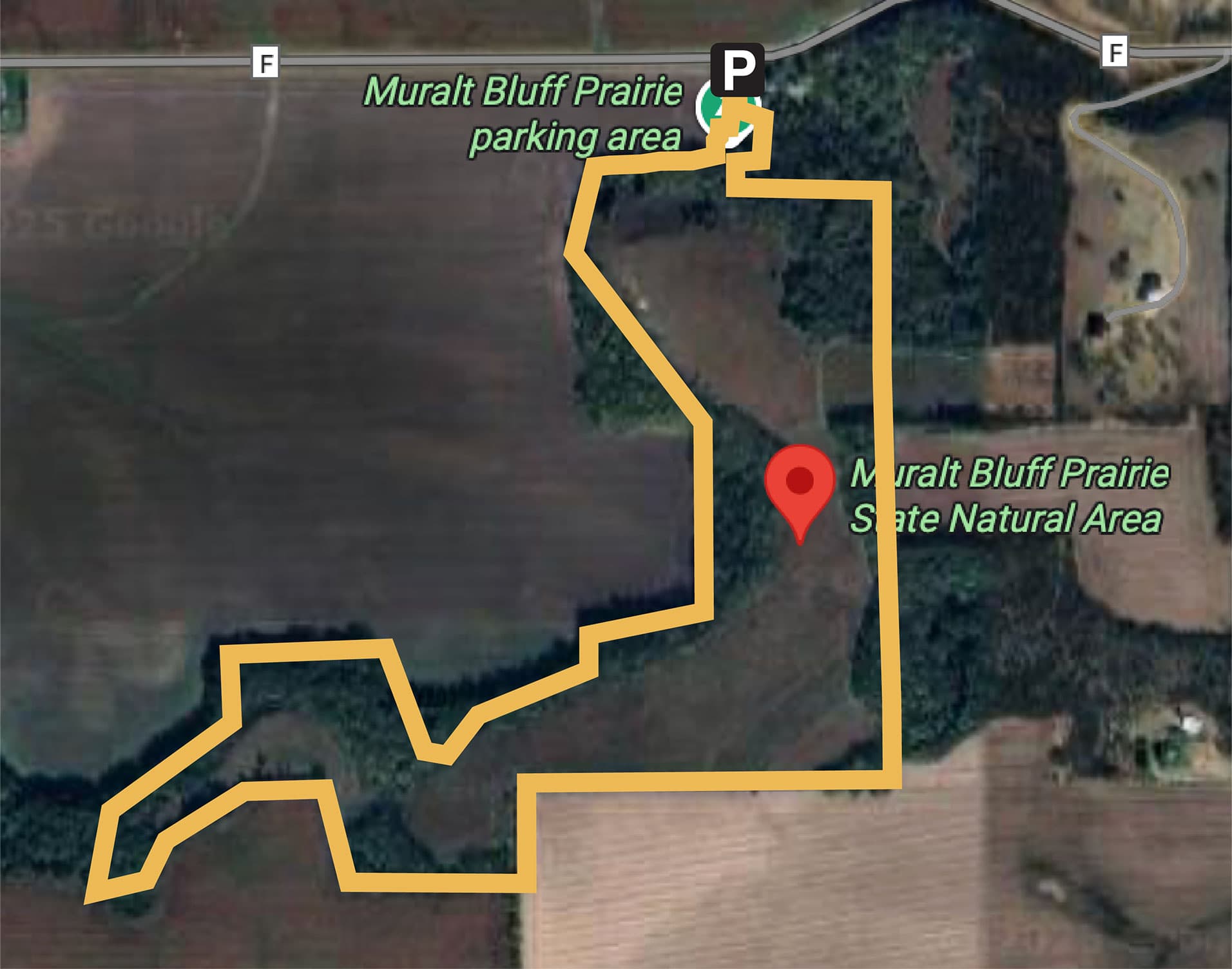
                This prairie does not have any maintained trails or burn breaks on the site. However, visitors are welcome to hike the steep bluff. 

                The parking lot for Muralt Bluff Prairie is located near W2635 County F, between Monticello and Albany. Access is by foot only up the steep bluff, and a trail will take you to the farthest west end. You can return by following the firebreak along the south and east edges.

                Google Map

                Site Steward

                Connect with the site steward to see how you can care for this rare habitat at an upcoming work party.

                Site Steward: Tom Mitchell (Email)

                Upcoming Events Here

                No event found!

                How to Enjoy This Site

                Allowed:

                • Hiking
                • Bird Watching
                • Dogs (must be on a leash during bird breeding season from May-July)
                • Hunting (all legal species; no permit or reservation required)

                  Not Allowed:

                  • Collecting plants, rocks or animals

                  How to Enjoy This Site

                  Allowed:

                  • Hiking
                  • Bird Watching
                  • Dogs (must be on a leash during bird breeding season from May-July)
                  • Hunting (all legal species; no permit or reservation required)

                    Not Allowed:

                    • Collecting plants, rocks or animals


                    Enjoying the spring shooting star blooms at Muralt Bluff Prairie. Photo by Jerry Newman.

                    What Makes Muralt Bluff Special

                    Best times to see the abundant native plants are spring and fall. In early May, a large population of prairie smoke blooms on the northwest bluff along with shooting star, puccoon, violet, sand cress and Pasqueflower. Later in autumn, you can see all the tall grasses, nine kinds of asters, five species of goldenrods, gentians and blazing stars. Many other threatened and endangered species find a home here. However, changes in the surrounding land use have reduced the available grassland habitat from hundreds of acres in the 1970s to only the Muralt footprint today.

                    On July 20, 2014, a visitor to Muralt Bluff Prairie posted to the Southern Wisconsin Butterfly Association (SWBA) website a tally of the more than 100 butterflies that he spotted:  including giant swallowtail, eastern tiger swallowtails, clouded sulphurs, coral hairstreaks, summer azures, great spangled fritillaries, pearl crescents, question marks, eastern comma, mourning cloak, American lady, red admirals, red-spotted purples, common wood nymphs, monarchs, northern broken-dash and Delaware skipper.

                    The elevation of Muralt Bluff Prairie is also a sight to behold, with views of Blue Mounds some 40 miles away. 

                    Outcrops of limestone and sandstone rocks are present on the site.  Erratic boulders from an earlier episode of glaciation are present.  The last advance of the ice sheet stopped about 10 miles to the northeast 16,000 to 18,000 years ago, but a pro-glacial lake, named Glacial Lake Broadhead by Wisconsin geologists, backed up the valleys of Sylvester and Searles Creeks and the Sugar and Little Sugar Rivers, flooding the broad valley to the north of Muralt Bluff Prairie.  

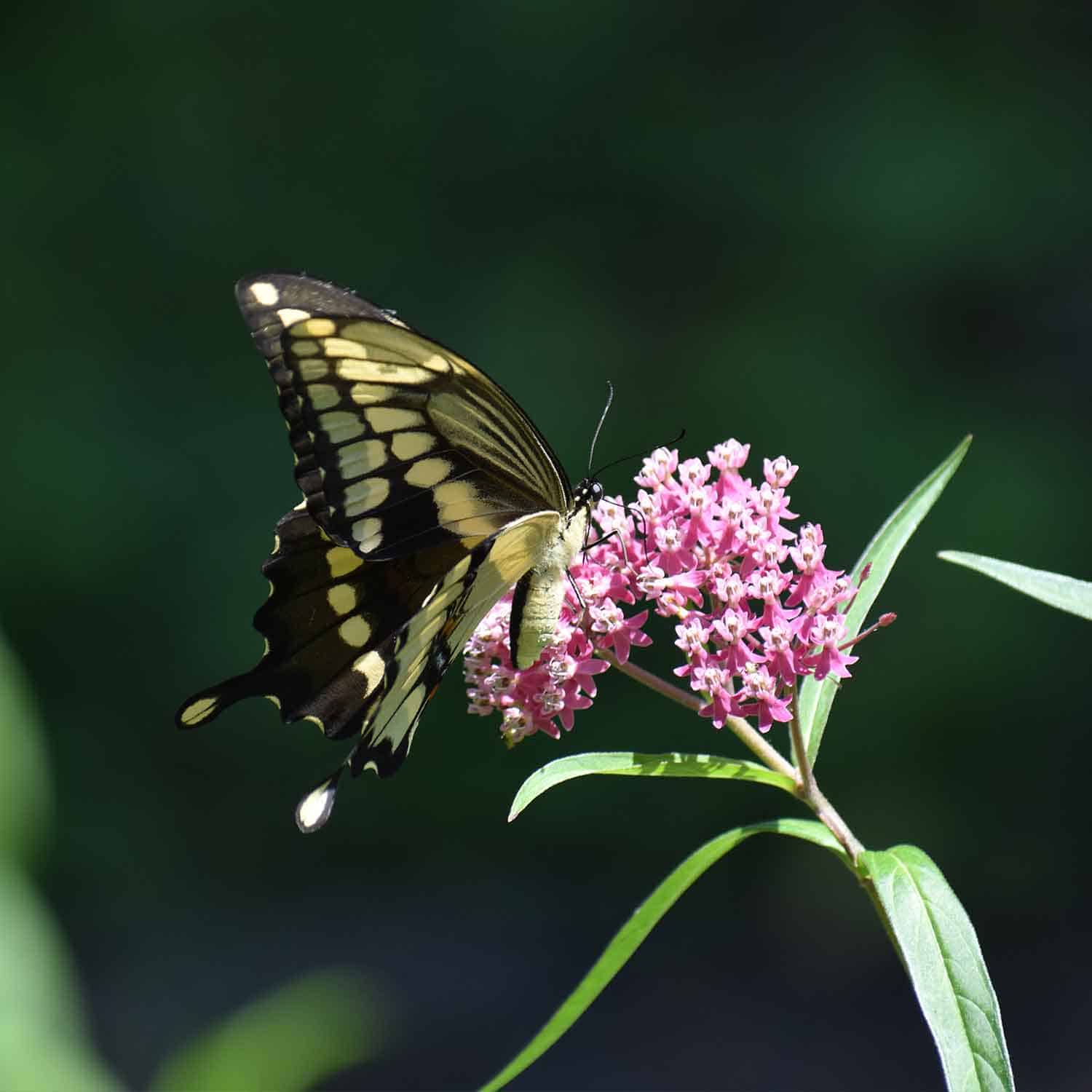
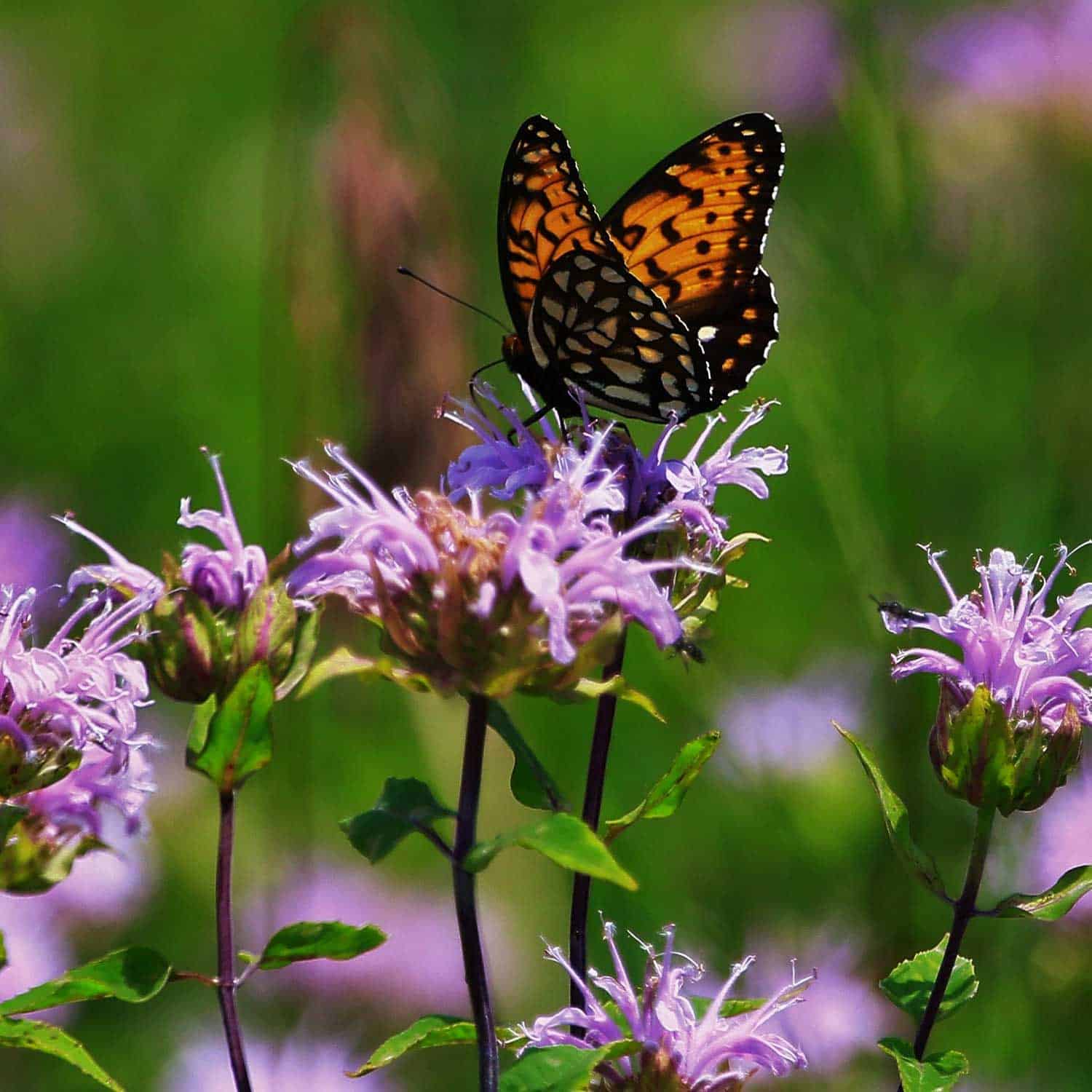
                    Wisconsin State-Endangered regal frittilary butterfly feeding on wild bergamot at Muralt Bluff Prairie in 2017. Photo by Gary Eldred.

                    How was Muralt Bluff Protected

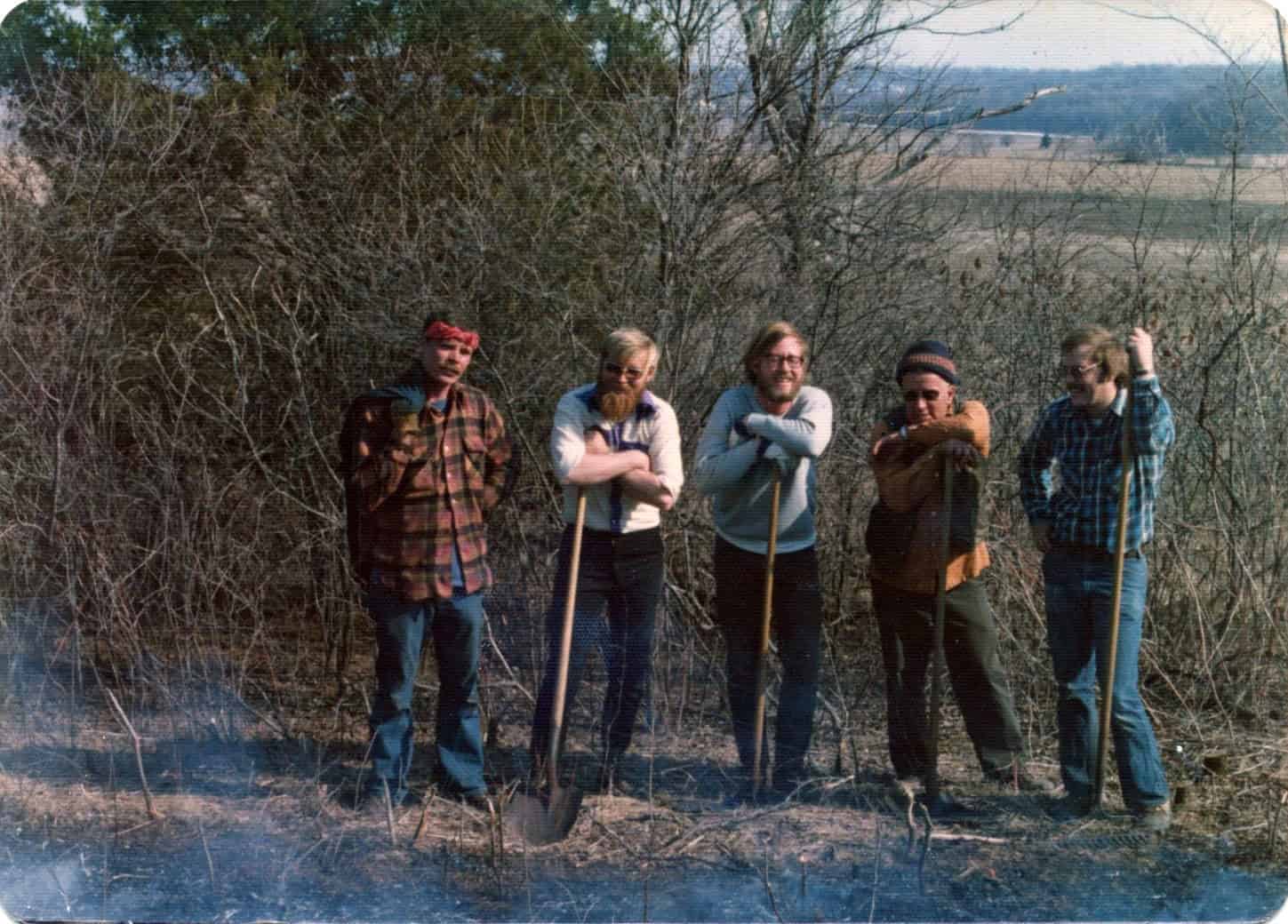
                    During the early 1970s, early Prairie Enthusiasts Gary Eldred and John Ochsner independently discovered the unusual tall grasses and flowers covering Muralt Bluff Prairie. They kept visiting the site and made a plan to conduct a prescribed burn there. In April of 1975, Gary and John joined Reynold Zeller, Dan Hazlett, Jonathon Wilde, Deanne DeLaronde, Chuck Philipson, Tim and Peggy Hammerly, and John Ringhand as they dropped a match in the southeast corner and watched the fire follow the wind across the field to the north.  Their suppression  tools—snow shovels and burlap bags—proved inadequate to slow or stop the fire.  The Albany Fire Department responded to reports of a wild fire, but they were unable to get their trucks up the bluff, so everyone stood and watched as the fire eventually ran out of fuel.  Many cedar trees were scorched, the ground was blackened. But the following summer erupted in blooms of native flowers which were long suppressed by lack of fire. The sight was impressive enough that the Green County Board of Supervisors was persuaded to buy the acreage, protecting it from development. Read more about this first prescribed burn HERE.

                    Muralt Bluff Prairie was dedicated as a Wisconsin State Natural Area in 1977. With the help of The Nature Conservancy, an additional 12 acres was added to the site in 1981. The county deeded Muralt Bluff Prairie (then 62 acres) to The Prairie Enthusiasts in September, 2013. With the addition of the adjacent Iltis Savanna this is a 95-acre mosaic of prairie, savanna and woodland.  A fourth parcel, Stauffacher Prairie, which is located a mile away across from Gap Church on Highway 59, is considered by the Wisconsin DNR to be part of the Muralt Bluff Prairie SNA although that land is owned by the State of Wisconsin.

                    In 1975, some of the original Prairie Enthusiasts conducted their first major prescribed burn. Some of the crew here left to right: Dan Hazlett, Gary Eldred, Jonathon Wilde, Reynold Zeller, Chuck Phillipson. Photo by John Ochsner.

                    How You Can Help Muralt Bluff Prairie

                    The Prairie Bluff Chapter is stewarding the site by removing colonies of aspen, sumac, dogwood, prickly ash and honeysuckle that had invaded from the fence lines and wooded edges. These species are being removed as they smother and shade out the native plants and grasses.

                    Check out our Events Calendar to see upcoming work parties or contact the site steward to get involved.

                    Volunteers collecting native plant seeds at Muralt Bluff Prairie. Photo by Jerry Newman.