Newark Road Prairie

Newark Road Prairie

Newark Road Prairie

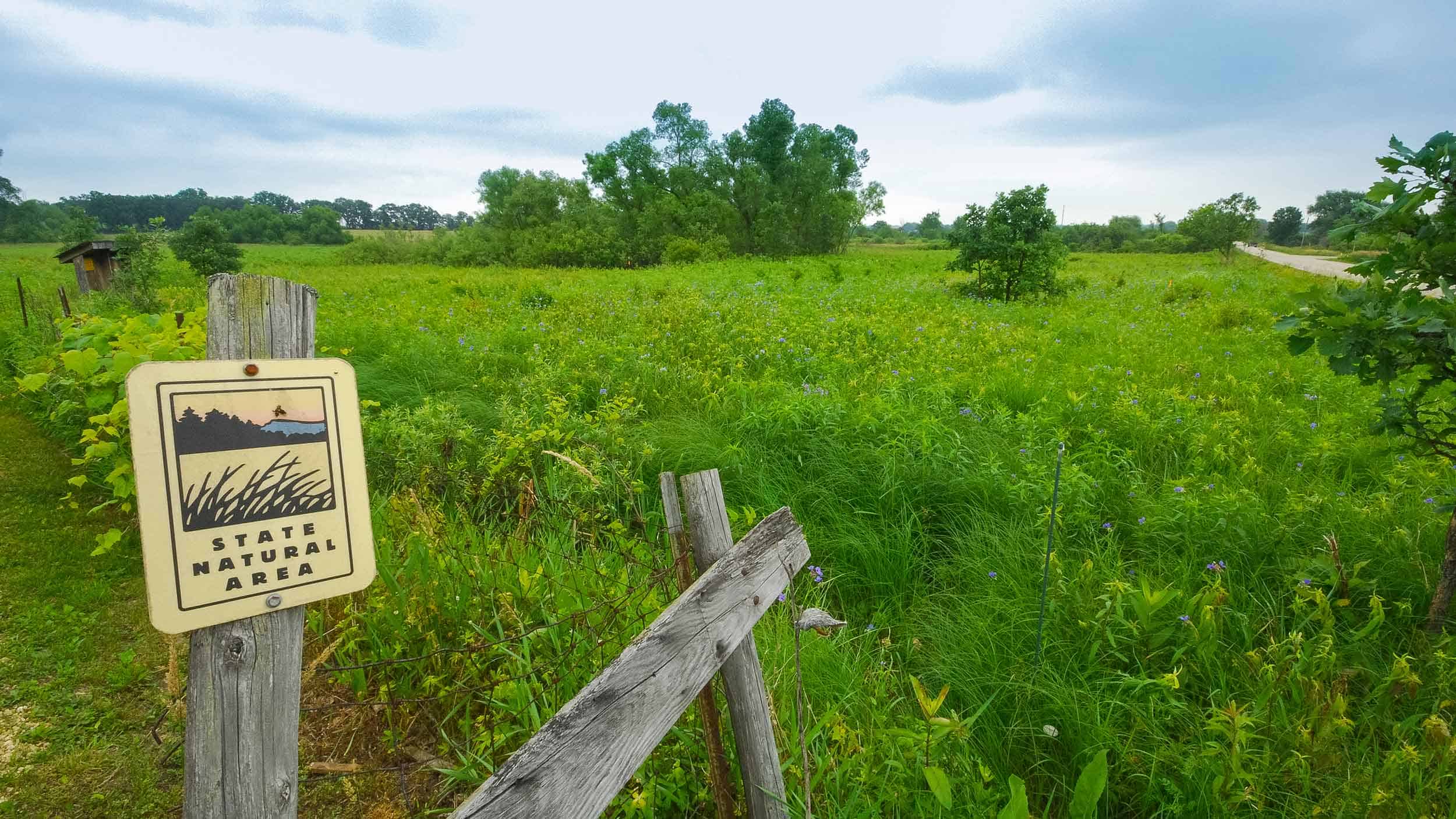
Since the early 1980s, Beloit College has been caring for Newark Road Prairie which consists of nearly 33 acres of high-quality wetland, prairie and oak savanna. To maintain its rich diversity, the land requires active stewardship consisting of frequent prescribed fires and invasive brush removal. For decades, Beloit College has had passionate volunteers, contractors and staff like Professor Richard Newsome stewarding the land. Recently, The Prairie Enthusiasts approached the college to collaborate on habitat stewardship. That relationship resulted in Beloit College generously donating the property to The Prairie Enthusiasts on March 21, 2024. The Prairie Enthusiasts will continue the site’s long legacy of stewardship, ensuring that the prairie will be a haven for wildlife for generations to come. “Newark Road Prairie is one of the most ecologically diverse areas that we are now stewarding,” says Debra Behrens, Executive Director of The Prairie Enthusiasts. “We’re grateful for the decades of care that many organizations have provided and look forward to continuing that land legacy.” 

SITE STEWARDS

PRAIRIE BLUFF CHAPTER

EMAIL

ACCESS & DIRECTIONS

Section Land 13-1-11, Newark Rd., 53511

Description & Significance

The property, which was originally protected in the 1970s by The Wisconsin Chapter of The Nature Conservancy, has been managed by college students and volunteers, Rock County Conservationists and The Prairie Enthusiasts. It is home to an incredible array of plants, insects and animals. Crayfish burrows create small mounds throughout the wetland, and rare plants draw in students and researchers. The diversity of wildlife there is so abundant that the Wisconsin DNR named it a State Natural Area in 1974. 

The property has also served as a place of ecological and geological education for Beloit College students who have examined the behavior of red-winged blackbirds, monitored streams and completed floristic surveys. Yaffa Grossman, Professor of Biology with Beloit College stated, “Newark Road Prairie’s rich floristic diversity provides a glimpse of southern Wisconsin’s rich prairie heritage. Beloit College students, faculty, and staff, the Rock County Conservationists and others have engaged in many field trips, research studies and prescribed burns at Newark Road Prairie during the past 40+ years. As The Prairie Enthusiasts assume the stewardship of this site, I expect that these activities will continue and grow.” Newark Road Prairie will continue to be a place of education for the college as well as be open to the public.

Usage Policy

Allowed:
 

Not Allowed:

Pleasant Valley Conservancy

Pleasant Valley Conservancy

Pleasant Valley Conservancy

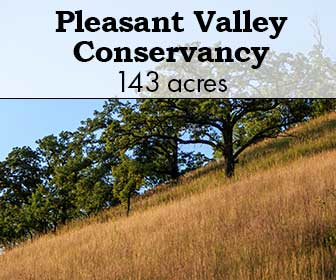
Pleasant Valley Conservancy State Natural Area is a 140-acre natural area in western Dane County. It consists of extensive restored oak savannas, dry, mesic, and wet prairies, wetlands, and oak woods. It is in the Driftless Area of Wisconsin and is in the Hill and Valley Province.

Scenic views and wildlife viewing are excellent, and a hiking trail brings one into the heart of the savanna. Thirty-seven acres were donated to The Prairie Enthusiasts in 2006, along with a conservation easement on the remaining land. 

There is an extensive website that was developed by Tom Brock with information about the site and its management. 

SITE STEWARDS

KATHIE BROCK

608-238-5050

EMAIL

ACCESS & DIRECTIONS

*** THIS SITE IS CURRENTLY CLOSED TO THE PUBLIC ***

Description & Significance

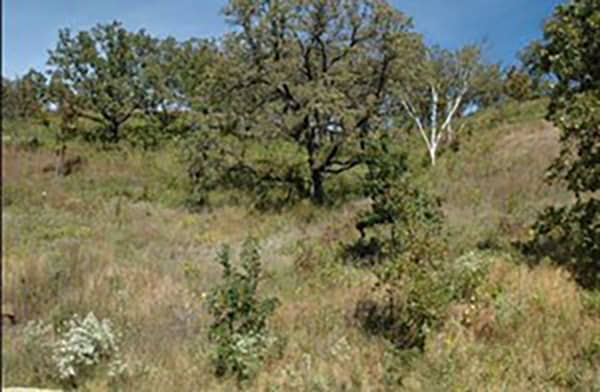
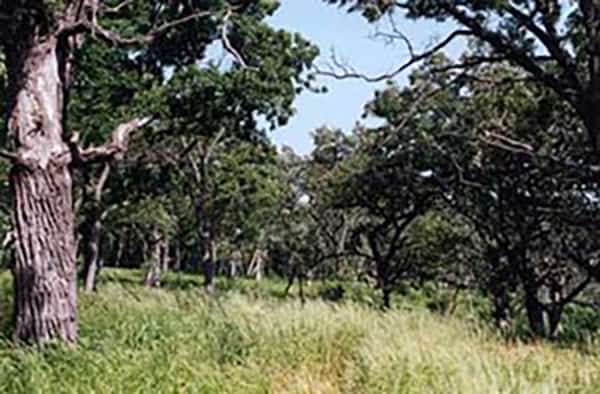
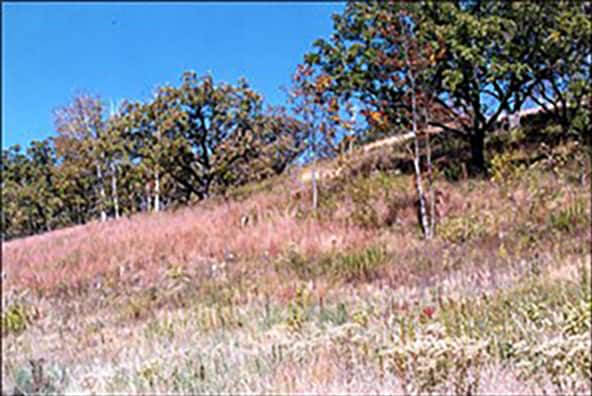
The steep south-facing ridge supports several prairie remnants, which are now thriving after intensive management began in 1995. The oak savannas, primarily on the ridge top, contain numerous large, open-grown bur and white oaks with many being over 150 years old. This area supports numerous grass, sedge, and forb species including the state-endangered purple milkweed (Asclepias purpurascens), which re-appeared after restoration and prescribed burning began.

The cooler north-facing slope is predominantly oak woodland with red oak, basswood, hackberry, butternut, yellowbud hickory, and red maple. The woodland contains a good variety of spring ephemerals.

The savanna and oak woodland support a diversity of bird species which include the red-headed woodpecker, a declining bird species of conservation concern. Other birds include blue-gray gnatcatcher, eastern wood pewee, tufted titmouse, eastern bluebird, yellow-throated vireo, scarlet tanager, black-billed cuckoo, and yellow-billed cuckoo.

Also present is the spring-fed Pleasant Valley Creek, which flows through the wetland and into East Blue Mounds Creek.

Notable Species:

South-Facing Prairie Remnant:

  • big bluestem (Andropogon gerardii)
  • little bluestem (Schizachyrium scoparium)
  • Indian grass (Sorghastrum nutans)
  • side-oats grama (Bouteloua curtipendula)
  • wood betony (Pedicularis canadensis)
  • bird’s foot violet (Viola pedata)
  • purple prairie clover (Dalea purpurea)
  • violet wood sorrel (Oxalis violacea)
  • prairie turnip (Pediomelum esculentum)

Oak Savanna:

  • purple milkweed (Asclepias purpurascens)
  • silky rye (Elymus villosus)
  • bottlebrush grass (Elymus hystrix)
  • ear-leaved brome (Bromus latiglumis)
  • leadplant (Amorpha canescens)
  • large-flowered yellow false foxglove (Aureolaria grandiflora)
  • Canada milk-vetch (Astragalus canadensis
  • Illinois tick-trefoil (Desmodium illinoense)
  • prairie alumroot (Heuchera richardsonii)
  • shooting star
  • spiderwort
  • giant yellow hyssop (Agastache nepetoides) – state threatened
  • upland boneset (Eupatorium sessilifolium) – special concern

North-Facing Slope:

  • bloodroot (Sanguinaria canadensis)
  • Jacob’s ladder
  • large-flowered bellwort- (Uvularia grandiflora)
  • yellow lady’s slipper orchid (Cypripedium parviflorum)
  • large flowered trillium (Trillium grandiflorum)
  • Dutchman’s breeches (Dicentra cucullaria)

Natural History

Pleasant Valley Conservancy consists of a long narrow ridge that runs almost due east/west, with steep hillsides facing both north and south. The north-facing slope is cool and moist and the vegetation is primarily oak woods. The south-facing slope receives the full brunt of the sun and is hot and dry. Its vegetation consists of oak savanna and prairie. Pleasant Valley Conservancy is part of the unique “Driftless Area” of southwestern Wisconsin, an area that the glaciers never reached. Surveyors notes and plant surveys tell us that the dominant vegetation before settlement was oak savanna, with areas of prairie along the edges of the streams and on the steepest south-facing slopes. The spring-fed Pleasant Valley Creek flows through the property, feeding into Blue Mounds Creek. Along the creek valley is an area of marsh and wet prairie.

The property was owned by the Lockwood Family for many years and was in general agricultural use from the 1880s through the 1950s. However, only about 15 acres of the property was ever in cropland (now planted to prairie). The rest was pasture, woodland, or wetland. After the early 1960s the property was in absentee ownership until Kathie and Tom Brock purchased it in 1980.

An air photo by the Soil Conservation Service, done in 1937, shows that the south-facing slope was predominantly prairie and oak savanna. The Wisconsin Land Cover map for the Town of Vermont, done around the same time, provides a similar picture. Most of the south-facing slope was probably pastured, but very slightly. Subsequent air photos show that after the 1950s, the south slope gradually deteriorated, losing its open character.

At the time restoration began in 1995, there was a small native “goat” prairie at the west end of the hill. The remaining parts of the south slope had small amounts of remnant prairie vegetation which were virtually overgrown with planted red pines, native red cedars, and invasive trees and shrubs such as black walnut, buckthorn, and honeysuckle. These woody plants were cut and removed from the south slope during the winter of 1997-98. Controlled burns were begun In the spring of 1998 and were extremely successful, leading to a resurgence of original prairie. Continued burns since then have returned the whole south slope to prairie.

At the time restoration began, the upper slope and the ridge top had many large open-grown oaks (mostly bur but some whites), but they were overun with invasive trees and shrubs. During the 1999-2003 period, most of this invasive woody vegetation was removed, and controlled burns were introduced, which were quite effective. Remnant herbaceous vegetation growing in a highly suppressed form was released. Continued burning at yearly intervals have encouraged further savanna vegetation. Careful monitoring and control of invasive shrubs has kept the savannas open.

Although the wetland had been tiled, it was abandoned to agriculture in the 1950s and the tiles gradually broke. Today, the wetland is of high quality and is fairly large for the Driftless Area. Many springs arise in the wetland and contribute water to a small creek that flows through the east end. Also, Pleasant Valley Creek is on the Conservancy and flows through the west end of the wetland. This cold-water spring-fed creek supports many wetland forbs and sedges. Reed canary grass, a common bane of wetlands, is present in only low amounts.

Volunteers

Various volunteer activities are carried out throughout the year. To be placed on a special email list for Pleasant Valley Conservancy, send an email or call site steward Kathie Brock.

Usage Policies

Currently not open to the public.

Ownership History

The Prairie Enthusiasts owns outright 37 acres of Pleasant Valley Conservancy and owns a permanent conservation easement on the remaining land. The 37 acre parcel had been owned by the Savanna Oak Foundation, Inc., a nonprofit foundation established by Tom and Kathie Brock. Savanna Oak donated this parcel gratis to The Prairie Enthusiasts in 2006.

The conservation easement on the remaining land was donated gratis to the Prairie Enthusiasts by Tom and Kathie Brock in 2006.

Pleasant Valley Conservancy was designated a State Natural Area in 2007.

Management

Some of the management activities of Pleasant Valley Conservancy have been supported by grants from the U.S. Fish and Wildlife Services (controlled burns of the wetland), Wildlife Habitat Incentive Program of the U.S. Department of Agriculture (oak savanna restoration), and Landowner Incentive Program of the Wisconsin Department of Natural Areas. The Conservation Reserve Program of the U.S.D.A. has also permitted us to plant prairie on our four CRP fields.

However, most of the restoration work at Pleasant Valley Conservancy has been supported by Tom and Kathie Brock through their Savanna Oak Foundation, Inc.

Management activities include the following (visit the Brocks’s website to see the details): controlled burns, seed collection and planting, on-going brush control, weed control, and plant species monitoring.

Schluckebier Sand Prairie

Schluckebier Sand Prairie

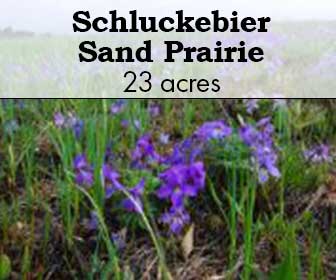
Prairie violet by Joshua Mayer

Schluckebier Sand Prairie

Schluckebier Sand Prairie, one of the last surviving remnants of the 14,000 acre Sauk Prairie Sauk , a vast grassland that covered the area prior to European settlement. The small dry to dry-mesic prairie is situated on part of an old Wisconsin River terrace. The prairie supports a good diversity of native plants and insects. Including plants such as little bluestem, June grass, Virginia dwarf dandelion, short green milkweed, bird’s-foot violet, pasque flower, prairie smoke, flowering spurge, spiderwort, and rough blazing-star.

Except for a few small patches on slopes and along the edges, it is believed that the entire site had been plowed as early as the 1850’s. An area to the south was also grazed until 1969. Because of its sandy soil and rapid depletion of nutrients, the site was abandoned for cultivation purposes and native species that had disappeared were able to recolonize the prairie. Also present, perhaps due in part to human disturbance, are sand blows that provide microhabitats for specialists like false heather, a pioneer plant that helps stabilize the sand blows. Today, with a management regime of prescribed fire, brushing, and invasives control the condition of the prairie is improving. Schluckebier (SCHLUCK-e-beer) is a German name meaning “drink a beer”. The site is owned by The Prairie Enthusiasts and was designated a State Natural Area in 2006.

SITE STEWARDS

BRANDON MANN

413-427-4099

EMAIL

ACCESS & DIRECTIONS


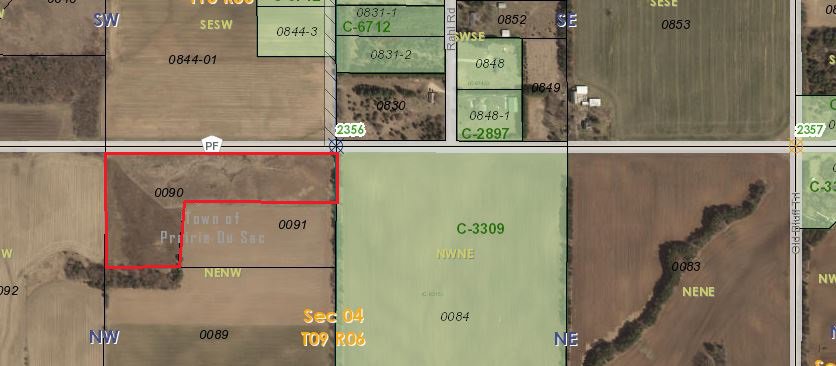
Take US Highway 12 west of Sauk City until you get to the light at County PF.  Turn left (west) onto Co. PF and travel 1.5 miles, at which point there is a dirt lane immediately beyond a row of trees on the left.  Turn left (south) into the lane and look for the small mowed parking area about 100 down the lane.


Google Map

Description & Significance

The prairie supports a good diversity of native plants and insects.

Notable Species:

  • prairie bush-clover (Lespedeza leptostachya)
  • little bluestem (Schizachyrium scoparium)
  • June grass (Koeleria macrantha)
  • Virginia dwarf dandelion (Krigia virginica)
  • short green milkweed (Asclepias viridiflora)
  • bird’s-foot violet (Viola pedata)
  • pasqueflower (Anemone patens)
  • prairie smoke (Geum triflorum)
  • flowering spurge (Euphorbia corollata)
  • spiderwort
  • rough blazing star (Liatris aspera)

Sand prairie is a dry native grassland community dominated by grasses such as little bluestem, J junegrass, panic grasses, and poverty-oat grass. Common herbaceous associates are sand cress, field sage-wort, western ragweed, several sedges (e.g., Carex muhlenbergii, Cyperus filiculmis, and Cyperus schweinitzii), flowering spurge, frostweed, round-headed bush-clover, western sunflower, false-heather, long-bearded hawkweed, stiff goldenrod, horsebalm, and spiderwort. Drought-adapted fungi, lichens, and mosses are significant components of sand prairie communities.

Management

Except for a few small patches on slopes and along the edges, it is believed that the entire site had been plowed as early as the 1850s. An area to the south was also grazed until 1969. Because of its sandy soil and rapid depletion of nutrients, the site was abandoned for cultivation purposes and native species that had disappeared were able to recolonize the prairie. Also present, perhaps due in part to human disturbance, are sand blows that provide microhabitats for specialists like false heather, a pioneer plant that helps stabilize the sand blows. Today, with a management regime of prescribed fire, brushing, and invasives control the condition of the prairie is improving.