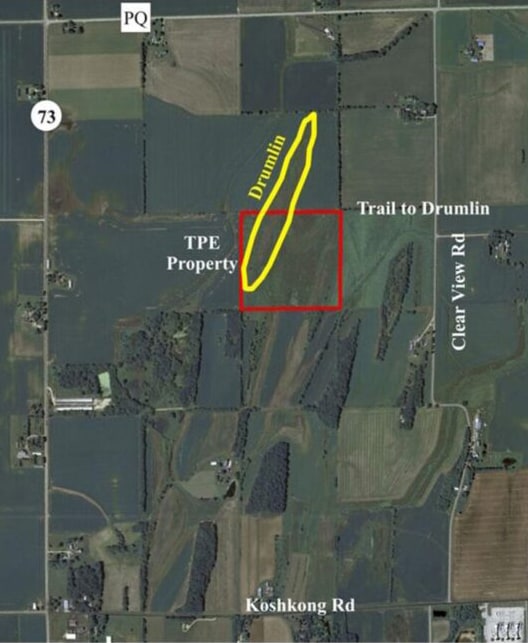
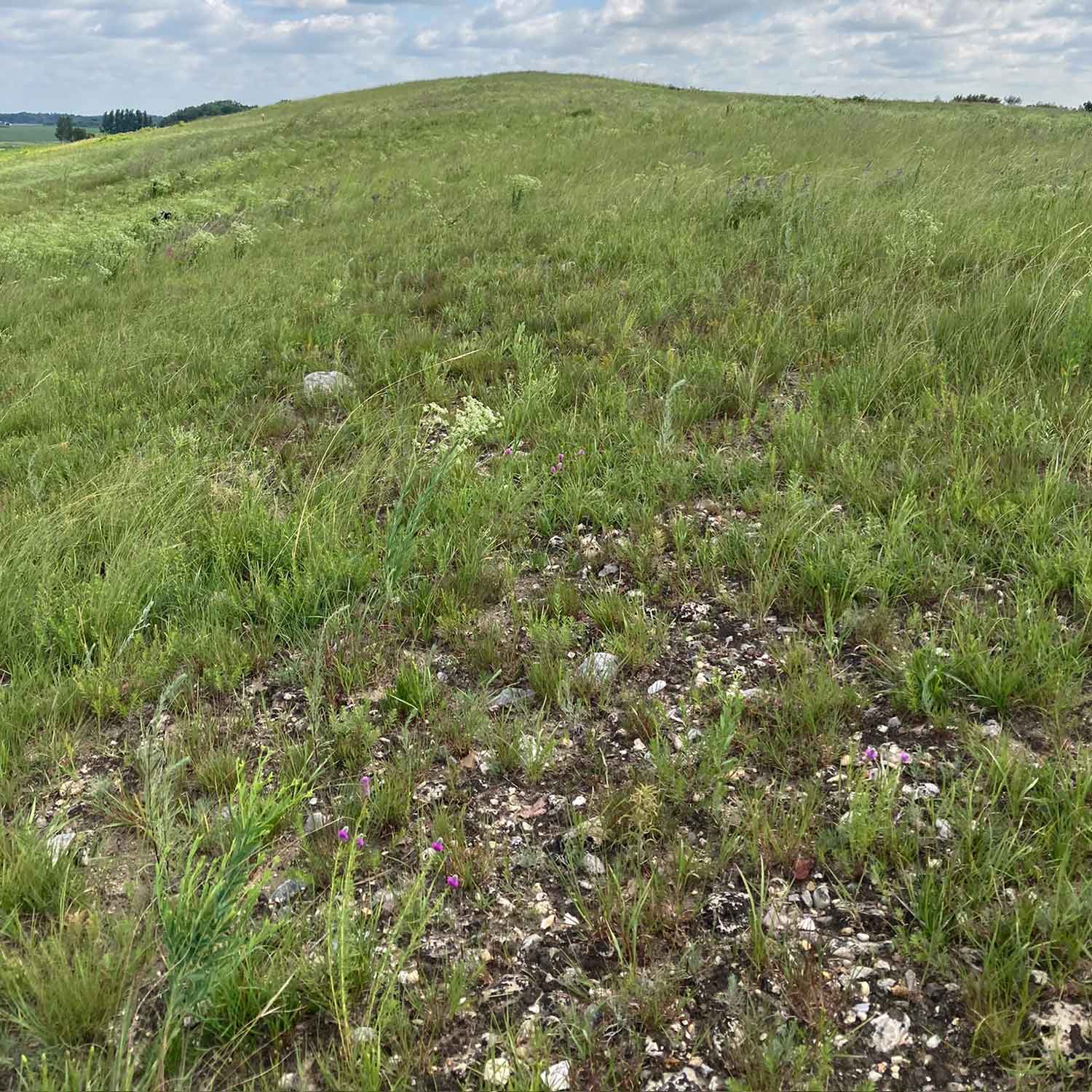
The Prairie Enthusiasts and Wisconsin Department of Natural Resources have ranked Smith-Reiner Drumlin Prairies as a top-tier prairie remnant. The term drumlin is from an Irish word meaning “little hill.” Drumlins are long, narrow whale-shaped hills that were formed by glaciers and are composed of the till (rock, gavel, and sand) pushed along and ground up under the ice. The last glacier to move across southeast Wisconsin did so in a northeast to southwest direction, thus the setting orientation of the hills.
The site contains two linear, parallel, drumlin hills formed by the passing of the last glacier more than 11,000 years ago. Such glacially sculpted ridges or drumlins are a common feature between Madison and Milwaukee, and they once were covered with prairie and savanna. Southern Wisconsin is world famous for its rare drumlins. In the 1840s, Smith-Reiner Drumlin Prairie was part of a 7,000-acre treeless prairie that had been in place for 4-5 thousand years.
The drumlins are composed of glacial till (subglacial rock soil debris) including deposits of sand and gravel, making for a blend of dry, dry-mesic, and even a few pockets of mesic prairie of varying soil pH. The east drumlin has a sandier soil with a lower pH level (acidic) and the west drumlin soil contains dolomitic limestone bedrock slopes with a higher pH level (alkaline). Agriculture was unsuited to grow croplands on drumlins due to their gravelly consistency. The preserve’s prairie remnants were grazed until sometime in the early 1950’s, thus they are not pristine. The berms evident along the base of the hills were constructed in the 1960s, as part of a federal soil conservation practice that has since fallen out of use. Today, the driest portions of the preserve are now once again high quality prairie, and more mesic areas are recovering nicely with a good population of native species.
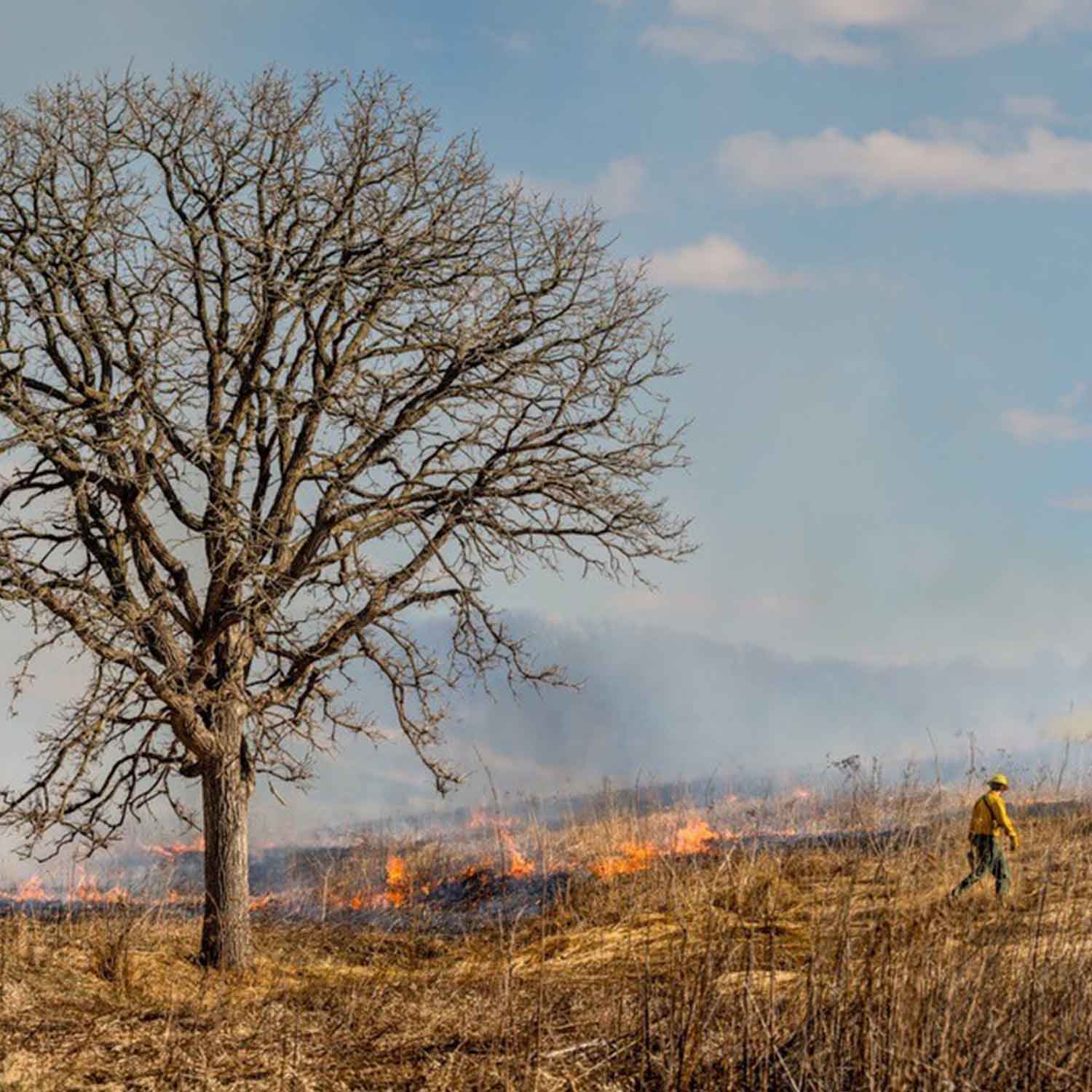
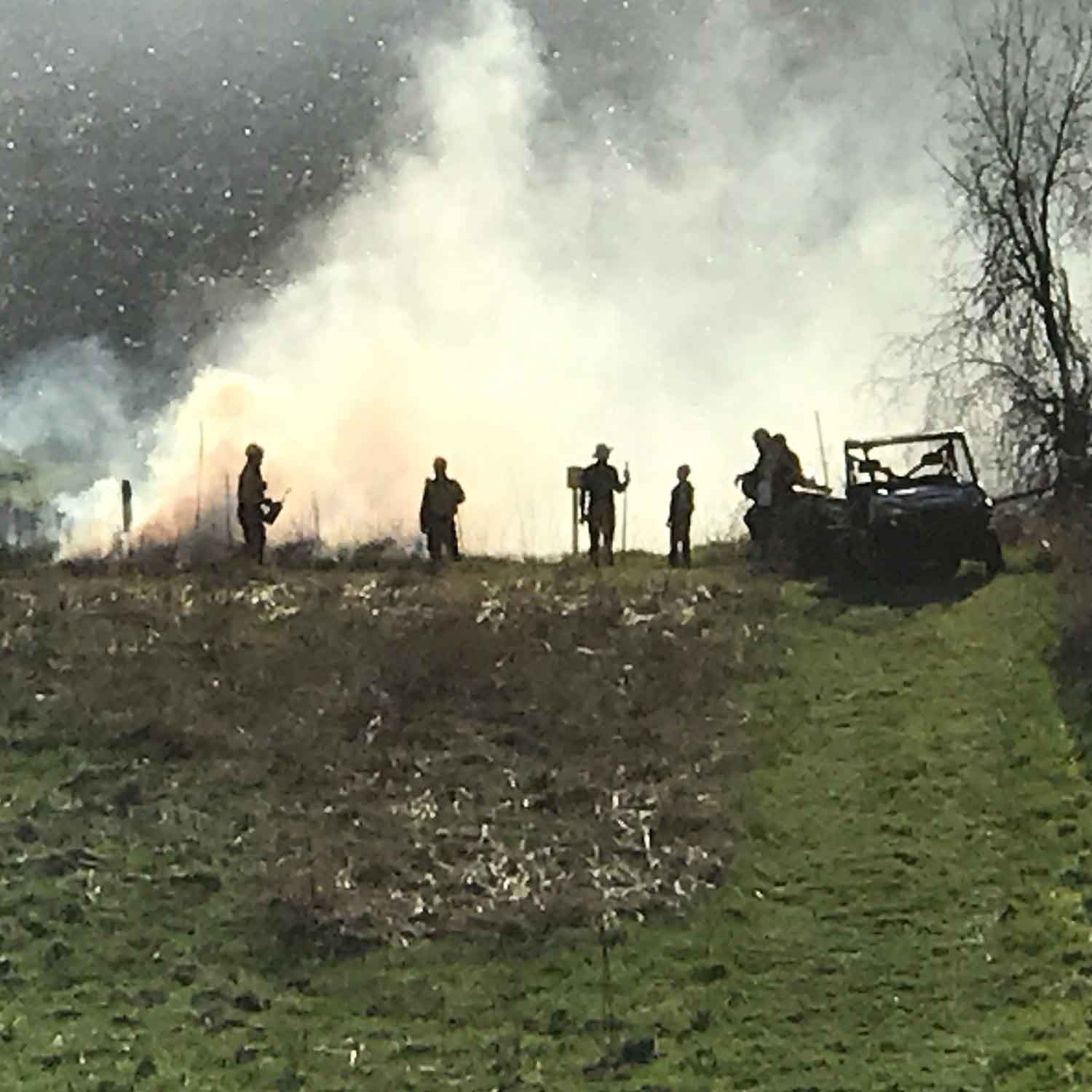
When European settlers first came to this area, they found a vast sea of grasses and wildflowers that were part of a continuous tallgrass prairie ecosystem stretching west to the Great Plains. These prairies had many species of grasses such as big and little bluestem and Indian grass that grew to heights of five to six feet, limited tree cover, and hundreds of species of wildflowers. Frequent fires that occurred either naturally, through lightning strikes, or through the actions of Native Americans, limited the encroachment of most trees and shrubs. Some trees such as bur oaks could survive frequent fires due to their fire-resistant bark, but only in low numbers. Fires also stimulated growth of prairie grasses and wildflowers. The deep roots of prairie plants develop rich, fertile soils that were eventually prized by European settlers for agricultural use. When the invention of the mould board plow allowed the native prairie sod to be busted and converted to crop fields, over 99% of original tallgrass prairie was lost. As a result, many species that relied upon prairies are now rare. Of the prairie and grassland species found in Wisconsin, 41 are listed as endangered or threatened.
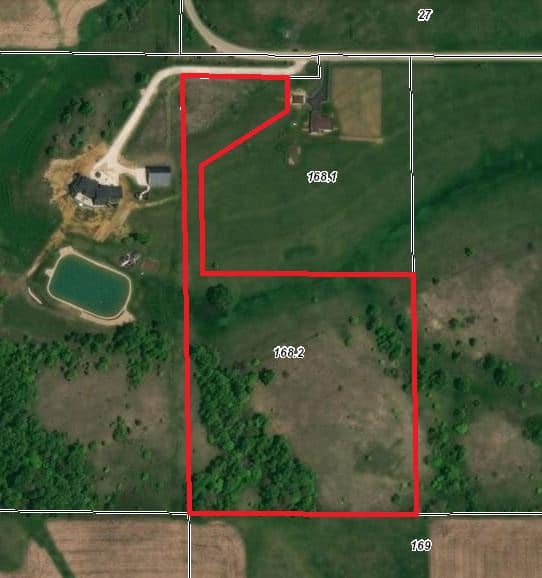
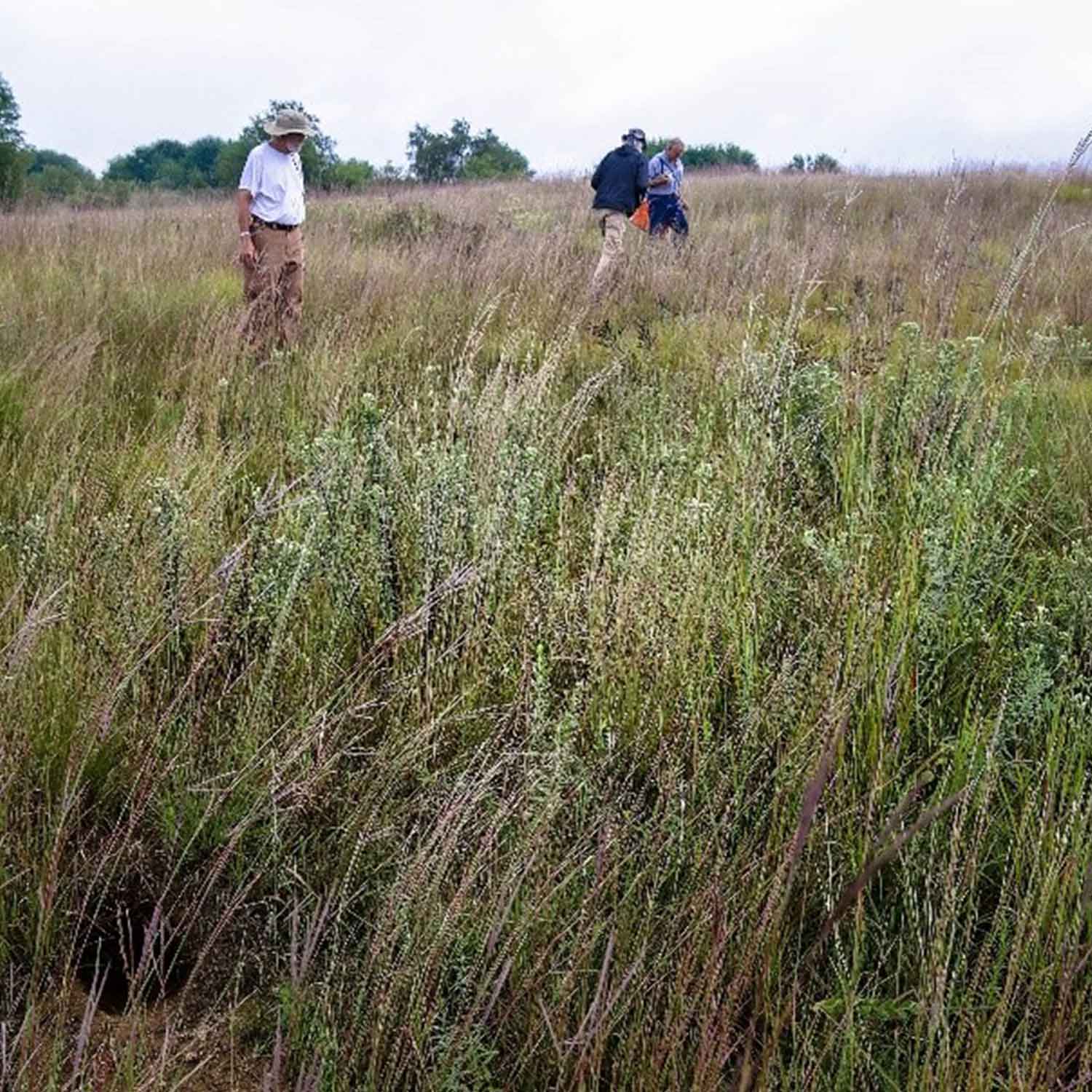
Today, the preserve’s hills are still covered with their original sod of prairie plants (13 acres) which have been in place for at least 4-5 thousand years. The remnants are imbedded within productive cropland (28 acres) which have been enrolled in the USDA Conservation Reserve Program (CRP) since 1988. Originally, planted to smooth brome grass, The Prairie Enthusiasts is now converting these fields to prairie vegetation with the first seeding done in the fall of 2013.
Prairie dropseed is a type of now uncommon prairie grass that is important to many prairie species of leafhoppers, including Memnonia panzeri, a State Special Concern species that feeds exclusively on this plant. Both the grass and the rare leafhopper are present on this preserve.
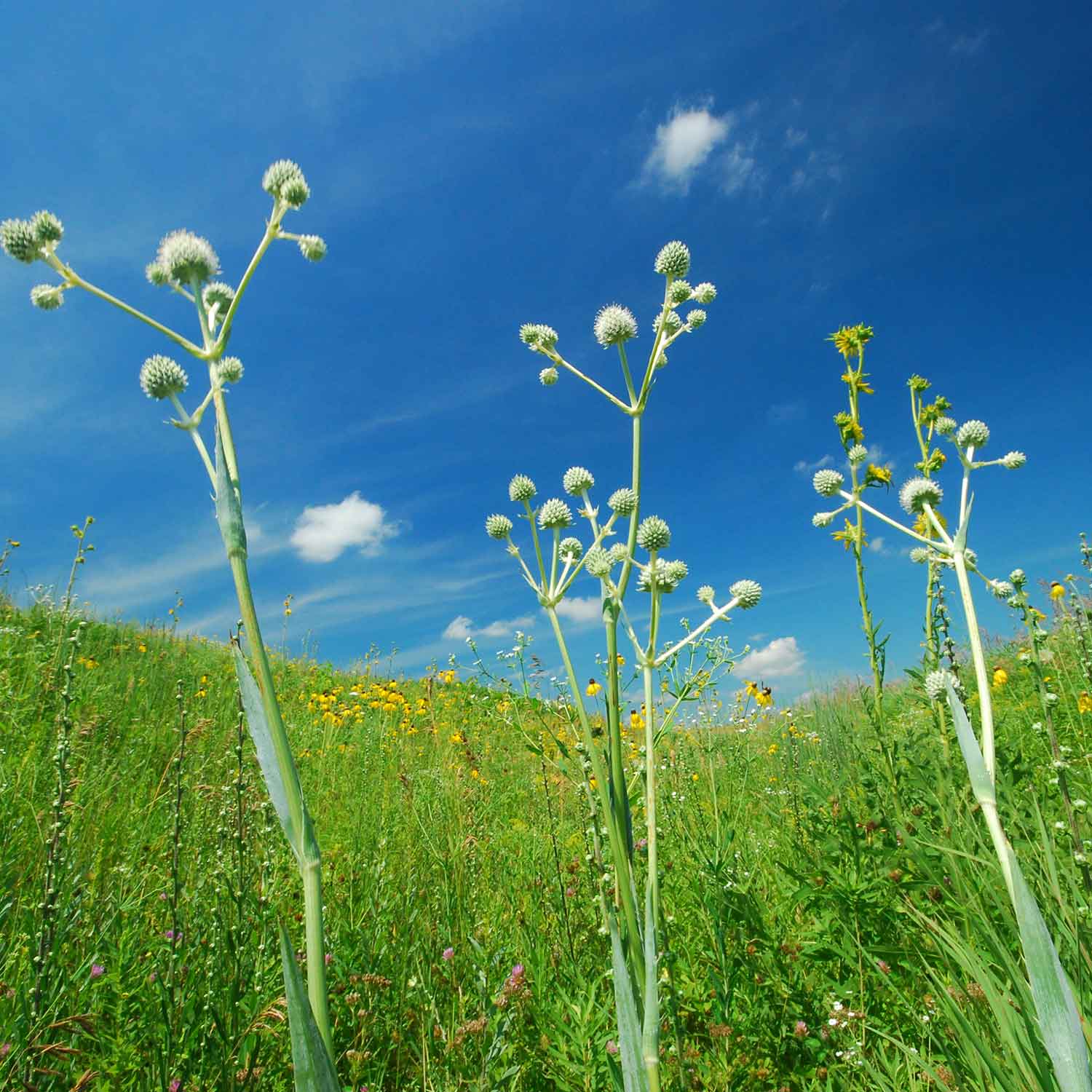
A few pockets of deeper soil on the drumlins support species such as this prairie lily (Lilium philadelphicum) compass plant and rattlesnake master that are more typical of mesic (deep soil) prairies. Prairie lily plants will grow on both acid and high pH soils and grow best in dry-mesic to mesic habitat. It takes seven to eight years before a prairie lily plant growing in the wild will get big enough to bloom.
Plant Communities
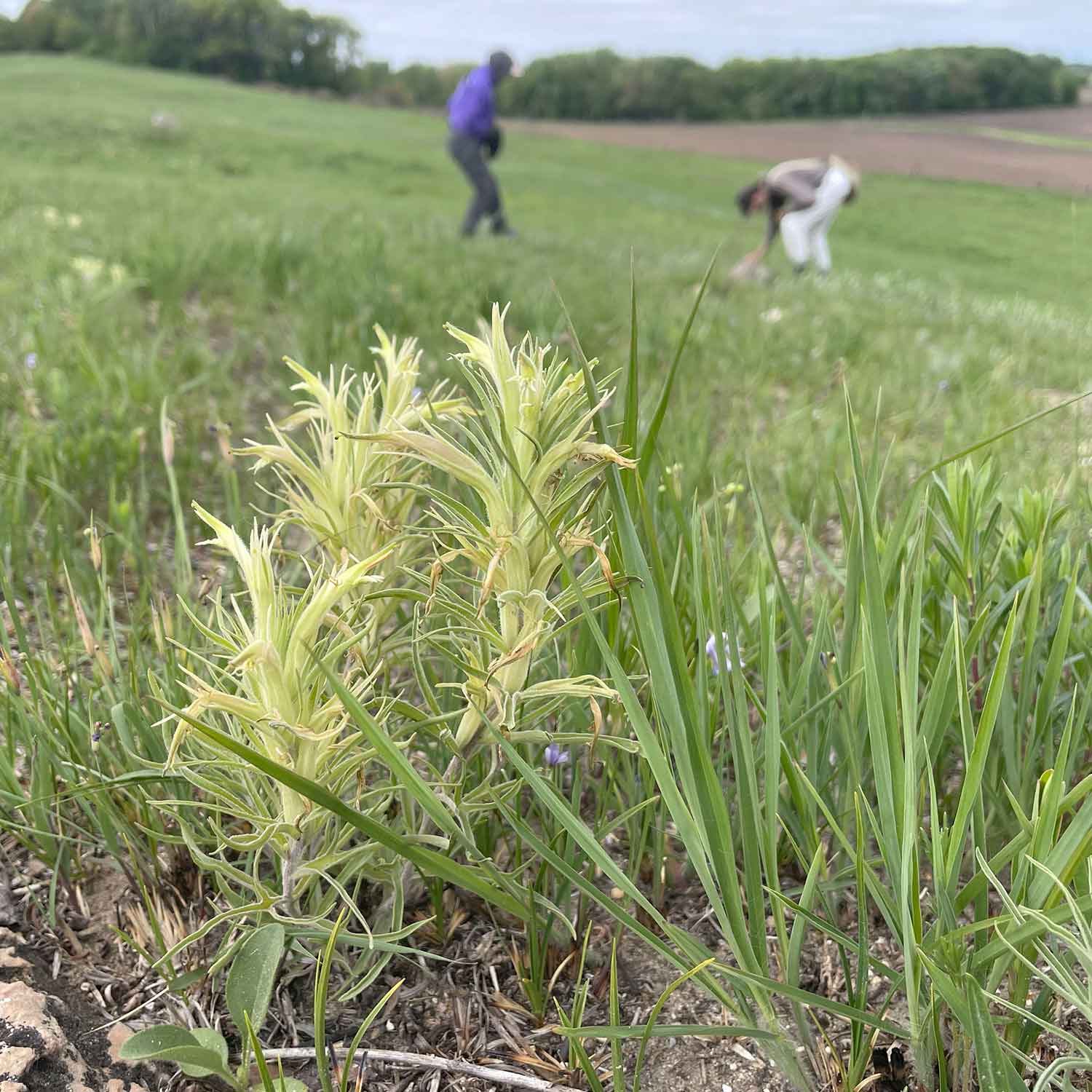
Early season blooming forbs:
- bird’s foot violet (Viola pedata)
- prairie violet (Viola pedatifida)
- blue-eyed grass
- hoary puccoon (Lithospermum canescens)
- prairie smoke (Geum triflorum)
- spiderwort
Mid-summer blooming forbs:
- black-eyed Susan (Rudbeckia hirta)
- common milkweed (Asclepias syriaca)
- whorled milkweed (Asclepias verticillata)
- compass plant (Silphium laciniatum)
- flowering spurge (Euphorbia corollata)
- lead plant (Amorpha canescens)
- pale purple coneflower (Echinacea pallida)
- prairie coreopsis (Coreopsis palmata)
- prairie dock (Silphium terebinthinaceum)
- prairie lily (Lilium philadelphicum)
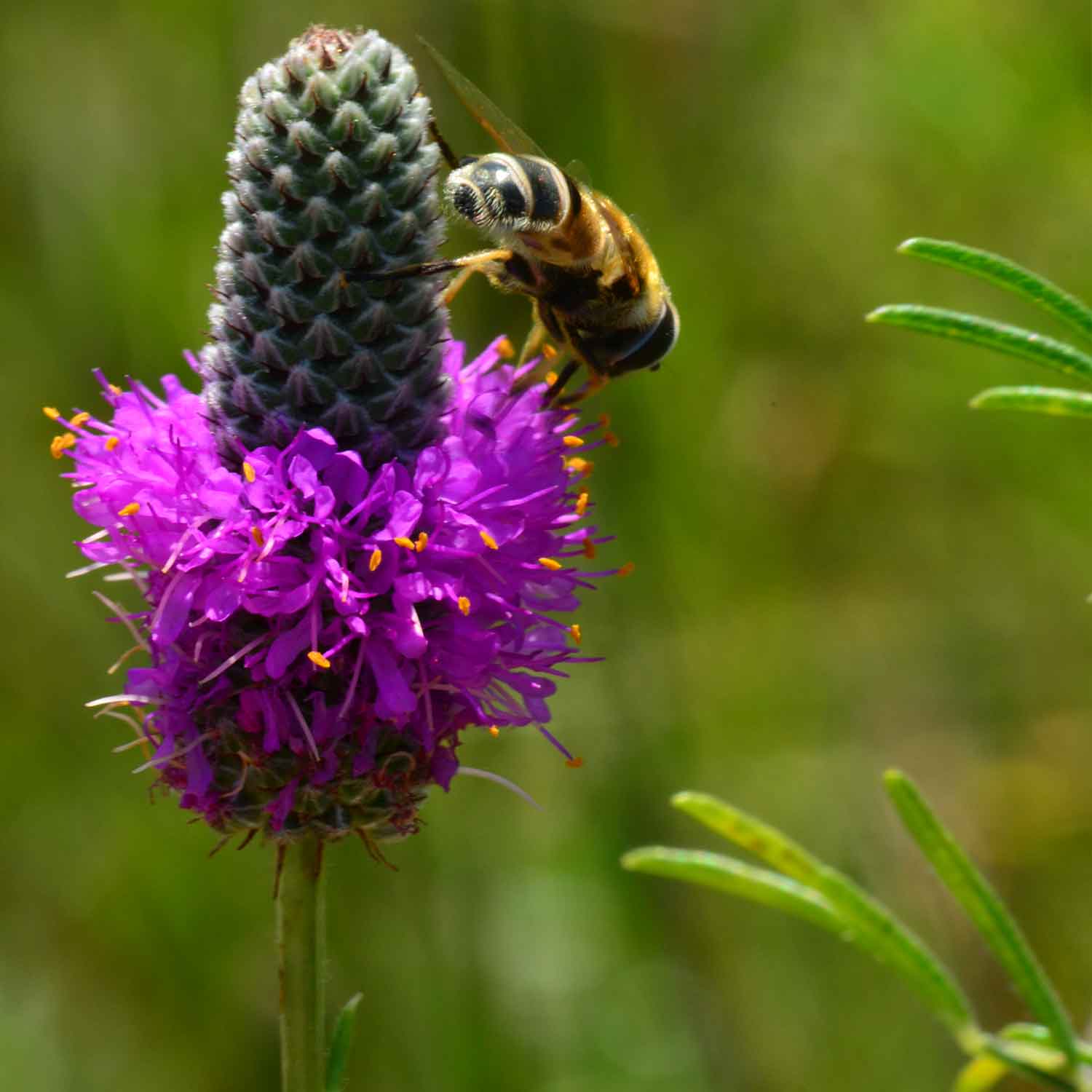
- purple prairie clover (Dalea purpurea)
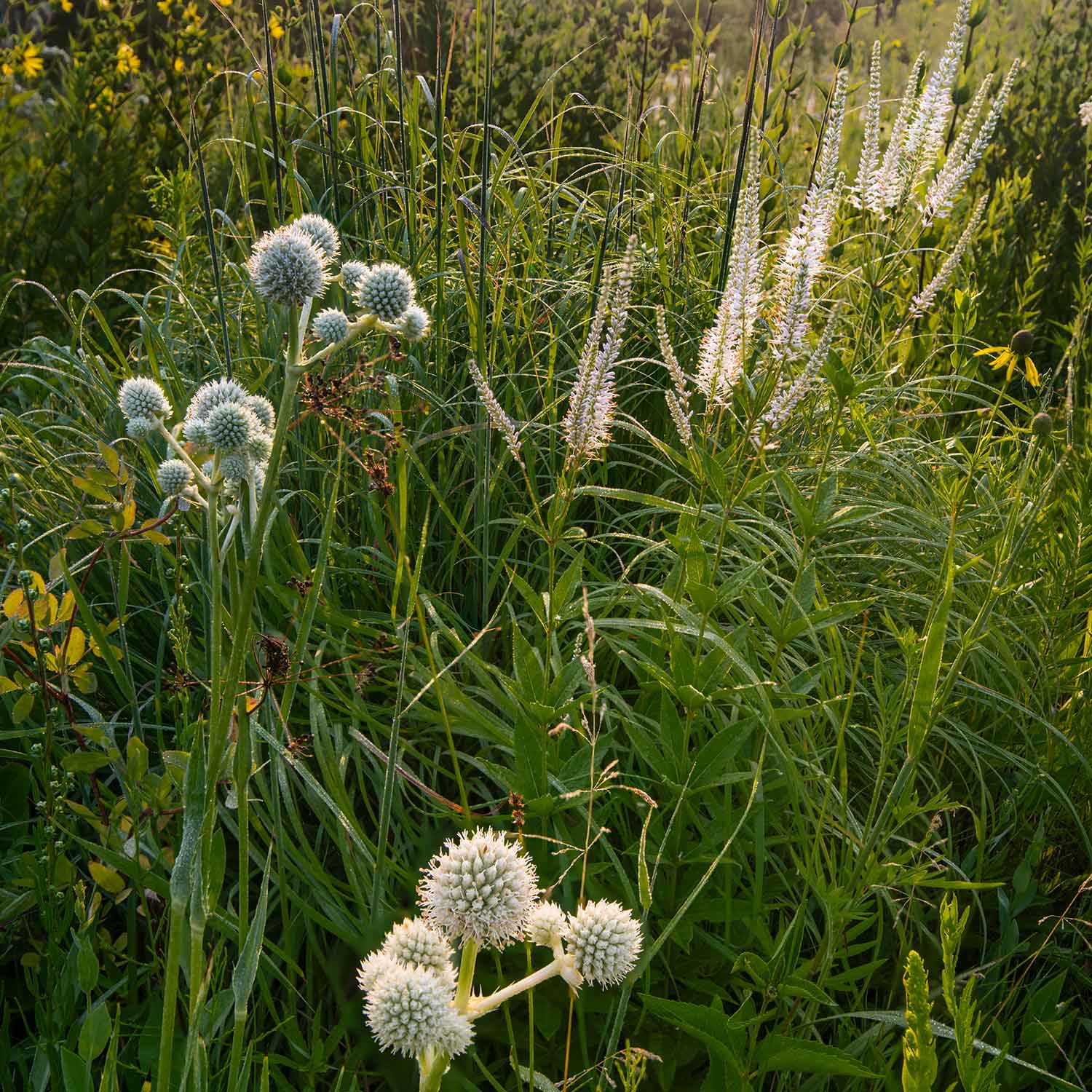
- rattlesnake master (Eryngium yuccifolium)
- wild rose
- yellow coneflower (Ratibida pinnata)
Last season blooming forbs:
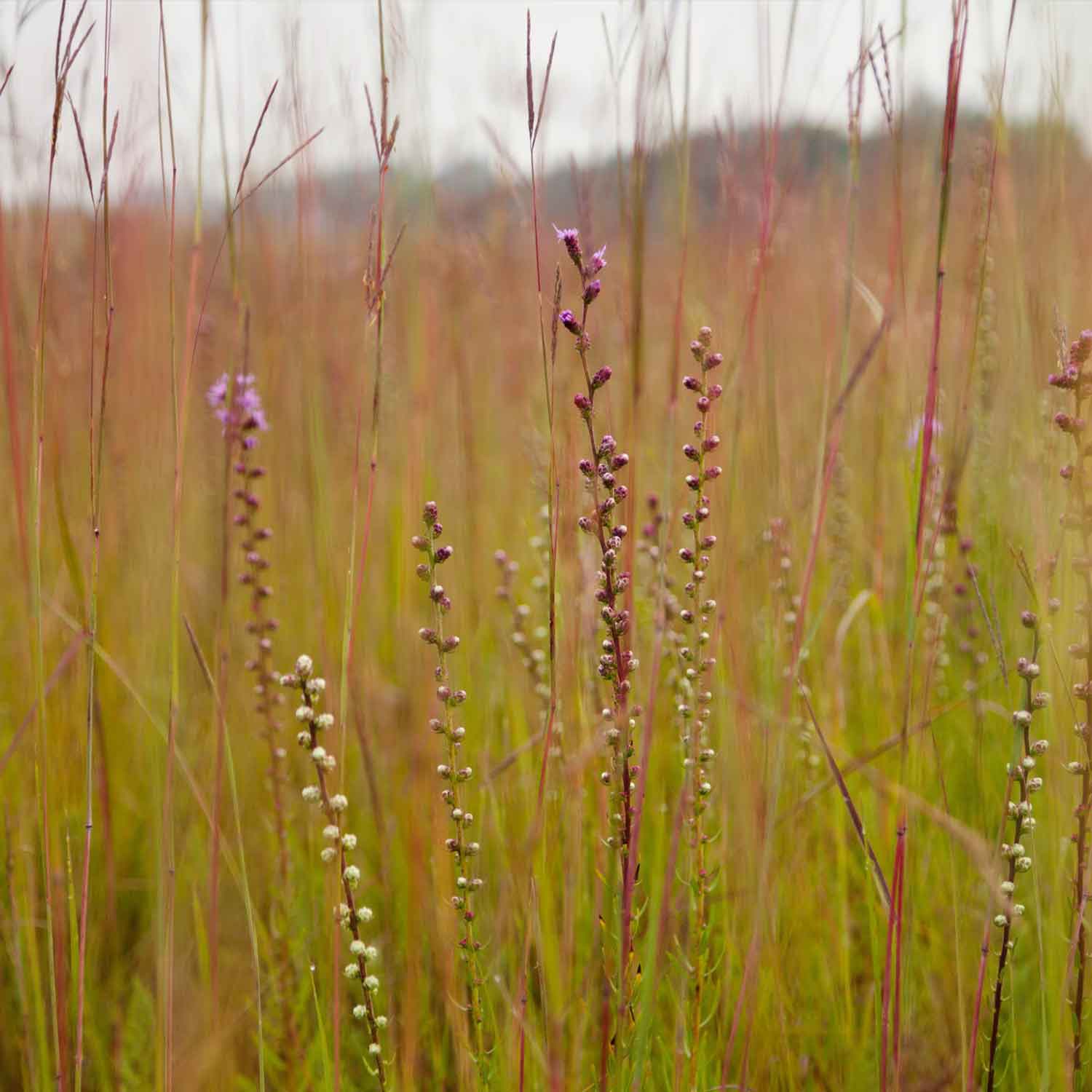
- cylindrical blazing star (Liatris cylindracea)
- rough blazing star (Liatris aspera)
- downy gentian (Gentiana puberulenta)
- flax-leaved aster (Ionactis linariifolia)
- heath aster (Symphyotrichum ericoides)
- silky aster (Symphyotrichum sericeum)
- sky-blue aster (Symphyotrichum oolentangiense)
- smooth blue aster (Symphyotrichum laeve)
- prairie sunflower (Helianthus petiolaris)
- western sunflower (Helianthus occidentalis)
- common goldenrod (Solidago canadensis)
- Missouri goldenrod (Solidago missouriensis)
- old-field goldenrod (Solidago nemoralis)
- showy goldenrod (Solidago speciosa)
- stiff goldenrod (Solidago rigida)
Cool season grasses: porcupine grass, early panic-grass, prairie panic-grass and Scribner’s panic-grass
Warm season grasses: little and big bluestem, Indian grass, prairie dropseed, switchgrass The Prairie Enthusiasts has recently planted into the CRP (former cropland) areas some species that were not present as remnant populations on the site (hence missing from the plant list), but which have a high probability of having been present in pre-settlement times, based on what is known about the region’s flora and ecology. The introduced species are mostly ones characteristic of deep soil mesic to wet-mesic prairie communities that were lost from the site following introduction of agriculture to the land, plowing of the deep soil and grazing of the un-plowed prairie remnants. The site’s remnants represent only the dry soil end of the prairie community continuum, and thus lack many deep soil species. Past grazing may also have eliminated some species.
Insects, Birds & Animals
The majority of prairie forbs rely on pollinating insects to transfer pollen from one plant to another to insure abundance of flower seed and plant generation. Pollinators are a key to the health and vigor of the prairie. Prairie provides bees and other pollinators with a continuity of food resources throughout the season. Large patches and massive swirls of flowers allow bees more efficient access to the blooming plants. Monarda, common and whorled milkweed, mountain mint, Culver’s root, prairie clover and pasture thistle are good foundation plants for pollinators.
Insects: red-headed thatching ant, prairie leafhopper, clay-colored leaf beetle, goldenrod soldier beetle, black swallowtail, tiger swallowtail, silver-bordered fritillary, monarch, skipper, spring azure, pearl crescent butterfly, ten-spotted skimmer dragonfly, katydid, milkweed leaf beetle, small milkweed bug, red milkweed beetle, milkweed tussock larva, shield bug, bumble bee, weevil
Birds: dickcissel, bobolink, yellowthroat, eastern meadowlark, field sparrow, grasshopper sparrow, chipping sparrow, song sparrow, tree sparrow, house sparrow, yellow cuckoo bird, bluebird, cedar waxwing, cat bird, gold finch, brown thrasher, indigo bunting, kingbird, ruby throated hummingbird, killdeer, morning dove, robin, downy woodpecker, redwing blackbird, sandhill crane, ring-necked pheasant, wild turkey and (outside of breeding season) short-eared owl
On November 24, 2013, Gary Birch and Rich Henderson observed a short-eared owl at Smith-Reiner Drumlin Prairies, and again on December 21 of that year. This owl is a rarely seen specialist of open grasslands. It was flushed at midday out of knee-high grass where it had been roosting. This interesting species, with a wingspan of 33-to- 43 inches, requires large, treeless areas of grassland, sedge meadow, or marsh habitat to establish breeding territories (it nests on the ground) and for hunting areas. Short-eared owls hunt mostly at night but sometimes also during the day. They are most often seen at dawn and dusk sitting on fence posts or flying low over open ground using a low, slow, graceful flight reminiscent of a butterfly and locating prey by ear. They hunt small mammals such as voles, shrews, mice, rabbits and, occasionally, birds. The preserve is not currently large enough to ever hope to entice the owls to nest there, but the grassland habitat is clearly sufficient to provide critical feeding and resting habitat during spring and fall migrations.
Mammals: American badger, coyote, meadow jumping mouse, red fox, thirteen-lined ground squirrel, white tail deer, woodchuck
Amphibians: eastern gray treefrog