Swenson Bluff

Swenson Bluff

Swenson Bluff Preserve

This 54-acre site that contains several distinct prairie remnants sitting high atop the bluff, with spectacular views of the farms and St. John the Baptist Catholic Church situated in the wide, flat valley below. This preserve includes Swenson Hill Prairie, Agaski Bluff and Shooting Star Prairie. At the top of the hill are five acres of open grassland, a large remnant representative of calcareous, dry-mesic hill prairie. Plant species present indicate a light or non-existent grazing history, and it is most notable for the heterogeneity of its summer prairie flora.


Agaski Bluff during summer. Photo by Eric Preston.

Swenson Bluff Preserve

Agaski Bluff during summer. Photo by Eric Preston.

This 54-acre site that contains several distinct prairie remnants sitting high atop the bluff, with spectacular views of the farms and St. John the Baptist Catholic Church situated in the wide, flat valley below. This preserve includes Swenson Hill Prairie, Agaski Bluff and Shooting Star Prairie. At the top of the hill are five acres of open grassland, a large remnant representative of calcareous, dry-mesic hill prairie.  Plant species present indicate a light or non-existent grazing history, and it is most notable for the heterogeneity of its summer prairie flora.

Access & Directions

The larger parcel of this site is located 1.9 miles south of State Highway 14, and the village of Arena, on County Road H. There is no parking lot;  park in the west roadside right-of-way of County Road H (to be legal, parked vehicles need to be at least 3 feet away from the gravel shoulder). Access is by foot only starting at the The Prairie Enthusiasts sign, walking along the field edge to the trail head at the edge of the wooded area. The smaller parcel is located 0.2 miles to the south-southeast. The hike up to either prairie is very steep.
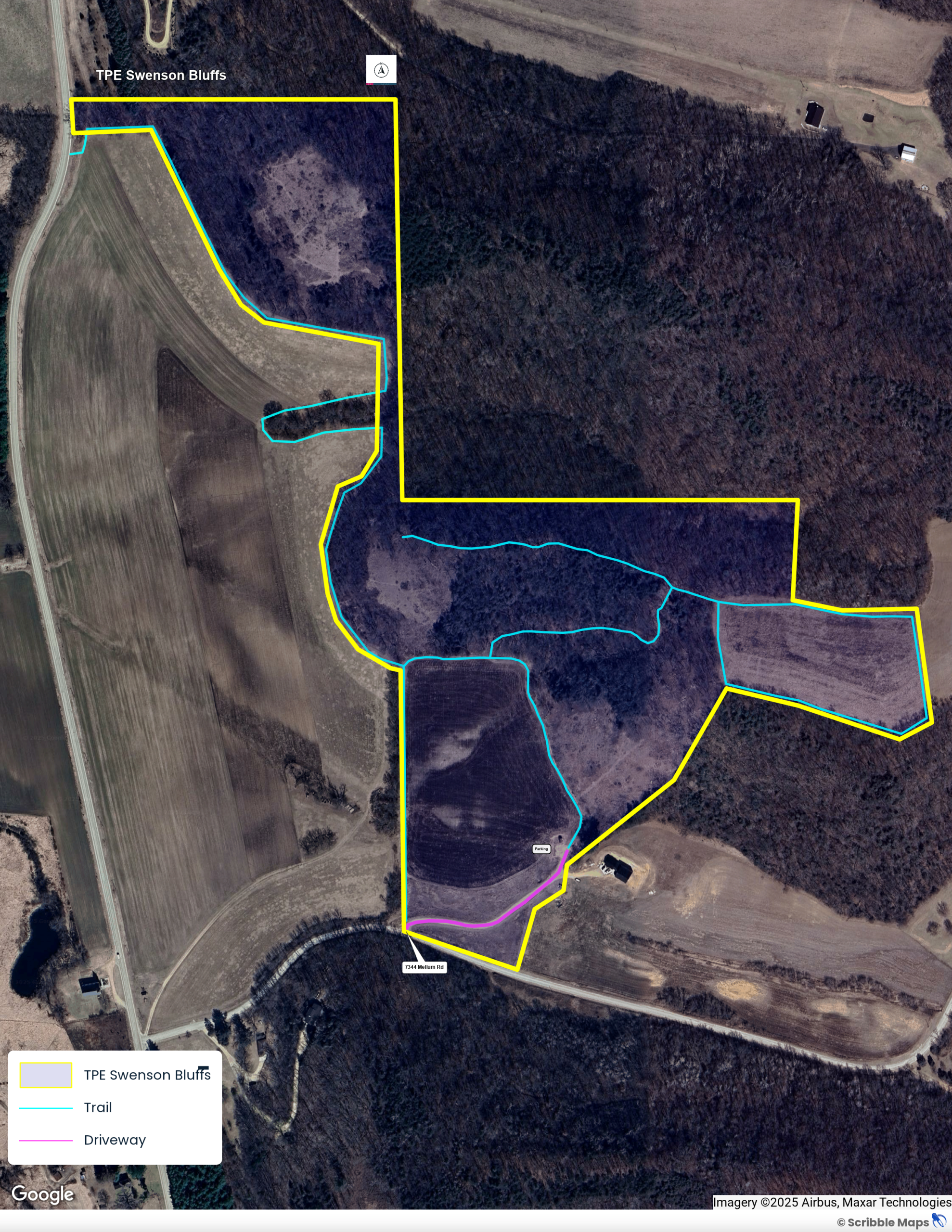
Google Map

Site Steward

Connect with the site steward to see how you can care for this rare habitat at an upcoming work party.

This site is stewarded by The Prairie Enthusiasts Empire-Sauk Chapter.

Site Steward: Scott Sauer (Email)

How to Enjoy This Site

Allowed:

  • Outdoor Recreation
  • Hunting (for all species, no permit or reservation required)

      How to Enjoy This Site

      Allowed:

      • Outdoor Recreation
      • Hunting (for all species, no permit or reservation required)


        Hikers explore Swenson Bluff Preserve in summer. Photo by Rob Baller.

        What Makes Swenson Bluff Preserve Special

        This preserve contains three parcels: Swenson Hill Prairie, Agaski Bluff and Shooting Star Prairie. Swenson Hill Prairie is approximately 16 acres, including the surrounding woods. Agaski Bluff nearby is a 38-acre section with specatular species. The smaller parcel, known as Shooting Star Prairie, is approximately three acres in size, which includes its namesake plant.

        Swenson Bluff Preserve is, at five acres of open grassland, a large remnant representative of calcareous, dry-mesic hill prairie. It is largely free of common herbaceous weeds such as white sweetclover (Melilotus alba) and wild parsnip (Pastinaca sa). There are small clusters of compass plant (Silphium laciniatum), indicating a light or non-existent grazing history (the hillside is considerably removed from the dairy barn on the Swenson farm). It is most notable for the heterogeneity of its summer prairie flora, with leadplant, butterflyweed, and prairie coreopsis (Amorpha canescens, Asclepias tuberosa, and Coreopsis palmata) blooming in a vast, intermixed display.  Likewise, the 2014 burn revealed a rich display of prairie spring ephemerals (violets, puccoon, and violet wood sorrel among them) on a lower, more level portion of the property. Other plants of note are tuberous Indian plantain, prairie turnip, cream Baptisia, and Hill’s thistle (Arnoglossum plantagineum, Pediomelum esculentum, Baptisia bracteate, and Cirsium Hillii).

        After extensive clearing in 2003, Shooting Star Prairie demonstrated why it received its common name. The skirt of brush at the base of the hill had concealed a huge display of Shooting Star (Dodecatheon meadia). This small remnant is also home to one of four, and the largest, Wisconsin populations of pale false foxglove, Agalinis skinneriana, a prairie annual that is listed as Endangered or Threatened in all the States where it occurs.

        Good invertebrate records from WDNR surveys in the 1990s and 2000s exist for both parcels. Across both tracts, thirteen prairie-specialist species – those dependent on prairie remnants – have been cataloged. On Swenson Hill Prairie, there is a collection record for the rare Kansas Prairie Leafhopper (Prairiana kansana), but that collection was not repeated after the initial collection. The WDNR lists P. kansana as a Species of Greatest Conservation Need (SGCN). Shooting Star Prairie has rich sods of prairie dropseed (Sporobolus heterolepis) which harbor the State-endangered Hill Prairie Shovelhead Leafhopper (Attenuipyga vanuduzeei), known from only six or seven locations in the Upper Midwest. The State-threatened prairie specialist Net-Veined Leafhopper (Polyamia dilata is also found on Shooting Star Prairie.

        SGCN, Threatened and Endangered Species on the Swenson Hill (SHP) and Shooting Star Prairies (SSP):
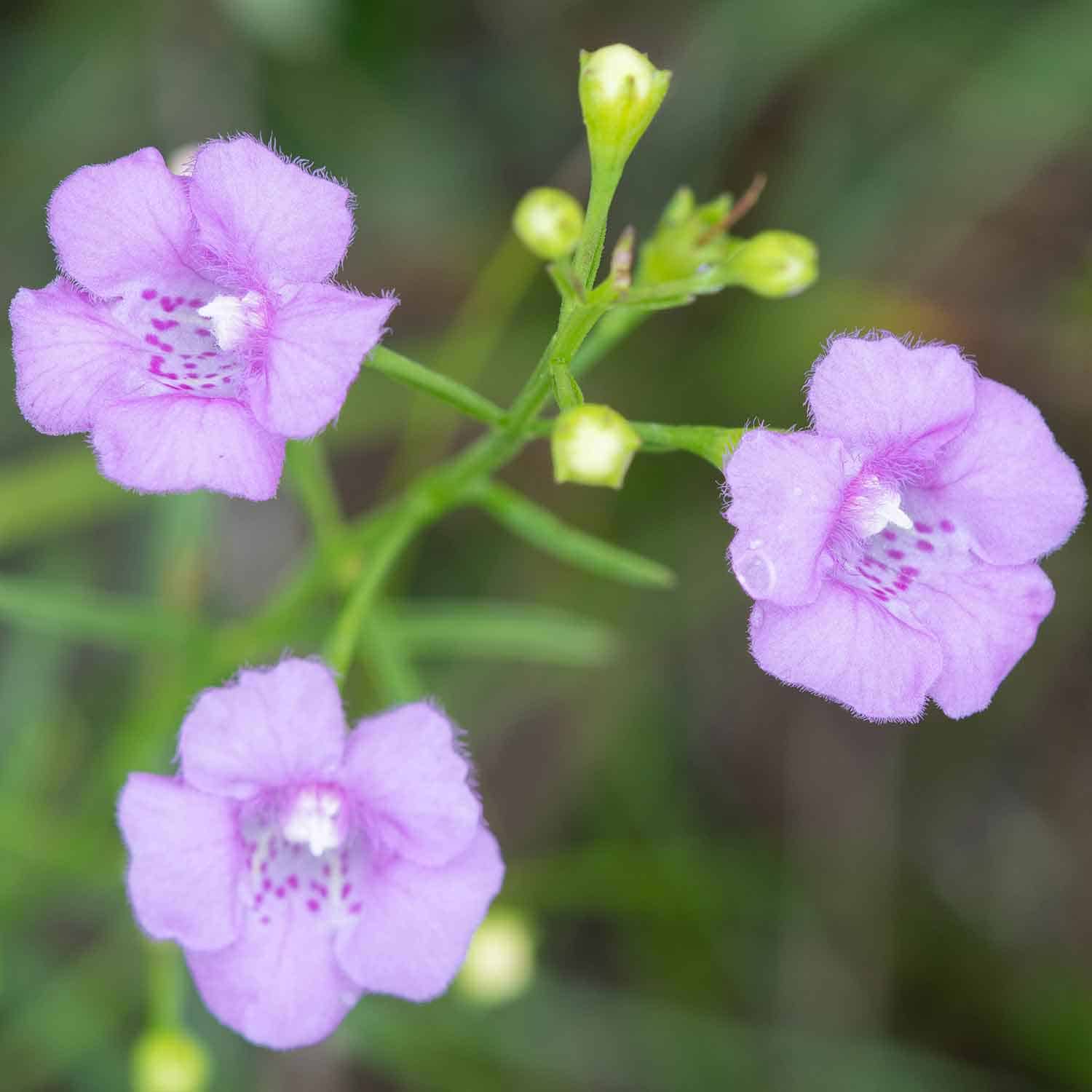
        The State Endangered Plant, pale false foxglove (Agalinis skinneriana) can be found at Swenson Bluff Preserve, which inspired the name of Agaski Bluff. Photo by Eric Preston.

        SPECIES COMMENTS
        PLANTS
        Pale False Foxglove
        Agalinis skinneriana
        WI Endangered (S2)
        Prairie Indian-plantain
        Arnoglossum plantagineum
        WI Special Concern (S3)
        Hill’s Thistle
        Cirsium Hillii
        WI Threatened (S3)
        Federal Species of Concern (SOC)
        Prairie Turnip
        Pediomelum esculentum
        WI Special Concern (S3)
        INVERTEBRATES
        Hill Prairie Shovelhead Leafhopper
        Attenuipyga vanduzeei
        WI Endangered (S1)
        Federal Species of Concern (SOC)
        Net-Veined Leafhopper
        Polyamia dilata
        WI Threatened (S2)
        Kansas Prairie Leafhopper
        Prairiana kansana
        WI Special Concern (S2)
        Little Information

        How was Swenson Bluff Preserve Protected

        The Prairie Enthusiasts has been active on the Swenson Bluff Prairie site with management activities and field trips since 2002. This, along with the ongoing relationship maintained with the Swenson family by volunteers Amy Staffen and Scott Sauer through the past decades, kept the protection prospects alive and led to The Prairie Enthusiasts ownership on August 20, 2018. Funding for this purchase was made possible, in part, by the Wisconsin Department of Natural Resources Knowles-Nelson Stewardship Program.

        The Swenson Bluff Prairie parcels are part of a larger prairie complex with other remnants persisting on nearby hillsides and bluff tops, making this an important area for native plant diversity. The Nature Conservancy (TNC) led protection efforts in this area beginning in the early 1990’s when The Prairie Enthusiasts was still a small organization. The Nature Conservancy’s interest in this area derived primarily from the presence of the rare Agalinis skinneriana and, secondarily, from the biodiversity of the area provided by the prairie-savanna-woodland complex.

        Either the Swenson Hill or nearby Drakenburg prairie were included in the description and analysis of dry-mesic prairies in John Curtis’s seminal work The Vegetation of Wisconsin (1956). Notes within the 1990 TNC description of the sites and the St. John’s Complex suggest that Olive Thomson visited these sites in the 1950’s. (Read more about Dr. John and Olive Thomson, premier conservationists, environmental education leaders and naturalists.)

        In 2024, The Prairie Enthusiasts purchased the 38-acre Agaski Bluff addition. Read more about that story HERE.
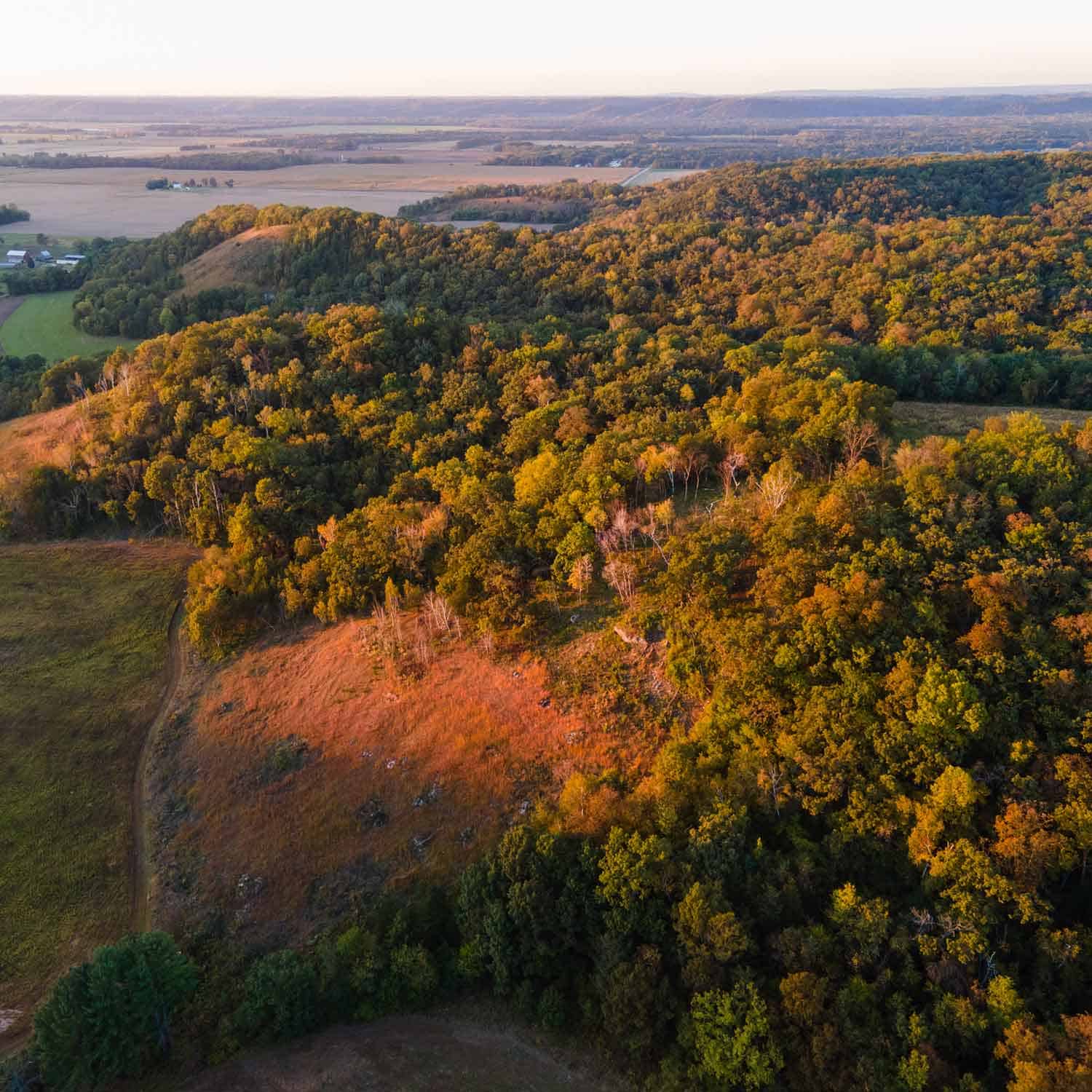
        Agaski Bluff after its acquisition. Photo by Eric Preston.

        How You Can Help Swenson Bluff Preserve

        In 2002, with funding provided by a US Fish and Wildlife Service (USFWS) grant for private lands, both Swenson Hill Prairie and Shooting Start Prairie were largely cleared of invasive red cedars, as well as some planted and volunteer white pines, black cherry, buckthorn, honeysuckle, and other invasive shrubs.  In 2007, Empire-Sauk Chapter volunteers burned roughly 2/3 of Swenson Hill Prairie. Site Steward Scott Sauer, along with volunteers from Quercus Land Stewardship, conducted winter-season burns on Swenson Hill Prairie in 2012, 2013, 2014 and 2016.

        Current management efforts are focused on continued removal of invasive species, especially buckthorn and honeysuckle.

        Check out our Events Calendar to see upcoming work parties or contact the site steward to get involved.
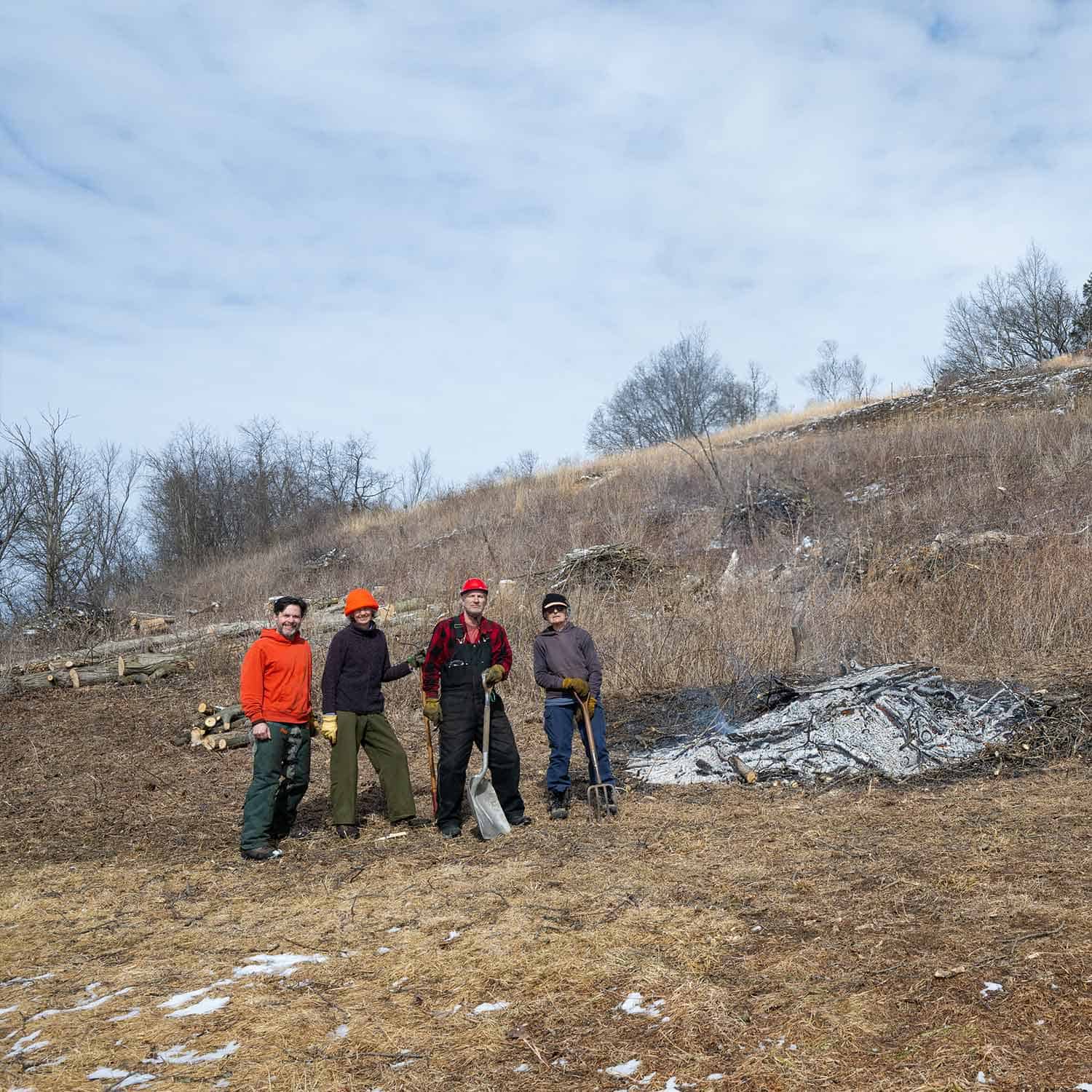
        Empire-Sauk Chapter volunteers burn brush piles during a work party. Photo by Eric Preston.
        Sylvan Road Conservation Area

        Sylvan Road Conservation Area

        Sylvan Road Conservation Area

        This 99-acre site is made up of oak woods, wet prairie and riparian scrub/young forest. The wet prairie consists of wet mesic prairie, wet prairie and sedge meadow.


        View of Sylvan Road Conservation Area. Photo by Tom Hunt.

        Sylvan Road Conservation Area

        View of Sylvan Road Conservation Area. Photo by Tom Hunt.

        This 99-acre site is made up of oak woods, wet prairie and riparian scrub/young forest. The wet prairie consists of wet mesic prairie, wet prairie and sedge meadow.

        Access & Directions

        This site is southeast of Dodgeville along Sylvan and Banner Roads in the Town of Waldwick.

        Google Map

        Site Steward

        Connect with the Chapter to see how you can care for this rare habitat at an upcoming work party.

        This site is stewarded by The Prairie Enthusiasts Southwest Wisconsin Chapter.

        Chapter Contact: (Email)

        How to Enjoy This Site

        Allowed:

        • Hiking
        • Hunting (for all species, no permit or reservation required)

        How to Enjoy This Site

        Allowed:

        • Hiking
        • Hunting (for all species, no permit or reservation required)


            Unique rock formation at Sylvan Road Conservation Area. Photo by Jerry Newman.

            What Makes Sylvan Road Conservation Area Special

            This area is the gem of this parcel and contains a number of species rarely found in Wisconsin, including rattlesnake master, yellow-headed fox sedge, and prairie gray sedge. Prairie Indian plantain, a threatened species, is also found in this community.

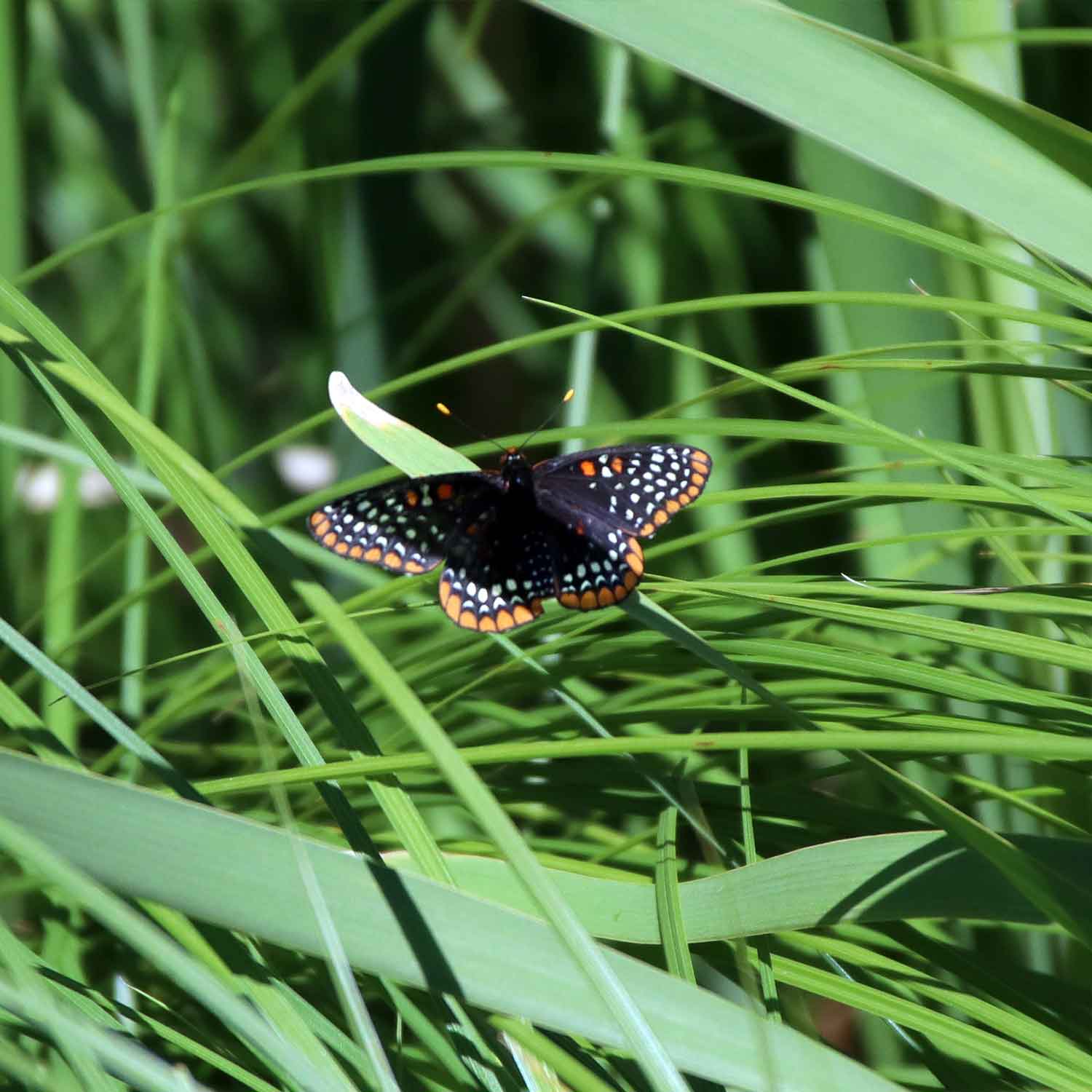
            Butterfly at Sylvan Road Conservation Area. Photo by Jerry Newman.

            How was Sylvan Road Conservation Area Protected

            The Prairie Enthusiasts purchased this site in 2014.

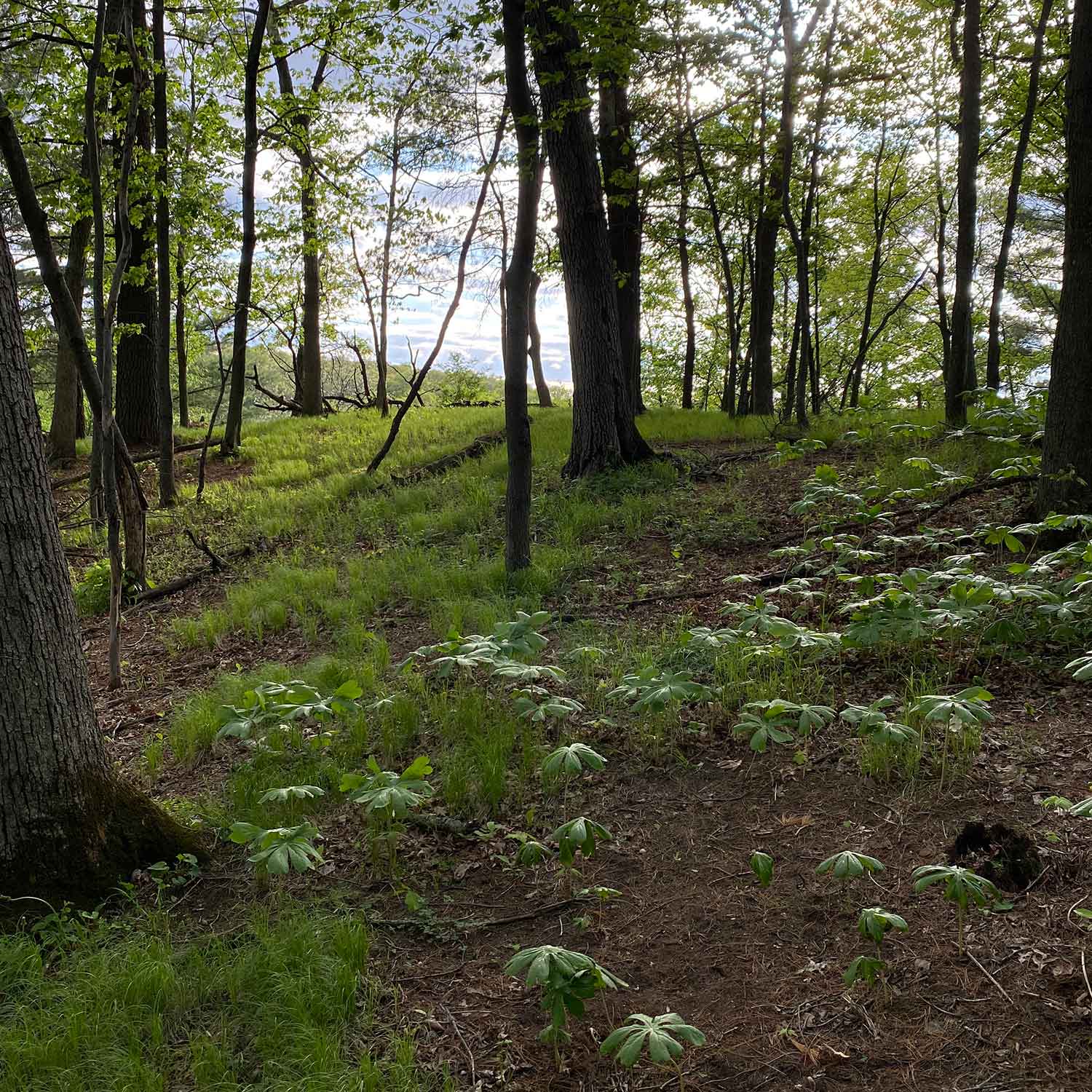
            Walking through Sylvan Road Conservation Area. Photo by Tom Hunt.

            How You Can Help Sylvan Road Conservation Area

            Check out our Events Calendar to see upcoming work parties or contact the site steward to get involved.

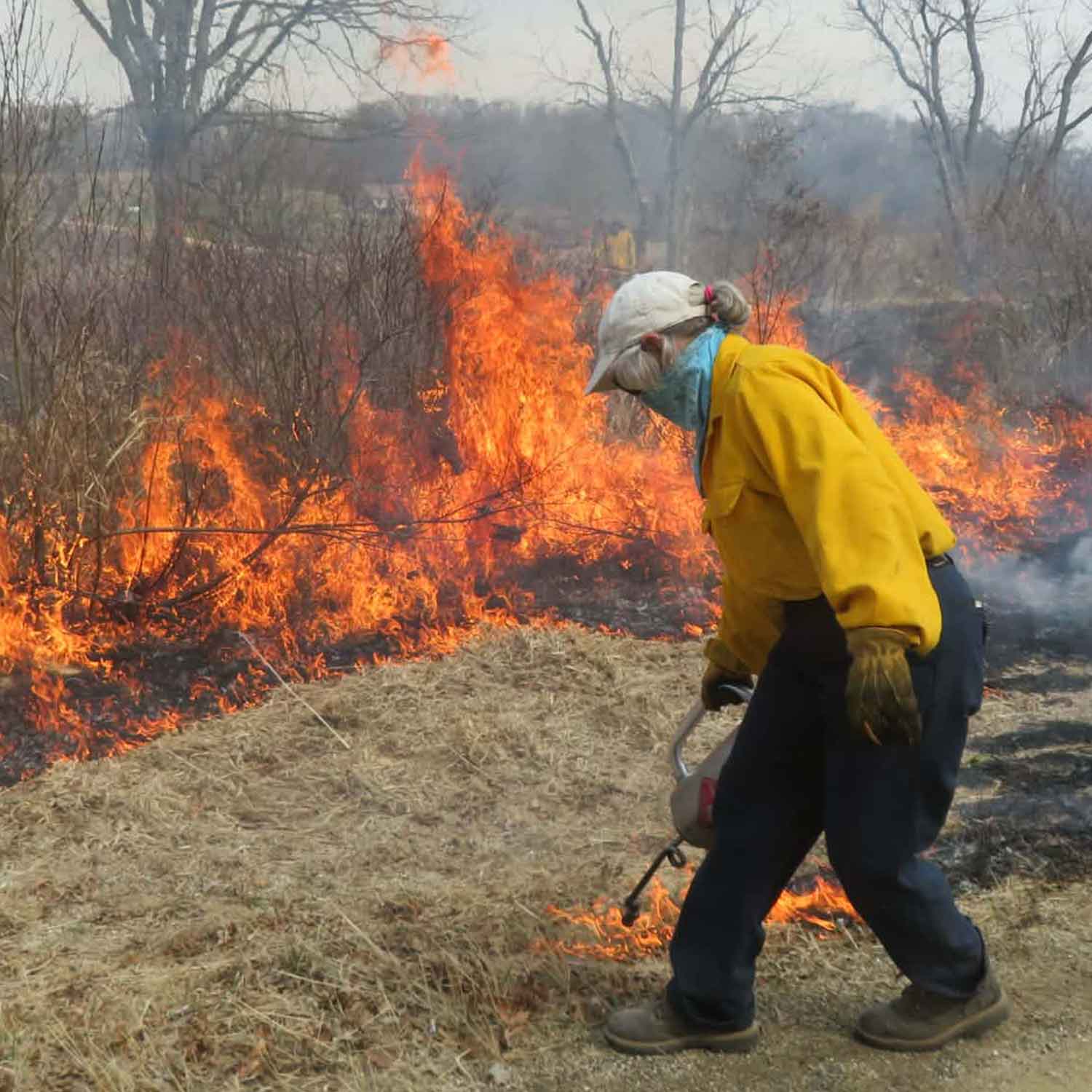
            Prescribed burn at Sylvan Road Conservation Area. Photo by Don Isbister.

            Thomas Tract

            Thomas Tract

            Thomas Tract

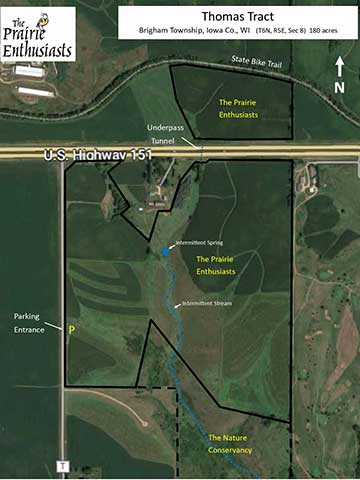
            Along Highway 18, just west of Barneveld, this site stretches out across a long draw, where the land pitches and folds into itself. 190 acres in a mix of native grassland and agricultural land, it sits between the Military Ridge State Trail to the north and The Nature Conservancy’s Barneveld Prairie to the south, creating a large block of contiguous habitat for rare prairie plants and grassland birds to flourish. 


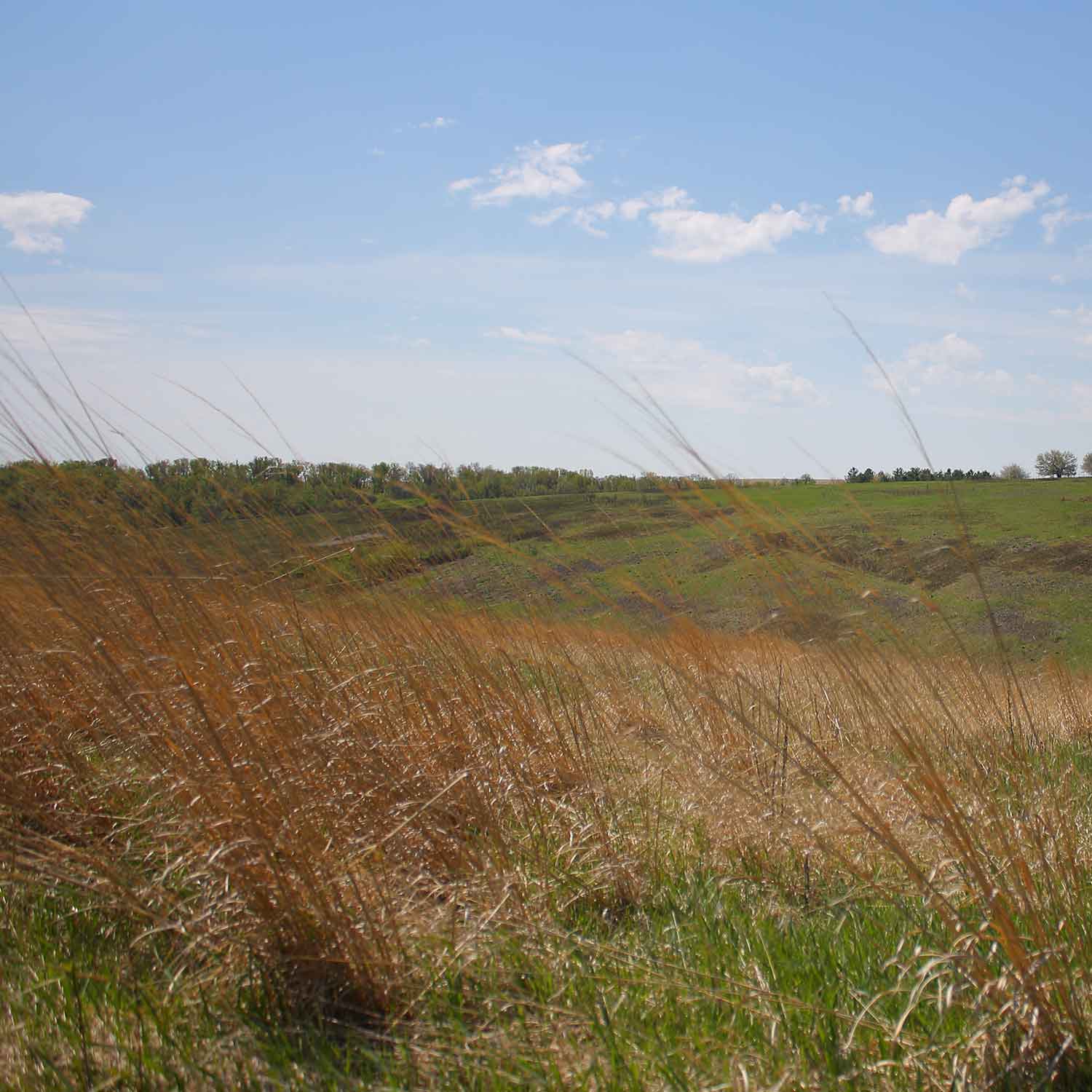
            The expansive view of Thomas Tract. Photo by Reid Bartholomew.

            Thomas Tract

            The expansive view of Thomas Tract. Photo by Reid Bartholomew. 

            Along Highway 18, just west of Barneveld, this site stretches out across a long draw, where the land pitches and folds into itself. 190 acres in a mix of native grassland and agricultural land, it sits between the Military Ridge State Trail to the north and The Nature Conservancy’s Barneveld Prairie to the south, creating a large block of contiguous habitat for rare prairie plants and grassland birds to flourish. 

            Access & Directions

            3975 County Highway T in Barneveld, WI 53507

            Google Map

            Site Steward

            Connect with the site steward to see how you can care for this rare habitat at an upcoming work party.

            This site is stewarded by The Prairie Enthusiasts Empire-Sauk Chapter.

            Site Steward: Andy Sleger (Email)

            How to Enjoy This Site

            Allowed:

            • Hiking
            • Hunting (for all species, no permit or reservation required)

                How to Enjoy This Site

                Allowed:

                • Hiking
                • Hunting (for all species, no permit or reservation required)


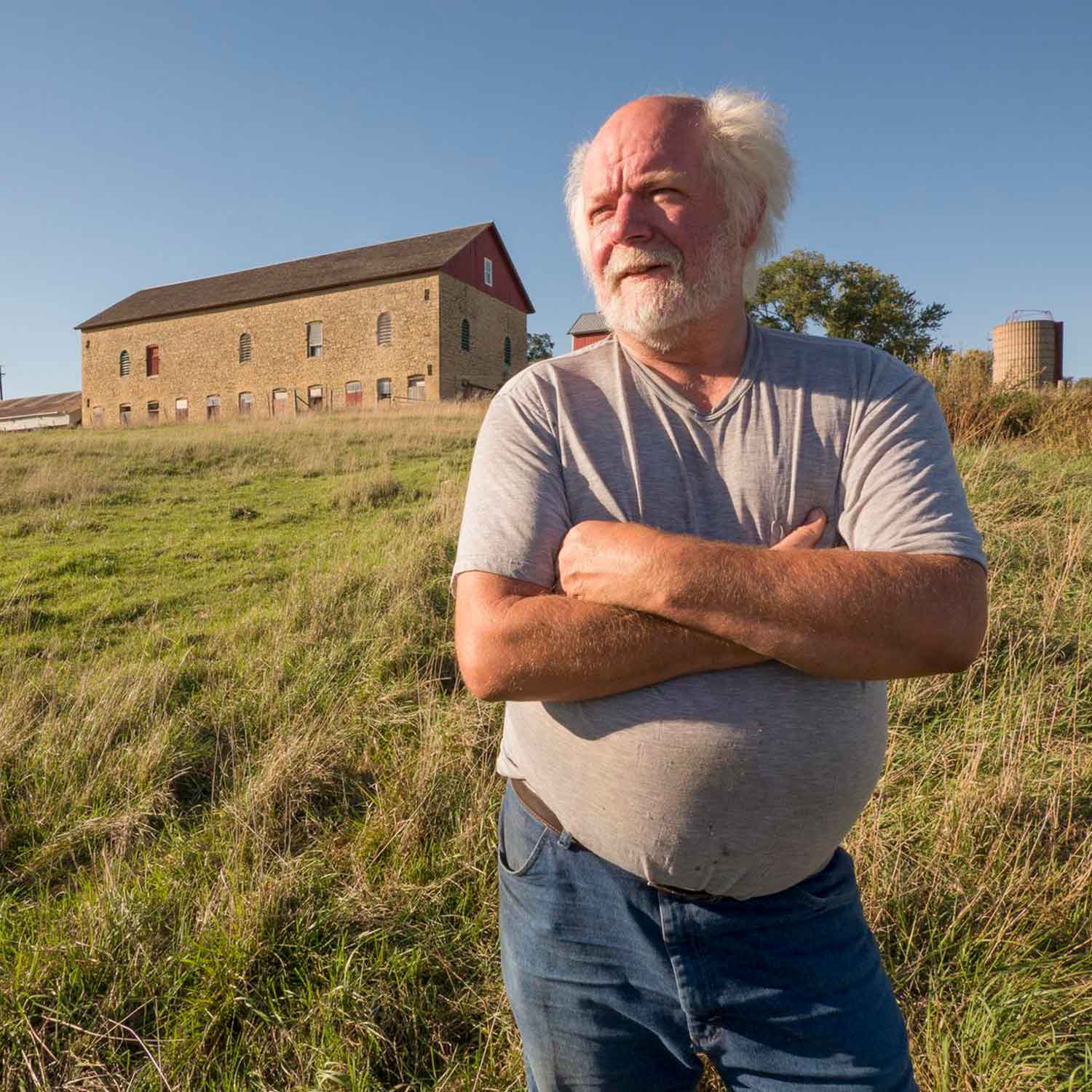
                    The Thomas family historic barn. Photo by Reid Bartholomew.

                    What Makes Thomas Tract Special

                    Once common in southern Wisconsin, prairies are very rare today. The 95,000-acre Military Ridge Prairie Heritage Area in Dane and Iowa counties contains one of the highest concentrations of native grasslands in the Midwest. It provides important habitat for plants and animals like meadowlarks and other grassland birds, which have disappeared in more developed parts of the region. The federally-endangered prairie bush clover occurs on The Nature Conservancy’s (TNC) land to the south. Because there is similar habitat on The Prairie Enthusiasts’ land, the population of this rare plant is expected to expand as restoration progresses. The adjacent land owned by TNC also has a population of the State Endangered regal fritillary butterfly, we expect it to move on to this portion of land as well, especially as restoration proceeds. 

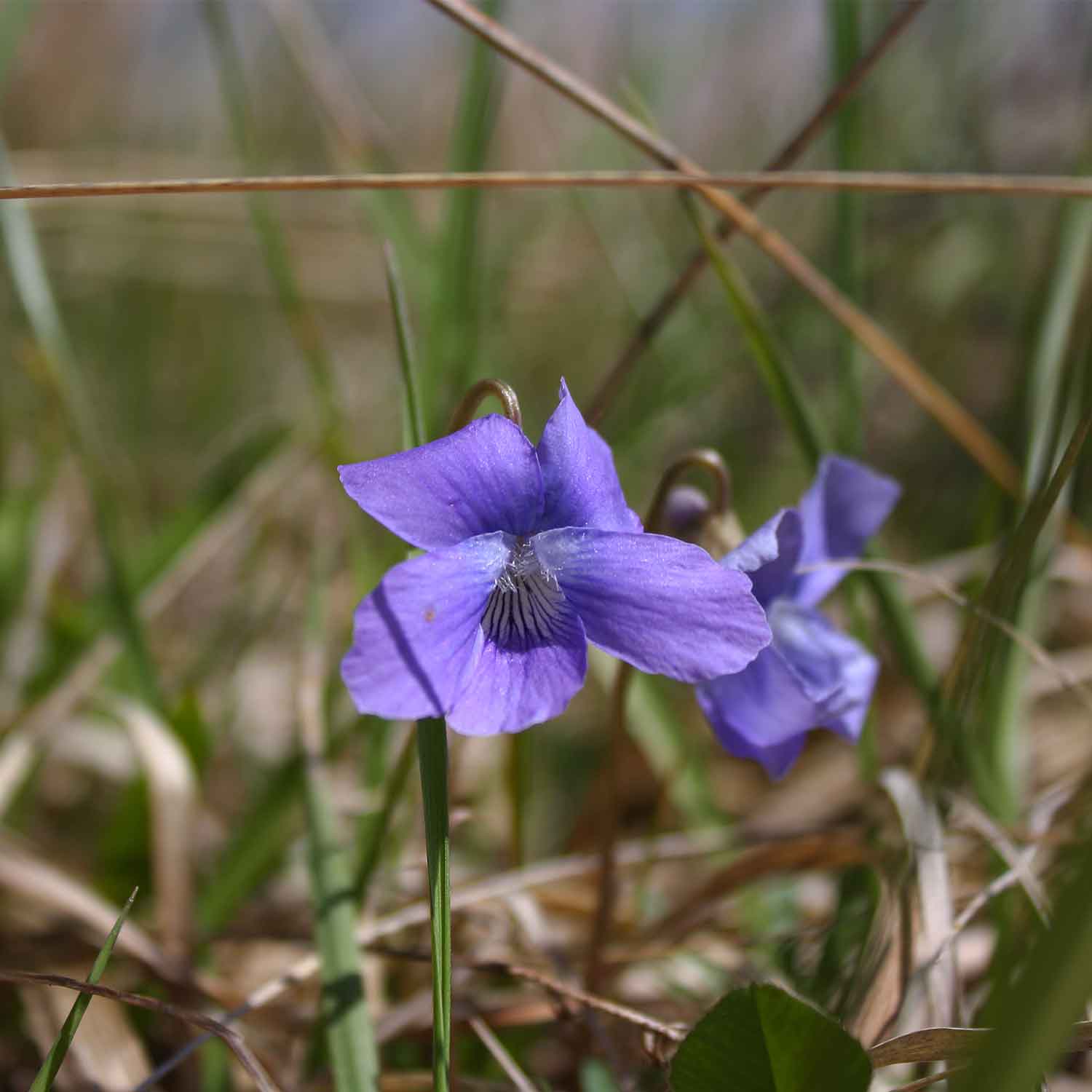
                    Violet at Thomas Tract. Photo by Reid Bartholomew.

                    How was Thomas Tract Protected

                    In 1860, the Thomas family arrived from Wales in southwestern Wisconsin and settled among the rolling hills, beginning a multi-generational history of tending to the land as farmers. Stonemasons by trade, they built a stone barn from local materials, completing it in 1880. Nearly 150 years later, the barn is still standing, listed in both the Wisconsin and National Register of Historic places and watched over by the great grandson of the people who built it with their own hands, Doug Thomas. 

                    Doug had a front-row seat as the land around him began to change over the years. Subdivisions went up with large houses on land that his neighbors once farmed. Trees began to rise across the landscape that had been clear only a generation before. A golf course was constructed just over the hill to the east. As the last of his family still living on the land, he knew that he wanted to honor the deep connection that his family had built with the place: “My father and his brother, they never wanted this to be developed. 

                    Protecting the land was a team effort that took place over time. With the Thomas family land located in the Military Ridge Prairie Heritage Area, it’s in one of the highest-priority regions for conservation statewide where multiple state and non-profit actors have worked alongside one another for decades. The Nature Conservancy initially purchased 79 acres from the Thomas family back in 1997 directly south of the Thomas Tract, and Driftless Area Land Conservancy had worked with Doug to place a conservation and historic preservation easement on these 190 acres in 2005 to ensure that the barn and the land would be protected in perpetuity. Finally, in 2014, The Prairie Enthusiasts and The Nature Conservancy worked in collaboration to purchase the property, and the remainder of the Thomas’ family’s land was protected in one form or another.

                    Doug Thomas by the historic barn at Thomas Tract. Photo by Mark Godfrey of The Nature Conservancy.

                    How You Can Help Thomas Tract

                    The Empire-Sauk Chapter has been stewarding the site, taking their time slowly restoring portions of the site. For Andy Sleger, Land Manager for the Empire-Sauk Chapter and Site Steward for the Thomas Tract, the first step has been to control the invasive species that are abundant on parts of the site, including Burnet saxifrage, sweet clover, and spotted knapweed. He’s proud of the progress that’s been made in the past few years and shared his excitement over the way that native species such as needle grass have responded with the reduction in invasive species pressure. With consistent fire being returned to the site, Andy can see the native species that have survived beginning to flourish once again. Doug, for his part, is relieved to see that the legacy of his family’s care for the land will continue on: “It’s the best feeling knowing that it will stay the same, knowing that somebody can’t build a house over this.”

                    The primary goal is to restore the Thomas land back to its original open prairie, which is important for declining grassland birds and other wildlife. This will be a volunteer effort for the most part, and the Empire-Sauk Chapter welcomes new volunteers. In the future, we hope to work with the community and our partners to form a “Friends of the Thomas Stone Barn” group to contribute the knowledge and expertise with historic buildings that we lack, and help make the barn a place where people can gather and experience our prairie and agricultural heritage.

                    Check out our Events Calendar to see upcoming work parties or contact the site steward to get involved.

                    Grasses at Thomas Tract. Photo by Reid Bartholomew.

                    Thomas Wet Prairie

                    Thomas Wet Prairie

                    Thomas Wet Prairie

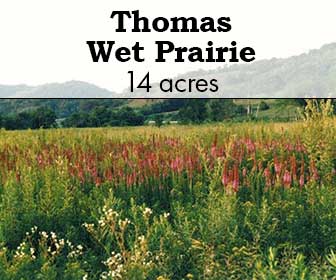
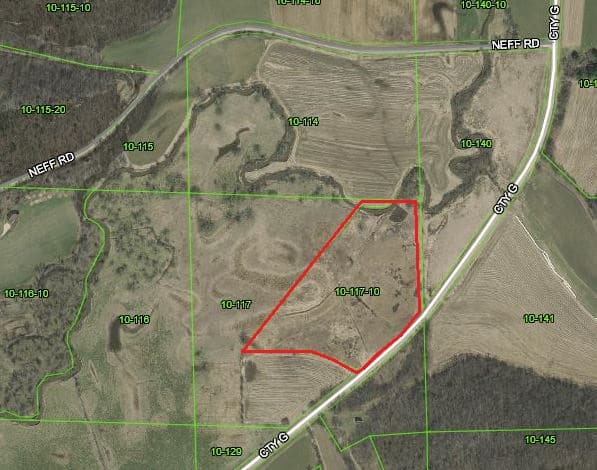
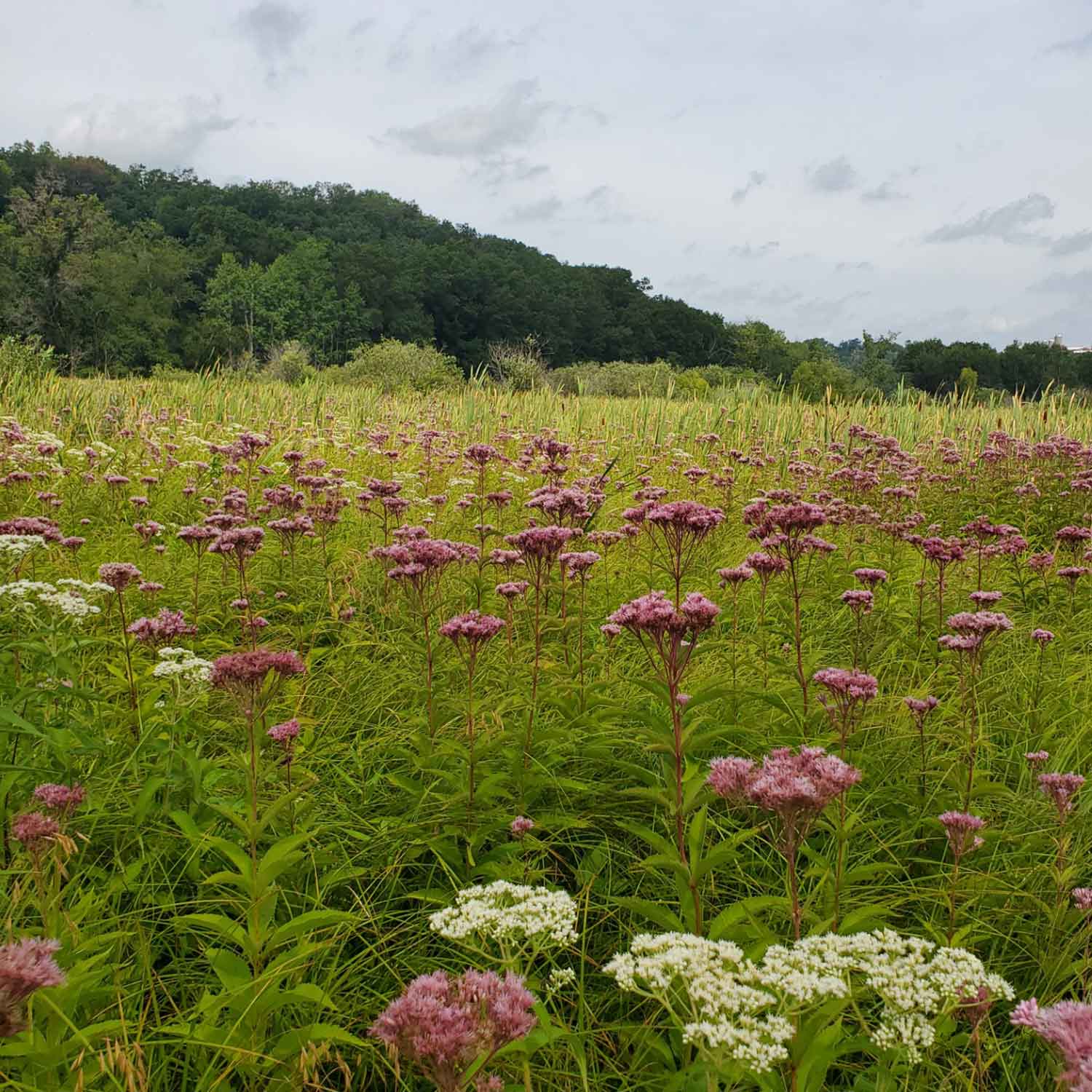
                    These 13.7 acres preserve wet prairie, sedge meadow, little pools, clumps of willow and a single large bur oak. This site was the first property owned by The Prairie Enthusiasts.


                    View of Thomas Wet Prairie. Photo by Kristin Westad.

                    Thomas Wet Prairie

                    View of Thomas Wet Prairie. Photo by Kristin Westad. 

                    These 13.7 acres preserve wet prairie, sedge meadow, little pools, clumps of willow and a single large bur oak. This site was the first property owned by The Prairie Enthusiasts.

                    Access & Directions

                    Thomas Wet Prairie is located in Grant County on County Trunk Highway G, approximately 7.5 miles south of the village of Muscoda and 8 miles north of the intersection with US Highway 18. 16403 County Road G, Muscoda 53573.

                    Google Map

                    Site Steward

                    Connect with the site steward to see how you can care for this rare habitat at an upcoming work party.

                    This site is stewarded by The Prairie Enthusiasts Southwest Wisconsin Chapter.

                    Site Steward: Kristin Westad (Email)

                    How to Enjoy This Site

                    Allowed:

                    • Hiking
                    • Hunting (for all species, no permit or reservation required)

                    How to Enjoy This Site

                    Allowed:

                    • Hiking
                    • Hunting (for all species, no permit or reservation required)


                        Prairie sunrise. Photo by Gary Shackelford.

                        What Makes Thomas Wet Prairie Special

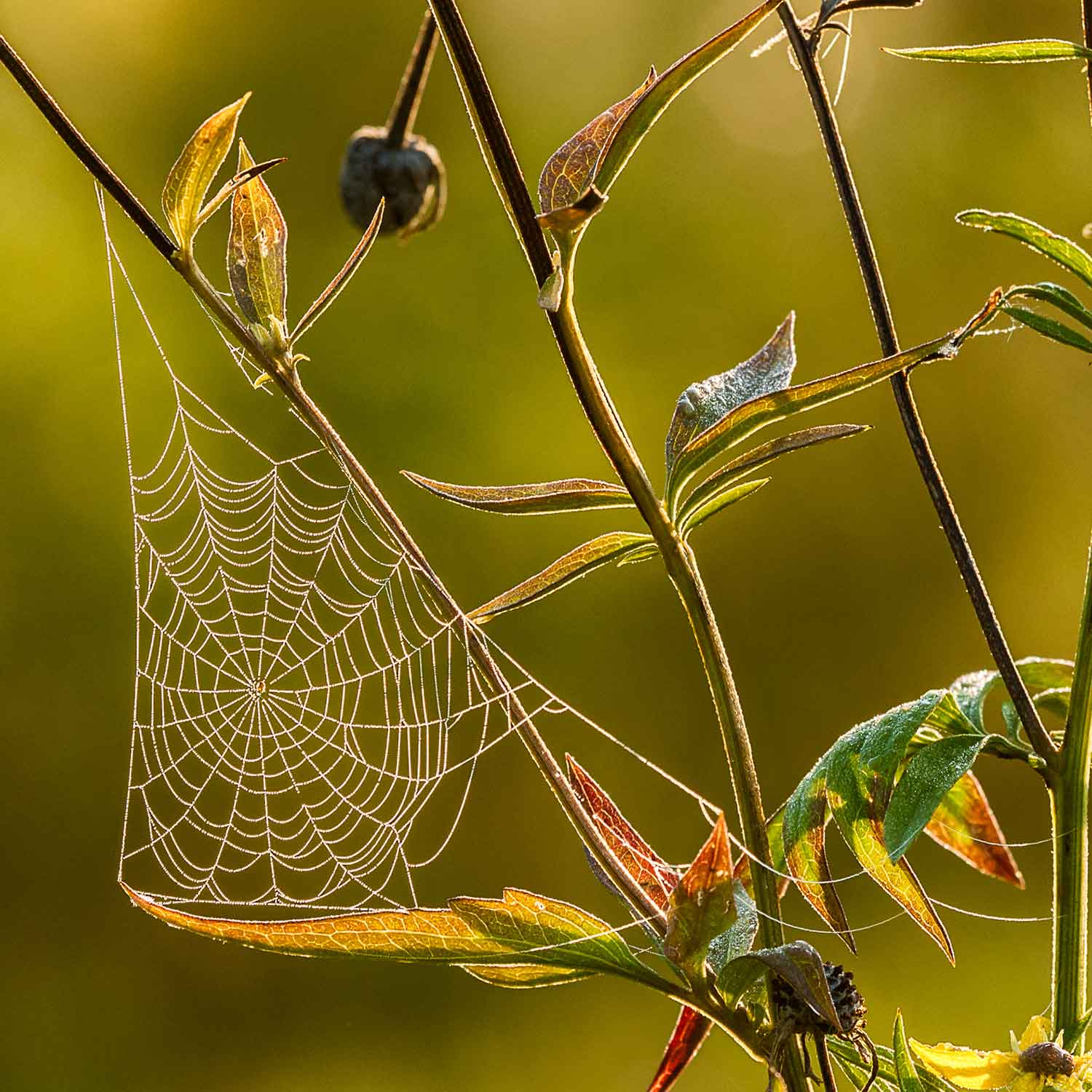
                        Biologists have recorded over 200 plant species and scores of insect and spider species. When was the last time you saw a crayfish tunnel in a prairie? This site is full of them. It is also home to a fuzzy-shelled old snapping turtle. Each summer, dozens of sedge wrens and a few snipe nest there. Bald eagles often visit the bur oak.

                        Spiders and other insects can be found at Thomas Wet Prairie. Photo by Gary Shackelford.

                        How was Thomas Wet Prairie Protected

                        For decades, the Thomas family left their cattle in the wet prairie. Far from the barn, and too squishy for easy walking, cattle didn’t graze the land very hard. The Thomas family includes nature lovers. They never installed drain tile or broadcast sprayed the pasture with herbicide the way some farmers might. Their gentle approach to farming sustained the native community.

                        In the late 1980s, the Prairie Enthusiasts purchased 13.7 acres from the Thomas family with targeted funds from a major donor. Before then, volunteers had explored, documented and managed prairie remnants, but hadn’t acquired any land for permanent protection. At Thomas Wet Prairie, The Prairie Enthusiasts became a landowner for the first time.

                        Looking across Thomas Wet Prairie. Photo by Kristin Westad.

                        How You Can Help Thomas Wet Prairie

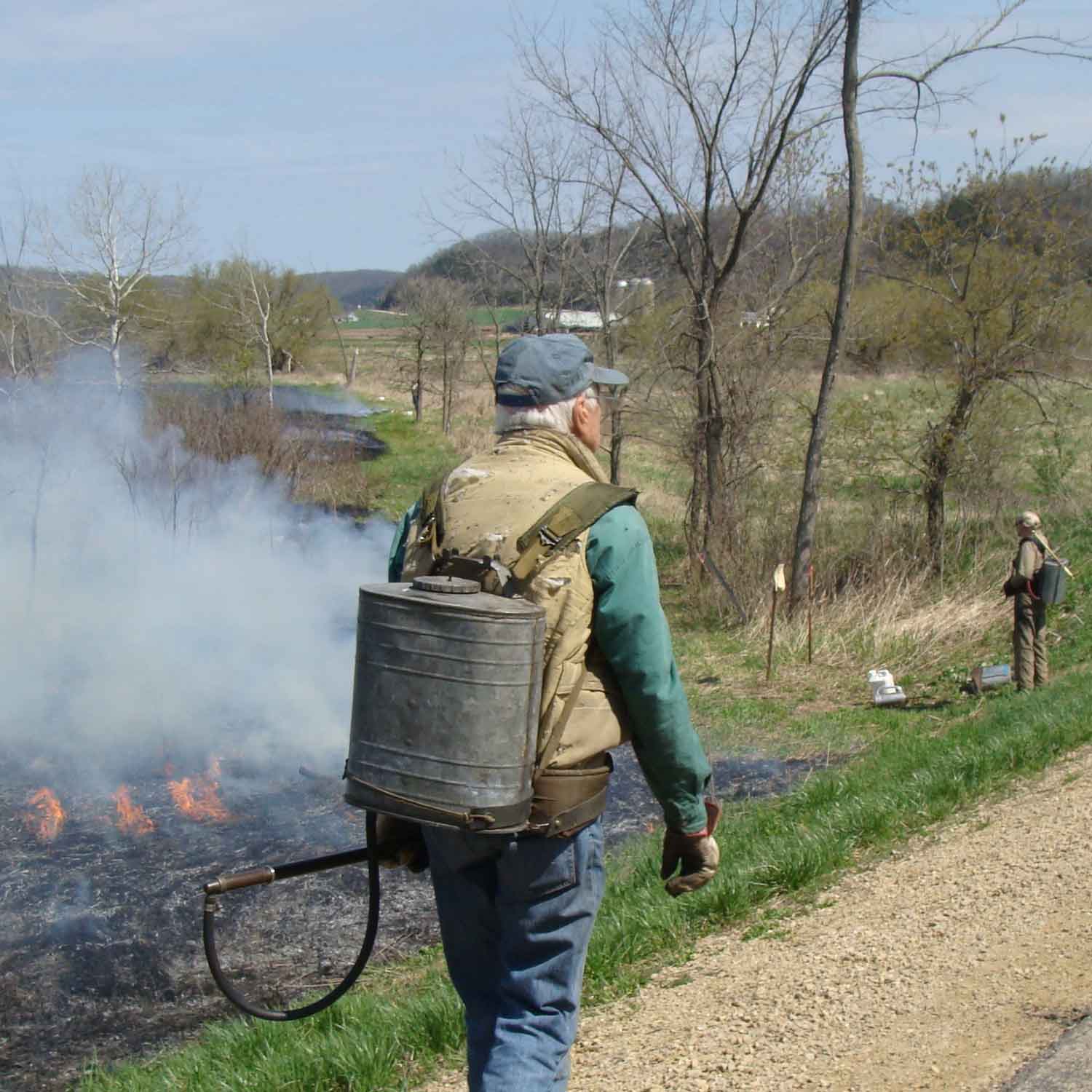
                        Although Thomas Wet Prairie never had the dense brush that threaten many prairies, reed canary grass and hybrid cattails crowd out native species in parts of the preserve. To reduce their abundance, volunteers use a combination of frequent fire and selective herbicide treatment. When burning, volunteers leave half of the land unburned as a refuge for fire-sensitive species. Volunteers spread seeds of native species into the areas where they are removing pest species.

                        Check out our Events Calendar to see upcoming work parties or contact the site steward to get involved.

                        Prescribed burn at Thomas Wet Prairie. Photo by Kurt Lifka.

                        Vale Prairie

                        Vale Prairie

                        Vale Prairie

                        This site has over 70 species of native prairie plants, some of which are endangered, threatened and of special concern here in Wisconsin. This remnant is also home to the federally threatened prairie bush clover, a very rare plant found only in the upper Midwest.


                        Prairie smoke and shooting stars at Vale Prairie. Photo by Mary Zimmerman.

                        Vale Prairie

                        Prairie smoke and shooting stars at Vale Prairie. Photo by Mary Zimmerman.

                        This site has over 70 species of native prairie plants, some of which are endangered, threatened and of special concern here in Wisconsin. This remnant is also home to the federally threatened prairie bush clover, a very rare plant found only in the upper Midwest.

                        Access & Directions

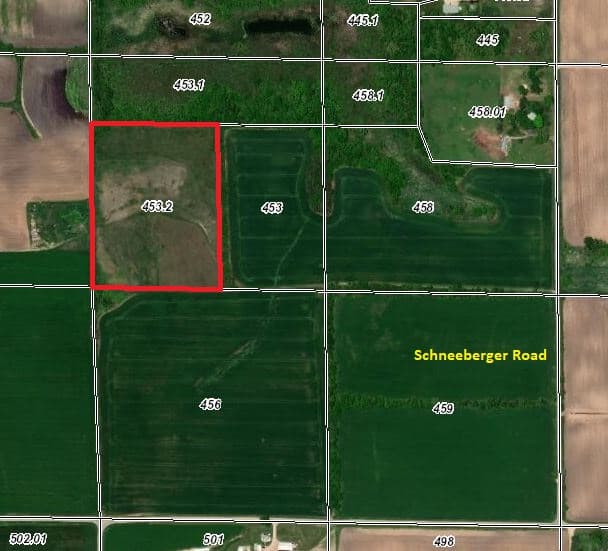
                        From Albany, go west on Mineral Point Road to Purinton Road. Continue west to Schneeberger Road, turn right (north) and go about 4/10 of a mile, and park along the road. Walk in to the west of Schneeberger, on a rutted dirt track along a fence line, a quarter-mile on our narrow easement between crop fields.

                        Google Map

                        Site Steward

                        Connect with the Chapter to see how you can care for this rare habitat at an upcoming work party.

                        This site is stewarded by The Prairie Enthusiasts Prairie Bluff Chapter.

                        Chapter Contact: (Email)

                        How to Enjoy This Site

                        Allowed:

                        • Hiking – moderately challenging with rocky terrain, badger holes and no trails

                        How to Enjoy This Site

                        Allowed:

                        • Hiking – moderately challenging with rocky terrain, badger holes and no trails


                            Seed collecting at Vale Prairie. Photo by Ralph Henry.

                            What Makes Vale Prairie Special

                            The state endangered pink milkwort is found on this site. This remnant is the only protected site in the state where this plant has been found as of 1999. Other outstanding qualities of the site are its prairie smoke and shooting star displays.

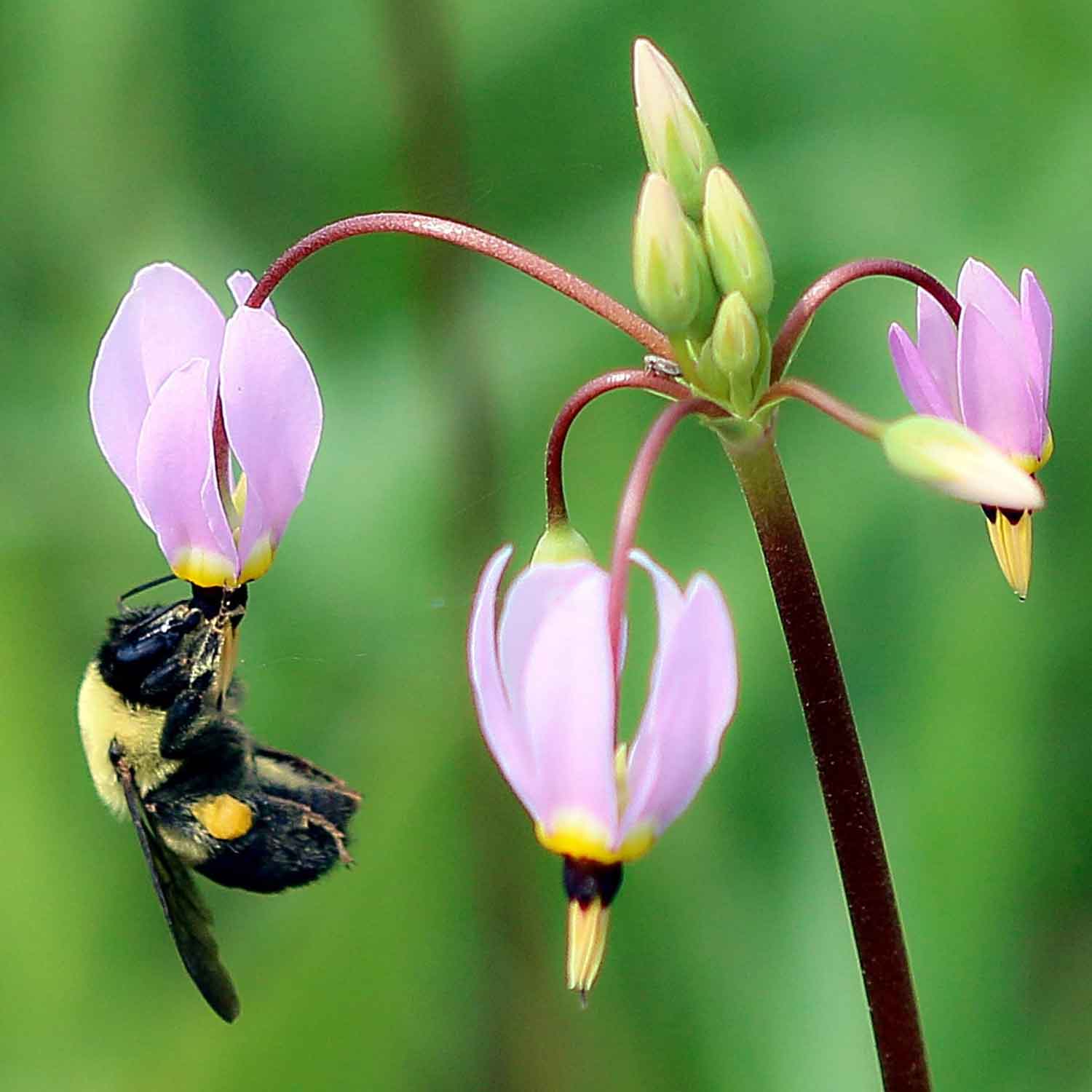
                            Bumblebee on shooting star. Photo by Jerry Newman.

                            How was Vale Prairie Protected

                            The remnant was first located in the mid 1970’s. Back then there was no such thing as The Prairie Enthusiasts. There was just a small bunch of guys who loved prairies and liked to burn them, then drink beer and talk about preserving remnants. The Vale Prairie was managed for about five years, then left to its own until 1992, when the Southwest Wisconsin Chapter purchased the 4.5 acre remnant and 11.5 acre buffer for a total of 16 acres. That was truly a fine purchase. The site was named the Vale Prairie after the owners, Harold and Crescent Vale, who were in favor of its protection and restoration.

                            Bee on flower. Photo by Jerry Newman.

                            How You Can Help Vale Prairie

                            In the winter of 1993, The Prairie Enthusiasts volunteers and Wisconsin Conservation Corps crews cut and stump treated all woody vegetation on the site. After eight years of work, the area is recovering nicely. Part of the restoration plan involved replanting an area of 1.5 acres in the southwest corner of the property because smooth brome had completely taken over. Our plan was to spray it with Roundup, collect seed, and replant. The spraying was done, and several months later, to our complete amazement, most of the regrowth was of prairie plants, apparently released to grow when the brome was killed! It was decided that the buffer areas would serve as a sort of genetic refuge for disappearing species from within Green County. Two species that have been nearly extirpated in Green County are Wild Quinine and Pale Purple Coneflower, so seed was collected from one coneflower site and three quinine sites and sown there. We now have a healthy and growing population of these plants.

                            In addition, part of the restoration plan involved expanding the remnant size, but only by using seed from the remnant. To date, a strip 30 feet by 400 feet has been restored on the south edge, and another area on the west end, measuring 45 feet by 100 feet, also has been restored. Areas that were heavily shaded by dense trees and brush have been mowed annually with a sickle bar mower. These areas are difficult to work with due to the fact that birds used the trees as perches for years, and as we all know, where there are birds, there are bird droppings, usually laced with seeds of everything except prairie plants! Once the shady trees are gone, these seeds grow like crazy. Presently the remnant is surrounded by old hayfields dominated by orchard grass. It does serve as a grassland habitat for some bird species, but our hopes are to plant these areas to prairie as well. 

                            Check out our Events Calendar to see upcoming work parties or contact the site steward to get involved.

                            Prairie Bluff Chapter volunteers at Vale Prairie. Photo by Jerry Newman.