Blue Sky Botany – Sunflowers
Blue Sky Botany — Sunflowers
Article and photos by Rob Baller. Input provided by Pat Trochlell, Jim Rogala and Dan Carter.
August 14, 2026
Botanist and early The Prairie Enthusiasts member Rob Baller created this series for our friends at Blue Mounds Area Project. The “blue sky” technique is Rob’s favorite for taking stunning plant photographs. Let him know what you think at robertballer@outlook.com.
ALWAYS get permission from the property owner if you want to try this technique.
Click to enlarge the images below!
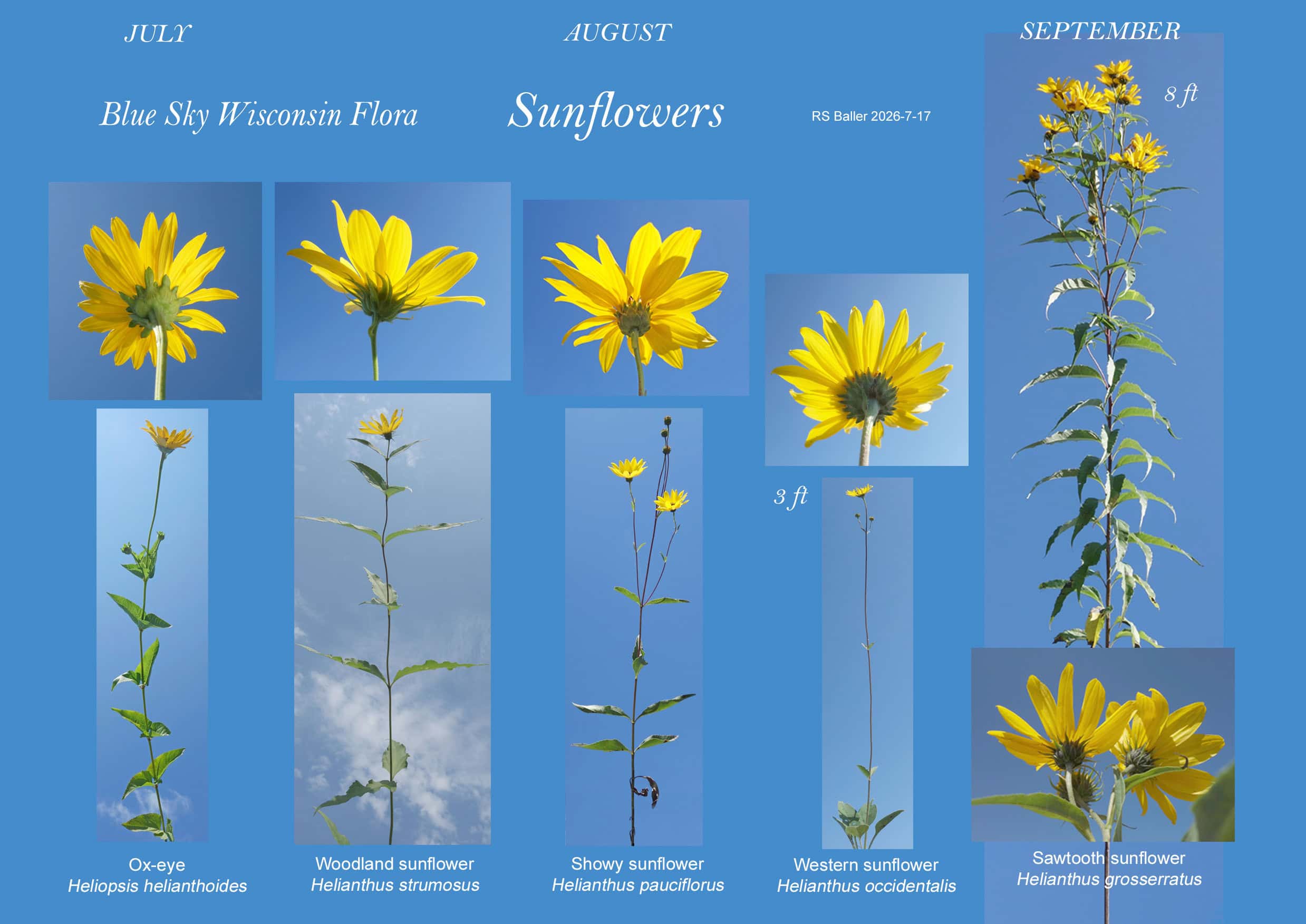
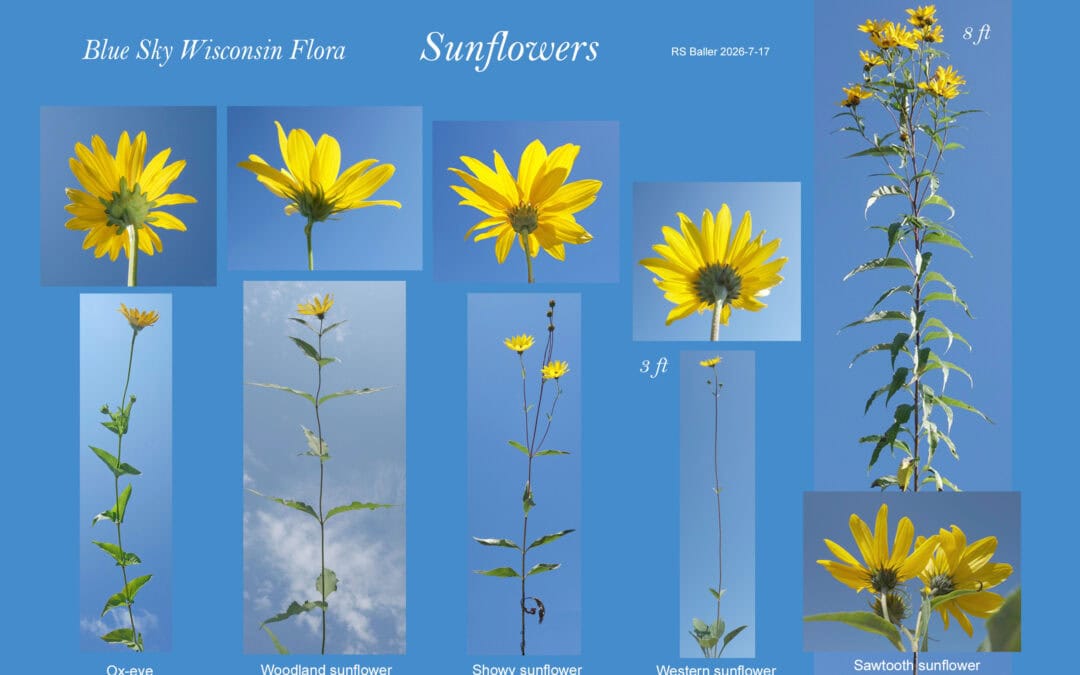
Ox-eye
(Heliopsis helianthoides)
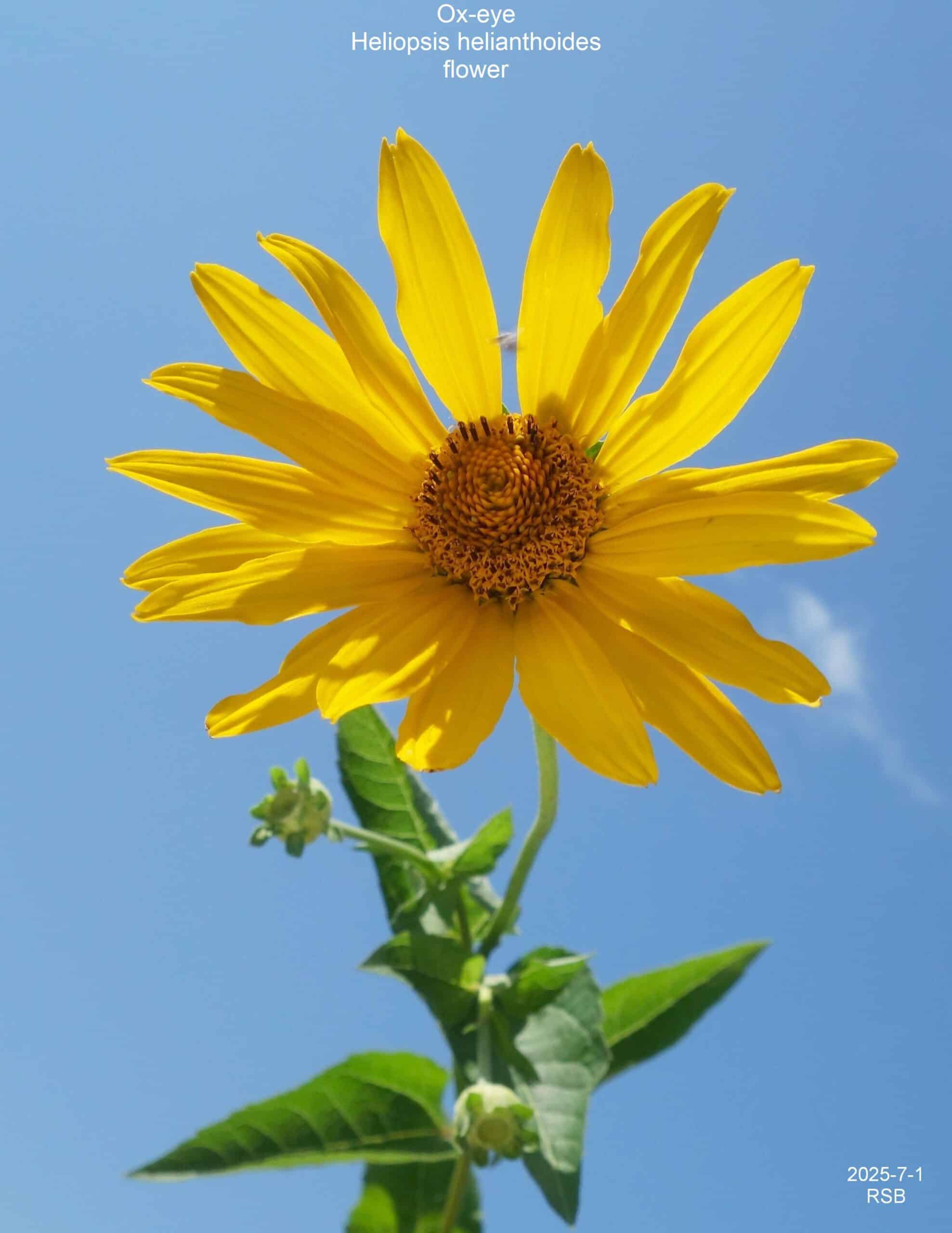
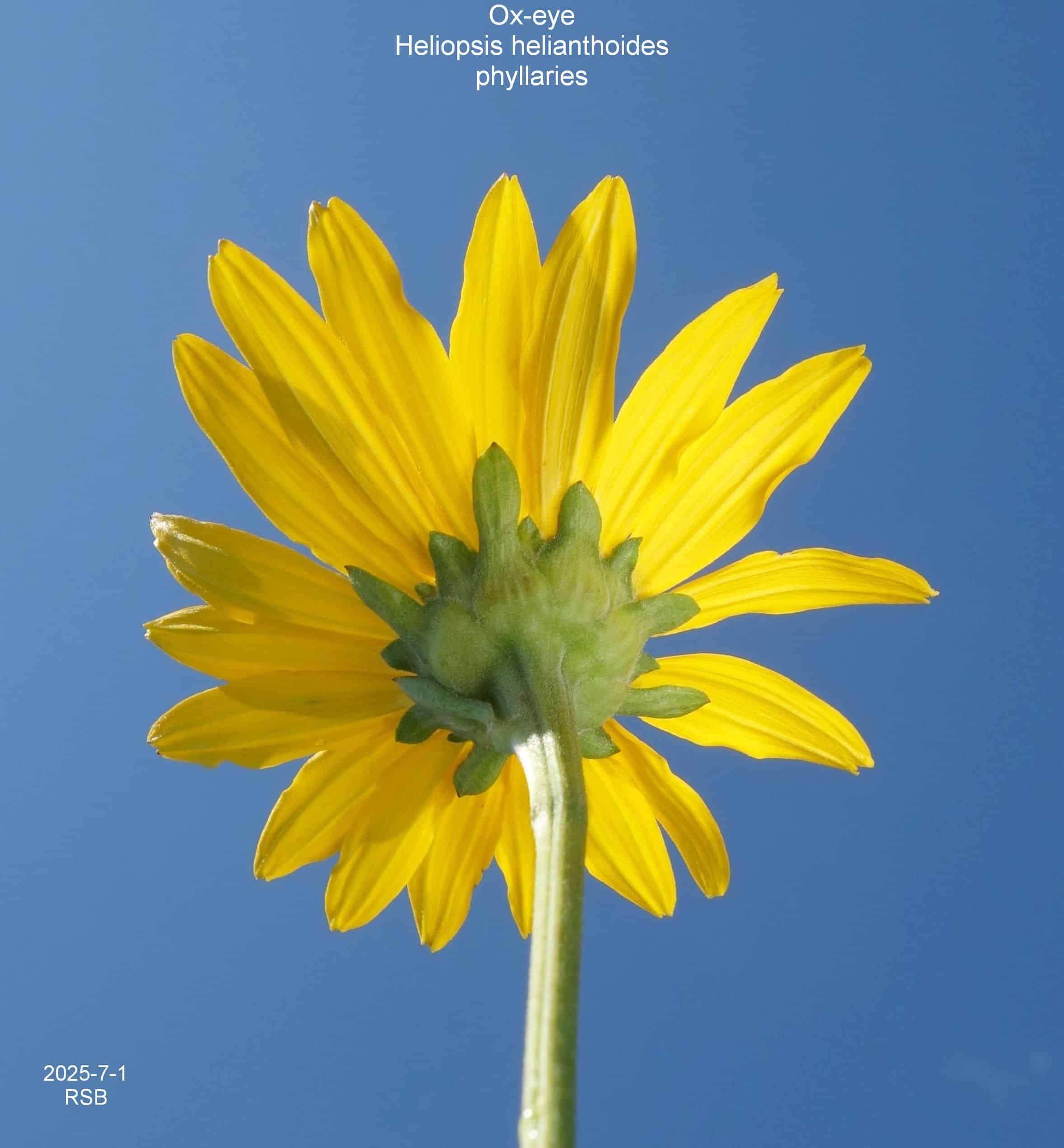
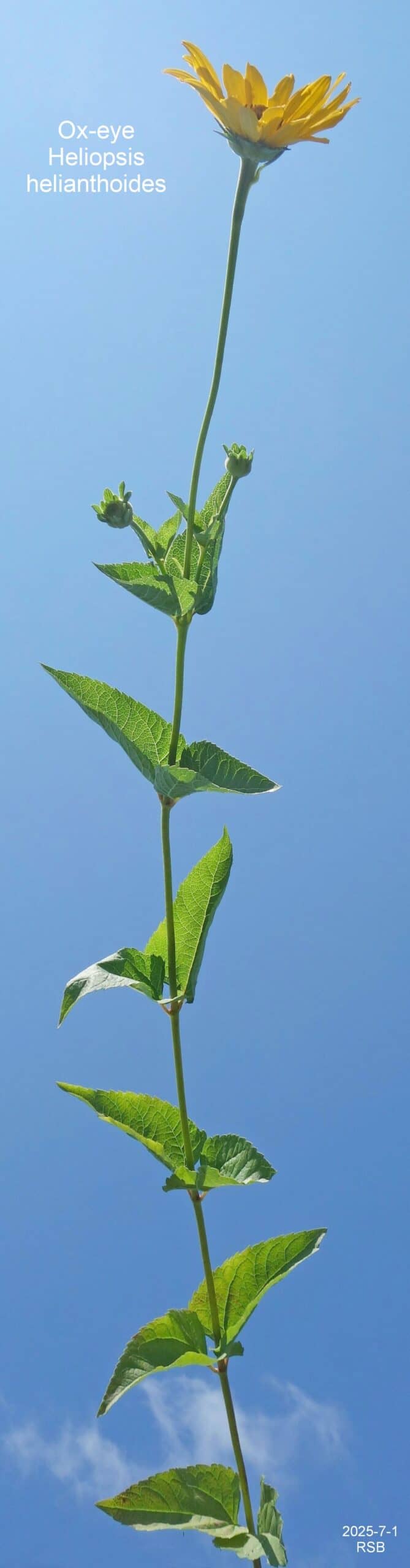
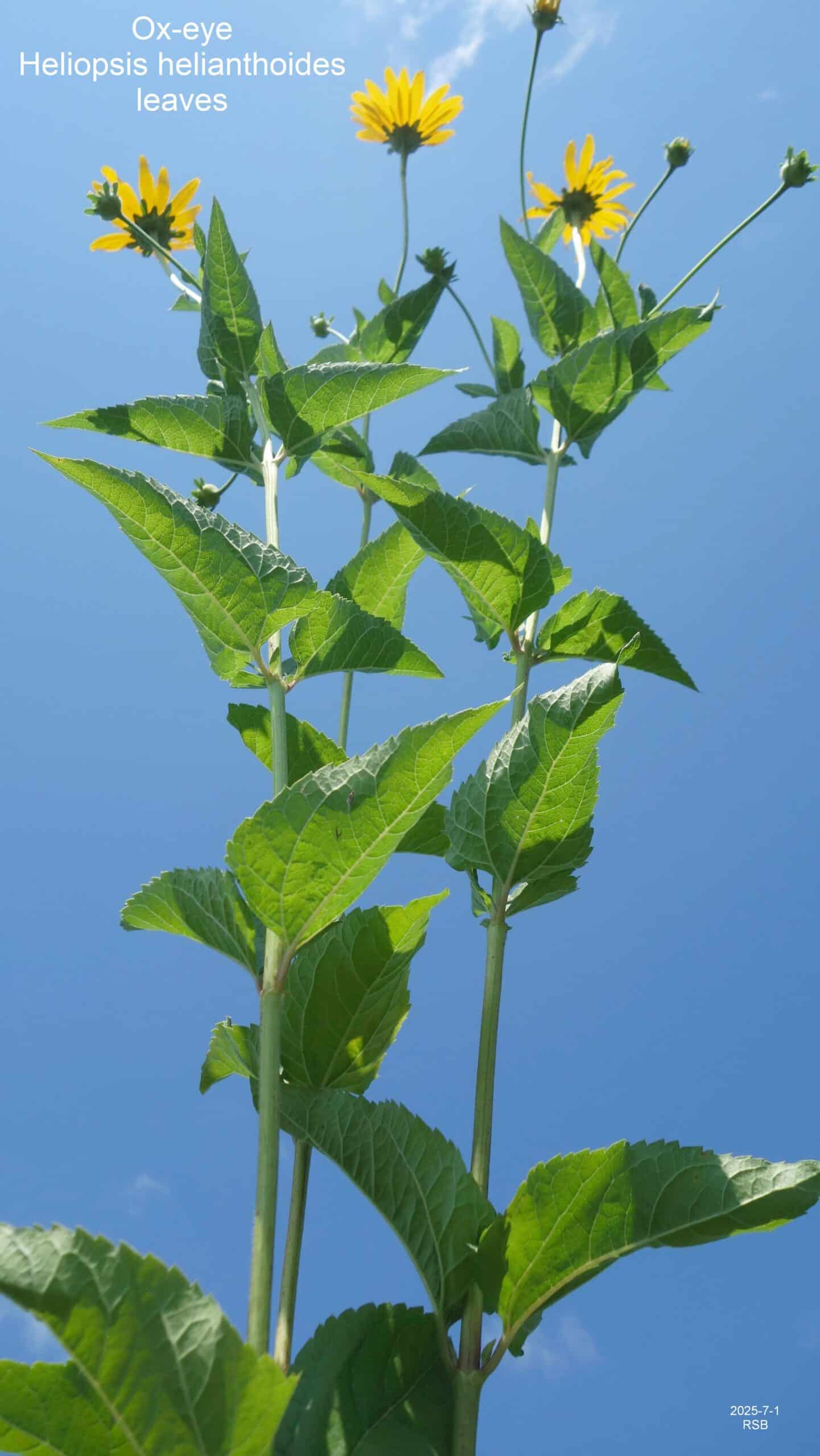
Mid-July-August. 3-5 ft tall. Mesic soil, usually full sun. Infamous for not being a true sunflower because both ray flowers and disk flowers form seeds. The rays impress me as being golden-orange rather than sunflower yellow. Leaves average twice as long as wide, creating a broadly triangular look, often squared at the base. It helps to unfold the curled leaf to examine it. Branching is strictly opposite, top to bottom.
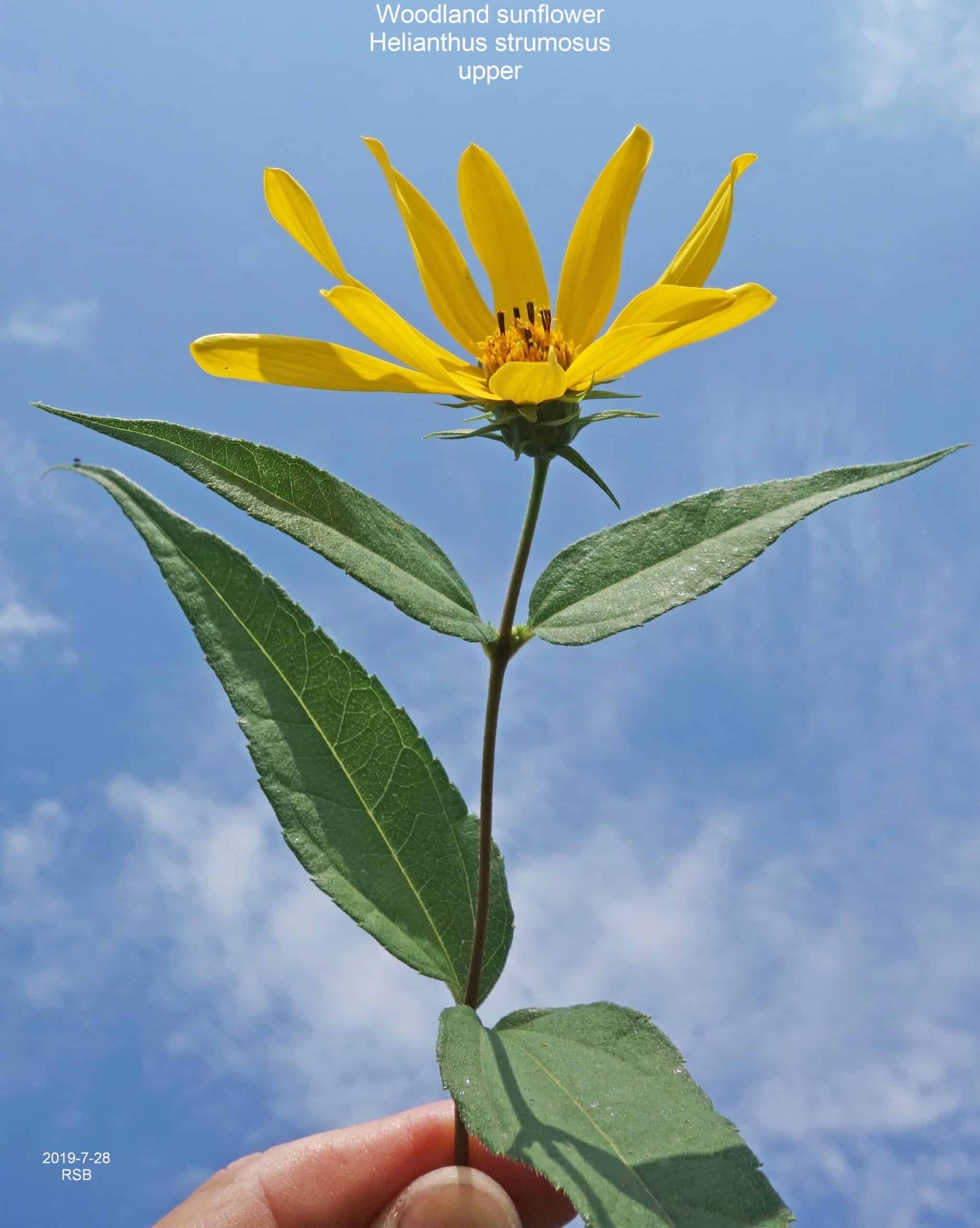
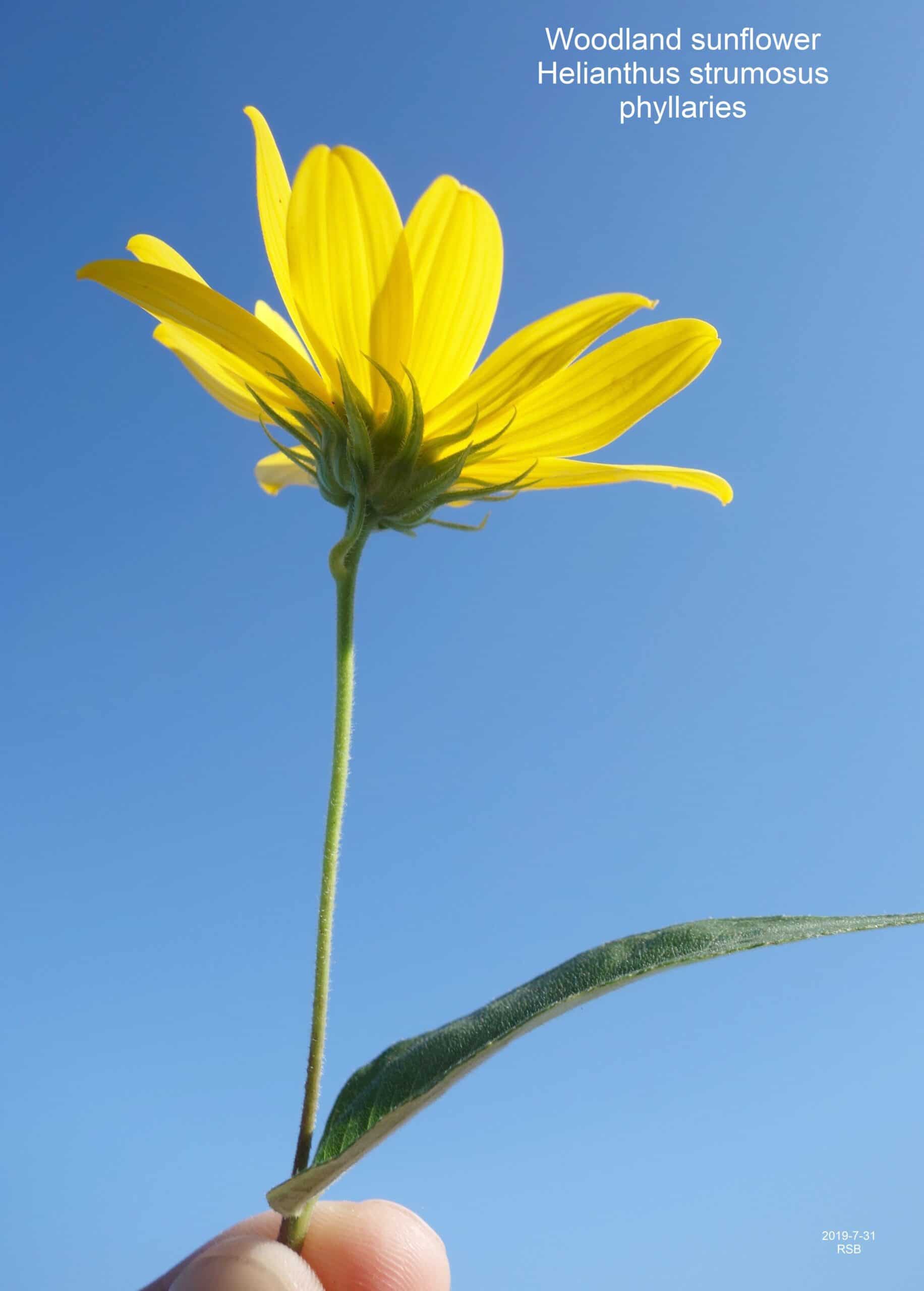
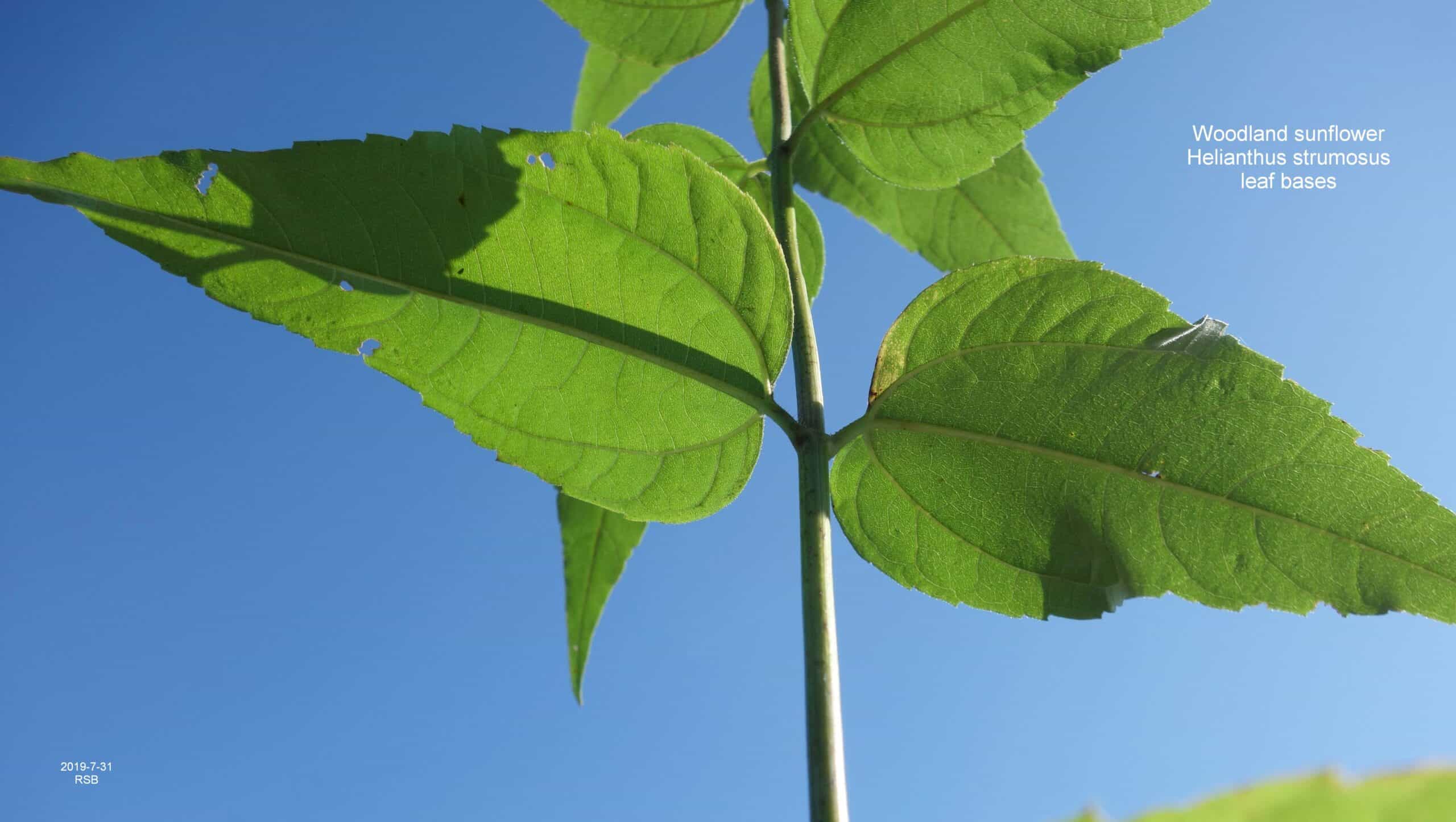
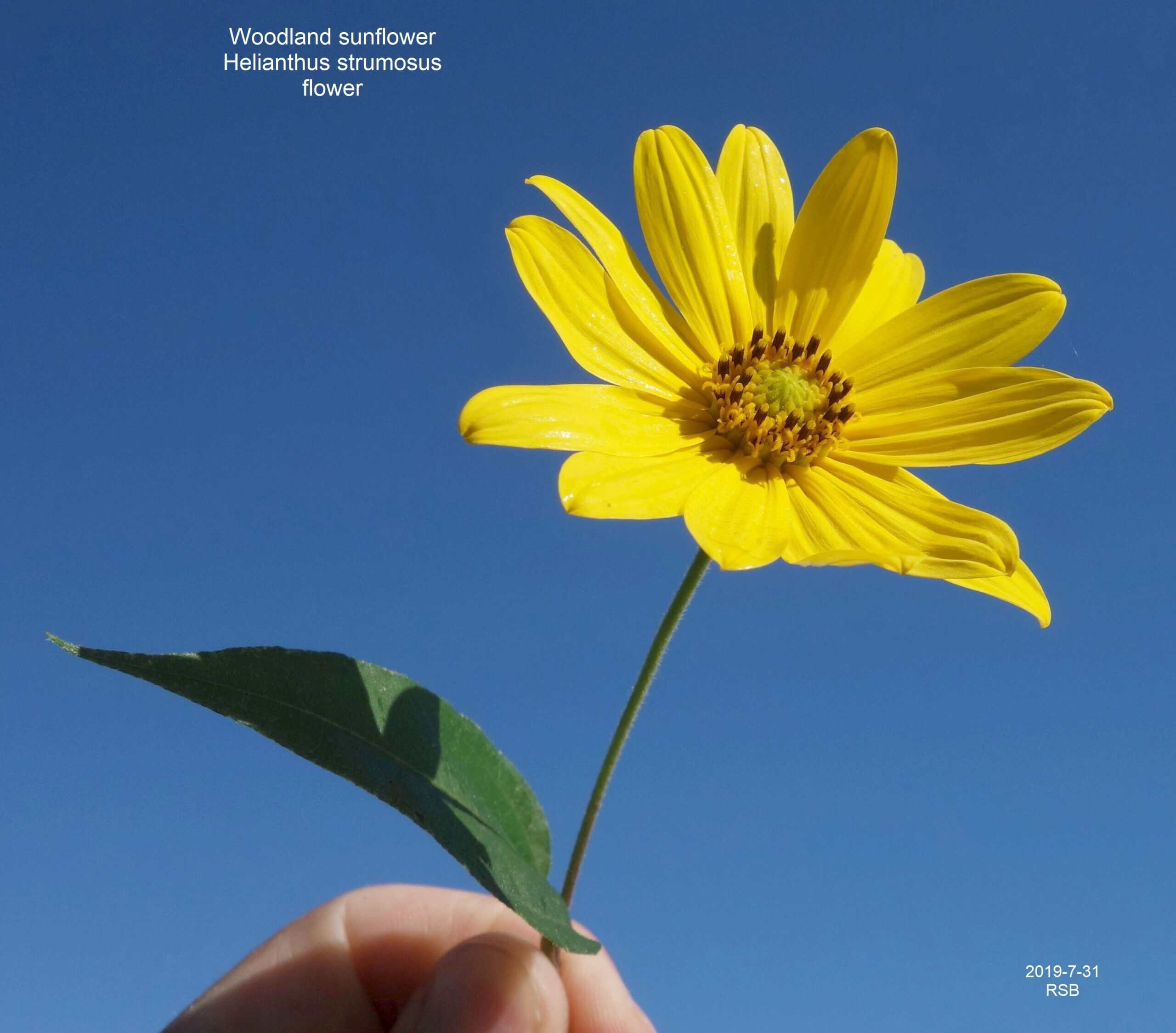
Woodland sunflower
(Helianthus strumosus)
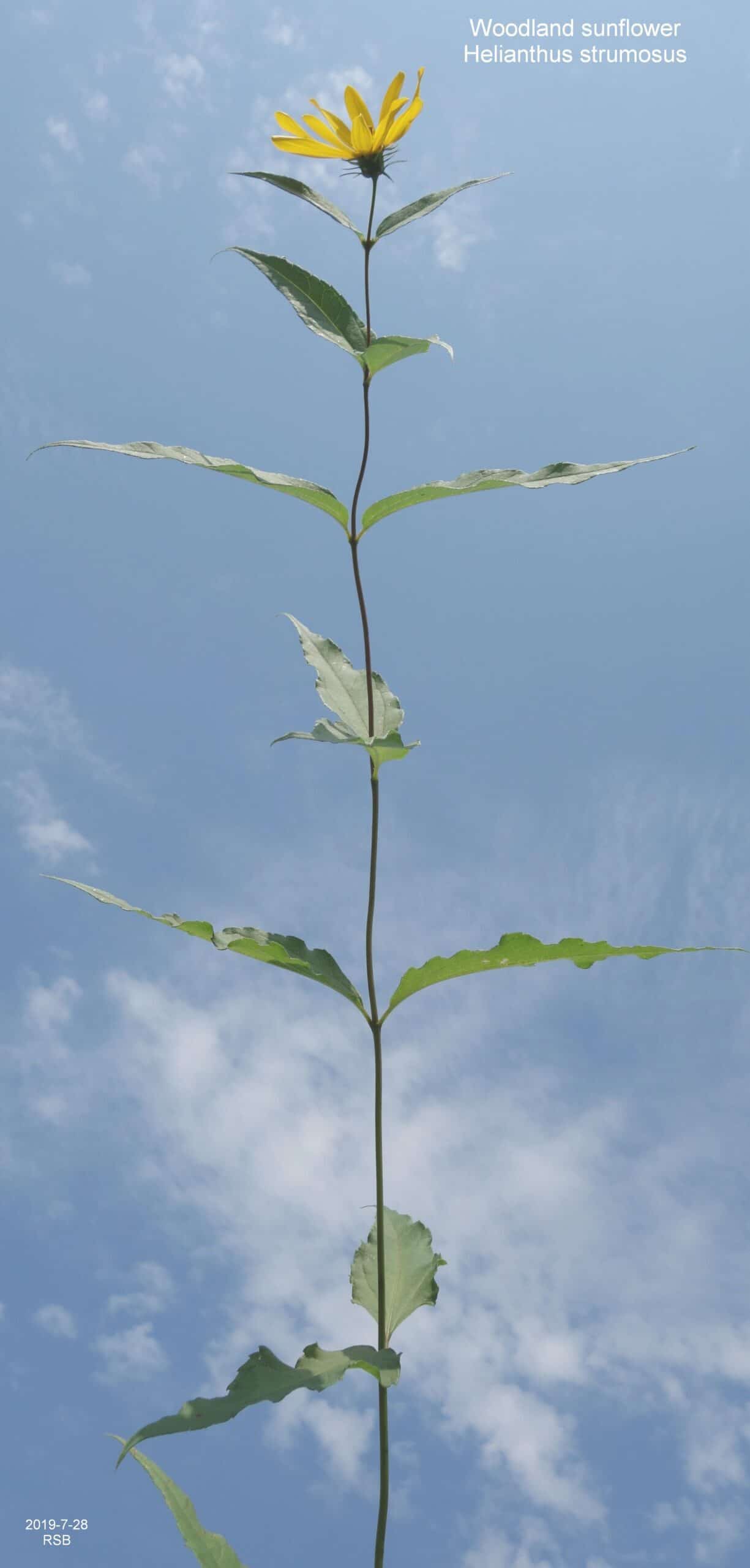
Mid-July-September. 3-6 ft tall. Petioles (leaf stem) a quarter inch long, leaf base squarish to broad and/or rounded, rough-scratchy to the touch, and those phyllaries under the flowers are peeling-away-little-wavy spears. I suspect this is the most common of the shade-tolerant ‘woodland’ sunflowers on all dappled roads and woodland edges in southern Wisconsin. In newer oak savanna restorations, it may explode into huge colonies. There are at least three more difficult species of woodland sunflowers that botanists disagree over. My advice is don’t worry about it.
Showy sunflower or few-leaved sunflower
(Helianthus pauciflorus, formerly H. laetiflorus)
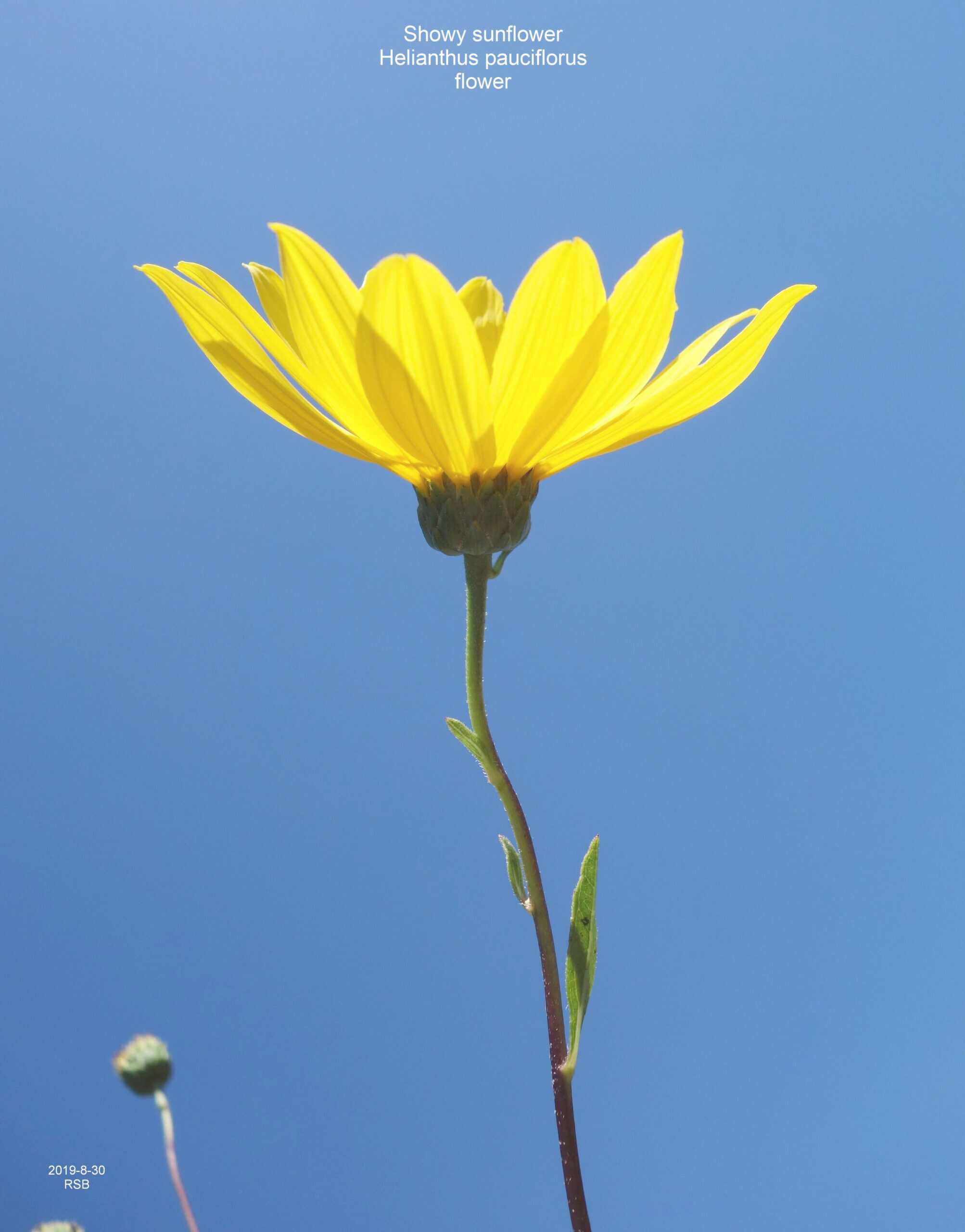
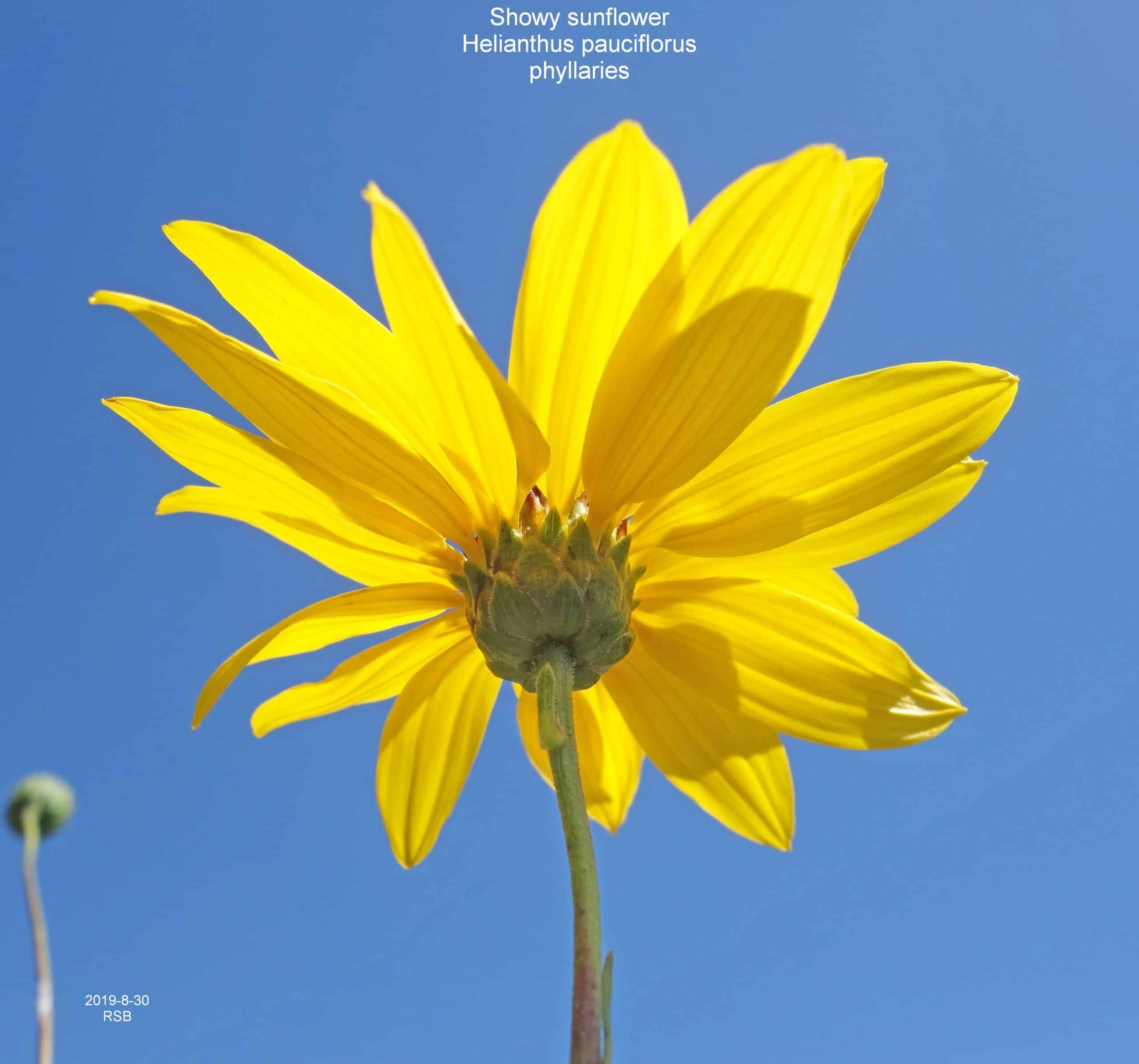
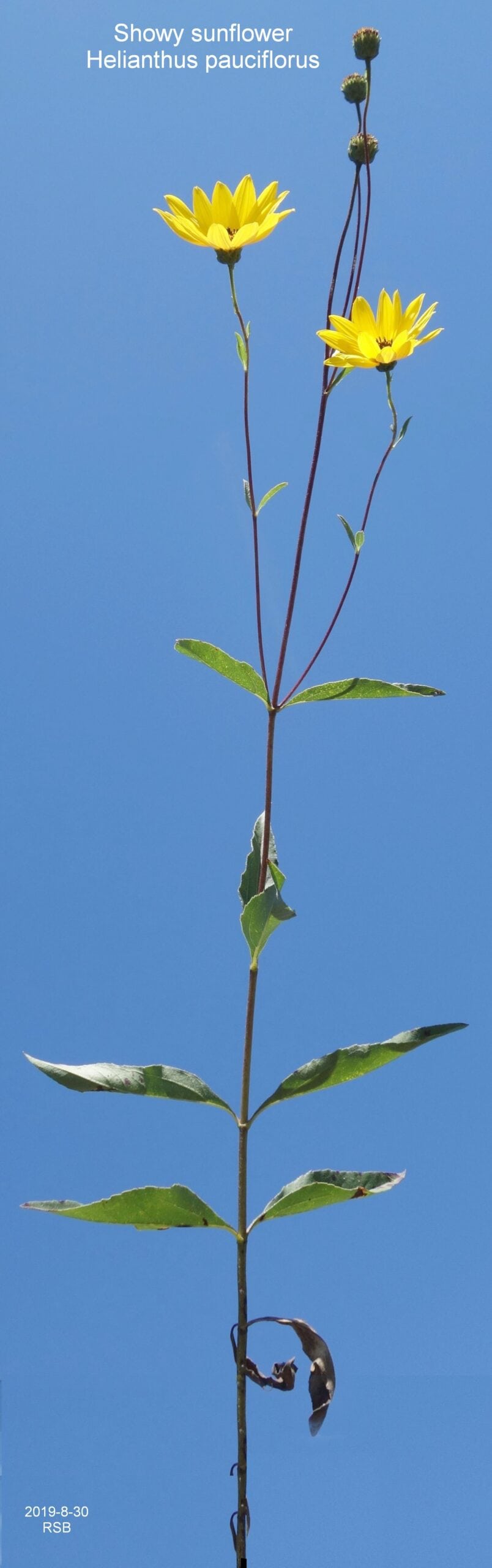
August-September. 3-5 ft tall. Full sun, mesic to dry prairie. Leaf bases taper gradually into the petiole, forming an angle that is acute. Leaf tips equally acute. The leaf arrangement has less leaves toward the top (somewhere between naked and woodland with regard to number of leaves and location). Phyllaries twice as long as wide, or wider, fitting tightly to the underside of the flower like shingles on a roof, with maybe the tips slightly peeling.
Dan Carter provided a taxonomic detail on this species: H. laetiflorus was often used for H. pauciflorus, but it also was and still is used for hybrids and backcrosses involving Helianthus tuberosus and Helianthus pauciflorus.
Western sunflower, naked stem sunflower or few-leaf sunflower
(Helianthus occidentalis)
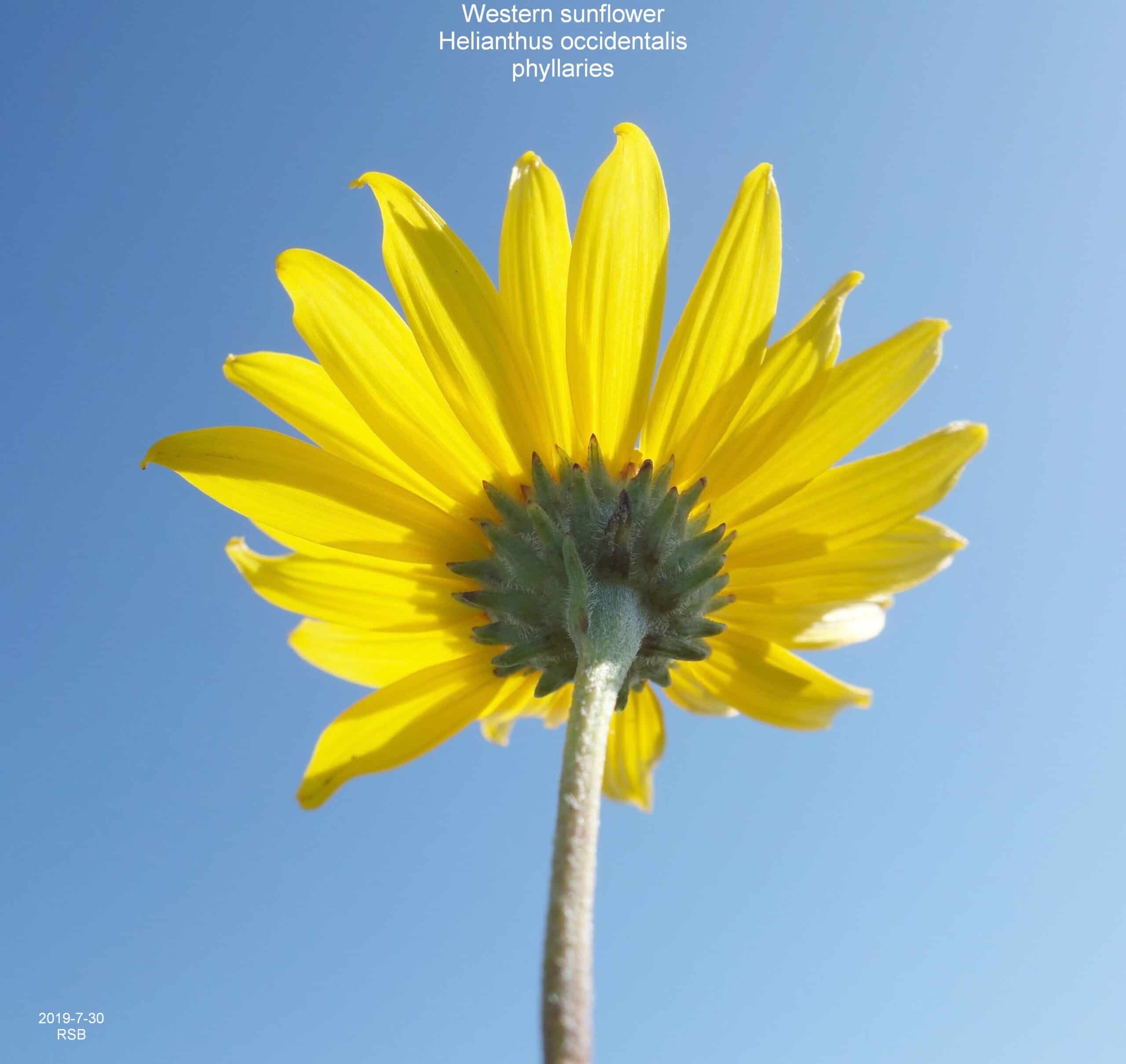
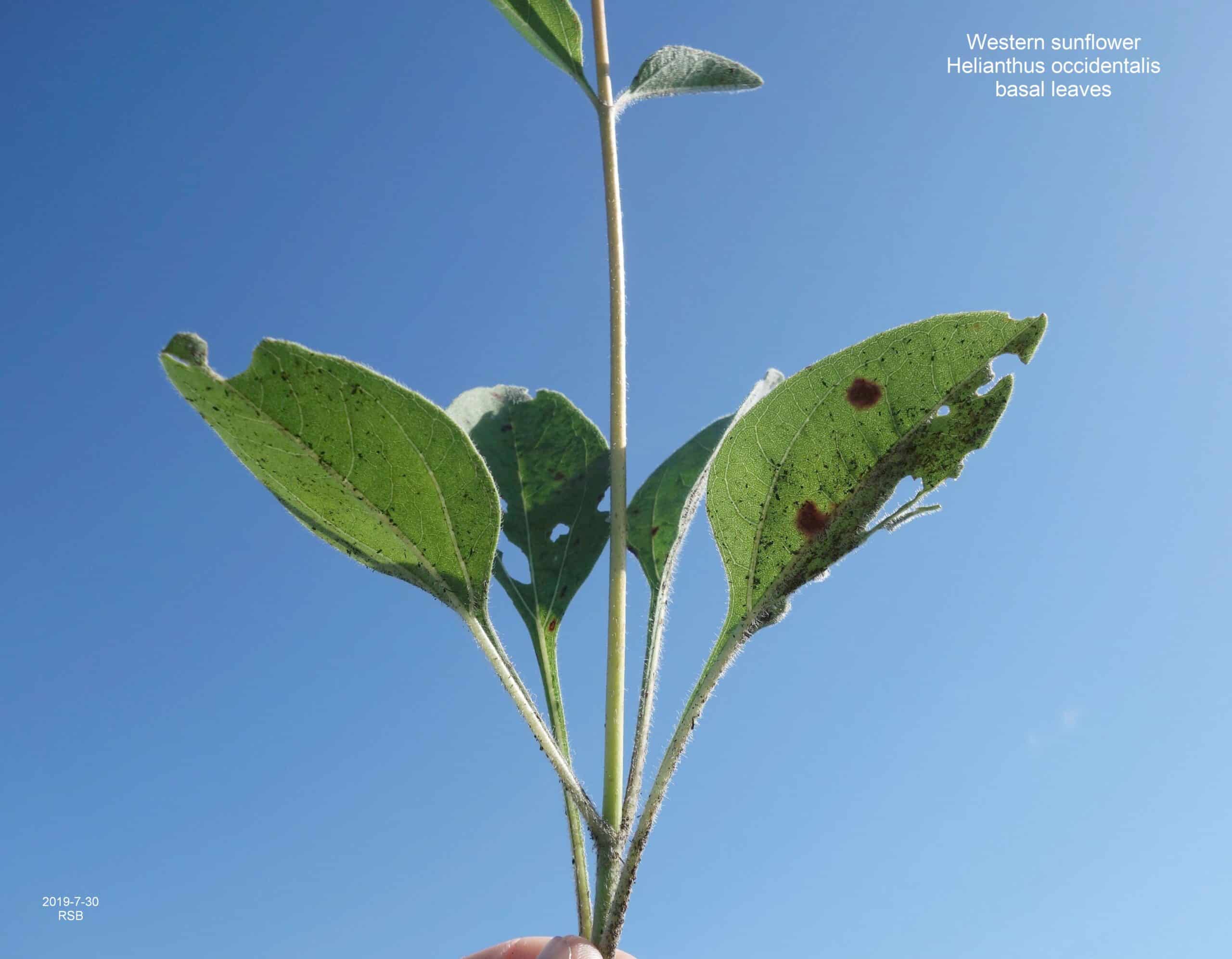
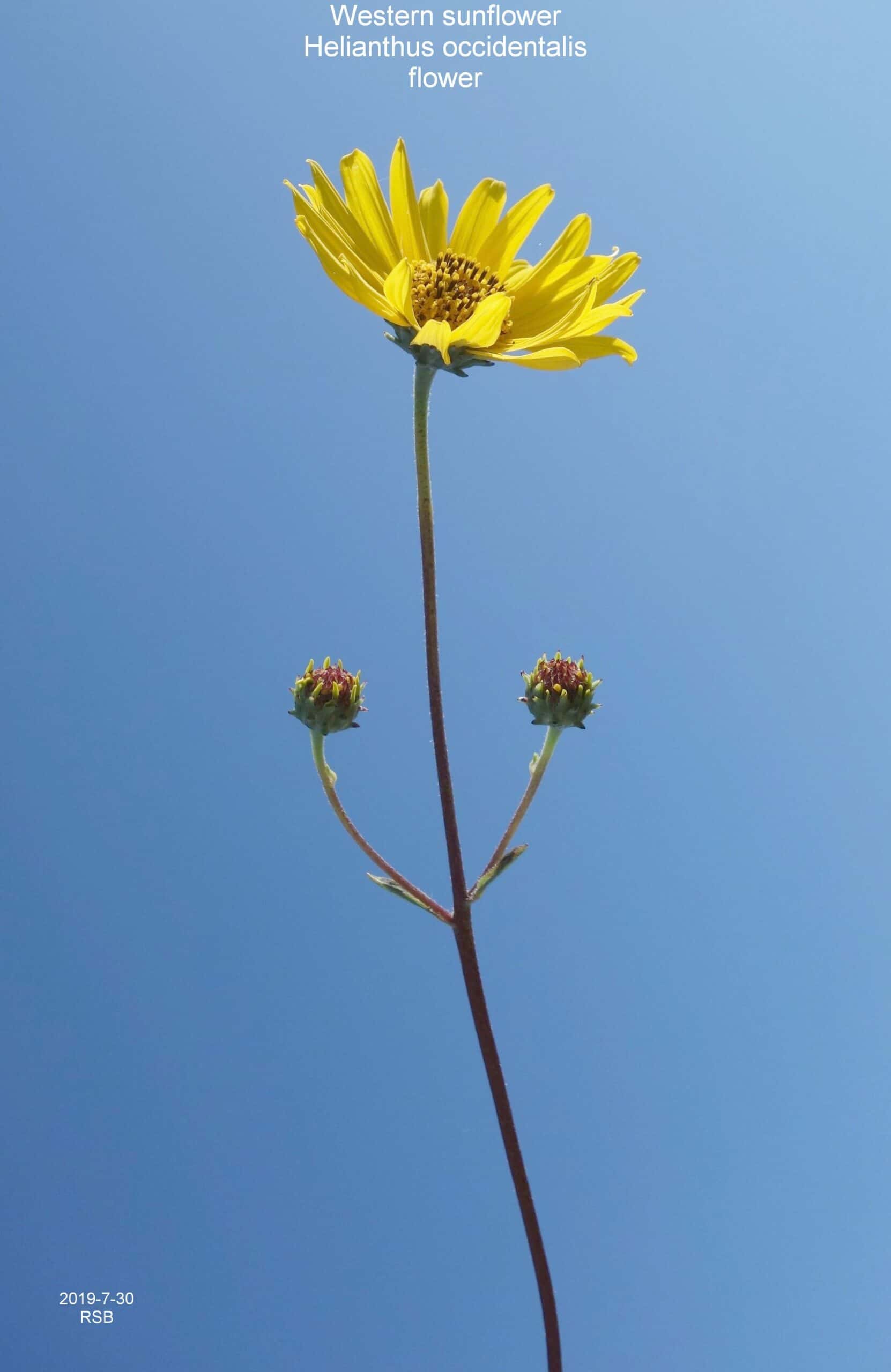
August-September. 2-5 ft tall. Full sun, dry prairie, sands, barrens. Definitely our driest sunflower, well-adapted with leaves restricted to a rosette at the base, and maybe one or two pairs of tiny Tyrannosaurus leaves midway up the stem.

Sawtooth sunflower
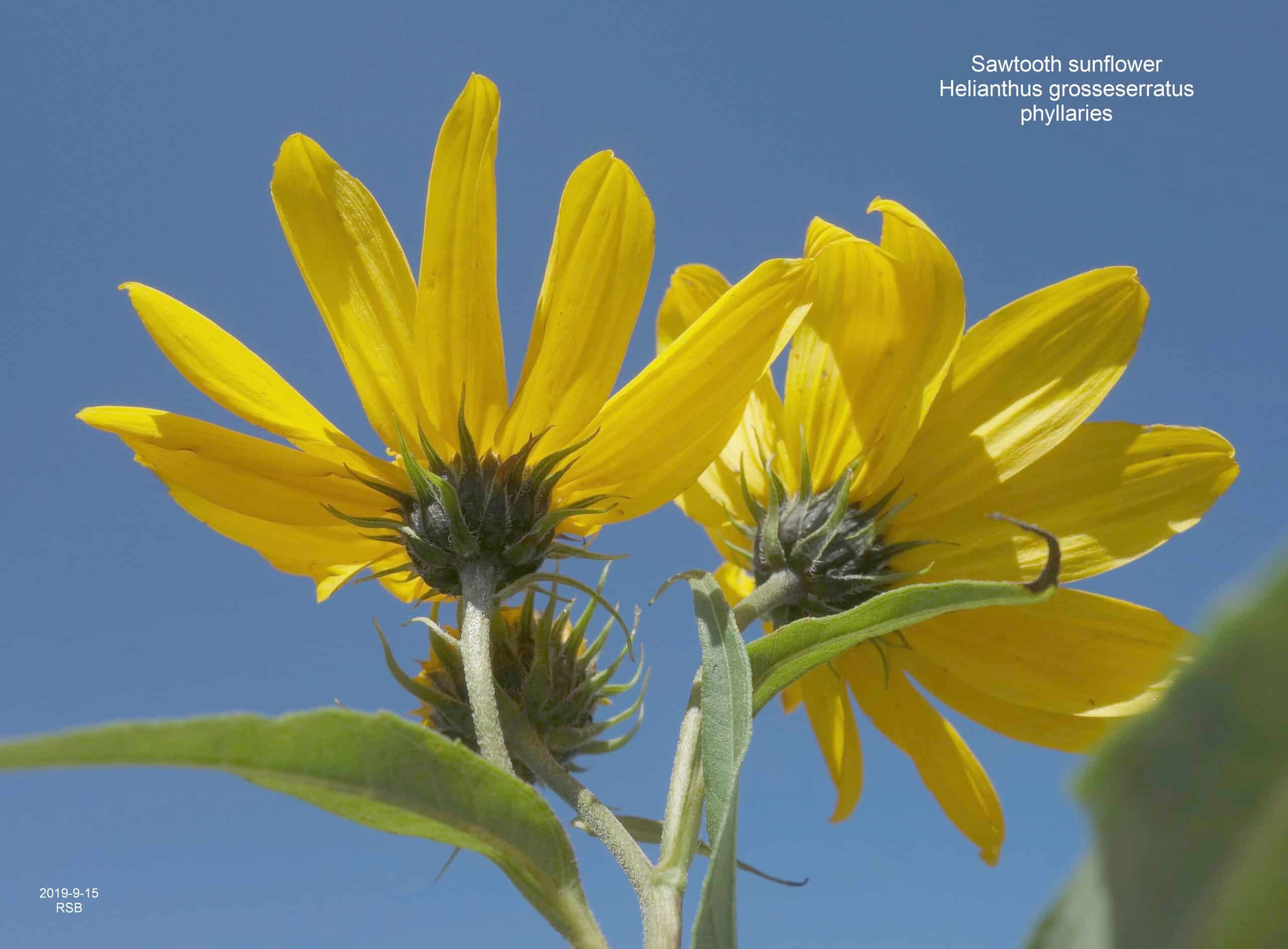
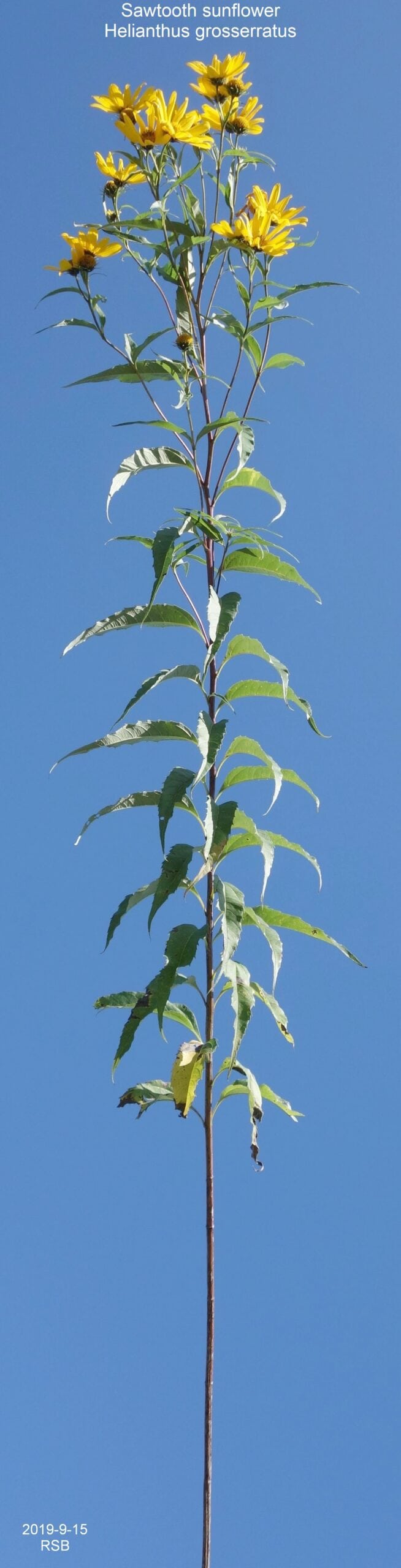
(Helianthus grossesseratus)
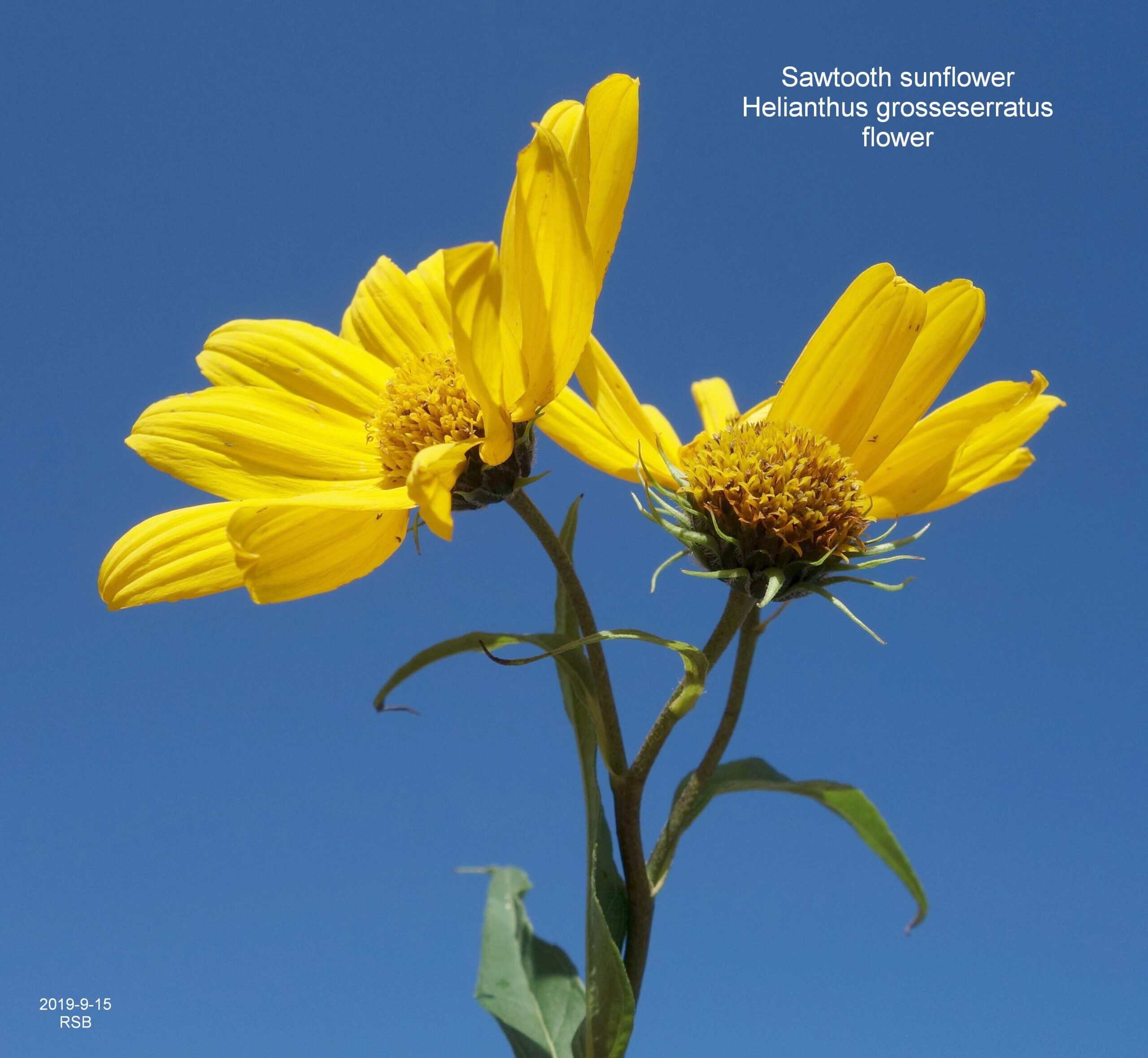
September. 6-9 ft tall. Tallest common sunflower. Full sun, rich mesic soils, sometimes lining cornfield margins along with giant ragweed. Leaves long-tapering, arching, the edges slightly toothed; “sawtooth” is overly optimistic. Phyllaries are long-tapering, spreading, wavy spear points.
Giant sunflower
(Helianthus giganteius)
This sunflower is provided by Dan Carter. Quite similar to sawtooth sunflower. Common on The Prairie Enthusiasts’ sites. One main difference between sawtooth sunflower and giant sunflower is that sawtooth has smooth stems and giant sunflower has hairy stems. The two sunflowers sometimes occur together and hybridize.
About The Prairie Enthusiasts
The Prairie Enthusiasts is an accredited land trust that seeks to ensure the perpetuation and recovery of prairie, oak savanna, and other fire-dependent ecosystems of the Upper Midwest through protection, management, restoration, and education. In doing so, they strive to work openly and cooperatively with private landowners and other private and public conservation groups. Their management and stewardship centers on high-quality remnants, which contain nearly all the components of endangered prairie communities.