by The Prairie Enthusiasts | Oct 5, 2026
Moely Prairie Tree Cutting and Brush Piling Work Party
Saturday, October 17 – 9:00 a.m. to Noon
Location: Moely Prairie in Prairie du Sac, WI
Join us this month as we continue to clean up small groves of sumac trees as well as the usual suspects, honeysuckle and buckthorn, in a few units of the prairie. While chainsaws won’t be needed for this particular focus, if you bring yours, we can always provide other bigger opportunities for you to tackle! Otherwise, loppers and herbicide will be provided.
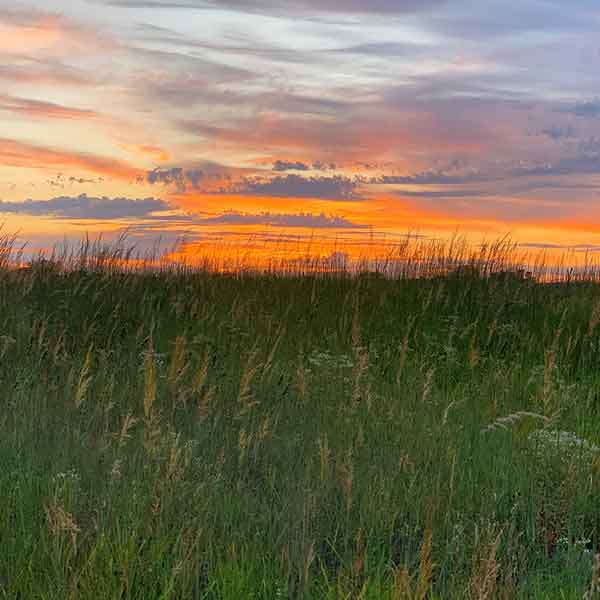
For the past nine years, dedicated volunteers have been hard at work on this 23.5-acre remnant prairie, steadily clearing invasive trees and brush. Nestled right in the heart of Prairie du Sac, Moely Prairie is both unique and accessible, offering a quiet spot to hike, cross-country ski, or snowshoe. It also serves as a living classroom, providing hands-on educational and citizen science opportunities for students and community members alike. Thanks to these efforts, we’ve watched the prairie’s native plant inventory grow from just 70 species to more than 200 through ongoing restoration and prescribed burns—a testament to what community care can achieve.
WHAT TO BRING:
Please wear long sleeves, long pants and sturdy, closed-toed shoes. Bring your own work gloves and your favorite equipment if you wish (loppers, chainsaws, etc.). Extra loppers and herbicide will be available for use. Water bottles are highly recommended.
WORK PARTY LEADER:
For questions and to RSVP, contact Paul Anderson at 608-712-9552.
DIRECTIONS:
From Hwy 12, turn east onto Hwy PF. After passing the prairie on your right, take a right onto 21st St., a right onto Fullerton Dr., a left on Billings Ave., and then a right onto Alban La. Park at the dead end and enter the prairie from there. 2200 Fullerton Dr, Prairie du Sac, WI 53578
by Evanne Hunt | Sep 29, 2026
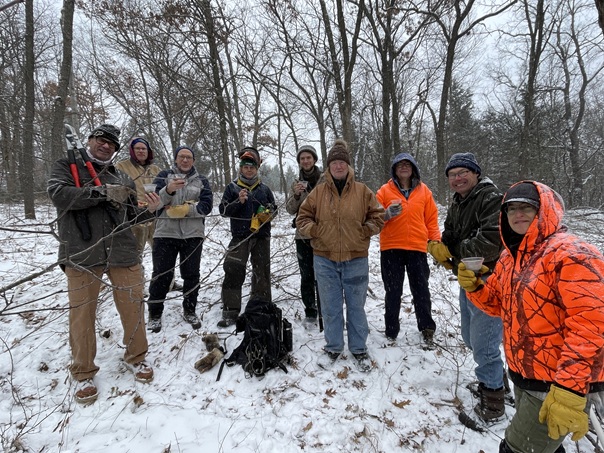
Buckthorn!
Join us as we cut and stump treat buckthorn at Dieperink Woods (formerly called Brokken Woods).
Some loppers will be provided, but if you have your own, feel free to bring them. We will also broadcast spread local seed onto the newly cleared areas.
Date: December 8 (Tuesday)
Time: 10am to 2pm
Location: Dieperink Woods (previously Brokken Woods)
Afton, MN
We will meet at the gate on the cul-de-sac at the south end of the property: at the far eastern end of 42nd St. S in Afton, MN. There is plenty of room to park.
Map to location
Bring:
♦ Dress appropriately for weather
♦ Drinking water
♦ Bring your lunch
by Evanne Hunt | Sep 29, 2026
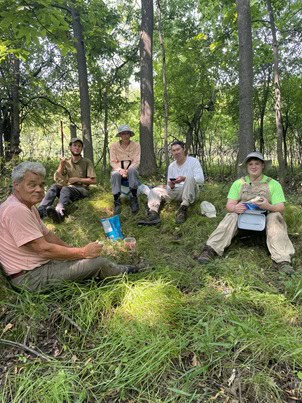
Buckthorn!
Join us as we cut and stump treat buckthorn at Dieperink Woods (formerly called Brokken Woods).
 Some loppers will be provided, but if you have your own, feel free to bring them. We will also broadcast spread local seed onto the newly cleared areas.
Date: November 10 (Tuesday)
Time: 10am to 2pm
Location: Dieperink Woods (previously Brokken Woods)
Afton, MN
We will meet at the gate on the cul-de-sac at the south end of the property: at the far eastern end of 42nd St. S in Afton, MN. There is plenty of room to park.
Map to location
Bring:
♦ Dress appropriately for weather
♦ Drinking water
♦ Bring your lunch

by Evanne Hunt | Sep 29, 2026
Buckthorn!
Join us as we cut and stump treat buckthorn at Dieperink Woods (formerly called Brokken Woods).
Some loppers will be provided, but if you have your own, feel free to bring them. We will also broadcast spread local seed onto the newly cleared areas.
Date: October 13 (Tuesday)
Time: 10am to 2pm
Location: Dieperink Woods (previously Brokken Woods)
Afton, MN
We will meet at the gate on the cul-de-sac at the south end of the property: at the far eastern end of 42nd St. S in Afton, MN. There is plenty of room to park.
Map to location
Bring:
♦ Dress appropriately for weather
♦ Drinking water
♦ Bring your lunch
by The Prairie Enthusiasts | Sep 28, 2026
Work Party at Salem Methodist Cemetery
Thursday, October 8 – Noon to 4:00 p.m.
Location: Salem Methodist Cemetery in Klossner, MN
The Salem Methodist Cemetery restoration is in full swing. With a generous grant from the Carl & Verna Schmidt Foundation, the Many Rivers Chapter was able to bring in a contractor to remove a significant amount of woody encroachment in the northeast corner as well as a clump of mature maples on the east fenceline. It’s now time for us to get at the remaining woodies on the east side!
WHAT TO BRING:
Please bring loppers (we will have extras) and or your preferred tool of woody destruction, gloves, sturdy footwear, and water. We will provide herbicide daubers for stem treating. We’d love to have you join us.
CONTACT:
Contact Erik Koehler at (612) 414-8576 if you have any questions.
LOCATION:
Located approximately one mile west of Klossner on County Road 5 (Fort Road).